Remember ME - You Me and Dementia

Showing posts with label Help Support. Show all posts

June 11, 2020

World Elder Abuse Awareness Day 2020 - #StandWithOlderPersons #PurpleDotChallenge

We #StandWithOlderPersons and accept #PurpleDotChallenge to raise Awareness and Prevention of Elder Abuse.


On occasion of 'World Elder Abuse Awareness Day' on 15th June 2020, INPEA in association with GAROP and Silver Innings seeks Support of all age group and gender to create awareness about elder abuse and it's prevention.

INPEA wants social media users to post a picture of a #PurpleDot on their palm or any other place or paper and express their thoughts about Elder Abuse, Awareness, Stigma and Prevention.


INPEA has created a separate hash tag #StandWithOlderPersons to take a strong stand on Elders issues. Accept the Purple Dot Challenge and post it on your social media handles with hash tag #StandWithOlderPersons and #PurpleDotChallange


So friends let’s #StandWithOlderPersons and send your Purple dot challenge pictures with your thoughts on our / post social media accounts like Facebook, LinkedIn, Instagram or Twitter.

This Challenge is open from 1st June to 30th June.


We will also post your support on our all social media accounts.

You can also forward us your pictures through E-mail at silverinnings@gmail.com or WhatsApp on 91+ 9987104233

Creative Support by Web Solutions India.

#WEAAD #WEAAD2020 #SILVERINNINGS #ELDERABUSE #INPEA 


________________________________________________________
Credit: Reports and photographs are property of owners of intellectual rights. Seniors World Chronicle, a not-for-profit, serves to chronicle and widen their reach.

December 9, 2011

THAILAND: Elderly flood victims lack support

BANGKOK, Thailand / Bangkok Post / News / December 9, 2011

NAKHON SAWAN : State and private sectors should pay more attention to elderly people affected by the flood disaster as they need special support to get their lives back to normal, a community leader says.

Payao Sapprasong, 84,emerges from her rented house in Muang district of Nakhon Sawan. The flood crisis destroyed most of her belongings.She used to work as a masseuse to earn enough money to send her grandson to school and pay the rent—now she is jobless. SOMCHAI POOMLARD
Karuna Kiriwan, leader of Wat Phrom Jariyawat community in Muang district, has voiced concerned over the well-being of older people in her community as most of them were left to struggle with the flood aftermath alone.

Like their communities upcountry, many young people have left the villages to work in big cities, leaving old people at home with their grandchildren.

Sixty percent of Wat Phrom Jariyawat community's 1,200 residents are elderly, Ms Karuna said, adding that most developed post traumatic stress disorder after the disaster.

"I have talked to them since the flood and found that they have serious depression," Ms Karuna said. "Most of them live alone or live with their grandchildren, whose parents work in other places.

"At such an old age, it is very difficult for them to earn enough money to restore their houses or to buy new household appliances."

Ms Karuna said agencies in charge of flood rehabilitation should urgently address the problem of mental health among the elderly. Light jobs, hobbies, and recreational activities should be organised to ease their stress, she said.

Payao Sapprasong is one of the elderly residents affected by the flood in early October.

The 84-year-old lived with her 16-year-old grandson in a 10-square-metre rental room when the floodwaters arrived.

She moved to an evacuation centre at a school at Wat Phrom Jariyawat community.

"At that time, I felt despair and didn't know what to do about the future," she said. "I can't do my job, which means that I don't have money for my grandson to go to school and no money to pay for the house rent."

She worked as a Thai traditional masseuse. Before the flood, she could earn about 400 baht a week, but when the flood struck she become jobless.

"I lost my closet, mattress and fan in the flood," Mrs Payao said. "It was my biggest loss in the flood. I don't know whether I have enough money to replace them as I need to keep money for my grandson.

"All I can do now is to pray. I pray for my strength, to be strong enough to survive the crisis."

She said she wanted the Pheu Thai government to increase the 500-baht allowance for the elderly as they promised during the election campaign. Ms Karuna suggested every disaster-hit community set up a centre for the elderly especially those who have no one living at home to take care of them.

"A community temple is a good venue to set up such a centre, where the elderly can have eating and resting areas," she said, adding that running a centre for the elderly needs cooperation from all sectors, including local residents.

The community council held regularly meetings to map out a flood rehabilitation programme, which covered all groups of residents, including elderly people.

Villagers formed a team to clean up the houses of those who needed help and to improve the community's landscape damaged by the deluge.

Ms Karuna said every community should come up with a plan to make their locality elderly-friendly as the nation becomes more and more an ageing society.

The Foundation of Thai Gerontology Research and Development Institute, said Thailand had 7.1 million elderly people in 2009. This number is expected to increase as the life expectancy at birth has been risen from 68.5 to 73.6 years for men and from 75 to 79.1 years for women.

Copyright The Post Publishing PCL 1996-2011
____________________________________________________________
Credit: Reports and photographs are property of owners of intellectual rights. 
Seniors World Chronicle, a not-for-profit, serves to chronicle and widen their reach.

December 6, 2011

JAPAN: Checking up on the elderly in disaster-hit areas

OSAKA, Japan / The Daily Yomiuri / National / December 6, 2011

By Yasuhiro Maeda and Tomoko Koizumi / Yomiuri Shimbun Staff Writers


With the arrival of winter, residents in areas affected by the March 11 disaster have implemented measures to check on elderly residents living alone in temporary housing units.

On Friday morning, temperatures dropped to below zero in many of the quake-affected areas, the lowest so far this winter. There are concerns elderly people living alone may become ill or die as they will have to withstand not only loneliness, but also the cold.

An elderly man walks in a temporary housing complex in Ishinomaki, Miyagi Prefecture, on Friday.

In the Naka-dori area of Fukushima Prefecture, temperatures dipped below zero in the early morning.

At a 240-unit temporary housing complex in Otamamura, Fukushima Prefecture, four residents made the rounds of individual units to make sure yellow flags had been hung at the door.

The group called to residents inside, asking, "Are you OK?" or "How do you feel today?"

The flags, measuring 20 centimeters by 30 centimeters, are called "Shiawase no hata (happiness flags)," a name inspired by the film "Shiawase no Kiiroi Hankachi" (Yellow handkerchief of happiness), starring popular actor Ken Takakura.

Mitsutoshi Kamata, 56, head of the residents' association, came up with the idea of using the flags to confirm the safety of the elderly living alone. The association distributed the flags to 44 households, mainly those with residents aged 70 or older living alone.

The group decided those people should hang the flags in the morning and take them down in the evening. Other residents take turns checking the flags.

In mid-October, this system helped the residents discover a 70-year-old man unable to move due to a stomachache because his flag was left outside after dark. After being rushed to the hospital, the man was diagnosed as suffering from an inflamed gall bladder.

After an operation, the man was discharged two weeks later.

"The flag saved my life," the man said.

Residents at the Otamamura temporary housing complex moved there from Tomiokamachi, which is close to the crippled Fukushima No. 1 nuclear power plant. They say it is colder in inland Otamamura than in their hometown on the Pacific coast.

"I don't want our neighbors to die alone," Kamata said.

At a 70-unit temporary housing complex in Ofunato, Iwate Prefecture, personal alarms were distributed to all households at the end of October to enable residents to notify others if they have a problem by pulling the cord to activate the alarm.

The alarms were distributed in small bags containing an "Otasuke shiito (help sheet)" with a sheet to list information, such as any chronic illnesses, family doctors' names and emergency contact numbers. Elderly people were asked to carry the bags not only when they go out but also when they are home.

Shoetsu Shimizu, 62, who heads the residents' association there, asked volunteer organizations to donate the alarms.

"I'm worried about the elderly's health as it gets colder," Shimizu said.

In October, a 79-year-old woman living alone in temporary housing in the prefecture was found dead in her bathroom.

"Local government officials are patrolling temporary housing to keep an eye on those living alone. But there is a limit to what they can do," Shimizu said. "It's important to have a system to enable residents to notify their neighbors in case of an emergency."

Some complexes are trying to set up community gardens so residents will not stay indoors even on cold days. The gardens also provide communication opportunities for residents.

In Otsuchicho, Iwate Prefecture, Tono Magokoro Net, a volunteer group, played a major part in making a vegetable garden on unused farmland in the town's Kozuchi district.

Daikon radishes, spinach and other vegetables were planted, and residents from nearby temporary housing units gather in the garden on weekends.

Setsuko Sano, 59, who enthusiastically works in the garden, said, "Coming here allows me to chat with many people and brighten my day."

The organization plans to set up a total of three vegetable gardens in the town and use the vegetables grown there to make bentos for the elderly.

Ryoichi Usuzawa, 63, a member of the organization who lost his house in the disaster, said, "We'll keep an eye on the elderly, who tend to be isolated, and give them opportunities to go out."

Following the Great Hanshin Earthquake, some disaster victims living alone died while their neighbors were unaware they were in trouble.

Between 1995, when the quake occurred, and 1999, 233 persons in temporary housing died that way. Of those, about 64 percent were aged 60 or over.

Yasuhiro Yuki, an associate professor of social welfare studies at Shukutoku University, said, "Temporary housing complexes in the Tohoku region are far from towns and cities, and sometimes the elderly are reluctant to go out.

"When the weather is very cold, there are fewer events. So efforts to watch the elderly and prevent them from being isolated are especially important."

© The Yomiuri Shimbun
____________________________________________________________
Credit: Reports and photographs are property of owners of intellectual rights. 
Seniors World Chronicle, a not-for-profit, serves to chronicle and widen their reach.

November 11, 2011

UK: Stars rally to help vulnerable older people keep warm

LONDON, England / The Telegraph / Personal Finance / November 11, 2011


Celebrities such as Sir David Jason and Sir Terry Wogan are pledging their winter fuel allowance to help those worse off.

Staying warm and healthy in our cold winters is something most of us 
take for granted." Photo: Jeff Gilbert

By Emma Simon

Wealthier pensioners are being urged to "recycle" their winter fuel payments to help older, more vulnerable people keep their homes warm this winter.

A host of senior celebrities, including Ann Widdecombe, Sir Michael Parkinson, Dame Cleo Laine and Sir David Jason, are backing this new charitable appeal by handing over their own winter fuel payments.

It's hoped their star quality will encourage others to do the same. All money raised by this Surviving Winter appeal will be distributed by the Community Foundation Network, which works with local charities and organisations to help those struggling with rising gas and electricity bills.

The winter fuel payment has long been mired in controversy. Payments have been sharply reduced this year – with the poorest households losing almost £100 – although all the major energy companies have hiked up gas and electricity prices by almost 20pc this year.

The universal benefit is paid to all households where at least one person is over 60, regardless of income. But in the small print in this year's Budget, it emerged that the coalition won't be paying the additional "top-up" payments – which have been paid every year since 2008, when they were introduced to ensure payments kept pace with rising bills.

This means this winter, those aged 80 or over will receive a £300 payment, compared to the £400 they received last year. Younger pensioners will get £200 instead of £250. Last year, more than 12.6 million people received this benefit.

Related article
How to donate your winter fuel allowance 10 Nov 2011


But while there is concern that these payments won't provide enough help to the poorest households, there is also disbelief that they are made to far wealthier families. An estimated 100,000 recipients have incomes of over £100,000, and more than 450,000 are higher-rate taxpayers. This benefit is paid to 65,000 expatriates, including 31,145 in Spain and 4,674 in Cyprus, plus more than a thousand in Greece and Italy – none of which are known for harsh winters. The number of expats collecting this payment has gone up by almost three times in the past six years.

There have been repeated calls for the benefit to be means-tested to focus resources on those in most need. Dame Joan Bakewell, a former "government tsar" for older people, caused ructions when she tried to hand back her payment last year to highlight the system's iniquity. She said it proved to be "nigh on impossible", despite ministers' claims that wealthier pensioners were "encouraged" to forgo the allowance.

It is hoped this new charitable endeavour will provide a more viable alternative, as the money people give up will find its way to help others, rather than simply be swallowed up into the black hole in the government coffers.

Ros Altmann, the director-general of Saga, said: "I am delighted to be supporting this brilliant initiative to help recycle winter fuel payment from those who don't need them to those that do. It is important, as part of a caring society, to enable people who want to support those at risk of fuel poverty to keep warm and well this winter."

© Copyright of Telegraph Media Group Limited 2011
__________________________________________________________
Credit: Reports and photographs are property of owners of intellectual rights. 
Seniors World Chronicle, a not-for-profit, serves to chronicle and widen their reach.

November 10, 2011

THAILAND: Older people stranded at home

BANGKOK, Thailand / ReliefWeb / HelpAge International / November 10, 2011

By Caroline Graham

HelpAge is working to help at least 2,500 older people and their families affected by the floods in Thailand. The country’s worst flooding in half a century has caused widespread damage in approximately 60 provinces out of 76. Older people have been severely affected, mainly due to poor mobility and lack of money. Thousands are stranded in their homes without basic essentials such as food, water and medicine.
Thousands of older people, like this man, have stayed behind in their flooded homes 
(c) HelpAge International

Our partners, the Rural Elderly Entrepreneurship Development Association (REEDA) and the YMCA, say some moved out of their homes to relief centres. However, thousands of older people remained in their houses, never believing the water level would rise this high. Flooding on this scale has never happened in their lifetime.
Older people were also worried about security and did not want to leave their houses empty for fear of having property stolen. Now they are finding it almost impossible to go out and get essential supplies.
We are working with REEDA in the central provinces of Chainat and Singburi and with the YMCA in Ayuthaya, near Bangkok. Together, we are assessing the specific needs of older people in these areas so we can provide appropriate relief assistance.
Cut off from the community
HelpAge International's Senior Programme Manager in the region, Godfred Paul, said: "Some older people are unable to move due to mobility problems. Some are refusing to leave as they do not want to leave their home unattended. Others do not want to be a burden to their children or other family members, so decided to stay back. "These older people are not able to get to distribution centres, health and other essential services. They are cut off from the rest of the community. People who are still living in their homes need food, water, medicines and sanitation materials.                                             Photo: Kerek Wongsa/Reuters
"Some older people want to go out to get essential items but need help. Many have tried wading through the water with walking sticks. A local newspaper reported an older women coming to the food distribution point after having starved for five days in her house." The Thai Government does not have enough boats or boat drivers to deliver help to people in need. Prices of essential goods are sharply rising, and cases of theft and other crimes are increasing as people become more desperate.
"All this makes older people even more vulnerable," Paul added. Some older people stranded in their houses cannot even afford to pay for a ride in the few boat services available. They are unable to call for help as they have no electricity to charge their mobile phones or because they have run out of credit.
Those with chronic conditions have run out of medicines and cannot get to hospitals or health centres. Not knowing when the flood waters will recede, or if their home and possessions are safe, is causing many older people a great deal of anxiety and stress.
Delivering essential items
Needs assessments so far have shown the main items required are food and drink, such as rice and milk. Other essential items such as blankets, toilet paper, water filters, portable gas stoves, kettles, mosquito repellent, torches, chlorine and EM mudballs to neutralise contaminated water have also been listed.
Thanks to emergency funding, HelpAge and its partners can now deliver these items and cash grants to 2,500 households. We are also coordinating a medical mission in all the three provinces to be delivered by Mercy Malaysia.
Concerns about the cost of recovery
A more detailed assessment of what older people need as Thailand recovers from this disaster will follow. The findings will be given to government and civil society agencies.
Older people are already worried about the cost of recovery. Their homes will need to be cleaned and repaired. Many will have to try and find work to earn an income, and get medicines for their health.
© 2011 ReliefWeb
__________________________________________________________
Credit: Reports and photographs are property of owners of intellectual rights.
Seniors World Chronicle, a not-for-profit, serves to chronicle and widen their reach.

September 8, 2011

CHINA: How to help elderly people who have fallen down

BEIJING, China / People's Daily / China Society / September 8, 2011

Guidelines warn against hasty help

By An Baijie - China Daily

Members of emergency rescue teams under the Red Cross Society of China perform a first-aid drill in Beijing on Wednesday. Photo/ China Daily

A just-released guideline on how to help elderly people who have fallen down is not connected with a series of recent cases where people have gone unassisted, said a Ministry of Health official.

Yan Jun, a division director of the ministry's disease prevention and control bureau, told China Daily that planning for the guideline was started two years ago.

"The guideline just explains how to deliver assistance in a scientifically proper way," she said.

Xin Baoshan, director of the Chinese Red Cross National Training Center, which specializes in emergency training, said helping up an elderly person in an inappropriate way can cause further injuries.

"The public should know that kind intentions won't necessarily lead to good outcomes, particularly in emergency response and first aid," he said at an awareness event on Wednesday to mark World First Aid Day, which falls on September 10.

The 41-page guidebook issued on Tuesday elaborates risks that might cause the elderly to fall over and how to help them at home and on the street.

It outlines four steps to take before lending a hand: evaluating the person's physical condition, determining the cause of the accident, finding potential risks such as being close to a staircase, and making a plan for rescue workers.

"Don't rush to lend a hand to the elderly after seeing them fall over. It should be handled by different measures in different situations," the document said.

The guideline comes amid a rising number of cases in which elderly people who fell were not helped up.

On Friday, an 88-year-old man in Hubei province collapsed face-first on the ground and lay helplessly in a crowd for about 90 minutes until his son and wife arrived. They sent him to hospital but he died from suffocation caused by a nosebleed blocking his airway.

The ministry said the new guidelines have nothing to do with morality and ethics. "We don't doubt the morality of the Chinese public to lend a hand to elderly people who have fallen down," Yan said.

Together with the guideline on the elderly, three other guidelines involving children, drowning and traffic accidents were also issued on Tuesday.

Currently, only one percent of the Chinese public has received correct emergency training.

Some people, however, have other reasons to fear assisting people who have fallen.

On Aug 26, a bus driver helped an 81-year-old woman who had fallen over on an overpass in Rugao, Jiangsu province. The woman later called police and claimed the driver had run her over. Police checked the video on the bus and found the woman was not telling the truth.

Tan Fang, a professor at South China Normal University, set up a foundation in March to deal with the risks of helping the elderly in difficult situations. It provided both financial and legal aid to those who had gotten into trouble for helping the elderly.

Tan said the ministry's guideline would not be enough to encourage the public to help the elderly, since it did not provide ethical and legal support to those who might be sued after helping out.

"The problem does not lie in rescue techniques, but in social ethics and legislation," Tan said.

Copyright by People's Daily
__________________________________________________________
Credit: Reports and photographs are property of owners of intellectual rights.
Seniors World Chronicle, a not-for-profit, serves to chronicle and widen their reach.

July 15, 2011

CHINA: Xinjiang offers living subsidy, medical check for over-age-80

BEIJING, China / The People's Daily / China Society / July 15, 2011

People over 80 years old in northwest China's Xinjiang Uygur Autonomous Region will get monthly basic living subsides and annual free medical checks starting July, local authorities said Thursday.

A senior citizen of Uygur ethnic minority in Xinjiang, making a folk music instrument. (Photo: chinanews)


Seniors between the ages of 80 and 90 will get a monthly subsidy of 50 yuan (7.7 U.S. dollars), those between 90 and 100 years old will get 120 yuan, and those over 100 years old will get 200 yuan, said Zhou Junlin, deputy director of the Xinjiang Civil Affairs Department, at a press conference.

Everyone over 80 years old in the region will get a free medical check every year, Zhou said.

"The new policy is part of the regional government's key programs this year to improve the well-being of local residents," he said.

Some 214 million yuan will be earmarked for the new policy every year, which will benefit about 280,000 seniors citizens, or 1.28 percent of the region's total population, he said.

Source: Xinhua
___________________________________________________________
Credit: Reports and photographs are property of owners of intellectual rights.
Seniors World Chronicle, a not-for-profit, serves to chronicle and widen their reach.

INDIA: 'Vayomithram' has served over 850 senior citizens

THIRUVANANTHAPURAM, Kerala / The New Indian Express / July 15, 2011

Around 850 senior citizens in the Corporation limits have thus far availed of the services of the mobile clinic operated under the aegis of ‘Vayomithram’, a joint venture of Kerala Social Security Mission (KSSM) and National Rural Health Mission (NRHM). One more mobile unit will be pressed into service soon, officials said.

Vayomithram means friend of the aged.

The mobile clinic offers palliative care and is equipped to conduct basic health tests. Last March, ‘Vayomithram’ started providing free ambulance services to senior citizens above the age of 65, within the limits of the Corporation. Senior citizens belonging to any of the 100 wards can utilise the service in an emergency. A station situated near the Chithira Thirunal Park at East Fort, operates one ambulance at present which is available round-the-clock. The ambulance service, however, is yet to gain popularity. So far, only around eight trips were made by the service.

‘Vayomithram’ is an extensive programme that provides necessary amenities to senior citizens, including palliative care for the invalids, 24-hour help desk, service of counsellors at the help desk, information regarding hospital, police and ambulance through a telephone number, registration to facilitate services for the elderly other than the ambulance service. The Mobile Palliative Care Unit is manned by a doctor and a nurse. The services of the unit can be availed of through the 24-hour help desk. The mobile unit is equipped to conduct various tests, including blood tests and checking blood pressure.

The programme was first launched in Kollam and then extended to Thiruvananthapuram. At present, Thiruvananthapuram has one mobile clinic. One more will be pressed into service soon, Renny George, Senior Counsellor/ Coordinator of KSSM said.

‘Vayomithram’ is a venture of KSSM, NRHM and the local body concerned. At present, the KSSM is bearing the expenditure and it is to be shared by all three within one year. ‘’Trained personnel with a Masters in Social Work are selected as counsellors. 42 candidates are to be recruited to serve all the stations. Three counsellors will serve under one station in three shifts a day. Doctors are from the NHRM,’’ says Dr R Ashok, Executive Director, KSSM.

‘’A team of Accredited Social Health Activists (ASHA) workers will conduct a survey among senior citizens in slum areas and selected people will be provided with palliative care through our mobile clinic. In Thiruvananthapuram, one mobile clinical unit is functioning at present and 850 people have utilised the services of the unit till June 13,’’ he said.

‘Vayomithram’ project will be launched in Malappuram on July 23. As part of the 100-days action plan of the government, the plan is proposed to be extended to all district headquarters before July 30.

Copyright © 2009 Expressbuzz

Illustrative photos courtesy of Prof. John Kurakar
___________________________________________________________
Credit: Reports and photographs are property of owners of intellectual rights.
Seniors World Chronicle, a not-for-profit, serves to chronicle and widen their reach.

July 3, 2011

INDIA: Bollywood star spreads some joy

MUMBAI, Maharashtra / The Times of India / Bollywood / July 3, 2011

Aftab Shivdasani was in a great mood as he walked in to interact with 300 senior citizens of HelpAge India at the screening of Bin Bulaye Baarati that was organised in association with Provogue. Aftab, who has been associated with the NGO dedicated the screening to his grandfather, who passed away recently.

Gulshan Grover, Shakti Kapoor, Rajpal Yadav, director Chandrakant Singh and Shweta Bharadwaj were present at the screening.

Speaking at the occasion, Aftab said, "I've been associated with this NGO for nine years. I wanted to do something for these senior citizens as I've lived with my grandparents my whole life. I feel they would be proud about this endeavour." The screening was also attended by Prakash Borgaonkar of HelpAge India.

Pic Courtesy: gomolo.in

Copyright © 2011 Bennett, Coleman & Co. Ltd.
__________________________________________________________
Credit: Reports and photographs are property of owners of intellectual rights.
Seniors World Chronicle, a not-for-profit, serves to chronicle and widen their reach.

June 25, 2011

UK: She campaigned for disabled people

.
LONDON, England / The Guardian / Society / Disability / June 22, 2011

Nasa Begum obituary

She campaigned for disabled people


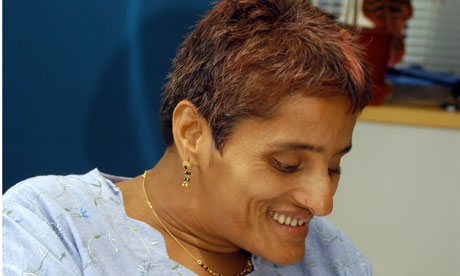
Nasa Begum taught colleagues and the public that disabled people do not need help but equal opportunities. Photograph: Social Care Institute For Excellence
 
Nasa Begum, who has died aged 47 of a chest infection following a long illness, made an important contribution to the understanding of the experiences of disabled people, and campaigned tirelessly for the right to independent living. Her work had a significant impact on the way that the health service consults and learns from patients. Begum was perhaps the only senior policy adviser to the Department of Health who was a service user herself, having received support for mental ill-health as well as her physical disability.

Born in Birmingham, to a factory-worker father and housewife mother, both Pakistani migrants, Begum was diagnosed with a neurological condition that resulted in spine curvature and muscle degeneration. Between school and university, she attended Hereward College in Coventry, at the time a college for disabled students, which she said compromised her quest for independent living. In 1989 she was awarded an MA at Warwick University in applied social studies.

Her career began at Northampton Welfare Rights Centre, progressing through to senior policy and research positions in disability rights. She held research and development posts at Warwick University, the King's Fund, the Policy Studies Institute and the mental health charity Mind. She joined the Social Care Institute for Excellence (SCIE) in 2003 as a principal adviser, and helped to set up its first participation strategy with the aim of putting service users and their carers at the heart of service delivery. She also led work on the needs of disabled refugees and asylum seekers.

During her time at SCIE, Begum was seconded for two years to the Department of Health, where she played an important part in developing a user-led organisation for disabled people in every health authority. She also joined the board of the National Centre for Independent Living and was a member of the Care Quality Commission's mental health improvement board and the Joseph Rowntree Foundation's empowerment strategy group.

One of Begum's early papers, Burden of Gratitude (1990), focused on women with disabilities receiving personal care. Something to Be Proud Of (1992) was a study of the lives of Asian disabled people and carers. Jointly with colleagues, she also wrote Beyond Samosas and Reggae: A Guide to Developing Services for Black Disabled People (1995), and Developing User Involvement: Working Towards User-Centred Practice in Voluntary Organisations (2003).

In her paper I'm Not Asking to Live Like the Queen (2005, published by SCIE), Begum outlined the wishes of service users on the future of social care for adults in England. Later that year, she presented the Lord Pitt memorial lecture on her joint report with the Race Equality Unit, Doing It for Themselves: Participation and Black and Minority Ethnic Service Users (2006). Begum fought all her life for inclusion for people with disabilities. She taught colleagues and the wider public that disabled people do not need "help", but equal opportunities.

In 2008 Begum featured on the BBC TV programme Don't Get Mad, Get Dom, with Dominic Littlewood, which showed British Airways refusing to allow her on a flight from India because she was unaccompanied. She fought successfully for BA to recognise her right to travel independently. She is survived by her mother, Farzan, and her sisters, Qamar, Rabina and Taira.

• Nasa Begum, rights campaigner, born 23 July 1963; died 24 May 2011

© Guardian News and Media Limited
______________________________________________________
Credit: Reports and photographs are property of owners of intellectual rights.
Seniors World Chronicle, a not-for-profit, serves to chronicle and widen their reach.

June 9, 2011

USA: They're making dreams come true for Las Vegas Valley senior citizens

LAS VEGAS, Nevada / Las Vegas Review-Journal / Views News / June 9, 2011

Nonprofit group makes dreams come true for
Las Vegas Valley senior citizens

From left, North Las Vegas Care Center Director Marisela Lopez
and maintenance director Tim Andersen talk with resident Lance Walri
about two 55-inch, flat-screen TVs that were donated to the center
by RC Willey as part of the nonprofit program Second Wind Dreams. 
Craig L. Moran/View

By Jan Hogan, View Staff Writer

Second Wind Dreams grants "dreams" such as riding camels and taking hot air balloon rides for those senior citizens living in assisted care facilities. Dreams can be as simple as a cupholder for a wheelchair or as endearing as getting back in touch with family.

Whatever the dream, Second Wind Dreams is to senior citizens in assisted care facilities what the Make-A-Wish Foundation is to children who are seriously ill. The nonprofit organization is based in Marietta, Ga.

"A lot of times, they'll say they don't want to do anything, that they've done everything already," said Donna Streeter, community relations coordinator for Second Wind Dreams. "So you (start them) talking and read between the lines."

Sometimes dreams are for all the residents. On May 11, RC Willey presented two 55-inch , flat-screen TVs to the North Las Vegas Care Center.

In Las Vegas, one woman, Betty Williams at Silver Ridge Healthcare Center, asked to meet Marie Osmond. The woman was given free tickets to the "Donny and Marie" show at the Flamingo and went backstage to meet the stars after the show. Marie Osmond presented her with a doll from her signature line.

Sandie Durgin's mother, Geri, 86, always enjoyed painting. After high school she was part of a live window display at Macy's in New York City. She would paint the ties and shirts as people stopped to watch. The items could be purchased inside.

Geri Durgin became an at-home mother but spent her leisure time involved in the hobby, at which she excelled. Second Wind Dreams arranged for her wish ---- to have art on display. An exhibit was held April 29, 2009, at the Rio.

Painter Geri Durgin sits in her wheelchair powered by her daughter, Sandie, as they take a surprise trip to the Rio on April 29, 2009. Unbeknownst to Durgin, Second Wind Dreams, a nonprofit organization that has a goal of granting the dreams of the elderly, set up an exhibit of her paintings at the casino. Special To View

How did it feel when she learned about the display?

"It was like somebody handing me a million dollars," Geri Durgin said.

Buzz , who lives at Silver Sky Assisted Living, has expressed the desire to go fishing.

"Buzz's best buddy at Silver Sky, with whom he did everything, passed away earlier this year, and he has been a bit reclusive since then," explained the Second Wind Dreams website, secondwind.org. "This would get him out into the fresh air and perhaps he could catch one for his buddy Jack."

Another senior, a 94-year-old woman, is still awaiting her dream. She wants to dance on stage.

"She's a crack up, a female Milton Berle, queen of the one lines," Streeter said.

LynnAnn Homnick, administrator and executive director at Silver Sky Assisted Living, said interviewers ferret out what the senior always wanted to do, "then these people in the background go to work. It's like the mice in 'Cinderella,' how they did everything to get her ready for the ball."

Dreams are listed online at secondwind.org.

The Las Vegas branch began with only a few facilities. All were sponsored by Caesars Entertainment Corp .

Dreams are investigated to ensure that they're appropriate. One man wanted to sky dive. His doctor, however, nixed the idea for health reasons. A woman asked to meet a famous rap artist but, when questioned, had never heard his name before.

It seems the woman's caregiver was the rapper's fan.

The organization began in 1997 and is 90 percent volunteer-driven.

"I've never seen an organization like this," Homnick said. "They do all this and ask for nothing in return."

Copyright © Stephens Media LLC 1997 - 2011

June 7, 2011

USA: Elderly Man Looks for Mystery Rail Road Rescuer

NEW YORK / NBC New York / News / June 7, 2011

By Greg Cergol

A hero comes to the rescue when a passenger gets trapped
in a Long Island Rail Road gap.

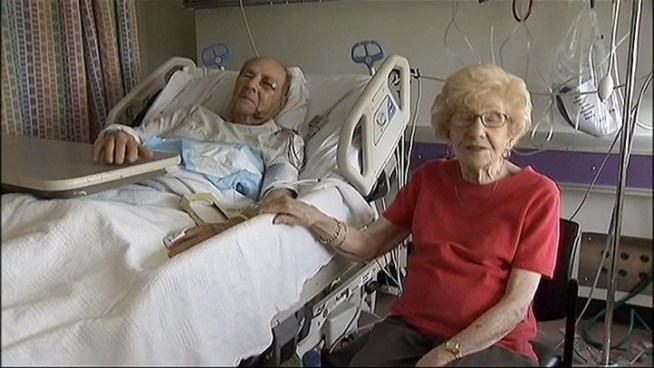
A 92-year-old man who was injured in a fall on the Long Island Rail Road on Sunday wants to say thank you to the mystery rescuer who helped him after he took the tumble onto the tracks.

The problem is, Ben Goldman doesn't know whom to thank.

"He saved him. He never thought of his own safety, and then he ran away," said Dorothy Goldman, Ben's wife of 65 years.

Dorothy Goldman screamed after watching her husband plunge through the "gap" as he exited the LIRR train in Great Neck.

The two were returning home from the ballet at Manhattan's Lincoln Center. Ben Goldman exited first, to extend a helping hand to his wife. That's when he fell to the tracks.

"I don't know if I looked down far enough," Ben Goldman said from his hospital bed at North Shore University hospital.

"He just disappeared like he was in quicksand," Dorothy Goldman added.

Immediately, Dorothy Goldman said, her husband's rescuer jumped to the tracks and lifted Ben Goldman to safety.

As first responders tended to Goldman, the man left without identifying himself.

"I would just like to say it was extraordinary and wonderful what you did for me," said Ben Goldman.

Goldman suffered a slight concussion and broken cheekbone among other bumps and bruises; he is expected to be released from the hospital by Wednesday.

As Goldman prepared to go home, he and his wife asked the unknown rescuer to come forward.

"This was a most unselfish thing, and caring," Dorothy Goldman said. "When someone saves your life, you owe them something, at least a thank you, right?"

© 2011 NBCUniversal, Inc

May 31, 2011

AUSTRALIA: Healthy heart, healthy brain

.
SYDNEY, NSW / The Sydney Morning Herald / Wellbeing / May 31, 2011

Chew On This

By Paula Goodyear

Mental health ... exercise is good for your brain as well as your body

Not all the news about dementia is gloomy. The flipside of scary statistics like a predicted doubling of dementia cases by 2030 is that we’re not entirely helpless when it comes to keeping our minds as we age – we just don’t realise it.

We might have grasped the fact that keeping the brain active can help prevent its decline, but there’s another important message that hasn’t got through – that healthy blood pressure from mid-life onwards is one of our best anti-dementia defences. That’s why a new NSW Health campaign to boost awareness of the blood pressure-dementia link is aiming at 40-somethings, not just the over-60s.

“Only around 20 per cent of us understand that we can reduce the risk of dementia by keeping blood pressure levels healthy,” says neuroscientist Dr Michael Valenzuela, senior research fellow with the School of Psychiatry at the University of NSW. “But many risk factors for dementia that we do have influence over like blood pressure and cholesterol levels and being overweight can start to have an impact in our 40s and 50s – often decades before people start worrying about dementia.

“Pharmacological treatment of high blood pressure is the only medical treatment found so far to reduce the incidence of dementia,” he adds.

So what is it about high blood pressure that can ultimately mess with our minds? In a nutshell, the same damage it inflicts on arteries that leads to heart disease can also affect the brain – hence the Healthy Heart Healthy Mind name given to the new dementia prevention campaign underway in the Illawarra and Shoalhaven areas south of Sydney.

High blood pressure contributes to the second most common type of dementia after Alzheimer’s disease – vascular dementia that’s caused by having a stroke. But there’s also some evidence that keeping blood pressure levels healthy can help prevent Alzheimer’s disease as well, says Valenzuela. One theory is that micro-haemorrhages from tiny blood vessels feeding into our brain tissue could cause the damage that kicks off Alzheimer’s, he says.

‘These micro-bleeds are strongly linked to high blood pressure and the thinking is that they affect the blood supply to the brain. This not only means the brain gets less nutrients, but also that there’s less clearance of toxins from the brain. Another explanation is that the leaking blood may also have a toxic effect on brain tissue,” he explains.

Valenzuela is the author of Maintain Your Mind, a new guide to preventing dementia to be published by ABC Books later this year – and which has really good news about the protective role of exercise.

“The assumption was that physical activity helps prevent dementia because it helps lower blood pressure and improves the blood flow to the brain. But there’s evidence that exercise can also have more direct effects on the brain, stimulating new brain cells to grow as well as increasing connections between the cells in the hippocampus - the brain’s memory centre,” he says. "Some of these effects could be due to the positive role of growth factors and molecules called cytokines that are stimulated after exercise.”

Are some kinds of exercise better than others? Most studies suggest that aerobic exercise is important, but Valenzuela’s recommendation is for at least three brisk 30-minute walks and at least one session of resistance (strength) training each week. A combination of both is good for health generally – and also helps prevent diabetes which is another risk factor for dementia, he says.

So while you’re tossing up whether to learn Mandarin or mah-jong in the interests of maintaining your brain, don’t forget to schedule a few brisk walks as well.

Blood pressure – what’s normal?

As a general guide, the Heart Foundation suggests:

Normal blood pressure: generally less than 120/80 mmHg

Normal to high blood pressure: between 120/80 and 140/90 mmHg.

High blood pressure: 140/90 mmHg or higher. If your blood pressure is 180/110 mmHg or higher, you have very high blood pressure.

Copyright © 2011 Fairfax Media

May 27, 2011

INDIA: Supreme Court Verdict Revives Euthanasia Debate

.
MUMBAI / Inter Press Service / Health / May 27, 2011

By Sujoy Dhar


In a secluded hospital bed in this bustling Indian metropolis, a woman who has lain brain dead for 37 years after a brutal sexual assault is at the centre of a national debate on mercy killing.


India’s Supreme Court has ruled that Aruna Shanbaug should live, while at the same time supporting passive euthanasia - or the withholding of medical treatments that are keeping her alive.

The court’s decision to rule out euthanasia of any kind for Shanbaug gladdened her former colleagues - nurses at the King Edward Memorial (KEM) Hospital - who have taken care of her since the day in 1973 when she was sodomised and strangled with a dog chain by a hospital custodian whose advances she had spurned.

The decision saddened Pinki Virani, the journalist who petitioned the court to allow euthanasia for her.

TV Grab: A file photo of 60-year-old nurse Aruna Shanbaug who, since the last 37 years, has been living in a vegetative state in a Mumbai hospital - PTI

Virani also recognised the importance of the landmark decision in a country where euthanasia of any kind had previously been unlawful. This did not stop Virani from criticising Shanbaug’s fellow nurses who want to keep her alive. "Because of Aruna Shanbaug - this tragic woman who has been denied the choice because of those who profess to ‘love’ her by touting her bedsore-less ‘life’ - no Indian hereinafter need suffer the way she does," Virani said.

The Supreme Court verdict came as a first step toward the passage of a law in India on euthanasia - allowing passive euthanasia in certain cases, based on merit.

According to the judges, since "there is no statutory provision in our country as to the legal procedure for withdrawing life support to a person in PVS [permanent vegetative state]… passive euthanasia should be permitted in our country in certain situations."

According to court euthanasia should not be permitted to Shanbaug because her caregivers are ready to tend to her medical needs. The hospital is taking care of her and as such the court decided that unless they want it, it will not be granted. Shanbaug’s family has shunned her since the incident. Virani’s petition was also rejected, as she is neither Shanbaug’s kin nor caregiver.

The court said it disagreed with the government’s legal advisor, the attorney general, that euthanasia should never be permitted.

"A decision has to be taken to discontinue life support either by the parents or the spouse or other close relatives, or in the absence of any of them, such a decision can be taken even by a person or a body of persons acting as a next friend," the court said.

India’s Law Minister Veerappa Moily immediately said, "There is a need for a serious debate regarding the matter. It has to be examined, it has to be debated upon."

Proponents of voluntary euthanasia in India hailed the court’s decision. "This court verdict is path- breaking and it has legalised something which is actually already in practice in many hospitals by the doctors. We need a law making voluntary euthanasia - both active and passive - an option," said Surendra Dhelia, a medical doctor who is also joint secretary of the Mumbai-based Society for Right to Die with Dignity, which is affiliated with The World Federation of Right to Die Societies.

Dhelia said a person should make a living will or give someone a power of attorney under which he or she can be denied treatment in case of terminal illness or vegetative state.

"As an individual, I support euthanasia for Aruna since [she has been] in a vegetative state for 37 years. But since she does not have a living will we cannot support it legally," said Dhelia.

Virani said the Indian Parliament must add to the Supreme Court guidelines to further protect individual rights. "Meanwhile, individuals could examine the possibility of writing their living will and also talk to those they trust about the DNR or ‘do not resuscitate’," said Virani.

Harmala Gupta, founder of CanSupport, India’s first cancer support group, said it is premature to talk of euthanasia in a country which has yet to make basic health care available to its citizens.

"It is not fair to ask someone who does not have reliable and affordable access to proper symptom control for unrelenting pain and other distressing problems, including mental depression, whether they want to take their life," said Gupta.

"The wishes of the family, if the patient is unable to communicate, will also have to be considered," said Gupta, who also believes that allowing death to take its natural course either by not intervening to interrupt it (euthanasia) or by prolonging it (using a ventilator) when it is clear that a patient is dying is the right way forward.

"For this we need to make palliative care a part of basic health care in this country," Gupta said.

With too few support groups like CanSupport in India, and the healthcare system in dire straits, euthanasia is often a heartless choice for the poor, according to Gupta.

In a village in eastern India’s Bihar, shopkeepers Mukesh Kumar and Asha Devi had once asked the court to allow the mercy killing of their two terminally ill children. When the courts refused them, they appealed to the prime minister and the state’s chief minister for help to bear the cost of treatment.

Their two sons, 15-year-old Nitin and 13-year-old Anshu, suffer from muscular dystrophy, a hereditary disease that weakens the muscles. The brothers are unable to do anything on their own since they are paralysed from the chest downwards.

"Either the law should allow us to practice euthanasia or assist us in treating them," said the parents who have made the rounds of courts and government hospitals with their plight and prayers.

Copyright © 2011 IPS-Inter Press Service

May 19, 2011

CANADA: Marg Ahdemar fights cancer in Mexico

.
WILLIAMS LAKE, British Columbia / Williams Lake Tribune / Community / May 19, 2011

By Gaeil Farrar - Williams Lake Tribune

A special fundraising tea for Cariboo Friendship Centre executive director Marg Ahdemar takes place today, May 19. The donations are being collected to help Marg and her husband Barry with the cost of medical treatment that Marg is receiving at a clinic in Mexico, says her sister Verna Blinn.

A few weeks ago Marg was given six to 12 months to live by British Columbia doctors, but she is now responding well to the treatment she is receiving at the clinic in Tijuana, Mexico, says Blinn. “We didn’t expect something like this. It happened so fast,” Blinn says.

In December, she says Marg began feeling unusually tired and run down so she began a series of tests here and in Vancouver and Kamloops.

Marg Ahdemar has been executive director of the Cariboo Friendship Centre Society since 1992 and is now fighting cancer in Mexico.

She says doctors determined that Marg had blood clots on her lungs and a mass in her liver. But she says doctors in B.C. were not consistent in their diagnosis of whether Marg had cancer or some other rare condition, but she was eventually told that her condition was untreatable and terminal.

In Kamloops she says Marg was given a hospice number and told to go home and get her affairs in order. Unwilling to accept defeat, she says Barry and family members began checking out health food stores in Kamloops.

At one of the health food stores, she says they found a couple of sisters in their 90s who told them that their brother had been given a similar terminal diagnosis a few years ago, but was now back on his feet and doing well after receiving treatment in Mexico.

The sisters put them in touch with doctors at a clinic in San Diego, California who had arranged for their brother’s treatment in Mexico.

On April 16 Blinn says she accompanied Marg and Barry to San Diego and then to Tijuana, Mexico. Heading out, she says Marg was extremely ill but is now responding well to the treatments she is receiving.

She says Marg is being treated with a combination of chelation, vitamin supplements to strengthen her immune system which in turns allows her the strength to fight the liver cancer. Marg is also receiving chemotherapy on a weekly basis, daily insulin and a variety of other treatment modules, Blinn says.

Marg goes to the clinic from 8 a.m. to noon Monday to Friday.

“The doctors are available to come to the unit they are renting and in fact have come to provide medical assistance to her when the clot on her lung moved,” Blinn says.

"She is responding to the treatment that Canada would not provide her.”

Blinn spent the first two weeks with Marg and Barry in Mexico and says family members are taking turns going to Mexico to help them out and provide support.

She says the initial treatment will take about 13 weeks, with Marg returning home to Williams Lake in July with a home- care plan. She will then return to Mexico for assessment and treatment in October.

Marg worked with the drug and alcohol program for a number of years, helped to found and worked at the Nenqayni Treatment Centre, and has been involved with the Cariboo Friendship Centre Society for many years, serving as executive director since 1992.

Blinn says the BC Association of Friendship Centres and the Kamloops friendship centre are also hosting fundraisers for Marg’s treatment which is costing about $5,000 a week, plus the cost of accommodation.

© Copyright
 

May 11, 2011

KOREA: She Delivers Flowers to Live-Alone Seniors for Parents' Day

.
SEOUL / Chosun Ilbo / Arts & Entertainment / News / May 11, 2011

Actress and florist Kong Hyun-joo put her skills to work over the weekend to make flower baskets for senior citizens who live alone.

Kong arranged the baskets with carnations from Friday to Sunday and delivered them with thank-you notes to the elderly as Parent's Day gifts.

"I made the baskets to show my gratitude and respect for elderly parents who live alone," she said. "I hope this leads to greater awareness of single elderly households."

Kong has taken part in other charity programs recently, including donating the proceeds from sales of her flower arrangements to the Join Together Society, which works toward reducing famine, illness and illiteracy worldwide.

Kong Hyun-joo

Copyright © 2009 Chosun.com

May 5, 2011

KOREA: "Sharing is most noble thing one can do for others"

.
SEOUL, Korea / The Korea Herald  / News / May 5, 2011

By Bae Ji-sook

A new era of sharing in Korea has been heralded by the minister of health and welfare.

Chin Soo-hee urged the public to realize that sharing even the smallest things could foster a charity culture here, during an exclusive interview to mark the launch of The Korea Herald’s new “Sharing” page.

“Sharing is the single most noble thing one can do for other people. That is to express the utmost love without condition. It doesn’t have to involve a large sum of money or something extraordinary. All you need is love and passion for others,” Chin said last week.


Health and Welfare Minister Chin Soo-hee talks about the
importance of sharing at her office in Seoul.
(Park Hae-mook/The Korea Herald)

Chin and her ministry recently introduced a range of projects to foster sharing across Korean society, including a state-run volunteering group of youths and senior citizens, and incentives for businesses to take part in charity. She pointed to some Western countries where charity has already become an integral part of people’s lives as examples for her vision for Korea.

“From the very early stage, children are taught to share the small allowance they get from their parents with others. When they grow up, they carry out what they have learned. Numerous events are held for benevolent purposes and people take it for granted that they should take part in them. It is well established as a moral code for them,” she said.

Chin now seeks to include sharing in the school curriculum and advises companies to give extra credits to jobseekers with volunteering experience when hiring employees.

“Charity experience shows how warm-hearted a person is and how devoted she or he is to the community. That can be translated into loyalty as well. Isn’t that a good reason to hire them?” she said.

But most of all, she added, people need to be more active in spreading the culture of philanthropy ― a job The Korea Herald has tasked itself with in creating the new weekly “Sharing” page.

Health and Welfare Minister Chin Soo-hee has urged Koreans to be inspired to give by figures such as Bill and Melinda Gates, Warren Buffett and Richard Branson. And she urged charitable souls to work to inspire others to give as well.

“Do not seek to make your name big or to show off what you’ve got,” Chin said, smiling, “but raise other people’s awareness and encourage them to join what you are doing. In this case, no one would really think you are showing off at all.”

The ministry of health and welfare’s recent raft of “sharing” projects aim to promote philanthropic deeds throughout the nation.

Charitable donations made in Korea have more than tripled in recent years, according to the Ministry of Health and Welfare. The nation’s donations totaled 9.6 trillion won in 2009, compared to 2.9 trillion won in 1999. The number of registered volunteers also rose from 1.4 million to 8.59 million over the same period.

The number of blood donors also jumped to 2.57 million, up from 2 million in 2007. Aside from blood donation, 140,445 people pledged to donate organs.

Despite the upward trend, Korea’s charity credentials still fall short of many countries. Currently, Korea’s private donations are equal to 0.5 percent of GNP ― way below 1.67 percent in the U.S., 0.73 percent in U.K. and 0.64 percent in South Africa.

In Korea, 21.3 percent of citizens participate in volunteering ― around half of the volunteering rates in the U.S. (41.9 percent), New Zealand (41.5 percent) and Norway (38.9 percent).

Given that charity can help ease the burden of the government welfare budget, charity or sharing should be a high priority in state affairs, experts say.

Promoting charity is one of the government’s most important missions as it strives to realize its vision of a caring society.

The ministry has just launched “Korea Hands,” to encourage more people to reach out to those in need.

Minister Chin, inspired by the AmeriCorps program, an American state-governed volunteers’ group doing work from public education to environmental cleanup projects, said Korea Hands will be a useful stepping stone for all people seeking to give something back to their communities.

Chin visited the U.S. Corporation for National and Community Service, which manages the AmeriCorps program, in March to get inspiration for Korea Hands.

The program is to kick off in Gyeonggi and South Jeolla provinces this month with 500 young and 300 senior citizen members. Younger members will volunteer for 10 to 40 hours a week over a period of more than six months. Senior citizens, aged 60 and older, will be able to help other people with their life experiences.

Korea Hands will provide them with training in leadership, basic administration and other skills.

The ministry plans to expand the program to other parts of the country following the launch in Gyeonggi and South Jeolla provinces.

Chin has offered some incentives to help stir interest in the program. Young volunteers who excel in the Korea Hands junior division will be given a chance to go to the U.S. to learn from AmeriCorps and other charity groups there.

Chin also said the ministry will seek ways to work with large corporations to help Korea Hands members get extra credits in recruitment processes.

“We will guarantee that those who have taken part in Korea Hands are not only generous but also smart, talented and capable of handling all kinds of cases. They gain such ability from doing charity and volunteer work,” she added.

In addition to the Korea Hands scheme, the ministry plans to appoint a total of 14,000 senior citizens from more than 700 community clubs for seniors nationwide as specialized volunteers.

The project will tap into seniors’ rich life experience.

The specialized volunteers will be given full control to plan volunteer work, and have a 3.7 billion won budget. The Korean Senior Citizens Association, the largest lobby group in Korea with more than 2 million members, will also support the project.

“I think we have a fair chance of success for the program,” Chin said. “The so-called baby boomers, born right after the Korean War (1950-1953), are about to retire or have retired. Most of them are highly educated, have had impressive careers, and have worked hard to develop the national economy. They are healthy, and most of all, eager to continue social activities in their post-retirement lives,” she said.

“Think about abundant experiences they have piled up. We need to gather them and pass them to the next generation,” Chin said.

For people who cannot spare time for volunteering, the ministry has launched the “Nanum (sharing) N Mark” program, which involves products from 22 companies including Lotte Mart, Samsung Tesco, Seven/Eleven and S-oil. The N Mark companies donate a certain portion of the proceeds from the sale of their products marked with “Nanum.”

“This way, businesses will be given a chance to participate in philanthropic activities, and citizens will naturally take part in the sharing process by shopping,” Chin said.

Welfare Ministry officials themselves have set an example of the sharing spirit by establishing the “Talent Donation Bank.”

Staff including high ranking officials donate money earned from extra activities, such as fees from giving lectures, writing articles and other work, to a central pool to be delivered to people in need. Within a month of launching, the donation bank managed to collect more than 10 million won, which was then shared with 3,312 poor people living near Seoul Station by buying them winter clothes last January, when temperatures dropped to record lows.

“Most of the extra income we make is possible because we are welfare ministry officials who should serve the public. So, we thought it would be appropriate to share the money with the public,” Chin said, adding that sharing a little of what you have with others isn’t a heavy burden.

Bae Ji-sook
E-Mail: baejisook@heraldm.com

Copyright 2001~2010 Herald Media Inc.

May 4, 2011

USA: GreatGrandma serves lots of love to 75 seniors/month

.
FRUITA, Colorado / NBC11News / Community / May 4, 2011

Just in time for Mothers Day, 11 News found a great grandmother who's well known for warming hearts with her cooking.

By Kelly Asmuth


Anna Hutton, 76, has twenty grand-kids and ten great grandchildren. However, twice a month, she prepares a feast for her senior friends.

The hot meal is served at the Fruita Senior Center (located in the new Community Center). It's enjoyed by around 75 elderly folks. Anna says neither her age nor her oxygen tank have taken a bite out of what she loves- putting care into her food.

"They say you can't trust a skinny cook, so I fit the bill really well. I just like to cook. It gives me something to look forward to, something to do," says Anna.

Anna's been preparing the meals for nearly a decade. She shops for all the food with donations from her senior guests, and of course, uses her own recipes. Anna's dinner is served on the first and third Thursday of each month at noon.

Kelly Asmuth
E-mail:: kelly.asmuth@nbc11news.com

Gray Television, Inc. - Copyright © 2002-2011

May 2, 2011

USA: Reversing the negative connotations of aging

.
WALTHAM, Massachusetts / The Boston Globe / May 2, 2011

By Cindy Cantrell, Globe Correspondent

Cultural critic Margaret Morganroth Gullette of Newton has devoted two books, ‘‘Aged by Culture’’ and ‘‘Declining to Decline,’’ to the importance of reversing the negative connotations of aging in modern society.

In her new book, ‘‘Agewise: Fighting the New Ageism in America,’’ she examines the sources of discrimination and misconceptions through which aging is equated with decline in the national psyche.

Gullette, a resident scholar of the Women’s Studies Research Center at Brandeis University, criticizes the blind acceptance of hormone therapy, cosmetic plastic surgery, and society’s tendency to focus on what is lost to dementia rather than the remaining qualities that define an individual.

She believes it is this ‘‘terror’’ of memory loss that triggers an increasing number of people to view aging as worse than dying.

© 2011 NY Times Co

April 27, 2011

EUROPE: EU aims to promote 'active ageing' to tackle pensions crisis

.
BRUSSELS / The Parliament / Latest News / April 27, 2011

By Martin Banks


Member states have been accused of "under-estimating" the scale of the demographic crisis facing Europe.


“At present the mantra of active ageing is more words than action”  - -  Jean-Louis De Brouwer
Speaking in Brussels on Wednesday, senior European commission official Jean-Louis De Brouwer said that demographic changes were taking place "here and now."

"We are confronted by something - demographic change – that is not science fiction but is happening here and now."

"This is something that, perhaps, member states have under-estimated in the past," said De Brouwer, a director in the commission's employment directorate.

The debate, organised by the European Policy Centre, the Brussels-based think-tank, was told that by 2050 nearly one in three EU citizens will be 65 or older.

The number of people aged 60 and over is rising faster than at any period since 2007.

Low fertility and higher life expectancy will, said De Brouwer, result in a continuous rise of the average age of Europe's population.

He said one of the possible reasons why member states had under-estimated the problem was because the impact of demographic change falls outside the normal "life cycle" of most member states governments.

"Normally, the consequences are not felt for 10 to 15 years which, given that most governments are elected for up to five years, is well outside the political cycle."

He said that, subsequently, tackling the challenge of demographic change was "not something that is easy for national governments."

He said this is where the EU has a role in helping to "steer" policies aimed at addressing the issue.

De Brouwer said that older people were increasingly seeking to extend their involvement in social, economic and cultural activities.

"They do not want to be sidelined as they get older," he said.

He said that 2012 had been designated as the year of active ageing with one of the aims being to discourage early retirement.

"However, the year is not just about labour market participation but about helping older people to remain as independent for as long as possible."

Lifelong learning will have a crucial role to play in achieving this, he said.

Currently, he said that less than five per cent of older people, that is, those aged between 55 to 64, participate in training.

"This shows that at present the mantra of active ageing is more words than actions."

"This is something that is well understood and agreed by each and every member state," he said. "That is why promoting active ageing is one of the key issues."

An EPC policy paper said that policymakers can make a "significant difference by steering labour market in the direction of increased participation."

© 2011 Dod's Parliamentary Communications Ltd