Remember ME - You Me and Dementia

Showing posts with label Health. Show all posts

June 19, 2020

Sailesh Mishra Creating an Elder Friendly India

Watch, listen and learn


Sailesh Mishra a Social Entrepreneur, Mentor and the Founder of Silver Innings Group a community dedicated to Senior Citizens in India joins Lori La Bey on Alzheimer's Speaks Radio. Silver Innings has worked towards creating an Elder Friendly World making aging a positive and rewarding experience. Sailesh has also published a Dementia Self Help book called 'Remember ME- You Me and Dementia'.

Also Please like and share this uplifting information here : https://alzheimersspeaks.wordpress.com/2020/06/18/sailesh-mishra-creating-an-elder-friendly-india/


Alzheimer’s Speaks Radio – shifting dementia care from crisis to comfort around the world one episode at a time by raising all voices and delivering sounds news, not just sound bites since 2011.


________________________________________________________
 Credit: Reports and photographs are property of owners of intellectual rights. Seniors World Chronicle, a not-for-profit, serves to chronicle and widen their reach.

June 11, 2020

World Elder Abuse Awareness Day 2020 - #StandWithOlderPersons #PurpleDotChallenge

We #StandWithOlderPersons and accept #PurpleDotChallenge to raise Awareness and Prevention of Elder Abuse.


On occasion of 'World Elder Abuse Awareness Day' on 15th June 2020, INPEA in association with GAROP and Silver Innings seeks Support of all age group and gender to create awareness about elder abuse and it's prevention.

INPEA wants social media users to post a picture of a #PurpleDot on their palm or any other place or paper and express their thoughts about Elder Abuse, Awareness, Stigma and Prevention.


INPEA has created a separate hash tag #StandWithOlderPersons to take a strong stand on Elders issues. Accept the Purple Dot Challenge and post it on your social media handles with hash tag #StandWithOlderPersons and #PurpleDotChallange


So friends let’s #StandWithOlderPersons and send your Purple dot challenge pictures with your thoughts on our / post social media accounts like Facebook, LinkedIn, Instagram or Twitter.

This Challenge is open from 1st June to 30th June.


We will also post your support on our all social media accounts.

You can also forward us your pictures through E-mail at silverinnings@gmail.com or WhatsApp on 91+ 9987104233

Creative Support by Web Solutions India.

#WEAAD #WEAAD2020 #SILVERINNINGS #ELDERABUSE #INPEA 


________________________________________________________
Credit: Reports and photographs are property of owners of intellectual rights. Seniors World Chronicle, a not-for-profit, serves to chronicle and widen their reach.

May 11, 2018

India: 115th Birthday Celebrated of World Oldest Living Person

We at Silver Innings wish Happy 115 Birthday to World Oldest Living Person SUPER CENTENARIAN Mrs. MATHIURONGLIU GANGMEI of Makhuam-3 village, Marangjing, Noney District, Manipur-795159, India.


God bless her with long, happy, healthy and peaceful life.

She celebrated her 115 Birthday on 9th of May 2018.


As informed provided by:
K G Akham
Office Asstt.
Children Training School, Noney, Manipur
Email: kgakham@gmail.com
Contact No. 9612971541
Posted by #Silverinnings on 11th May 2018


Credit: Reports and photographs are property of owners of intellectual rights. Seniors World Chronicle, a not-for-profit, serves to chronicle and widen their reach.

November 3, 2012

INDIA : 'National Conference on Ageing' 6th ,7th Nov 2012

NEW DELHI , INDIA / BUSINESS STANDARD / EVENT / OCT 26,2012

By Press Trust of India

Aiming to empower senior citizens and take stock of the social, financial and health issues faced by them, Social Justice and Empowerment Ministry (MSJE) will hold a two-day ageing conference here next month. 


The 'National Conference on Ageing' will bring together representatives of all state governments, key union ministries, organisations working in this sector and several imminent citizens to dwell upon the issues faced by senior citizens, a senior official from SJ&E Ministry said.

"The conference has been divided into four themes concerning older persons.The sessions will be chaired by senior officials from several ministries and organisations to shed light on the programs conducted by them for senior citizens and its response," he said.


The themes decided for the conference- planned for the first week of November- are Social and Economic Security of Older Persons, Health care, Family and Community Care, and focus on Special Elderly Groups consisting of senior citizens above 80 years. 

"Senior officials from ministries such as Home Affairs, Labour and Employment, Finance, Health and Rural Development, Planning Commission have been invited for conducting fruitful discussions over the policies concerning older persons," the official said. 

For holding discussions on pension and insurance schemes for senior citizens, SJ&E Ministry has invited representatives from pension and insurance regulatory authorities. 

NGO's dealings with United Nation's mandate for senior citizens have also been invited for the conference. 
 
"We have sent a special invitation to the Delhi Police to discuss physical security of these vulnerable people," he said. 

Several groups and sub-groups will be formed to conduct in-depth discussions and analyse the issues covered in the four original themes. 

"These group and sub-groups will present their recommendations and findings on the second day of the conference," the official said. 

During the course of discussion, the conference will also review various aspects related to senior citizens (Maintenance, Protection and Welfare) Act in various states and ways to ensure that it is implemented effectively. 

"Several states have yet not followed all the provisions of this act even after repeated reminders from the SJ&E Ministry.The Ministry will once again request these states to ensure its through implementation," he said. 

The Conference will be inaugurated by Social Justice and Empowerment Minister (MOSJE)  Mukul Wasnik who will also chair the final round of discussion on the second day.
 
Business Standard Copyright © 2012

________________________________________________________ 
Credit: Reports and photographs are property of owners of intellectual rights. 
Seniors World Chronicle, a not-for-profit, serves to chronicle and widen their reach.

May 11, 2012

UK : The crisis in social care , Indifferent Civilised Society

LONDON UK / Mail Online / Society / May 8, 2012

By Dominique Jackson

The parallel universe of geriatric care is not somewhere most people visit willingly, nor regularly, if they can help it. Most of us cannot even begin to imagine the burgeoning twilight universe which exists alongside ours. After all, the care system only really hits the headlines when brave whistle blowers expose particularly shocking cases of neglect and abuse.
                                                                                                                                       
                     This is a terrifying indictment of how poorly we value the achievements of the older generation and of how quickly and how conveniently we forget the huge debt we owe them

I am not quite sure why most of us choose to remain so blinkered about the crisis in social care? After all, we are all going to get old one day; thus, someone, somewhere is probably going to have to help look after us and somehow, that care is going to have to be paid for. 

Today’s open letter, begging the Prime Minister to open his eyes to the care crisis, is signed by 78 charities and campaign groups, who are all working on the grim, often fraught and woefully under-funded frontline of care provision for the frail, elderly, disabled and otherwise most vulnerable members of society. They know all too well what they are talking about.

Surely, social care is the litmus test of a civilised society? The current crisis, both in funding and provision, is a terrifying indictment of how poorly we value the achievements of the older generation and of how quickly and how conveniently we forget the huge debt we owe them.

I sincerely hope that Mr Cameron takes a few minutes off from his busy day out with Mr Clegg, relaunching the aims of the coalition from a factory in Essex. I hope he takes enough time to read this important letter, to digest what it means and to decide to take some action.

Two years ago, when Messrs Clegg and Cameron stood side by side in the Downing Street Rose Garden, charities and the elderly lobby felt they had some cause for optimism. The coalition soon published a white paper on health care reform which promised “a sustainable legal and financial framework for adult social care” by the second session of parliament.

Yet today we are frustratingly no further on and the government looks increasingly out of touch with its growing numbers of elderly, and vocal, voters in the wake of the “Granny Tax” debacle.

The Queen’s Speech tomorrow is expected to include a vague nod to the importance of social care reform, but there will be no bill brought forward in this session. Thus, we have no hope of any realistic overhaul in long term elderly care for at least another two years.

This is two years too long for a shocking majority of elderly people and their family members, many of whom work as unpaid carers, and a huge number of whom are currently struggling to fund, or even to find, appropriate and adequate support and care. 

Tens of thousands of elderly pensioners are forced to sell their homes to pay for residential care. Many more thousands of senior citizens who do not have that option are trapped in the postcode lottery of care I wrote about on this forum only last week when I highlighted the plight of 99-year-old war veteran and dementia patient Bill Sandford, unable to move close to his daughter and her family because of a shortfall in local council funding.

The Commission on Funding of Care and Support, chaired by economist Andrew Dilnot, called for a limited liability model of social insurance, in which any individual’s liability for the cost of care would be capped at around £35,000, with the state coming in at this threshold.

However, implementing Dilnot’s proposals has reportedly been held up by rows within the Treasury over how to pay for the reforms. A much delayed White Paper on long term care will finally appear next month but is expected to focus mainly on issues such as improving service quality, safeguarding vulnerable patients and on personal budgets to allow greater freedom of choice. How on earth we are expected to pay for all of this is not expected to be directly addressed at all.

This is particularly bad news for those of our poorest senior citizens. Two thirds of the 400,000 pensioners in the country’s care homes are funded by the state and recent cuts to council funding have led inevitably to a drop in levels of staffing, recruitment criteria, provision of training and thus in standards of care.

A report on transforming social care for the poorest elderly people from the Centre for Social Justice think tank is also published today. It argues that the current means-tested system of funding is at breaking point and that the proposed Dilnot reforms ignore the plight of the war time generation who simply do not have any assets to sell.

The CSJ, which was established by work and pensions secretary Iain Duncan Smith while he was in opposition, hopes its findings may influence the politicians who are considering their response to Dilnot in cross-party talks ahead of the White Paper’s appearance in June. 

All this research and all these recommendations are all very well but what we really need  now is some joined-up thinking and some immediate action. We need an open and honest debate about the needs of the elderly and we should all, every single one of us, be involved. After all, we will all be elderly one day.

Our population is ageing and ageing fast. Almost 20 per cent, 11.8 million, of us are now over the retirement age. Of these, 1.3 million are already over the age of 85. Our rapidly ageing population means swiftly rising rates of dementia and growing legions of frail and vulnerable seniors, who are, whether they like it or not, dependent on younger generations.

It should not have to fall to a coalition of charities to have to highlight the scale and urgency of the challenge of social care reform but now that they have bravely brought the debate back into the headlines, it is high time for the government to wake up to this demographic time bomb and act.

© Associated Newspapers Ltd
 
________________________________________________________
Credit: Reports and photographs are property of owners of intellectual rights.
Seniors World Chronicle, a not-for-profit, serves to chronicle and widen their reach.

May 7, 2012

USA : For Campbell, ‘Everything’s fine’

FORT  WAYNE , USA  /  The Journal Gazette / Active Aging  / May 6, 2012

Icon defies Alzheimer’s, maintains busy schedule


By Steve Penhollow


When compared with other medical revelations, the news that a senior citizen has Alzheimer’s does not qualify as a surprise, Glen Campbell says.

“That’s not a surprise,” he says in a phone interview. “Now finding out that something’s got a lump in it. That’s a surprise.”

Perhaps a man in his mid-70s should be prepared to hear almost anything regarding what has gone wrong with his body.

At any rate, Campbell says he has tried not to let being on the receiving end of this diagnosis last year change how he runs his career. 

“I just do it the same way I always have,” he says. “Everything’s fine. I pick up whatever I need along the way. There are always a few things to pick up here and there.”

Some of the things to which Campbell refers here, presumably, are words. 

He sometimes gropes for them over the phone and uses three teleprompters in concert to help him remember the lyrics to his 74 charted songs and 27 top 10 hits.

Glen Campbell has had 74 charted songs and 27 top 10 hits during his musical career.
But everything is fine in the sense that Campbell has chosen to do the opposite of what celebrities in his situation usually do, and it has proven not only to be the brave thing but the smart thing as well.

Even with the occasional bouts of forgetfulness, Campbell’s performances continue to receive high marks from fans and critics. Campbell performs Thursday at the Honeywell Center in Wabash.

Campbell says he’s been “pickin’ and grinnin” so long that it’s like walking and breathing. 

“I think people just kind of overdid it, made too much of it,” Campbell says of the coverage of his condition.
When music experts wax expertly about a career as rich and varied as Campbell’s, they sometimes describe it as having spanned this and that.

But Campbell has built some actual bridges.

He mashed up country and pop before that was extensively seen as seemly (and before mashing was extensively seen as creative).

“Yeah, I think I will take credit for that,” he says. “I helped everything along. But I really don’t like to look at it as pop rock or crock.

“It’s music,” Campbell says. “Some of it has got really good chord progressions and some of it has not-as-good lyrics. You kind of have to weed through it.”

Campbell takes responsibility for any and all weeding that has happened in his career, which is just another way of saying “the buck stops” with the Rhinestone Cowboy. 

The music business has changed a lot since Campbell was a young man, but he says the way he started out in the ’60s is still a good way to go about it: Become known as an excellent musician.

“What I did was I played for a band and we had (the) best band in the world for a long time,” Campbell says, referring to the gaggle of studio musicians known as “The Wrecking Crew.” He says.

“I knew how to use a capo. I could get it in any position.”

Campbell says he isn’t proud of any one accomplishment more than another.

“I wouldn’t single anything out,” he says. “I feel good about everything that’s been happening to me. It’s been marvelous up to this point. I’ll just keep on doing what I do, and the only difference will be that I will say ‘huh?’ a couple of times more than I used to.”

These days, Campbell’s crackerjack band has three of his grown offspring in it. 

“Oh yeah, that’s how I raised them. I didn’t raise them to … bum money off me,” he says, laughing. “I make them work.” 

“No really,” he says. “I have been really blessed that way.”

Campbell appears to be touring a lot these days, but he says there are a lot of breaks built into the schedule.
“Some days I sing and some days I play golf,” he says. “Unfortunately, whenever I decide I want to go play golf, it rains.” 

His wife, Kim Campbell, seems ever at his side, although it is perhaps a measure of the family’s fierce resolve about Alzheimer’s that she mostly leaves her husband alone during this interview.

“My wife does everything I ask,” Campbell says, “and I only say that because she is sitting here looking at me.”

Theirs is a complex bond simply explained, Campbell says. 

“I’ll tell you what it all comes down to,” he says. “We love each other. It’s amazing.”


 ________________________________________________________
Credit: Reports and photographs are property of owners of intellectual rights.
Seniors World Chronicle, a not-for-profit, serves to chronicle and widen their reach.

April 22, 2012

CHINA: Medication recall order


SHANGHAI, China / The Shanghai Daily / Live in Shanghai/April 22, 2012


The Ministry of Health yesterday ordered all medical institutions to recall 13 types of medication reported to be contained in contaminated capsules.

It also required the medical institutions to stop using the medicines listed by the State Food and Drug Administration (SFDA) as being possibly polluted, according to a notice issued by the ministry yesterday.

The capsules were exposed by media to be made of industrial gelatin. This contains a greater amount of chromium than edible gelatin and can be toxic if ingested in excessive amounts.

The SFDA said yesterday more inspection teams have been sent to investigate the incident and find out those responsible.

Inspection teams from several departments, including the police, health authorities and supervision agencies, have been sent to Zhejiang, Hebei and Jiangxi provinces to supervise the investigation.

Those who refuse to cooperate in the investigation and try to cover up malpractice will be severely punished, it said.
Source: Xinhua

____________________________________________________________
Credit: Reports and photographs are property of owners of intellectual rights. 
Seniors World Chronicle, a not-for-profit, serves to chronicle and widen their reach.

April 17, 2012

USA: Beyond drowsy, too little sleep ups diabetes risk

WASHINGTON, DC / Associated Press / Health / April 17, 2012

Sleep loss one of health care's big challenges

By LAURAN NEERGAARD, Associated Press

More people pull the night shift. Teens text past midnight and stumble to class at dawn. Travelers pack red-eye flights.
Nodding off behind the wheel isn't the only threat from a lack of shut-eye. There's growing evidence that people who regularly sleep too little and at the wrong time suffer long-lasting consequences that a nap won't cure: An increased risk of diabetes, heart disease and other health problems.

Illustration courtesy: bipolar.101 
"We have a societal conspiracy for sleep deprivation," says Russell Sanna of Harvard Medical School's sleep medicine division, who attended a TEDMED conference last week where scientists called sleep loss one of health care's big challenges.
Just how unhealthy is it? Consider how sleep may play a role in the nation's diabetes epidemic.
Studies have long shown that people who sleep fewer than five hours a night have an increased risk of developing Type 2 diabetes, the kind that tends to strike later in life.
Rotating shift work — three or more night shifts a month interspersed with day or evening hours — raises the risk, too, says a recent report from researchers who analyzed years of medical records from the huge Nurses' Health Study.
Diet and physical activity are big factors in Type 2 diabetes. Certainly it's harder to work out or choose an apple over a doughnut when you're tired, especially at 3 a.m. when your body's internal clock knows you should be sleeping.
But a study published last week shows sleep plays a more complex role than that. As sleep drops and normal biological rhythms are disrupted, your body physically changes in ways that can help set the stage for diabetes, reports neuroscientist Orfeu Buxton of Boston's Brigham and Women's Hospital.
Buxton's team had 21 healthy volunteers spend almost six weeks living in a laboratory where their diet, physical activity, sleep and even the light was strictly controlled.
The volunteers started out well-rested. But for three of those weeks, they were allowed only about 5½ hours of sleep every 24 hours — at varying times of the day or night, to mimic a bad shift rotation or prolonged jet lag. That knocked out of whack the body's "circadian rhythm," a master biological clock that regulates such patterns as when we become sleepy and how body temperature rises and falls.
What happened was startling: Blood sugar levels increased after meals, sometimes to pre-diabetic levels, because the pancreas stopped secreting enough insulin, Buxton reported in the journal Science Translational Medicine.
At the same time, the volunteers' metabolic rate slowed by 8 percent. The researchers had them on a diet so they didn't gain weight — but Buxton says typically, a metabolism drop of that size could mean gaining 10 to 12 pounds over a year.
The results make sense, says Dr. Michael Thorpy, sleep center director at New York's Montefiore Medical Center and a neurology professor at Albert Einstein College of Medicine.
"If we're going to spend a third of our day sleeping, there's got to be a good reason for it," says Thorpy, who notes that diabetes is far from the only worry.
Up to 70 million Americans are estimated to suffer from chronic problems with sleep, from insomnia to sleep apnea. Impaired sleep has been linked to high blood pressure, heart disease, obesity, depression, memory impairment and a weakened immune system. Still another concern: The World Health Organization has classified night shift work as a probable carcinogen, because too much light at night may hamper a hormone involved both with sleep and suppressing tumor cells.
Don't people adjust to the night shift if they're on it long enough? Buxton says rotating shifts probably are most worrisome. In his study, the volunteers' bodies went back to normal after nine nights of sufficient sleep at the right time. No one knows how long it takes before sleep deprivation and an off-kilter biological clock may cause permanent damage.
Montefiore's Thorpy says natural night owls seem to adapt better to night shifts, but that people never fully adapt if they swing back to daytime schedules on their days off. Also, about 30 percent of regular night workers have trouble sleeping during their off hours or are particularly fatigued, he says, something termed "shift work disorder."
The consumer message:
—The National Institutes of Health says adults need between seven and nine hours of sleep daily for good health.
—If you work nights, go straight to bed when you get home, Buxton advises. Avoid too much light along the way. Thorpy says wearing yellow- or orange-tinted sunglasses on the drive home can block short-wavelength "blue light" that triggers wakefulness.
—Let natural light help keep your biological sleep clock on schedule, advises Harvard's sleep-education Web site. For most people, sunlight in the morning is key. For the night shift, more bright light in the evening shifts people's internal clock, Buxton explains.
—For anyone, a sleep-inducing bedroom is one that's dark, quiet and cool. Avoid caffeine, alcohol and stressful situations near bedtime. Electronics right before bed aren't advised, either. Going to bed and waking up at the same time every day also helps.


Lauran Neergaard covers health and medical issues for The Associated Press in Washington.
Copyright © 2012 Yahoo! Inc
____________________________________________________________
Credit: Reports and photographs are property of owners of intellectual rights. 
Seniors World Chronicle, a not-for-profit, serves to chronicle and widen their reach.

April 3, 2012

USA: Forgetfulness — 7 types of normal memory problems

BOSTON, Massachusetts / Harvard Medical School / April 3, 2012

HEALTHbeat Extra

How much forgetfulness is too much?

It’s normal to forget things from time to time, and it’s normal to become somewhat more forgetful as you age. But how much forgetfulness is too much? How can you tell whether your memory lapses are within the scope of normal aging or are a symptom of something more serious?

Healthy people can experience memory loss or memory distortion at any age. Some of these memory flaws become more pronounced with age, but — unless they are extreme and persistent — they are not considered indicators of Alzheimer’s or other memory-impairing illnesses.

Seven normal memory problems

1. Transience
This is the tendency to forget facts or events over time. You are most likely to forget information soon after you learn it. However, memory has a use-it-or-lose-it quality: memories that are called up and used frequently are least likely to be forgotten. Although transience might seem like a sign of memory weakness, brain scientists regard it as beneficial because it clears the brain of unused memories, making way for newer, more useful ones.

2. Absentmindedness
This type of forgetting occurs when you don’t pay close enough attention. You forget where you just put your pen because you didn’t focus on where you put it in the first place. You were thinking of something else (or, perhaps, nothing in particular), so your brain didn’t encode the information securely. Absentmindedness also involves forgetting to do something at a prescribed time, like taking your medicine or keeping an appointment.

3. Blocking
Someone asks you a question and the answer is right on the tip of your tongue — you know that you know it, but you just can’t think of it. This is perhaps the most familiar example of blocking, the temporary inability to retrieve a memory. In many cases, the barrier is a memory similar to the one you’re looking for, and you retrieve the wrong one. This competing memory is so intrusive that you can’t think of the memory you want.

Scientists think that memory blocks become more common with age and that they account for the trouble older people have remembering other people’s names. Research shows that people are able to retrieve about half of the blocked memories within just a minute.

4. Misattribution
Misattribution occurs when you remember something accurately in part, but misattribute some detail, like the time, place, or person involved. Another kind of misattribution occurs when you believe a thought you had was totally original when, in fact, it came from something you had previously read or heard but had forgotten about. This sort of misattribution explains cases of unintentional plagiarism, in which a writer passes off some information as original when he or she actually read it somewhere before.

As with several other kinds of memory lapses, misattribution becomes more common with age. As you age, you absorb fewer details when acquiring information because you have somewhat more trouble concentrating and processing information rapidly. And as you grow older, your memories grow older as well. And old memories are especially prone to misattribution.

5. Suggestibility
Suggestibility is the vulnerability of your memory to the power of suggestion — information that you learn about an occurrence after the fact becomes incorporated into your memory of the incident, even though you did not experience these details. Although little is known about exactly how suggestibility works in the brain, the suggestion fools your mind into thinking it’s a real memory.

6. Bias
Even the sharpest memory isn’t a flawless snapshot of reality. In your memory, your perceptions are filtered by your personal biases — experiences, beliefs, prior knowledge, and even your mood at the moment. Your biases affect your perceptions and experiences when they’re being encoded in your brain. And when you retrieve a memory, your mood and other biases at that moment can influence what information you actually recall.

Although everyone’s attitudes and preconceived notions bias their memories, there’s been virtually no research on the brain mechanisms behind memory bias or whether it becomes more common with age.

7. Persistence
Most people worry about forgetting things. But in some cases people are tormented by memories they wish they could forget, but can’t. The persistence of memories of traumatic events, negative feelings, and ongoing fears is another form of memory problem. Some of these memories accurately reflect horrifying events, while others may be negative distortions of reality.

People suffering from depression are particularly prone to having persistent, disturbing memories. So are people with post-traumatic stress disorder (PTSD). PTSD can result from many different forms of traumatic exposure — for example, sexual abuse or wartime experiences. Flashbacks, which are persistent, intrusive memories of the traumatic event, are a core feature of PTSD.

© 2000-2012 Harvard University
____________________________________________________________
Credit: Reports and photographs are property of owners of intellectual rights. 
Seniors World Chronicle, a not-for-profit, serves to chronicle and widen their reach.

UK: "For four months last year I suffered from shingles"

LONDON, England / The Independent / Health / Life Style / April 3, 2012

Months of searing headaches, a violent, blistering rash – the peculiar agony of shingles took Robert Chesshyre by surprise. Robert Chesshyre, now freelance writer and journalist lives in south-west London, and is author of Shingles: Under my skin.


For four months last year I suffered from shingles. It would be an exaggeration (though only a slight one) to say that my life was on hold: it would not be an exaggeration to say I suffered great anxiety as to when (if ever) I would be rid of the searing headaches that dominated my days.


The illness started as a small cloud in a clear blue sky. I was on holiday in Guernsey and had been taken to dinner by friends. There was just time the next morning for a final burst of museum-visiting before flying home.

I had a headache (well in excess to anything I might have expected from the previous night), and found it hard to absorb the museum information. By the time I got home (it was, as it happens, Friday the 13th), I had stabbing pains across the right-hand top and side of my head and in my right ear. They were so sharp and severe that from time to time I cried out.

Next day was Saturday, so there was a two-day wait to see a GP. We looked up the causes of "ice-pick" headaches: could these be a migraine (I had suffered as a teenager)? I had one blister-like spot, which I was pretty sure I had had for some time: the idea of shingles never occurred.

On Monday I discovered that "my" doctor could not see me until Tuesday. Would I like to come in and see the duty doctor? I hesitated and (very foolishly) said "no", preferring to wait. Spots appeared overnight, and by the time I finally went to the surgery (by now five days after the headaches began), my wife (medical correspondent, Christine Doyle) and I had diagnosed shingles.

My knowledge of the disease was scant. An uncle had had a bad attack when I was a small boy, and had suffered a painful rash round his middle. It was severe enough to be the talk of the family. I did know that shingles is caused by the herpes virus that lies dormant in everyone (therefore in most people) who has ever had chickenpox (in my case half a century earlier).
But that the illness could cause grief (such as my enervating headaches) other than a rash (the most common symptom) was news to me.

More damaging was my ignorance that the anti-viral treatment, Zovirax (acyclovir), the one proven weapon against shingles, should be started immediately. It was five days before I got my prescription. The GP said there was still a chance that the drug – five horse-sized pills daily for a week – would work, and I clung desperately to this hope.

The headaches, however, persisted. I monitored my condition as closely as a storm-tossed sailor scanning the heavens. If I detected any brightening of the sky, it was self-delusion. I returned to the GP to ask for more anti-virals. "No go," he said, "if they don't work first time, they don't work." He added that the effects of shingles become more severe with age. More unwelcome news.

"What now?" Like the mariner, all I could do was hope to ride it out. Christine advised me to avoid the Internet. I might read stories that would further alarm me. A friend rang, and I told him about the shingles. "Oh my god," he said – he had had a similar attack which had lasted three and a half months.

That seemed like a heavy sentence with which to wake up each morning with a band of pain from my forehead across the top of my head via my ear to the nape of my neck. Later I would have settled for that time-scale with alacrity.

I realised that the more I did – and this included driving – the less I thought about the pain, and the better I felt. So we went on holiday. By now I had developed my own self-medication: paracetamol and ibuprofen through the day, and a slug of whisky, drunk slowly through the early stages of the evening.

Back home, I returned to the GP and he prescribed amitriptyline, an anti-depressant, adding that, at the doses I would take, it was just a pain-killer. It didn't seem to make any difference, and, as it was not supposed to be taken with alcohol, I abandoned it and went back to my whisky.

I ran into a friend on the street, and told her of my woes. "Oh," she said brightly, "my father suffered from shingles: they ruined the rest of his life."

Summer slid into autumn, and winter beckoned. The headaches seemed to be lifting. I told everyone I was through the worst. How stupid can you get? The headaches came roaring back. It proved a final twist, however, and two weeks later they again departed, and with joy (touching wood) I resumed a normal life.

I learned that there is now a vaccine, though it cannot be taken until the sufferer has been clear of symptoms for 12 months. I asked a doctor about it, and she confirmed that it exists, adding that it is very expensive, which is possibly why it is not made widely known by the NHS.

Now I advise anyone who shows symptoms (and it is surprising how many people do get shingles) to get the anti-virals immediately, and everyone over 60 to have the jab and avoid the pain and the mental distress I endured. The day that my year without symptoms is up I'll be queuing for my dose whatever the cost.


© independent.co.uk
____________________________________________________________
Credit: Reports and photographs are property of owners of intellectual rights. 
Seniors World Chronicle, a not-for-profit, serves to chronicle and widen their reach.

March 30, 2012

EUROPE: Smoking Kills 650,000 people in Europe each year

VALLETTA, Malta / Times of Malta / News / March 30, 2012


There will be one million vacancies in the health sector across Europe by 2015 and the European Commission is seeing how to solve this problem without being unethical, by taking human resources from poorer countries, European Commissioner John Dalli said this morning.
Speaking during a meeting with the Meusac Core Group, Mr Dalli said this was one of the ways the European Commission was seeking to address health issues. Health remained central to a person's quality of life and also had an economic value.
EU countries, he said, should continue to invest and focus their efforts on wellness rather than concentrate on providing the best possible care. This was a way to ensure sustainability of the sector, which was facing difficulties because of the aging population.
The new European health strategy was based on prevention, accessibility, health security and sustainability.
"We are trying to convince people to change their lifestyles without imposing. We cannot tell people what to eat but inform them about what they are eating. The strategy is focusing on tackling obesity and smoking," Mr Dalli said, describing the fight against smoking as a massive hurdle.
He said that 650,000 people died in Europe each year due to smoking.
Mr Dalli questioned whether there was real freedom of choice in smoking since smoking was an addiction.
In its revision of the Tobacco Directive, the EU wanted to reduce the attractiveness of cigarette packaging and remove flavourings in cigarettes. It also wanted to reduce the size of advertising displays and possibly ban vending machines, which had to be age identifiable.
The Commissioner praised Malta for introducing measures such as no smoking in public places, a measure that was now also being extended to playing fields.
On the cross border health care directive, currently being transposed in EU laws, he said this was giving EU citizens the right to find redress in cures in another country, in cases of undue delays, such as waiting lists.
Such a measure is aimed at incentivising countries to invest more in reducing waiting lists.
There were also efforts underway to introduce a black list for doctors and nurses caught abusing in EU countries following a recent case of a doctor who was stopped in Germany and found operating in the Netherlands.
Mr Dalli said that rather than funding the health aspects of a certain projects, the new EU budget perspectives were enabling the health sector to benefit from structural funds.
On consumer rights, which were also part of Mr Dalli's portfolio, the Commissioner said the strategy was focusing on product safety, empowerment of consumers with information and rights and enforcement.
"We want consumers and businesses to be partners," he said.

Copyright © 2012 timesofmalta.com
____________________________________________________________
Credit: Reports and photographs are property of owners of intellectual rights. 
Seniors World Chronicle, a not-for-profit, serves to chronicle and widen their reach.

March 21, 2012

UK: Will health and care services of the future offer older people a better deal?

LONDON, England / The Guardian / Social Care / March 21, 2012

How can health and social care be encouraged to integrate?
By Debbie Andalo


Older people account for 75% of NHS activity, so it is vital that healthcare reforms
are tailored to their needs.
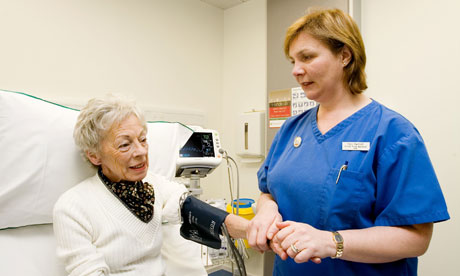
Photograph: Gareth Byrne/Alamy
 

Older people are the biggest users of the NHS, accounting for 75% of activity. They occupy 60% of hospital beds, according to figures from the charity Age UK, and it is estimated that their health and social careneeds alone account for most of the £70bn spent each year on patients with long-term conditions.
With the number of people aged over 85 expected to double in the next 25 years, it is crucial that the NHS of the future has the capacity to cope with the increased demands that this group of patients will bring. But do the planned changes for England outlined in the government's health and social care reforms offer older people the prospect of improved services in the new-look NHS? And will the reforms produce a more integrated health and social care landscape, which encourages more holistic and seamless care for these elderly and vulnerable patients?
These were some of the issues at the heart of a roundtable debate hosted by the Guardian and sponsored by the independent care home provider Barchester Healthcare, which looks after more than 10,000 older people across England, Scotland and Wales. The event was held under the Chatham House rule, which allows comments to be reported without attribution to encourage free debate.
Integration of health and social care is critical if the needs of older people are to be met in the future, the roundtable was told, but in 80% of cases it does not happen. "The reality of integration seems so far away from our real experience that it seems almost crazy to talk about it."
It was said by one participant that bringing social care and health together worked well when there were strong local relationships and leadership, while imposing integration on providers was destined to fail. "I don't think integration works from the top down," they added. The contribution which housing can make to the health and social care agenda was also now beginning to be recognised, which was seen as an important step forward. "People talk about the role of housing in a way that hasn't been talked of before," the roundtable heard.
Innovation
There is emerging evidence that the new clinical commissioning groups (CCG) starting to be set up as part of the government's health reforms, can promote integration, trigger innovation and improve services for older people. Under the reforms local CCGs, in most cases led by GPs, will control 60% of the NHS budget.
Significantly, the changes take the purchasing power away from health service managers and puts it into the hands of clinicians. Referring to the early success of CCGs, a participant told the roundtable: "We are seeing it [integration] working and have achieved a great deal in five months. We have been working on integrated care and have a complete multi-disciplinary approach to managing high-risk elderly patients. There is real engagement between GPs and consultants."
But the roundtable believed the transition to CCGs and health and  social care integration was a "huge challenge". One participant wanted to see more national support and guidance on the way forward. That was, however, unlikely because more "support from the centre" was at odds with the government's "localism agenda", the roundtable heard.
The creation of CCGs has, for the first time, forced clinicians to scrutinise local health services and seek improvements, said one participant. "Primary care trusts have always struggled to engage clinicians to look at services and how they can be improved. The [CCG] board has managed to achieve something which was always a failure in the past – we have now got real clinical engagement in improving services for the elderly."
The reforms, according to one contributor, created a climate of innovation in integrated care. "There is a groundswell of innovation happening. It's remarkable, I haven't seen this in five years of doing integrated care." The challenge, however, was how to go about rolling out innovation. "There is a lot of evidence about what good practice looks like. The challenge is why can't we scale up? That is always the big challenge around innovation."
The future success of CCGs will be down to how motivated GPs are in getting involved. Professional integrity, which can be reflected in how family doctors take their responsibility for care home cover, is also key. A contributor, referring to care home GP services said: "GPs range from excellent to [those who behave like] used car dealers. That is quite scary." Care homes frequently had to pay GPs for services, the roundtable was told, and on occasion they have demanded personal cheques rather than a payment being made out to the practice. "It's disgraceful," a participant said. There was a danger that the same culture could develop in CCGs, the roundtable was warned. "There is some very destructive behaviour around. Some CCGs are driven by power or whether they can make money out of it – they don't think about the patients, they are thinking about the opportunities. I think we need to be guarded about that."
It was estimated at the roundtable that 25% of GPs who take on commissioning responsibility do so not because they are "visionaries", but because they are looking for new business opportunities, a contributor said. GPs, as a profession, are not traditionally attracted to commissioning roles.
A participant said: "What motivates them is developing services in their practices with their partners, and influencing the way that health care is delivered locally for the common good." The new CCG system had to recognise that, if it wanted to encourage GPs to take a lead in creating innovative local services for the elderly. "If we are going to free them (GPs) up more it's about not micro-managing the process," the participant said.
There were also other risks attached to the government's health and social care reforms, which were highlighted by the roundtable. The desire for all trusts to take on foundation status, which would mean they would be free from central government control, created a danger that they would become "monolithic" providers of services, squeezing out other providers; the system of payment by results was also a disincentive for them to move activity out into the community to different providers. An NHS which has to find £20bn of efficiency savings by 2015 also means that CCGs could be driven to make savings, commissioning "pockets of care which doesn't work for the care of the elderly", a contributor warned. Another participant was concerned about how CCGs would cope once the vital managerial support from primary care trusts (PCTs) disappears when they are abolished in a year's time: "At the moment we are working well because we still have the managerial support of the PCT. We are going to fall down if we don't have multi-professional support. We have real concerns about next year."
Another key worry was that the NHS reforms are not happening in isolation, they are among a raft of changes happening across public services which could have a far-reaching impact on older people. A participant said: "Whole systems are changing. Not just health but local authorities are facing cuts and there is the Welfare Reform Act. If you [drop] that all on somebody's life that is a very worrying place to be. Having public services which you depend on collapsing and changing all at the same time will place an enormous pressure on health and social care services – not least because of the worry and the stress."
It is hoped some support will come from a new network of health and wellbeing boards, which are being established at local council level as part of the reforms and will be required to work closely with CCGs. The boards have a broad public health remit and will bring together health and social care to influence commissioning decisions.
The roundtable acknowledged that the boards had a "huge amount of potential" but there was concern that they might become another town hall sub-committee or talking shop. A participant said: "There is a real need for guidance on how they are formulated. There is potential for them to be so much more than they are at the moment. At the moment they are just looking at reports and driving strategy forward."
It was crucial that the boards had wide representation, from service users to acute trusts, managers and a range of private providers. "Somehow we have got to find a system. It's about a shared strategic purpose," said one contributor. There was real concern that the boards will fail if their control is put solely in the hands of managers: "When clinicians and doers – the users and the providers – get together they can drive things forward," said a contributor, "if the doers aren't involved it won't happen." (See more)
© 2012 Guardian News and Media Limited

____________________________________________________________
Credit: Reports and photographs are property of owners of intellectual rights. 
Seniors World Chronicle, a not-for-profit, serves to chronicle and widen their reach.