Remember ME - You Me and Dementia

Showing posts with label Ireland. Show all posts

May 26, 2012

IRELAND: Celebrates European Year for Active Ageing

DUBLIN , IRELAND / The Epoch Times / Ageing / May 24, 2012


Eight events across Ireland aim to strengthen ties between young and old


By Alan McDonnell


The benefits of active ageing were highlighted on Wednesday in eight regions around the country, as Active Retirement Ireland held a day of celebrations for the European Year for Active Ageing and Solidarity Between Generations.


Walking canes await elderly shoppers at a specialist retail store catering to senior citizens
Designated by the European Commission, the European Year for Active Ageing and Solidarity Between Generations is intended to raise awareness of the contribution that older people make to society. It seeks to encourage policymakers and relevant stakeholders at all levels to take action with the aim of creating better opportunities for active ageing and strengthening solidarity between generations.

With events taking place in Dublin, Westmeath, Limerick, Galway, Kerry, Waterford, Louth and Sligo, the importance of young and old helping each other in today’s society was highlighted. The day’s activities were supported by Active Retirement Ireland (ARI), the national representative body for 539 Active Retirement Associations throughout the country.

Commenting on the festivities, CEO of Active Retirement Ireland Ms Maureen Kavanagh said: “Our special day of celebrations highlights the significance of strengthening ties among people of all ages in society. The European Year for Active Ageing and Solidarity Between Generations is a fantastic initiative that Active Retirement Ireland fully supports.”

“With increasing uncertainty in the Irish economy, it’s important that everyone pulls together and combines their talents and skills to get the country back on its feet. Solidarity between generations is exactly what this is about, and our events today show what can be achieved when young and old come together.”


Read More about different events
 

The Epoch Times Copyright © 2000-2012


________________________________________________________
Credit: Reports and photographs are property of owners of intellectual rights.
Seniors World Chronicle, a not-for-profit, serves to chronicle and widen their reach.

March 6, 2012

IRELAND: It’s not real if it’s not online

DUBLIN, Ireland / Presseurop / March 6, 2012

INTERNET


Mass social movements only make waves when they have the internet in tow. This distorts our understanding of the world says Angela Nagle.
From the Arab Spring to the Occupy movement, revolutionary events and radical politics have certainly made headlines in the last year. Last week however, one of the largest strikes in human history took place and it barely registered as a newsworthy event in European media. With most of India’s major unions and thousands of smaller ones on board, the 24-hour general strike drew out an estimated 100 million-strong workforce, bringing banks, businesses and public transport in many parts of the country to a halt.
Back in the heady days of 2011, BBC journalist Paul Mason’s claim that “it’s all kicking off everywhere” (written in a blog – where else? – and now worked into a book published by radical press Verso) seemed to capture something of the spirit of a moment of popular revolt, where commentators who support the recent apparent radical turn have been keen to draw links between diverse movements happening around the world, from struggles against authoritarian regimes to those resisting austerity in Greece and Spain. But while opining over the Occupy movement continued unabated, both the press and bloggers remained relatively quiet about the Indian strike, with minimal coverage, such as the BBC’s report, which described it mainly in terms of inconvenience to commuters.
One explanation that leaps out is that Western audiences may just prefer to read about Western issues. This doesn’t quite explain things, though. The Arab Spring was, rightly, afforded significant coverage in the West, so much so that it defined the tone of the protests in Spain and later at Occupy Wall Street. It has been the subject of countless opinion pieces, blogs, essays – and no doubt spawned more academic papers than will ever be read. It's not surprising that we Europeans tend to view the world through a Europeanised prism, but it is interesting that the Indian strike failed to pique our interest given the country's role in the global economy. Perhaps the strikers reminded us of our European selves after all – just ourselves four decades ago.

The key ingredient that the heavily reported and blogged movements like the Arab Spring, Wikileaks, Anonymous and Occupy had that the Indian strike didn’t was the internet. It appears that if Western commentators can’t frame extra-parliament politics in terms of the internet, if struggles don’t come with a live stream and a form of organisation that sits comfortably with our contemporary internet-centric network sensibility, it will simply be ignored.
While commentators celebrating this new internet-centric radicalism have praised it for moving beyond cold war politics, the narrative being imposed, one of the internet as a technology of liberation, is not as removed from power or the cold war as its advocates would like to think. When US Secretary of State Hilary Clinton came out in support of the Arab Spring in her now famous internet freedom speech, she was continuing a tradition that began during the Cold War of casting the civilian internet, a byproduct of military spending, as a means by which to bring American democracy and the free market to the world.
If this really is a pattern that shapes our understanding of the world – and it is one that has already penetrated academia and is in danger of further shaping foreign policy, as experts like Evgeney Morozov have warned – the implications are troubling. The promise and optimism of the cyber utopian wave of the moment is so intoxicating that commentators seem afraid to step-up and play the role of kill-joy. In this strange distortion of global politics, Congolese coltan miners are not 2.0 enough to be part of our global village, while strikes such as last week's in India are just a bit too twentieth century to be part of our ongoing celebration of “the power of organising without organisations” as Clay Shirky put it.
Internet boosters are quick to point to the deficiencies of the so-called "mainstream media" but whatever its problems, the internet has played a role in futher diminishing serious, commited coverage of foreign news. With news organisations cutting back on foreign reporters and adapting as best they can to the conditions of the internet and online audiences who never commit, this cyber utopian frame is likely to be self-perpetuating.
The Indian strikers had clear demands. They were calling for a national minimum wage, social security benefits and permanent jobs for 50 million contract labourers. If the labour movement in countries like India continue to grow and organise they will bring about huge shifts not just at home, but also in the global economy. 
Jean Baudrillard famously claimed that the 1991 Gulf War did not take place. This absurd claim was much debated at the time, with critics accusing Baudrillard of denying reality and supporters saying he was accusing the war of existing primarily as a mediated, television conflict. Regardless of one's views on that war, the hashtag revolution seems to confirm that if something doesn't happen on the internet we don't care about it the real world.
For the time being, it may well be “kicking off everywhere,” but if it doesn’t come with a hashtag attached you’re unlikely to hear much about it.
Image: Strike in 1912 by Cornel University. CC licenced. 
Angela Nagle is a writer and researcher, studying for a PhD in internet cultures as a government of Ireland IRCHSS scholar in the Department of Communications at Dublin City University. She has contributed to publications including the Irish Times.

© 2012 Presseurop.eu
____________________________________________________________
Credit: Reports and photographs are property of owners of intellectual rights. 
Seniors World Chronicle, a not-for-profit, serves to chronicle and widen their reach.

January 18, 2012

IRELAND: Aengus Fanning, editor of Ireland's Sunday Independent, dies aged 69

LONDON, England / The Guardian / Media / January 17, 2012

Journalist who headed Ireland's most successful newspaper 
passes away in Dublin after long battle with cancer


By Henry McDonald


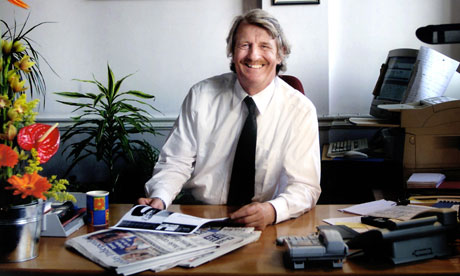
Aengus Fanning, the long-serving Sunday Independent editor, who has died aged 69.
Photograph: Sunday Independent/PA
The editor of Ireland's most successful weekend newspaper, the Sunday Independent, has died.

The Kerry-born journalist had steered the Sunday Independent to become the leading paper in the Irish Sunday market.
With its mixture of showbiz, politics and well-known opinion writers, the paper maintained a readership close to one million even during recession, making it the country's most successful paper over a generation.
Fanning had worked for Sir Tony O'Reilly's newspaper group,Independent News & Media, for more than 40 years. He edited the Sunday Independent for 28 of them, making him Ireland's longest-serving newspaper editor.
Among the journalists who worked for him was Veronica Guerin, the campaigning journalist shot dead by Dublin gangsters in 1996. Fanning became an adviser to the movie company that made a film about Guerin's life and death which starred Cate Blanchett.
Fanning had played for the Kerry Gaelic football minor team in his teens but was also a keen cricket fan and a regular at Lord's. He played the clarinet with a Dublin-based jazz band.
Under his editorship the Sunday Independent took an uncompromising stance against the IRA and Sinn Fein, and was unapologetically pro-business/free market in its outlook. Born in Tralee, his mother was a Presbyterian schoolteacher – an unusual background for someone from Kerry.
Fanning was on first name terms with successive Irish prime ministers such as John Bruton and Bertie Ahern, who often wrote for the newspaper.
____________________________________________________________
Credit: Reports and photographs are property of owners of intellectual rights.
Seniors World Chronicle, a not-for-profit, serves to chronicle and widen their reach.

December 25, 2011

IRELAND: Cardinal's hope for a caring 2012

CORK, Ireland / BreakingNews / Ireland / December 25, 2011

Cardinal Sean Brady has said he hopes 2012 will bring a more caring and neighbourly society.

Celebrating Christmas Day Mass, the primate called for people to rediscover qualities of generosity in the face of recession.

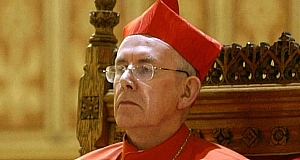
Cardinal Sean Brady

“Deep down, I believe, we all yearn for the gentler, more compassionate, more forgiving society, the society that Christmas represents,” Cardinal Brady said.

“I believe we all long for a less stressful, less anxious, more thoughtful lifestyle than the frantic, grab-all-you-can lifestyle that demands so much time and energy today.”

Cardinal Brady told parishioners in St Patrick’s Cathedral, Armagh, that he is praying for society to become more respectful.

“My hope and prayers for Ireland 2012 is that we become, once again, a more caring and neighbourly place, especially in these austere recessionary times,” he said.

“May we rediscover more clearly the spirit of generosity, reverence of the sacred, respect for creation, that have been our hallmark since the time of Saint Patrick."

© Thomas Crosbie Media, ____________________________________________________________
Credit: Reports and photographs are property of owners of intellectual rights. 
Seniors World Chronicle, a not-for-profit, serves to chronicle and widen their reach.

November 22, 2011

IRELAND: Elderly face cost of 'broken' care system

BELFAST, Ireland / UTV News / November 21, 2011

Northern Ireland's social care system is "broken", and the region's ageing population face substantial future costs to fund it, a new report has found.


The study, commissioned by Independent Health and Care Providers (IHCP), calls for urgent reform of how older and vulnerable people are looked after.

It warns some elderly people in NI already face care home costs of over £500 per week - while many can't afford to put money away for future care because of the downturn.

Hugh Mills from IHCP says the current care system needs change.

"The existing system is under serious strain," he said.

"It is important that older and vulnerable people are afforded the dignity and choice which they deserve.

"The IHCP is working with government and stakeholders like Age NI to devise original and workable ways to modernise the social care system to cope with both the growth in the numbers of older people and the spiralling cost of social care."

The report adds that many assume free care - such as residential and nursing homes - is provided by the state, but says this isn't the case.

Authors PwC say provision of homes is falling behind demand.

"Around £440m of public funding was devoted to the social care system for older people in Northern Ireland in 2009/10, representing around 10% of the total DHSSPS spend of £4.4bn," said Dr Esmond Birnie from the advisors group.

"While demand is rising fast, the provision of care, both in terms of funding and care homes is falling behind.

"This situation cannot continue and, in a period of severe financial constraint, a comprehensive reform of social care delivery and funding is now appropriate."

Age NI have called on the Health Minister to make reform a priority.

"Social care in NI is broken and its fundamental reform must now be a priority," said Anne O'Reilly of the charity.

"The current system is no longer sustainable, and it's not capable of meeting the needs of today's generation of older people or indeed future generations.

"Looking to the future, social care must become the lynchpin in supporting older people to remain independent and out of hospital and the right system of social care could reap significant rewards for us all as we age."

© UTV News__________________________________________________________
Credit: Reports and photographs are property of owners of intellectual rights.
Seniors World Chronicle, a not-for-profit, serves to chronicle and widen their reach.

September 8, 2011

IRELAND: Loneliness remains the biggest issue for the elderly

CORK, Ireland / Irish Examiner / News / September 8, 2011


By Seán McCárthaigh

THE country might be going through unprecedented economic hardship but loneliness remains the biggest issue for the elderly.

A report on the attitudes of older people by the Society of St Vincent de Paul (SVP) attributed an increasing sense of isolation, particularly in rural areas, to cutbacks in public services.

They also expressed widespread amazement at how badly hospitals and the health services in general are managed.

Older people blamed the closure of post offices and cutbacks to bus and rail services for their experience of a reduced level of human contact in recent years.

In particular, they expressed concern about the lack of transport services for visits to hospitals and other medical appointments.

The SVP said elderly people were forced to make long, difficult and stressful journeys, often at considerable personal expense, to access health services.

Many of those surveyed also complained of financial pressures, with those in receipt of just the state pension claiming they were barely able to manage.

"The state pension did not permit saving for a rainy day, emergencies, breakdown of appliances or repairs, and this was itself a form of poverty," the report said.

However, large numbers said they would forego fuel and food, especially meat, if they had to cut spending.

The report said many pensioners bitterly resented the discontinuation of the Christmas social welfare bonus and the introduction of stealth charges.

SVP president Mairead Bushnell said the research, involving interviews with almost 600 elderly people in 43 locations on the island, would act as a blueprint for the charity’s future work with the elderly.

"Although the SVP is working to combat loneliness by its system of personal visitation, services such as day centres, social housing and holidays, and the provision of personal alarms, it is a very wide social issue," said Ms Bushnell.

SVP said many people, especially in rural Ireland, felt it was a stigma to be seen to be seeking help from the SVP, while SVP members regularly felt overwhelmed by the scale of problems experienced by the people assisted by the charity.

Although many elderly people expressed fear for their personal safety and felt Ireland had become a more dangerous place, Mr Harvey said very few had been actual victims of crime.

© Examiner Publications (Cork) Limited
__________________________________________________________
Credit: Reports and photographs are property of owners of intellectual rights.
Seniors World Chronicle, a not-for-profit, serves to chronicle and widen their reach.

June 14, 2011

IRELAND: It's never too late to make new friends

DUBLIN / Irish Independent / Lifestyle / June 14, 2011

Socialising can be a problem as you get older but
Cultural Companions aims to change all that

RETIRED ship's captain Tony O'Grady loves the theatre, enjoys jazz and wouldn't be averse to a trip to the National Concert Hall or the Leopardstown races. The problem is, he's got no-one to go with.

As he avoids driving after dark and dislikes being alone in the city at night, he tends not to attend such events.

But that's all about to change, thanks to the launch of Cultural Companions, a new scheme to provide more opportunities for older people to enjoy the culture and arts scene.

The project, which piloted last month with events in Dublin and Cork, aims to develop local networks of people over the age of 55 who can meet regularly and go out together to such events, either with another person or as part of a small group.

"We'll be organising a series of events as opportunities for people to meet up and to get to know each other. These can be anything from going to films to lectures about art," says programme manager Emma Connors.

"Friendships will grow out of that and people may start organising trips for themselves. Every fortnight or so, we'll be inviting our members to an event."

As part of the programme, organisers are looking to recruit volunteers who can offer transport or companionship to people who would like to be involved in the initiative.

For pensioner Tony, who lives near Enniskerry in Co Wicklow, it's just what the doctor ordered.

"It's exactly the kind of thing I was hoping somebody would set up! I see Cultural Companions as a way to open the door for people, particularly those living alone. I see it as a network of friends with mutual interests that they can enjoy together.

"It's a way of being able to get out and go places I wouldn't be able to go to on my own -- the Japanese Gardens, Collins Barracks, the Leopardstown races or even a picnic in the Wicklow mountains.

"I do drive, but because I don't have a companion I tend not to go places. Yet I'm very interested in outings," says the 74-year-old.

"It means that I'm able to enjoy outings that I previously wouldn't have been able to engage in because of lack of a companion.

"All these things tend to be on in the evening and I don't really like driving after dark or being out late on my own, from a security point of view -- I'd feel safer if I wasn't alone."

His enthusiasm is mirrored in the avalanche of responses to advance publicity about Cultural Companions, which is an offshoot of Bealtaine, the national festival celebrating creativity in older age.

Before the Dublin launch of Cultural Companions even took place last month, 70 people had signed up, says Connors -- she's been getting an average of 10 enquiries a day about the scheme.

Interest in Cork, where the programme was launched recently, has also been very encouraging.

"People are phoning either because they don't have the same social networks that they used to have, they've relocated to a new house or have been bereaved and find they don't have an opportunity to go anywhere. Or simply that their friends are not interested in the same things they're interested in."
Funded by the Bord Gáis Foundation and developed by Age & Opportunity, a group whose aim is to increase the participation of older people in society, Cultural Companions will focus primarily on Cork and Dublin for the next few months but a national expansion is in the pipeline.

"We are already getting calls from places like Donegal, Limerick and Wexford asking about it, so from October we would look at rolling it out around the country," says Emma.

Cultural Companions is just what retired secretary Deirdre Connors, who lives alone in Kimmage, has been looking for. The sixty-something, who says her friends aren't interested in attending art or cultural events regularly -- they have other commitments -- has a wide range of interests but, like Tony, has difficulty in finding somebody to go out with.

"I like the theatre and attending concerts and I enjoy visiting art galleries -- the problem is finding someone to go with on a regular basis.

"Now I'm hoping to meet people of a like mind. Although I couldn't afford to go to the theatre every single week, there are lots of things that cost nothing -- visiting museums, art galleries. It'd be really lovely to go to with someone who enjoys it as much as I do and who has the time for it.

"I'd be interested in forming friendships with someone who goes to Cultural Companion events and who would also be interested in other outings, maybe going to other cities as well as Dublin."

Cultural Companions is free to join and, as part of setting up a recognisable brand for the organisation, members will receive a keyring and badges.

"This is not about organising trips for older people, it's about setting up a network which allows opportunities for friendships to grow naturally," emphasises Emma.

"One woman who phoned me was just getting over cancer and was living on her own and has struggled to go out."

Bealtaine coordinator Rebecca McLaughlin points to the proximity of two women who each contacted Cultural Companions to put their names on the list.

"They live less than 20 doors apart on the same street and had no idea that the other wanted to go to stuff!

"We know there are real issues and barriers preventing people from taking part in arts and cultural activities -- transport, booking tickets or lack of people to go with.

"Over 100,000 people take part in the Bealtaine festival but we know that if we can tackle those barriers, it may allow opportunities for many more older people to engage more actively in the arts."

The idea for the scheme was born when Rebecca heard about an elderly lady whose husband had recently died.

"This lady wanted to go to something but had nobody to bring her so another lady volunteered. I came back into the office after this conversation and decided there was an opening there for something which would provide opportunities for older people to get involved in cultural events and also empower older people to help other older people."

The organisers are currently encouraging venues such as art galleries, theatres and culture centres to get involved. In this context, it is worth noting that currently 11pc of the population, or 436,000 people, are over the age of 65.

It's predicted that by 2021 the figure will rise to 15.3pc. Other facts worth noting are that 89pc of older people are self-sufficient and in this country, the 65-plus age group have an income of €46.6bn.

"We would hope that such venues would see it as good business and would want to develop older audiences," says Emma.

As part of that she hopes businesses would offer special rates or discounts or organise talks with artists.

For more information contact Emma Connors on 01 8535178 or email emma.connors @ageandopportunity.ie

June 13, 2011

IRELAND: Elderly 'unwilling to report abuse'

DUBLIN, Ireland / Wicklow People / NAtional News / June 13, 2011

Some elderly people would not report abuse by their children because they dread the prospect of life in a nursing home, a new report suggests.

The cross-border study, the first of its kind in Ireland, questioned pensioners who ranked psychological, mental and emotional abuse the most damaging.

Pensioners dependent on others because of physical or mental difficulties were most at risk of abuse, with participants in the study believing elder abuse to be most likely to take place in the home.

Age Action Ireland said policies tackling abuse should focus more on empowering older people.

Some elderly people would not report abuse by their children because they dread the prospect of life in a nursing home, a new report suggests

Some 58 people in focus groups across the country were asked questions as part of the 'A Total Indifference to our Dignity' - Older People's Understanding of Elder Abuse' study, including their understanding of elder abuse, forms of abuse, why people experience abuse and how to prevent it.

It found elderly people believed the biggest threat to their well-being was the deterioration of their health, either physical or mental.

Those who took part in the study believed they were highly susceptible to losing control over their future if they required care, with all speaking of their dread at having to go into a nursing home.

Participants said they believed elder abuse was most likely to take place in the home.

But with nursing home care being the only alternative to family care, some participants said they would be reluctant to tell anyone about mistreatment for fear they could be taken into care.

Fear of the consequences of reporting an abuser was also raised by those interviewed while those from Northern Ireland in particular felt it was not helpful to bring in outside agencies like the police or social services.

©Wicklowpeople.ie

May 7, 2011

IRELAND: Cheers, I'm 101 years old!

.
DUBLIN / Independent.ie / Lifestyle / May 7, 2011

Why many more of us will be joining Eileen and living past 100


By Kim Bielenberg


As he celebrated his 105th birthday last year, Michael "Mick" Fitzsimons was in jovial mood in his local pub in Stradone, Co Cavan. He said the secret to his longevity was hard work, eating porridge, riding his bicycle until the age of 100 and not taking any holidays.


He had in fact gone for a spin on the bike until his son Michael Junior took the wind out of his tyres. He drank a glass of brandy every night.

This week Michael died not long after his 106th birthday. He was reputed to be Ireland's oldest man

In 2010 177 people passed their 100th birthday in Ireland, and each received the "centenarian bounty" of €2,540 from the President. Until recently clocking up a century of years was something of an oddity, but centenarians are now the fastest-growing age group in the world.

With life expectancy increasing every year, the Centre for Ageing Research and Development in Ireland predicts that the number of Irish centenarians will shoot up to 8,500 in the next 30 years.

Professor Desmond O'Neill, one of the country's leading age researchers says: "There has been a steady growth in the number of centenarians. The good news is that disabilities among those over 80 are dropping.

"There is a number of reasons why we will enjoy greater longevity. We have better education, sanitation, and nutrition."

Our rise in life expectancy has been steady since independence. In 1926 the life expectancy for both men and women was just 57, but since then it has grown to 77 for men and 82 for women.

Age researchers predict that population of people over 85 will rise from 74,000 to 356,000 by 2041.

The popular image of the centenarian may be one of a person who is physically infirm, hard of hearing and unable to go out. But a growing number of centenarians are still reasonably fit and healthy, according to Professor Des O'Neill.

On Tuesday this week 101-year-old Eileen Veale from Churchtown, Dublin, was out walking on the seafront at Dun Laoghaire. Asked for the secret of her long life she joked: "I haven't started to live at all."

Eileen is one of the only known widows of a veteran of the War of Independence. Her husband, who died six decades ago, was given a medal for his service for the old IRA before the birth of the Free State. She herself remembers the funeral procession of Michael Collins.

She recently gave up smoking, but is still partial to the occasional glass of wine or Bailey's Irish cream.

Her daughter Gay believes that Eileen's lengthy widowhood may have played a part in her reaching a ripe old age. "She has had complete freedom and nobody was going to tell her what to do.

"Her diet may also have played a part in it. She always ate yoghurt and wheatgerm, and she insisted that vegetables were fresh and not out of a tin."

Professor Desmond O'Neill says improved diets have played a role in our greater longevity. "People are eating more fresh food and they have reduced their salt intake."

The survival of a growing number of pensioners for nearly four decades beyond conventional retirement age is bound to put pressure on the exchequer. With up to one-quarter of citizens expected to be over 75 by 2041, the Government may have to keep pushing back the retirement age -- or even make it optional in more workplaces.

"If people are fit beyond their seventies and eighties it makes sense to allow them to continue working," says Professor Desmond O'Neill. "Many of the negative popular assumptions about older workers do not hold true. However, if we extend the retirement age we must ensure that older workers receive training in skills such as new technology."

In a new book Amortality, the writer Catherine Mayer has pointed to a new trend towards the over-70s acting as if they will never grow old. The Pope (84) and the Queen of England (85) showed in recent days that they had little difficulties performing their duties. The queen will hardly be exceptional if she is still reigning past her 100th birthday in 15 years time.

According to Catherine Mayer, the never-say-die attitude is best summed up by Woody Allen, who never rests and continues to turn out a film a year at the age of 76.

"When you're worried about this joke, and this costume, and this wig, and that location, and the dailies," he told an interviewer, "you're not worried about death and the brevity of life."

Groucho Marx had his own spin on ageing: "You're only as old as the woman you feel."

Some research shows that people who survived great stresses when they were young -- such as holocaust survivors -- may enjoy greater longevity.

"Centenarians are a curious group," says Professor Desmond O'Neill. "They are tough and resilient. You could say it is the meek and the weak who die young."

Not all the effects of an active elderly population are positive, of course. As much as other groups, criminals are putting off retirement and failing to hang up their balaclavas: the over-65s are the fastest growing group in British prisons.

While those aged over 100 are likely to become commonplace in the coming decades we are also likely to see the emergence of super-centenarians -- classed as those aged 110 and over. There are believed to be around 300 super-centenarians in the world, but numbers are set to grow.

As longevity increases, more people are likely to surpass the age of French woman Jeanne Calment, who lived to the age of 122. She was the oldest person in history whose age has been verified by official documents.

Like Mick Fitzsimmons she rode a bicycle until she was 100, but unlike the Cavan man she never worked. She ate two pounds of chocolate a week and treated her skin with olive oil. She is said to have walked all around the town of Arles to thank those who congratulated her on her 100th birthday.

On one of her birthdays when she was well into her 12th decade, a visitor is said to have bade her farewell by saying: "Until next year perhaps." Quick as a flash, the birthday girl responded: "I don't see why not. You don't look so bad to me."

- Kim Bielenberg

© Independent.ie

May 3, 2011

IRELAND: The upside of growing old and the downside of ageing

DUBLIN / The Irish Times / Health / May 3, 2011

By Padraig O'Morain


Our mental acuity declines and our bodies fail us but, as renowned biologist Lewis Wolpert points out, old age also offers the possibility of great contentment.

‘I feel it’s quite strange,” says Lewis Wolpert. “How could a 17-year-old like me be 81?”

Prof Wolpert is author of You’re Looking Very Well: The Surprising Nature of Getting Old, just published by Faber and Faber.

It has long been said that old people see themselves as being at an age much younger than their chronological years. The 17-year-old Wolpert still plays tennis and rides a bicycle but is baffled by the 81-year-old Wolpert: “I can’t get over how slowly I walk in the streets. I still play tennis and ride my bicycle but when I am walking everybody walks faster than me,” he says.

His book takes both a human and scientific look at ageing. He is Emeritus Professor of biology as applied to medicine at University College London.

And sometimes that scientific approach pricks some rather silly current bubbles. I have heard otherwise sensible people suggest, for instance, that at age 70 we are going to live so long that this is the point at which we need to work out what our next career will be.

Not so. “To increase longevity significantly will be very difficult,” Prof Wolpert points out. “It’s about complexity of the cells; wear and tear of cells causes ageing.”

Measures to increase longevity would have to be taken “at the level of the embryo”. Then he chuckles: “The person who did it wouldn’t know if it worked because he wouldn’t live long enough.”

The embryonic stage might sound rather early for putting off old age, but there again, Wolpert’s book informs us with scientific detachment that our mental abilities peak at the age of 22 – yes, 22 – and we begin losing muscle from the age of 40.

No need to despair, though – happiness peaks at the age of 74, so it’s not all about mental abilities and muscle mass.

What can get in the way of happiness for some people, he suggests, is obligatory retirement. He misses his work. “I quite liked having my scientific research group,” he tells me. “On the other hand, retirement means I don’t have to write grant applications.”

In the book he puts it somewhat more starkly – after explaining that some aspects of his discipline, biology, have probably already moved ahead of him since he retired, he adds, “There are also, I regret, times when I wonder what the point of continuing to live really is.”

Asked about this, he does not expand on it beyond what he has already written in the book, but surely he is not alone in feeling this way about retirement – it’s just that it’s not usually talked about in that way.

One group of people who often don’t get to retire are grandparents. Just when they might be free to devote time to themselves, they are pressed into service as unpaid childminders.

Thankfully, Prof Wolpert has now come to the rescue with this: “There are also problems associated with the role of the caring grandparent. A study in London showed that children did better if they went to nursery school than if they were cared for by their grandparents. Their social skills at three years were worse and they had more behavioural problems already at nine months, though their vocabulary was better.”

Reluctant prospective grandparent-childminders should cut out that passage, frame it and hang it up inside the front door. And if they’re challenged on it, they can refer critics to page 62 of You’re Looking Very Well.

Then they can devote themselves to exercise and the Mediterranean diet (lots of fruit, vegetables, cereals and fish but, alas, low amounts of meat and poultry) as there is some evidence that the combination can reduce your risk of Alzheimer’s by about 60 per cent.

If they prefer, they can devote themselves to sex and crime instead, or as well. Prof Wolpert informs us that “the frequency of sexual activity, for those who are active, declines only slightly from the 50s to the early 70s, and . . . this activity continues into the 80s.”

“If the old have energy for sex,” he adds, “they also have sufficient energy for crime. In England and Wales, prisoners aged over 60 are the fastest growing age group in prison.”

He points out, though, that this is due to harsher sentencing policies and and that most old people in prison suffer from poor mental health.

There is, however, one area in which a sort of justice prevails: that is in the area of prejudice against the old.

“Young and middle-aged adults who endorse negative stereotypes about older people display high rates of strokes, heart attacks and other serious heart problems later in life, compared with ageing peers who view the elderly in generally positive ways,” he writes.

And he cites Yale University psychologist Becca Levy who found that “those who viewed ageing as a positive experience lived an average of seven years longer. This means that a positive image had a greater impact than not smoking or maintaining a healthy weight.”

We hear a great deal about the negative side of old age: income and mobility problems, long waits in AE, sometimes inadequate social services and so on.

But the overall picture is brighter than that. As mentioned earlier, happiness peaks in the mid-70s and, Prof Wolpert says, “There is good evidence that most people in their 70s and 80s are very contented with their lives.”

There’s just one caveat:

“You have got to be healthy and have enough money.”

--------------------------------------------------------------------------------
You’re Looking Very Well: The Surprising Nature of Getting Old by
Lewis Wolpert is published by Faber and Faber and costs £14.99

© 2011 irishtimes.com

April 11, 2011

IRELAND: Elderly passport fees 'a betrayal'

.
LIMERICK, Ireland / Limerick Leader / National / April 11, 2011

Reintroducing passport fees for pensioners is mean-spirited and has left many feeling betrayed, elderly support groups have said.


The over-65s will have to pay a minimum 80 euro charge from April 11 after the free service for the elderly was scrapped in December's Budget.

Active Retirement Ireland said the savings will be minimal as it will deter pensioners from renewing their passports.

Maureen Kavanagh, chief executive, said: "Many of them (over-65s) feel betrayed as Fine Gael and the Labour Party - when in opposition - had promised to prioritise the protection of older people's rights and entitlements.

"Despite this rhetoric, the new Government is now withdrawing a benefit for older people, which, realistically, will result in minimal cost savings to the state."

Passport fees were scrapped at the height of the boom in 2005 for pensioners, with then-foreign affairs minister Dermot Ahern stating it was to recognise the years of service and hard work of senior citizens. However, the previous Fianna Fail-Green Party administration stated in the Budget that the over-65s would have to pay, yielding around 2 million euro to the state.

Age Action Ireland said it sent out the wrong message to older people and claimed the decision could be reversed by the Fine Gael-Labour Government.

"Really for the money it's going to save, we're talking very very small money, we think it's mean-spirited," spokesman Eamon Timmins said. "That's about the height of it."

Both organisations have received calls from concerned pensioners over the issue.

The charge for applying for a passport over the counter at the passport office in Dublin is also to increase by 15 euro to 95 euro. The 80 euro fee for using the passport express option at post offices remains.

Copyright (c) Press Association Ltd. 2011

April 3, 2011

IRELAND: An enduring state of Grace

.
DUBLIN / The Independent / Lifestyle / April 3, 2011

Septuagenarian and former model Grace O'Shaughnessy is an ambassador for older people in her formal role with Third Age and in the way she lives her life -- always elegant, vivacious and honest,  finds Emily Hourican

JUST as fashion regularly "discovers" different parts of the body and celebrates them, so society falls in love with different ages at different times. And right now, it is the turn of older people: Edna O'Brien, utterly fabulous at 80; Garret FitzGerald, showing himself to be sharper than men half his age; and Grace O'Shaughnessy, still elegant and vivacious at 71.

GROWING OLD GRACEFULLY: Former model Grace O'Shaughnessy keeps on smiling in Herbert Park, Dublin, as she did in 1973 and 1962.  Photo: Tony Gavin

"Sure, why would one be coy about one's age?" says Grace when I comment on her honesty, both in admitting her age and allowing herself to look it. "What the hell, it's my life, they're my lines and I earned them." Not that she looks anything like the conventional notion of being in her 70s; she's far too beautiful and well-groomed for that, wearing a crisp black-and-white striped shirt and well-cut jeans, with a whole load more clothes waiting in the car, "just in case ... Old habits die hard," she laughs.

Grace was one of the country's first well-known models, and later a TV presenter, with a fashion slot on RTE's Live at Three which lasted nearly 12 years. And now she is an ambassador for Third Age, a voluntary organisation dedicated to the well-being of older people. "It's a bit like the Samaritans for older people," Grace explains. "We run a senior helpline and suggest ways for them to integrate into the community, organise conversation classes with non-nationals, holidays, reflexology, chiropodist services, that kind of thing." Grace got involved because: "I thought, why not? If I can help in any way, I'm delighted to do it, and it's a bit of fun as well."

Grace is a natural ambassador for the organisation; her energy and sharpness of mind are immediately obvious; her wisdom and gentle humour become evident within moments. Is it not hard getting old having been a famous beauty, I ask? "Well, you see, if you put a lot of meas on your looks in the first place, it might be different, but if you didn't, I don't think you'd have a problem in that line," she responds, with a subtle twinkle.

Did she really not rate her looks? "No, I really didn't. I sort of fell into modelling rather than really wanting to be a model. I enjoyed it, I enjoyed the communication with people; it was relationships I formed through it that I got the most buzz from. I don't want to sound twee saying that, but I didn't grow up wanting to be a model."

In fact, she almost had to be forced down that road. Grace, the second youngest of five, with a Protestant mother and a Catholic father who worked for the civil service (her parents split the family religiously, bringing up two children Catholic and three Protestant) left school without any clear direction. "We grew up without any spare money at all," she says. "My parents sent us to the best school they could afford -- Wesley on the Green -- but I didn't go to college, because at that time, one didn't unless one was from a very intellectual family."

Grace did a secretarial course and worked in Walpole's on Grafton Street for a time. Then, an older sister got married and went to live in Bermuda. She and her husband sent money home for Grace to do a modelling course; "which, of course, I totally disregarded and paid a bill or did something else with the money," she says now, laughing. But fate was having none of that. Another older sister had the same vision for

Grace, and her husband also volunteered the money for a course. "So I did it then," Grace says. "I wasn't going to ignore that twice."

Click to continue reading
For more details on Third Age see http://www.thirdageireland.ie/

© Independent.ie

March 13, 2011

IRELAND: Elderly deserve respect not special treatment

.
DUBLIN, Ireland / The Sunday Independent /  Opinion / Analysis / March 13, 2011

From the bus pass to free medical care, older people are already very well served in our society, writes Eamon Delaney

LAST week Alone, the organisation for the elderly, urged the incoming Government to honour Enda Kenny's promise to make Ireland "the best place on earth where people could age with dignity" and to set up a special Minister for Older Persons.

Alone is an excellent organisation, set up by the late Willie Bermingham, and it is right to echo the valid, if typically over reaching, ambitions of Kenny. But do we really need a special Minister for Older Persons, and why should the old be treated as a special case, when in fact the very opposite may apply?

THE ALONE PROTEST:  Ministry for Old People Dropped    One day after repeating his vision for a country which is the best place on the planet to age in dignity new Taoiseach Enda Kenny has left older people in Ireland without a Minister to promote their interests.  For the first time in 14 years in Ireland there will be no Junior Ministry for Older People.

It is a pertinent point because during the election, a group called Older and Bolder took out full-page newspaper ads stressing the 'rights' of the elderly, and presenting themselves as some kind of marginalised, needy community in terms of public money. It gave the sense of yet another sectional interest group, looking after itself, as opposed to the overall good of the community, and, unfortunately, it reminded one of the over-75s medical cards fiasco.

Who can forget the images of all those affluent people coming in from Killiney and Monkstown to protest about the removal of their free medical care and then howling down the minister when he came to a church meeting to try and make his point. We look to our elders for a sense of dignity and proportion -- but, in this case, it was sadly lacking.

Few commentators were prepared to say this at the time -- but privately many felt it, including many older people, who said that yes, maybe they didn't need these medical cards and maybe surrendering them would be a sacrifice worth making to help others with more genuine needs.

But you wouldn't know this from the media hysteria of the time, and especially the apocalyptic coverage of the always gloomy Prime Time on TV which depicted it as if the pensioners were about to be deported. Now that things are worse, such coverage just looks hysterical.

Of course, we should respect the old and there's nothing worse than a brash, materialistic society which pushes them aside. In Japan, the elderly are revered, and put at the centre of the family and community, as they are in Mediterranean cultures.

We were once like this, too, but now, in our immature imitation of Anglo-American society, we seem content to push the elderly into nursing homes and out of sight. But if Garret FitzGerald can appear on TV talking more sense than the pundits half his age, then why can't we embrace the idea of ageing actively.

For this is the point, why treat older people, in general, as some kind of sacred cow, on the cusp of infirmity? Why also should older people be a special case in terms of public funding? And why should elderly people who are wealthy get free medical care?

Such universality, supported by the Labour Party, and thus by the new Government, has the potential to bankrupt the State. But this is only part of the financial burden, given that the increasing cost of the elderly, who now live longer, has created a 'pensions time bomb' -- or a 'grey lagoon'.

An editorial in last week's Irish Times criticised the use of phrases like 'time bombs' and 'burden on society' as 'unjust and unhelpful'. But this is a PC preoccupation with language. The editorial then welcomed a universal single-tier health service as being 'based on need rather than ability to pay'. But surely the idea of such State services is that they are, by necessity, means tested.

It is puzzling why people on the Left don't concede, and even welcome, such a distinction. Isn't this what they are about, after all -- helping those who can't pay? Unless such advocates really do think there is an unlimited amount of public money always available for such generosity.

But in the editorial's next sentence lies the rub. 'But there is a need for clarity on who will pay for aids, appliances and residential modifications in the new system, without which some older people will be unable to remain in their own homes.'

Precisely: who will pay exactly?

In the UK, a serious debate has opened up about the free services enjoyed in perpetuity by all the elderly. Even the trusty free bus pass has been questioned. According to the Guardian, such free travel costs up to stg£1bn a year -- and yet all surveys show that apparently most old people would gladly cut their usage, and even give up their bus passes, if it meant that the British government would not make the cuts in bus services necessary to save on bus company costs.

In almost all areas of society, the elderly win out financially. A very interesting report in the UK has appeared about the affluence of the 'baby boomer's', as they're called (those born post-1945) and here a survey, published last week, about the Irish over-50s -- hardly the elderly, surely -- reveals the spending power and consumer power of such a constituency. The reality is that many older people did well out of the boom here, selling their properties and downsizing, while it is the younger generation who are stuck with mortgages and negative equity.

If you look at the public sector, that huge draw on our finances, it is those who are retiring now who are doing best with their pensions package, whereas those retiring in the future will not do so well. And those on the lower ends of the civil service pay scales are nearly all younger. In fact, the whole public sector pensions and 'lump sums' bonanza could be seen in Ireland as a case of the older generation beggaring the young.

James Joyce once said that Ireland was 'the farrow that ate its young', and it's still the case. It is not the elderly who are taking the emigrant airplane, after all, but overwhelmingly the young.

This is not to underestimate the tough times that the elderly are also facing, and the particular disadvantages they face. Most pensions have lost their value and are no longer the guarantee of a secure old age that they once were -- itself an indictment of the changed pensions culture. Plus, a lot of old people had invested their life savings in bank shares and these are now worthless. For people on a small pension income, the prospect of water rates and especially property tax means they will now have to pay what could be, to them, substantial amounts in new taxation which they might reasonably have expected to have been spared in their declining years.

And these are taxes that will be with them all their lives -- following them to the grave -- unlike the mortgage which you can at least hope to have paid off in full some day. Nor do many older people have the option of reinventing themselves, and getting new work or qualifications to improve their earning power.

However, in terms of public monies and health, the old are well looked after, better than they ever have been perhaps. And while they, too, have to live through the tough times, everything is relative and much worse is the prospect of raising a young family in commuter land, facing unemployment or emigration, with no prospect of relief. And surely the basis of a welfare state should be to support those of less means, who cannot afford the services -- be they young or old.

Sunday Independent
©Independent.ie

March 5, 2011

IRELAND: What recession -- as good times continue to roll for the over-50s

.
DUBLIN, Ireland / The Independent / Business / Personal Finance / March 5, 2011

By Charlie Weston Personal Finance Editor


NO recession here, thank you very much, seems to be the mantra of older people.


Two-thirds of those over 50 say the recession has not had a major impact on their lives, despite saying they have seen their incomes fall.

The majority of older people have not had to cut back on holidays or eating out and are still buying new cars, the survey by 'Amarach' -- which has been seen by the Irish Independent, -- shows.

The relatively good fortune of older people is in stark contrast to those in their 30s and 40s, who have been hit hard by spiralling debts and tax rises.

Britain' s over- 50s are swapping slippers for safaris with grandparents going on gap- year breaks. Photo: PA


In contrast to their sons and daughters, most of the over-50s have not had to make any drastic changes to their spending patterns.

Some 84pc of those over 50 are mortgage-free. Even though many older people plan to be more cautious with their money, they are still more inclined to spend on home improvements and holidays than any other age group.

Three out of four people over the age of 56 have savings. This is a higher proportion than any other section of society.

Savings

The two main banks, AIB and Bank of Ireland, have the majority of the business of the over-50s, as older people show a loyalty to established financial institutions.

The research, which was conducted ahead of a conference entitled 'The Business of Ageing' in the Royal Hospital, Kilmainham in Dublin next Wednesday, shows that the over-50s are avid switchers.

Large numbers have switched their car insurance, electricity supplier and bank and move from supermarket to supermarket. Cost is the main impetus for this.

The 'Amarach' survey found that sentiment among the over-50s was positive. They are optimistic about themselves and how they feel. However, they have an overwhelmingly negative view of Ireland and the domestic political scene.

Even though 71pc said their income had decreased significantly in the last 12 months, 66pc said the recession had not had a strong impact on their lives.

This is despite the fact that pensioners were hit in the last Budget by a cut in the tax credits for the over-65s. Also, the new universal social charge hit everyone harder, while DIRT savings tax went up.

Those on public sector pensions were hit with an average cut of 6pc in their payments.

Anecdotal evidence also suggests that many older people are helping out their heavily indebted children by giving them money.

Charlie Weston
Personal Finance Editor
Irish Independent

© Independent.ie

September 2, 2010

IRELAND: More elderly experiencing isolation, loneliness, problems with housing

.
DUBLIN, Ireland / The Irish Times / News / September 2, 2010

Increase in people contacting Alone

By JOANNE HUNT

A CHARITY that provides services to vulnerable older people says it has seen a 150 per cent increase in the numbers contacting them for help with housing difficulties.

Alone, which provides long-term housing and a befriending service says it is now dealing with 200 calls a month from older people who have difficulty maintaining their homes.

Chief executive of Alone Seán Moynihan said yesterday: “For some older people, the house itself can become a poverty trap. If a person can’t meet a big expense like rewiring, their home can fall into disrepair.”

The Alone charity for older people has said it has had 150% more calls from people requesting help.  Photo courtesy:  Irish Independent

Mr Moynihan said the charity had also seen an increase in the number of calls from older people experiencing isolation and loneliness. He said there was an greater demand for its befriending programme with 35 isolated older persons now on a waiting list for befriending visits.

Mr Moynihan said that the charity, which provides an advocacy service, domestic maintenance and runs 95 residences for older people in need, received no Government funding and had also seen a dramatic drop in donations from the public this year.

“We have a long waiting list of people wishing to volunteer with us but we’re unable to proceed with these applications due to lack of funds.”

Mr Moynihan said the charity, whose volunteers number 20 for every one member of staff, were “involved in delivering face-to-face care and support to vulnerable older people. It’s important they are properly trained and this requires resources.”

Visit ALONE

© 2010 irishtimes.com

Seniors World Chronicle
Brings you a wide selection of
News reports and features on Aging.
Visit our home page.
Send us a token of your support!

June 13, 2010

IRELAND: Masterclass in resistance a lesson in love

.
DUBLIN, Ireland / The Independent / Sunday Independent / Opinion / Analysis / June 13, 2010

It is all too easy to cross the line between caring for the elderly and bullying,
writes Patricia Redlich

MY MOTHER Mary Cribbon was buried this time last year -- on June 16 to be precise -- aged almost 92. Looking back, I now realise that the last five years of her life constituted a masterclass on how to tread that tight-rope between care and bullying, as osteoporosis slowly curtailed her capacity to roam free. Tough-minded, clear-headed, and stubborn to the last, she taught me a truly humbling lesson. Love and abuse can be uncomfortably close bed-fellows.

Close family members are most likely to be the abusers, the statistics tell us. That figures. The overwhelming majority of elderly choose to live out their lives in their own homes. Family, therefore, invariably plays a pivotal role, despite being part of a mobile workforce, in a marketplace that is international, where women, too, have careers, and time is tight. Even where close relatives are not the principal carers -- and professional home help services have moved in to fill that gap -- family is still central to all major decisions in the older person's life. Elder abuse is a domestic affair. That is the challenge.

Three years ago, the HSE bravely attempted to meet that challenge by setting up an elder abuse service, staffed with case workers who intervene, when asked. Requests can be channelled through frontline staff such as public health nurses. Direct contact can be made by ringing the HSE on 1850-24-1850. Or if people wish to discuss the issue in more general terms, they can talk it through with Age Action, contactable on 01-4756989. Last year the service dealt with nearly two thousand allegations -- the tip of the iceberg, it is believed, since international statistics suggest that between 14,000 and 24,000 older people in Ireland have been abused at some time in the latter years of their lives.

The taboo has been lifted. The stark truth revealed. We are often less than admirable in our treatment of elderly loved ones.

Some actions are obviously criminal, like stealing from them, starving them, systematically beating them, or failing in care to the point where it's positively life-threatening -- all carried out by perpetrators of every hue, displaying sociopathic absence of conscience, or simple lack of moral character, or just plain greed. Since it's domestic, it will always be difficult, but in this scenario we can at least envisage various arms of the State stepping in with good authority.

Then there are the essentially good people, over-burdened, exhausted, psychologically put to the pin of their collars, driven beyond their ability to cope, who snap. As Eamon Timmins of Age Action puts it: "Family carers are the great heroes of modern society. Many don't choose to be carers. It just becomes their lot. And support services don't offer unless you ask. Until you raise the flag, you're on your own." A civil society is proactive. That doesn't mean Big Brother. It does mean open advertising of available resources, non-intrusive offers of help from everyone on the frontline, and swift, non-judgmental and conservative intervention when the alarm bell is rung. Neither the elderly person nor the family carer will want the relationship sundered. They just want the situation fixed.

And then there are people like myself and my mother.

She wouldn't wear her emergency alarm bracelet. She said it was too bulky for her tiny wrist. She had a point. It was bulky and her wrist was slim. She wouldn't wear it in necklace form either. It swung when she tried to lift her brittle bones out of the inappropriately soft leather sofa she insisted on using despite endless offers of specially designed orthopaedic chairs, which she said ruined the aesthetics of the sitting room she loved. And hitting the coffee table, the alarm was inadvertently activated. Which was why it couldn't be left on that easily accessible low coffee table either. Mugs of tea could land on it, creating the same kind of chaos.

That bloody bracelet became a metaphor for the masterclass my mother delivered, the battleground of our relationship as she struggled for self-determination, while I struggled to find an acceptable way to do the right thing. Yes, I know. You're protesting that this wasn't elder abuse. People like us don't abuse anyway, you say. But you're wrong, on both counts. Bullying is the ground-floor of all abuse. And it begins, all too often, with that fateful feeling that we know what's best. That bully lay within me, the only consolation being my belief that it lies within us all.

Over the years, my mother's reasons for resisting the alarm shifted. At the beginning, she felt embarrassed when she had to explain that it had gone off by mistake. Conscious of ageist attitudes, she didn't wish to seem dim, or be counted amongst the bewildered, or indeed, experience the indignity of having to explain herself. Later her motivation became more grim, but no less legitimate. She didn't want the ambulance to come and cart her off to hospital. That, she rightly saw, was the slippery slope to institutional care. And she did not want to end up in a nursing home. Death in the form of a huddled bundle at the bottom of her steep stairs seemed preferable.

My mother didn't explain any of this to me. People under siege say silly things, so she talked of ambulances disturbing the neighbours, and other such obvious rubbish. I'm not sure if she ever even consciously accessed her own motivation. How many of us really know why we do things? But in her relentless pursuit of her own agenda, she forced me to sit back on my heels and examine my own attitude. And it was one of selfishness. How would I ever cope with the nightmare of knowing she had died alone, but not ever knowing how long she suffered? How would I ever handle the guilt, remorse and sorrow? I wanted my mother to live, and die, in a way that made me feel more comfortable. She declined.

Wheelchair users will tell you. People often shout, or slow down their speech, or simplify their vocabulary, when talking to them. Physical infirmity inspires a kind of infantilism in the onlooker's approach, the notion that body and mind are so inextricably interwoven that a frail body automatically means a frail mind. Even if it's only a slight curvature of the spine, or slowness in differentiating between different copper coins at the checkout, or slight hesitancy when orienting themselves in a new environment, the elderly are automatically one-down. Seen through kinder eyes, it appears we're hard-wired to shift into helping mode when confronted with perceived weakness. The intention may be benign, but the effect is often that older people feel on the defensive. That's not a good basis for any relationship.

On the other hand, we expect more. Children we can forgive, indulge, enjoy even as they refuse to share our point of view. They are young after all. Even our stroppy teenagers, when we've had a glass of wine, or several beers, can be seen through the benign prism of knowing they've a lot to learn. But the elderly? Aren't they adults like us? Why can't they agree with our point of view? Why are they being so deliberately thick? The angry thoughts are endless, the bottom line always the same. We want them to think as we do. A thousand factors have blurred the barriers. We don't see them for what they are, namely separate, and entitled, to do things differently.

Cutting to the chase, the relationship with our elderly is a potentially combustible combination of a family's sense of entitlement, the inevitable emotional baggage of all parent and child relationships, the demands of duty, sibling rivalry, unfinished business, the insatiable desire to please, the inevitable experience of falling short of expectations, or simply failing. Plus all of what I said earlier, in my attempt to elucidate. Caring for the elderly, in short, is about solving the dilemma of the human condition.

Mary Cribbon, who just happened to be my mother, among many other roles she inhabited, including that of mother to my three sisters and one brother, made one thing clear. Combatting ageism, not to mention elderly abuse, is ultimately an act of love. More accurately, it is the daily exercise of loving. Or what our parish priests no longer feel uncomplicatedly free to say, it is the daily exercise of examining our conscience, in order to be good. Because goodness is not a permanent state of grace. It is a daily struggle.

Patricia Redlich, a trained therapist with a
Masters Degree in Clinical Psychology,
writes the 'Dear Patricia' Problem Page in the
Sunday Independent, Ireland's leading Sunday newspaper.

© Independent.ie

June 7, 2010

IRELAND: Over 800 patients in ‘outdated’ psychiatric facilities

.
DUBLIN, Ireland / The Irish Examiner / Health / Politics / June 7, 2010

Over 800 patients in ‘outdated’ psychiatric facilities

By Jennifer Hough

MORE than 800 mental health patients are still housed in psychiatric hospitals labelled as "Dickensian deplorable and appalling" despite repeated Government promises to shut them down.

John Moloney, Minister For Mental Health

Documents released to the Irish Examiner under the Freedom of Information Act reveal that some patients have been locked away for over 10 years, with many others needing intensive care for the rest of their lives. The documents also reveal concerns from healthcare professionals that "significant" capital investment is needed in several regions to move people with complex needs into more suitable facilities.

Last January, Minister for Mental Health John Moloney announced "closure plans" had been developed for 13 of the 19 remaining hospitals, branded "outmoded, outdated and grossly unsuitable" in a 2008 report.

He also claimed about €50 million a year will be available over the next three years, from the sale of buildings and land, to reinvest in community mental health facilities.

However, more than a year later, while most of the hospitals report that "reconfiguration" of services is under way, FOI documents reveal there are only six closure plans down on paper, one of which is a short email. The six are: St Brendan’s, Grangegorman,  St Ita’s, Potrane, St Brigid’s, Ardee, St Davnet’s, Monaghan, St Brigid’s, Ballinasloe and St Finan’s, Killarney.

According to the healthcare professionals who wrote one closure plan, some patients’ needs will not be met by relocation to nursing home care. "It will therefore be the responsibility of the mental health services to provide for their future care, quite possibly for the rest of their lives." A closure plan for St Finan’s states those who remain consist of older adults whose mental health requirements are overshadowed by physical frailty.

They have lived in the institution for some time, live in secure accommodation and are difficult to place in less restrictive environments, the document states.

In one secure unit seven women and five men all in their 40s have been living in the hospital for more than five years, and eight of those for more than 10 years.

In 2006, an expert group on mental health policy, called for the closure of St Brigid’s Psychiatric Hospital in Ardee, Co Louth. The closure plan for the hospital warns that although the service is "acutely aware" of the need to transform services, it estimates the cost at €51m. It also highlights the very specific needs of elderly people with a mental illness.

In relation to another hospital, St Senan’s in Co Wexford, Mr Moloney clearly stated a closure plan has been developed, but according to FOI documents, closure of St Senan’s is "dependent on a decision in relation to acute bed provision and capital investment". About 80 patients still remain in the hospital.

The closure plan for St Davnet’s says those who remain and were admitted in the past five years have "complex and challenging needs" and there are no suitable facilities elsewhere. According to the document, a new unit will require a "major capital investment".

© Examiner Publications (Cork) Limited

May 26, 2010

IRELAND: Confessions of a working mother

.
BELFAST, Ireland / Belfast Telegraph / Life & Style / BT Woman / May 26, 2010

Confessions of a working mother:
The debt that we all owe to grandparents

By Karen Ireland

I lost all my family to the lure of the great outdoors over the weekend as the tent went up and the sleeping bags came out.

The fantastic weather saw my three children and the biggest child of all, my husband, have their first camping adventure of the season — in the back garden.

Karen Ireland's Earlier confession:
March 3, 2010

Beached: An unusual appearance of snow at the seaside in Ballycastle, part of the patch of bad weather that hit our shores

I must admit as I went out to say goodnight to them part of me thought “if you can’t beat join ‘em” but my bed was too close and too alluring so I tucked them all in and headed for my close-by home comforts.

As I headed inside on my own I had one of those moments that happens to all parents (well I hope it does) at some stage when I thought — how did I suddenly become a mum to three maturing boys at six, eight and 10; how did that happen?

Sometimes this just happens and your heart feels like it is going to burst as you realise the enormity of parenting but also the speed with which it whizzes you by.

I started to think about the amount of support and help I have had in getting them thus far. (Being in the house on your own in the silence obviously gives you a lot of contemplating time).

I think this was semi instigated by an item on the news last week about the increasing role of grandparents in the upbringing of modern families that struck a real chord with me as well as serving to infuriate me somewhat.

The item was discussing this increasing role but also the conflict that can arise due to difference of opinion of parenting methods.

It doesn’t take Super Nanny to realise that different generations are going to differ in their outlook on how things should be done.

But as mums were being interviewed and giving off about how granny spoils wee Jimmy and gives into his every whim or feeds him too many sweets or fusses too much over what he has to eat while the parents are off working, I wanted to scream at the television that they should be grateful they have young and active grandparents who are willing to help. It frustrates me that parents who have never had to pay for a day’s childcare in their working lives often take it for granted.

My mum took ill when Jesse who is now 10, was just 10 months old. She passed away when he was just a year and from that point until this year when I have scaled back my work commitments to try to work around the boys, we have always paid for childcare and it is an expensive business.

However my recent illness and subsequent surgery found we were in need of childcare as I couldn’t drive or do the school runs for several weeks — a quick straw poll of local nurseries revealed afterschool care was going to cost us £200 a week to have the three of them collected from school and looked after until Tom got back from work.

This just wasn’t a viable option for us — so what did we do? Call on reliable and dependable grandparents. I’ve said before in this column that I hate asking Tom’s parents for childcare as with eight grandchildren I feel it isn’t fair to ask them to single some out and help them more than others.

However this was one of those needs must situations when we didn’t have much choice. My in-laws were wonderful during my enforced confinement. Not only did they pick up and look after the boys for several weeks — they also helped out with homeworks and ensured we were all fed and watered during this time.

Did they do it to my exacting standards? No they didn’t! But that’s because they did it much better — the boys came home to home-made pancakes every day, had lots of treats and proper dinners and yes, were spoilt rotten.

But is that not the beauty of having grandparents? And for one I am ever grateful for the help and support they provided.

Now that I am back driving again normal services are set to be resumed and I know the boys are disappointed they won’t be going to nanny’s for pancakes every day.

Instead, it will be back to the homework task master and back to fish fingers and waffles for tea.

So in the quiet at the weekend — I realised that we have got this far because when we have needed it we have always had help and support and that is something I hope I never take for granted. [rc]

©belfasttelegraph.co.uk