Remember ME - You Me and Dementia

Showing posts with label Population Demography. Show all posts

April 15, 2013

Senior Citizens to Impact 250 Loksabha Seats in coming Election


MUMBAI , INDIA / POLITICS / APRIL 15th , 2013 

By Sailesh Mishra

Indian Politics ‘Newest’ Vote Bank: Senior Citizens to Impact on 250 Loksabha Seats in coming Election


Taking a cue from recent study “Social Media & Lok Sabha Elections”, by IRIS Knowledge Foundation and supported by the Internet and Mobile Association of India (IAMAI), on how Facebook and other social media will impact 160 seats in coming Election, what immediately came to my mind was Elder Population impact on Indian Democracy. I have been trying to market this idea since launch of Silver Innings in April 2008. 

As on 2012 Senior Citizens Population in India is 100 million (10 crore) that comes to roughly 10% of Total Population.  But when we take into account the Total Voting Population i.e. 18+ age group, then Senior Citizens becomes roughly 26% of Voting Population, here I have not taken into account Senior’s influence on Family voting. 

Indian Parliament has 543 constituencies / seats and this 26% strong Vote Bank of Senior Citizens will surely impact more then 250 constituencies. This ‘new’ Senior Citizens Vote bank always existed but no one including elders ever realised their strength . This time 2013/14 Parliamentary and State Election will be change in new thought process towards our elders , they deserved to be respected and cared for as our great tradition need to travel in this new speed changing society . 

I would be happy if any research agency or students take up this interesting subject of ‘Senior Citizens Voting Impact on Indian Politics‘. 

In recent times, since last 3 years there has been contestant activity by most of the political parties to woo Senior Citizens by organising onetime events, trips, goodies etc , but they have failed to make a concrete Long Term Policy & Programme for doubling Ageing population . Government , Politicians and Political parties are Ageing but they don’t bother about Ageing population , which many demographer describe as ‘ Silver Tsunami ‘ , which will have huge economic and social impact on India’s growth . Not to forget the same story will repeat in most of the developing countries. 

Due to advocacy and awareness campaign like ‘ 16th August National Protest Day’  by organization’s like AISCCON, Silver Inning Foundation and a united front called Join Action Committee (JAC) since 16th August 2010 , of more than 32 All India organisation’s working for and with Senior Citizens and newly formed  Pension Parisad ; there has been marked improvement in channelizing & mobilising Senior Citizens as united group demanding basic rights from central and state governments . Senior Citizens pan India, has been slowly realizing their strength and can’t be fooled any more by this goodies of politicians.

Social Media including Facebook and Twitter, has added new type of activism and in fact renewed the whole advocacy movement, Silver Innings a pioneer in social media usage for ageing and many youth and elders have taken this technology route for outreach and mobilising elders and their family.

Iam happy that , Elders like always will give shape to our Future , whatever they demand today will be for betterment of more then 85% of total population. This strengthen my firm view that ‘Our Elders Are Change maker’s ‘, the change we all want to see.


About Author: 
Sailesh Mishra is Founder President of 'Silver Innings' a socail enterprise and Silver Inning Foundation, a NGO working with Senior Citizens and has more then 6 years hard core activist experience in Ageing domain . His unique PR and ICT tool usage for Ageing has made him Internationally known Gerontology Consultant.  He may be contacted at silverinnings@gmail.com


________________________________________________________
Credit: Reports and photographs are property of owners of intellectual rights.
Seniors World Chronicle, a not-for-profit, serves to chronicle and widen their reach.

April 29, 2012

JAPAN: Incredible Shrinking Country

NEW YORK, NY / The New York Times / Sunday Review / April 29, 2012

By Ross Douthat


“THE Children of Men,” P. D. James’s 1992 novel, is set in a future where the world’s male population has become infertile, and an aging Britain is adapting to the human race’s gradual extinction. Women push dolls in baby carriages. Families baptize kittens. There are state-run “national porn shops” to stimulate the flagging male libido. Suicide flourishes. Immigrants are welcomed as guest laborers but expelled once they become too old to work. The last children born on earth — the so-called “Omegas” — have grown up to be bored, arrogant, antisocial and destructive.
Josh Haner/The New York Times
Ross Douthat
James’s book, like most effective dystopias, worked by exaggerating existing trends — the plunge in birthrates across the developed world, the spread of voluntary euthanasia in nations like the Netherlands and Switzerland, the European struggle to assimilate a growing immigrant population.
But one developed nation is making “Children of Men” look particularly prophetic. In Japan, birthrates are now so low and life expectancy so great that the nation will soon have a demographic profile that matches that of the American retirement community of Palm Springs. “Gradually but relentlessly,” the demographer Nick Eberstadt writes in the latest issue of The Wilson Quarterly, “Japan is evolving into a type of society whose contours and workings have only been contemplated in science fiction.”
Eberstadt has spent years writing about the challenges posed by declining fertility around the globe. But Japan, he notes, is a unique case. The Japanese birthrate hovers around just 1.3 children per woman, far below the level required to maintain a stable population. Thanks to increasing life expectancy, by 2040 “there could almost be one centenarian on hand to welcome each Japanese newborn.” Over the same period, the overall Japanese population is likely to decline by 20 percent, with grim consequences for an already-stagnant economy and an already-strained safety net.
Japan is facing such swift demographic collapse, Eberstadt’s essay suggests, because its culture combines liberalism and traditionalism in particularly disastrous ways. On the one hand, the old sexual culture, oriented around arranged marriage and family obligation, has largely collapsed. Japan is one of the world’s least religious nations, the marriage rate has plunged and the divorce rate is higher than in Northern Europe.
Yet the traditional stigma around out-of-wedlock childbearing endures, which means that unmarried Japanese are more likely to embrace “voluntary childlessness” than the unwed parenting that’s becoming an American norm. And the traditional Japanese suspicion of immigration (another possible source for demographic vitality) has endured into the 21st century as well. Eberstadt notes that “in 2009 Japan naturalized barely a third as many new citizens as Switzerland, a country with a population only 6 percent the size of Japan’s and a reputation of its own for standoffishness.”
These trends are forging a society that sometimes evokes the infertile Britain in James’s dystopia. Japan has one of the highest suicide rates in the developed world, and there were rashes of Internet-enabled group suicides in the last decade. Rental “relatives” are available for sparsely attended wedding parties; so-called “babyloids” — furry dolls that mimic infant sounds — are being developed for lonely seniors; and Japanese researchers are at the forefront of efforts to build robots that resemble human babies. The younger generation includes millions of so-called “parasite singles” who still live with (and off) their parents, and perhaps hundreds of thousands of the “hikikomori”—“young adults,” Eberstadt writes, “who shut themselves off almost entirely by retreating into a friendless life of video games, the Internet and manga (comics) in their parents’ home.”
If there’s any reason for real optimism in this picture, it’s for Americans, rather than for Japanese. Twenty years ago, when declinists predicted that the United States would soon cede global leadership to Japan, they cited the same domestic trends that pessimists (this columnist included) often cite today: our unsustainable deficits and our fraying social fabric, our decadent culture and our uncompetitive economy.
These problems are still with us, and some of them are worse then ever. But they haven’t left us in anything like the plight the Japanese are facing. Our family structures are weakening, but high out-of-wedlock birthrates may be preferable to no births at all. We assimilate immigrants more slowly than we should, but at least we’re capable of assimilation. American religion can be shallow, narcissistic and divisive, but our religious institutions still supply solidarity and uplift as well. Our economy is weak and our deficits are large, but at least we aren’t asking the next generation to bear the kinds of burdens that today’s under-30 Japanese will someday have to shoulder.
There is one modern world, but every civilization takes a different route through it. For all our problems, 21st-century Americans should be thankful that we aren’t headed toward the same sunset as Japan.
© 2012 The New York Times Company
____________________________________________________________
Credit: Reports and photographs are property of owners of intellectual rights. 
Seniors World Chronicle, a not-for-profit, serves to chronicle and widen their reach.

April 1, 2012

CUBA: Cuba faces aging problem

HAVANA / Xinhua / China / April 1, 2012

Photograph courtesy: periodico26.cu
With more than 18 percent of Cubans now over 60 years old and a shrinking number of those under 14 years old, the island nation faces an aging problem, an official said Friday.
In just over a decade, the average age in Cuba will rise from 38 to 44, while 26 percent of the population will be around 60 years old and there will be a marked increase in age range over 80, Juan Carlos Alfonso Fraga, director of Center for Population and Development of NSB told delegates at an international meeting.
With a declining birth rate, "we will never reach the population of 12 million on the island," Fraga told the participants at the 8th National Congress of Gerontology and Geriatrics, including Director General of the World Health Organization (WHO) Margaret Chan as well as representatives from ten countries.
Cuban experts say that housing problems, low wages and lack of baby products are among the major factors discouraging Cubans to have more children. Increasing social independence has also enabled Cuban women to have more power to decide on their pregnancy.
The NSB reported that the island's population stood at 11,241,161 at the end of 2010, 1,467 less compared to the number in 2009.
Cuba is already one of the most rapidly aging countries in Latin America along with Uruguay and Argentina, and is expected to lead that list in the near future.
____________________________________________________________
Credit: Reports and photographs are property of owners of intellectual rights. 
Seniors World Chronicle, a not-for-profit, serves to chronicle and widen their reach.

January 24, 2012

CHINA: Facing Demographic Shift as Population Ages

WASHINGTON / The Washington Post /  Business / January 24, 2012


Bloomberg's Margaret Conley reports on China's aging population, its implications for the nation's economy, and the investment opportunities it may create. The latest government census shows 178 million Chinese were over 60 in 2009. That figure could reach 437 million, one third of the population, by 2050, the United Nations forecasts. While the elderly were looked after in the past by their children, urbanization and the nation's one-child policy have eroded the tradition of family care. (Source: Bloomberg)(Bloomberg)
____________________________________________________________
Credit: Reports and photographs are property of owners of intellectual rights.
Seniors World Chronicle, a not-for-profit, serves to chronicle and widen their reach.

December 30, 2011

MACAU: Census data shows population is becoming older

MACAU, SAR  / Macau Daily Times / Census / December 30, 2011

By Vítor Quintã

With a big part of the population now aged between 55 and 64 years old
the number of elderly will increase fast in the next few years,
preliminary data from the 2011 census shows
In the last decade the Macau population has become older, less children are being born and the number of elderly will likely soar in the next few years, the preliminary results of the 2011 census show. 


According to data released yesterday, there are 65,900 children up to 14 years old in Macau, which accounts for just 11.9 percent of the population. This figure represents a huge decrease from 2001, when youth took up 21.6 percent.

Currently Macau has the second best demographic profile in the world, only behind Qatar, as the working-age population reached 446,600. Adults below 65 now account for 80.8 percent of the total, up from 71.1 percent a decade ago.

With locals living longer, as life expectancy rose to 82.7 years, the median age of the population topped 36 years, up from 33.3 years in the previous census, carried out in 2001.
The increase in the number of immigrants and non-resident workers was able to slightly cut the percentage of elderly to 7.2 percent of the total, at 40,000.

But the director of the Statistics and Census Bureau, Vanessa Kong Pek Fong, stressed that a big part of the population is now aged between 55 and 64 years old. As such, they will be classified as elderly as well in the next few years. “This is one of the most important issues we are facing now,” she said.

And Macau’s birth rate, even though it has picked up in the last few years, is still too low to balance the big number of people reaching retirement, the official warned.

Density champion

The reclamation works undertaken in the last decade were still unable to keep with the growing number of inhabitants, which grew by 26.9 percent to 552,500.

As a result Macau’s population density rose 10.3 percent to 18,600 people per square kilometre. The territory strengthened its position as the world’s most densely populated city’s, in front of Monaco.

But the figures are even more staggering in some northern Macau districts, namely in Areia Preta and Iao Hon (142,300 people per square kilometre), Red Market (133,700) and Lam Mau (129,100).

According to this data, the Areia Preta and Iao Han district has the highest population density in the world, overtaking Hong Kong’s Mong Kok, where density reached 130,000 people per square kilometre, according to Guinness World of Records.

Areia Preta and Iao Hon is also the area where most people live, 66,900, but downtown Taipa was the fastest growing district with 26,200 further residents taking its total to 55,400.
The census found 233,870 building units, of which an overwhelming majority (81.8 percent) are residential flats. A significant number, over 23,000, are still vacant but the percentage of empty apartments actually slumped heavily, from 24.4 to 9.9 percent.

Data also reveals that more people are renting a house, as only 70.4 percent of the inhabitants are homeowners, down by 6.1 points from the previous census. “Most young people cannot afford to buy a flat and non-resident workers always rent as well,” Kong said.


Copyright: Macau Times Publications Ltd. 

____________________________________________________________
Credit: Reports and photographs are property of owners of intellectual rights. 
Seniors World Chronicle, a not-for-profit, serves to chronicle and widen their reach.

December 2, 2011

USA: Older People Are a Larger Portion of U.S. Population

NEW YORK, NY / The New York Times / US / December 2, 2011

By Sabrina Tavernise


WASHINGTON — Elderly people are now a greater portion of the population than at any time since the government began keeping track with those age 65 and older rising to 13 percent of the population over the past decade, the Census Bureau said.

According to the 2010 census, there were 40.3 million people age 65 and older as of April 2010, a rise of about 15 percent from 2000. In contrast, the nation as a whole grew by 9.7 percent. That is a change from the decade before, when the nation grew faster than the elderly population.


The fastest growing group was those ages 65 to 69, up by a third from 2000. That group will expand even more rapidly in the decade to come, starting in 2011, as baby boomers begin to turn 65.


“The boomers are coming,” said William Frey, chief demographer at the Brookings Institution.

The Northeast had the largest percentage of people 65 and older, at 14 percent, but the fastest growing older population was in the West, up by 23 percent over the decade. The states with the top increases were Alaska, Nevada, Idaho, Colorado and Arizona.

This is a new situation for the Sun Belt, Dr. Frey said, where people flocked over the past decade for work in areas that were booming. Now those people are aging in place, creating growing populations of older people, who will be fighting for scarce government resources alongside younger populations heavy with immigrants.

States with high percentages of elderly people — for example, West Virginia, Maine, Pennsylvania and Iowa — have experienced decades of loss or tepid growth of their younger populations, and lack the immigration that has propped up populations elsewhere in the country.

In Pennsylvania, people 65 and older make up 15 percent of the population, compared with a younger state with many immigrants, Texas, where the share is just 10 percent. The fast-approaching legions of baby boomers will push that up even further in the coming years. Pennsylvania’s population of people now 55 to 64 increased by more than 40 percent, Dr. Frey said.

Nationwide, the only group that experienced a decline was that of 75- to 79-year-olds, down by 1.3 percent over the decade, reflecting the low number of births during the Great Depression in the 1930s.

Elderly women still outnumber elderly men, but the gap is closing, the census said. The population of men ages 85 to 94 grew by nearly half, while the number of women in the same age group increased by about a fifth.

© 2011 The New York Times Company
____________________________________________________________
Credit: Reports and photographs are property of owners of intellectual rights.
Seniors World Chronicle, a not-for-profit, serves to chronicle and widen their reach.

December 1, 2011

USA: Senior citizens a bigger slice of US society

WASHINGTON, DC / Agence France Presse / December 1, 2011

People over 65 make up an increasingly large slice of US society (AFP/File, Patrick Sinkel)

People over 65 make up an increasingly large slice of US society, some 40.3 million in 2010, the US Census Bureau reported Wednesday.

In just a decade, the age group -- which numbered 35 million back in 2000 -- surged by 15.1 percent, even as the population as a whole increased by 9.7 percent.

In certain subgroups, the increases among seniors were huge: people from ages 85-94 increased in number by 29.9% (5.1 million compared to 3.9 million 10 years earlier) and people from 65-69 increased in number by 30.4% (12.4 million compared to 9.5 a decade ago).

But those from 75-79 actually decreased from 7.4 million to 7.3 million (-1.3 percent), reflecting a low birth rate in the Depression-era early 1930s.

Southern US states are home to far many older Americans: 14.9 million compared to just 7.8 million in the northeast.

Florida, a fabled sun-and-sand destination for US retirees, had the highest proportion of elderly, at 17.3 percent. Alaska sent seniors scrambling, with just 7.7 percent of the population over 65, the data showed.

The number of centenarians surged by 5.8 percent in 10 years, to 53,365 over 100 in 2010.

Copyright © 2011 AFP.
__________________________________________________________
Credit: Reports and photographs are property of owners of intellectual rights.
Seniors World Chronicle, a not-for-profit, serves to chronicle and widen their reach.

November 20, 2011

USA: Growing senior population accelerates need to plan for care

PORTSMOUTH,New Hampshire / Seacoastonline.com / Life / November 20, 2011

By Lisa Ganem 

Having spent the past 10 years caring for more than 1,200 clients in the state of New Hampshire and providing support and guidance to their families, I have come to realize that care options, and cost of care is not widely understood. Nor is the average consumer aware that planning for care is similar to planning for a child's education; there is a need to plan ahead or you may not end up where you want to be or end up paying too much.


The need for planning is becoming more important as our nation's demographics are evolving to a situation that has never been seen before. The nation's population of senior citizens is about to rise to historic levels. Some 78 million men and women — the generation known as the baby boomers — were born between 1946 and 1964. The first wave of boomers started turning 65 on Jan. 1, 2011, at a rate of more than 8,000 a day. By year's end, the nation's senior population will grow by almost 3 million, to a total of 49 million. By 2025, the senior population, which was 35 million in 2000, will have more than doubled to 72 million.

As older adults continue to age, many will experience various health problems such as impaired mobility, strokes, Alzheimer's disease and other dementias, to name a few. Some ailments will be long lasting, and some will occur in combinations. In fact, 80 percent of the nation's current seniors have one chronic health condition, and 50 percent have at least two.

Additionally, studies show that's about 90 percent of American seniors have said they want to remain in their own homes for as long as possible.

Historically, as families were planning for a loved one's care there were only two options — to move in with a loved one or be placed in a nursing home. In the last two decades, there has been a proliferation of care options, which has created a spectrum of choices. New options include family care, senior centers, adult day centers, non-medical care at home, medical care at home, retirement and independent living communities, assisted living communities, skilled nursing homes and continued care retirement communities. Choices allow for a family's care plan to be more dynamic and cost effective as one can receive assistance only as needed, when needed.

Researching the options and pricing is best left with you, the consumer. To do this it is important to educate yourself on the available care options; the costs associated with each option; and understand when it's appropriate to use. Getting advice from additional sources is advisable, preferably more than one is recommended. Ask questions; realize no one source is the authority on all care and find what is best for your family. Having done your homework upfront, you will better know how to use the advice and information you gather.

The most successful way to manage the cost of care is to only purchase what you need when you needed it. What does this mean? Years ago, it was not uncommon for a person to sell the family home and move into a community for seniors long before any care was needed. Although downsizing initially may seem attractive, you must consider that a move to such a senior community costs a person on average between $40,000 and $60,000 per year. If services and the monthly costs associated exceed one's needs, then those dollars are wasted, and could be better saved for future care. Considering the primary source of pay for senior care is private pay dollars, the potential of any wasted dollars should not be overlooked. There are other resources available to augment care, such as long-term care insurance, VA Benefits, state grants, Medicare and Medicaid.

Additionally, it is important to understand the beginning signs of aging which include: losing track of medications; losing interest in meals; declining personal hygiene; declining driving skills; scorched pots and pans; signs of depression; missed doctors' appointments and social engagements; household bills piling up and an unkempt house. Early intervention can also help to lower cost of care in the long run and provide for an overall higher quality of life.

The cost of senior care can be daunting, but if you do a little homework, you can help to reduce the overall cost by planning ahead, seeking resources and information, and educating yourself about the care options that are available. That way, you can find what options are best for you to ensure the highest quality, affordable care for you and your family.

Lisa Ganem is owner of Home Instead Senior Care of Seacoast and Southern New Hampshire. Home Instead Senior Care has served more than 1,200 clients and families and employed more than 850 staff. 
Lisa Ganem
E-mail: lisaganem@homeinstead.com


Copyright © 2011. Dow Jones Local Media Group, Inc
_____________________________________________________________
Credit: Reports and photographs are property of owners of intellectual rights. 
Seniors World Chronicle, a not-for-profit, serves to chronicle and widen their reach.

November 19, 2011

ITALY: Population Decline Catalyst For Economic Decline

LOS ANGELES, California / Investors' Business Daily / Editorials / November 18, 2011

VIEWPOINT

Italy has an absolute decline in the size of  workforce

Italy's problems have revealed the extent of the euro zone crisis.
Following the collapses in Portugal, Ireland and Greece, and with Italy teetering, the dream of a stable European monetary system is now over. And central to Italy's implosion is its negative population growth — an important lesson for a continent whose citizens are aging at an ever faster rate.
Population growth doomsayers from Thomas Malthus onward — who have claimed that population increases will lead to resource scarcity and disaster — have widely missed the mark, though such predictions continue. And few issues today are as highly ideological and politicized as family planning.
In Europe, population decline — not population growth — has proven a strong catalyst for economic decline.
Italy — along with most of Europe, as some commentators have noted — now faces a perfect storm. Growth is hindered by an ever-increasing debt burden, by a decrease in creative and energetic young workers and by an increasingly older population that has a great stake in preserving entitlement spending. Furthermore, GDP is unlikely to grow significantly while the work force shrinks.
With all of these scenarios in play, sustainable growth in Italy — and Europe — seems unrealistic in the foreseeable future.
With Europe's demographic issues, it is worth revisiting the work of economist Julian Simon. Decades ago, he made the case that people were "the ultimate resource," writing in his book by that name: "The standard of living has risen along with the size of the world's population since the beginning of recorded time." He added: "There is no convincing economic reason why these trends toward a better life should not continue indefinitely."
In the political world, Simon's contemporary, Ronald Reagan, also took a balanced view of population growth.
In 1984, James Buckley, Reagan's representative to the Conference on Population in Mexico City said: "First, and foremost, population growth is, of itself, neither good nor bad. It becomes an asset or a problem in conjunction with other factors, such as economic policy, social constraints and the ability to put additional men and women to useful work. People, after all, are producers as well as consumers."
Population decline is a different matter.
To have producers or consumers, a country must have people — and they are increasingly in short supply in Europe. Italy's birthrate is now estimated at 1.39, and a 2007 National Institute on Aging study noted that Italy — along with France, Germany, Greece, Russia and the Ukraine — has already "seen an absolute decline in the size of their workforce."
© 2000-2011 Investor's Business Daily, Inc
__________________________________________________________
Credit: Reports and photographs are property of owners of intellectual rights.
Seniors World Chronicle, a not-for-profit, serves to chronicle and widen their reach.

September 30, 2011

CANADA: Loneliness, cost of living biggest hurdles for the 65-plus

VANCOUVER, British Columbia / The Vancouver Sun / Business / September 29, 2011

Canada ushers in senior citizens boom

As median age nudges 40, the 65-plus crowd now outnumbers children in many provinces

By Teresa Smith, Postmedia News

Gerine Collingwood, of Cornerbrook, N.L., says she's "just started her senior years."

At 73, the upbeat mother of two spends her days visiting with seniors in her area, or talking on the phone with others farther afield.

Most people, she says, just want someone to talk to.

"Loneliness is the biggest hurdle seniors face," she said Wednesday. "That, and the cost of living."

Canadians are living longer, and having fewer babies, according to a Statistics Canada report released Wednesday. The report says the proportion of seniors will grow more quickly in the coming years as the first wave of baby boomers reach their final decades.

Gerine Collingwood The Western Star Photo by Geraldine Brophy

As of Canada Day this year, the median age of Canada's population was estimated at 39.9 years, up 0.2 years from a year earlier. (Median age is the age at which half of the population is older and half is younger.)

Newfoundland and Labrador has the country's highest median age (43.8 years) and the fewest children under the age of 15 (14.8 per cent), according to StatsCan.

The province is experiencing now what other provinces and territories should expect in the next 10 to 15 years.

Kelly Heisz, executive director of the Seniors Resource Centre of Newfoundland and Labrador - the province with the highest proportion of seniors - says her centre has been acting as "a onestop shop" for people looking for information on senior care in the province since 1991.

Over the past 20 years, Heisz says more services have become available, but "whether those programs are affordable is another story."

Calls from seniors in financial peril - who can't afford required medications, or who need help paying for taxi cabs to medical appointments from rural homes - far out-number the calls she gets for any other reasons, says Heisz.

On July 1, the number of seniors (persons 65 years or older) was almost five million, or 14.4 per cent of Canada's population, up 0.3 percentage points from July 1, 2010.

The proportion of children under the age of 15 has decreased, representing 16.4 per cent of the total population, or 5,644,800.

Collingwood says her peers are struggling. "They're hoping the people in power will realize soon that seniors need affordable housing."

She says rising costs of living, small - or non-existent - savings accounts, and heating bills that go through the roof, all combine to create a perfect storm for seniors.

"It just snowballs," she says. For the first time in the province's history, Quebec has more seniors (1,253,600) than young people under the age of 15 (1,241,700).

The three Prairie provinces are the country's youngest.

Manitoba and Saskatchewan are the only two provinces where the median age declined last year. The highest proportion of young people in Canada are also in Manitoba and Saskatchewan, 18.8 per cent and 19 per cent, respectively.

Alberta had, on July 1, the youngest population among the provinces with a median age of 36 and the lowest proportion of seniors, at 10.8 per cent.

British Columbia, on the other hand, was the only province in the West where the median age was higher than that of the country as a whole, at 41.1 years.

Seniors account for 15.3 per cent of B.C.'s population.

It was also the only province in the West where there were fewer children under the age of 15 (684,900) than seniors (700,500).

The territories are even more sprightly than the Prairie provinces, with Nunavut having the youngest population in Canada, where the median age is 24.8 years. Almost a third of the Nunavut population was under the age of 15, the highest proportion in the country.

The Northwest Territories' population was also younger than the national average, with the median age at 31.8 years and 21.2 per cent of the population under the age of 15.

Among the territories, Yukon had the oldest population. Its median age was estimated at 39.2 years and the proportion of seniors was 8.8 per cent.

© Copyright (c) The Vancouver Sun
__________________________________________________________
Credit: Reports and photographs are property of owners of intellectual rights.
Seniors World Chronicle, a not-for-profit, serves to chronicle and widen their reach.

September 29, 2011

UK: Population aged 100 or older 'hits record level'

LONDON, England / BBC News / UK / September 29, 2011

The number of people in the UK aged 100 or over has reached a record high, according to official figures.

The Office for National Statistics said there were 12,640 in 2010, compared with 2,500 in 1980 - a five-fold rise.

And life expectancy in the UK has reached its highest recorded level - 78.1 years for men and 82.1 for women.

The figures come ahead of UK Older People's Day, on 1 October, which marks the ways older people contribute to society.

The biggest contributor to the rising number of centenarians is the increased survival rate of those aged between 80 and 100 as a result of improvements in medical treatment and nutrition, as well as higher housing and living standards.

Current population projections suggest that there will be more than 160,000 people in the UK aged 100 or older in just over 30 years - a 12-fold increase on the current number.

In 2000 there were about nine female centenarians for every person of the opposite sex, but this had reduced to five by last year.

The figures also revealed that although women continue to live longer, mortality rates for men have improved.

With a difference of just 4.1 years between the sexes, the UK has the smallest gap between male and female life expectancy in the EU.

Supercentenarian increase
Regional variations emerged in the ONS figures, with people in West Somerset having the highest average age in the UK - 52.7 - with Norfolk next - 51.5.

And the number of people aged 110 years or more - referred to as supercentenarians - has also increased over the last 30 years.

There are five times as many as there were in 1980, rising from two to 10 in 2010.

Also read: Healthy UK Sees five-fold increase in 100-year olds

George MacKenzie, Registrar General for Scotland, said the number of people who lived for more than 100 years had been "steadily rising" since the start of the 21st Century.

"Estimates for 2010 show a rise in the number of people aged 90 to 99, partly because the number of births during the year 1920 was at its highest level since the introduction of national registration in 1855," he said.

He said this was due to the "large birth cohort" after World War I.

BBC © 2011
_______________________________
Credit: Reports and photographs are property of owners of intellectual rights.
Seniors World Chronicle, a not-for-profit, serves to chronicle and widen their reach.

September 14, 2011

JAPAN: Number of centenarians tops 47,000

TOKYO, Japan / The Japan Times / Life in Japan / September 14, 2011

The number of Japanese aged 100 or above is expected to top 47,000 as of Sept. 15, setting a new record for the 41st straight year, the health ministry said Tuesday, reports Kyodo.

The number of centenarians is projected to reach 47,756 as of Thursday, up 3,307 from a year earlier, according to a ministry survey conducted ahead of Respect for the Aged Day next Monday.

Among them is Jirouemon Kimura, of Kyotango, Kyoto Prefecture, who at 114 is recognized as the world's oldest man by Guinness World Records. Kimura was born April 19, 1897.

The oldest person in the country, however, is 114-year-old Chiyono Hasegawa, who lives in Kiyama, Saga Prefecture, and was born Nov. 20, 1896.

For its calculations the ministry used Sept. 15, which until 2002 was traditionally designated as a national holiday to respect the elderly. Since 2003, the holiday has been observed on the third Monday of September.

An estimated 24,952 people are set to turn 100 in the fiscal year through next March 31, up 1,683, the survey showed.

The credibility of last year's data was called into question after it was discovered that pension payments were being made to a number of elderly people, including centenarians, of whom there was no trace at their registered addresses.

This year, the ministry said authorities have confirmed that people who have either turned or are about to turn 100 are alive and kicking.

The tally of those aged 101 or older, however, was based on residential registrations and may include some elderly who remain unaccounted for since the March 11 disasters.

(C) The Japan Times
__________________________________________________________
Credit: Reports and photographs are property of owners of intellectual rights.
Seniors World Chronicle, a not-for-profit, serves to chronicle and widen their reach.

September 1, 2011

CHINA: 100 Million Elderly - A Demographic Time Bomb

NEW YORK, NY / Time Magazine / TIMEWorld / August 31, 2011

By Staff / E.O. / Worldcrunch

China had 178 million people over the age of 60 in  November 2010, according to a new report. China Photos / Getty Images

This post is in partnership with Worldcrunch, a new global-news site that translates stories of note in foreign languages into English. The article below was originally published in Economic Observer.

BEIJING — Proof is multiplying that China is aging at an alarming pace. If measured by international standards, China has been an aging society since 1999, announced Li Jianguo, vice chairman of China's National People's Congress. Li's remarks, as reported by Xinhua Net, were made during the presentation of the NPC Standing Committee's law-enforcement report on the Elderly Protection Act. According to this report, in November 2010, China had 178 million people over 60 years old, of which 119 million are over 65. That accounts for, respectively, 13.26% and 8.87% of the total population, and makes China the only country on the earth with more than 100 million elderly people.

But more worrying is how the statistics are set to unfold in the future: China's elderly demographic will surpass 200 million in just three years, and top 300 million by 2025. By 2042, more than 30% of China's total population will be over 60.
(See photos of China celebrating 90 years of communism.)

These numbers, says Yuan Xin, professor at the Institute of Population and Development at Nankai University, mean that China is "running headlong" into an aging society. Yet, as a particularly populous country, China is quite distinct from other societies. The report characterizes it as "an aging society with Chinese characteristics." That means, beyond the elderly group's large piece of the demographic pie, it is also a change that is happening extremely fast. Moreover, many of China's old people live alone, and a large number of disabled elderly live in hardship.

Over the past decade, the number of people over 80 years old has almost doubled to more than 20 million. As young people leave home to work in other cities, the number of elderly people living on their own has grown to 50%. Among them, 33 million of the elderly are disabled or partly disabled.

Li said China has established a basic social-pension system. There are 236 million people who participate in the old-age insurance scheme for urban enterprise workers. Currently, there are also 58 million retirees who receive state pensions (a mere 4.5% of the population), and the new rural social-pension scheme will cover 60% of all counties by the end of this year.
(See scenes from Beijing's underground transit system.)

In 2010, for every five working-age people, there was one old person being supported. According to the new estimates, that ratio will drop to three working-age people for each elderly person by 2020.

An 'Old' Adage

Traditionally, Chinese people used to say, "Raise children in preparation of one's old age," as families were counted on to care for senior citizens. But when both the husband and wife each come from a single-child family, bearing the responsibility of four elderly parents, whether economically or physically, will become unbearably heavy.

Cai Fang, Director of the Institute of Population and Labor Economics of China's Academy of Social Sciences, pointed out that when social changes break the foundations on which traditional values were based, the pension models are bound to change accordingly.

Yet, though plenty of Chinese are accepting the idea of a public pension, in reality, there's more demand than supply in social-care services. According to the report, there are old-age beds for only 1.8% of the population in China, compared with 5% to 7% in a developed country and 2% to 3% in a developing country.
(See why Japan's elderly could be the unlikely saviors after the earthquake.)

The Chinese authorities have proposed to provide up to 30 old-age beds per thousand elderly in the next five years, an increase of 3.4 million beds, an absolutely colossal task.

Experts believe that the main reason for such slow development of nursing homes in China is due to the huge long-term investment necessary, as well as the low return rate on investment. It's a sector that does not attract private capital. The NPC's Standing Committee recommended an acceleration of a public old-age nursing system, while the government should also help push the private sector into building these services.

Although China enacted the Elderly Protection Act in 1996, the rate of the demographic changes has outpaced proposed reforms. It is imperative to reform this law in order to highlight the responsibility of the government in finding the required investment and in promoting the construction of a care system for the elderly.

© 2011 Time Inc
___________________________________________________________
Credit: Reports and photographs are property of owners of intellectual rights.
Seniors World Chronicle, a not-for-profit, serves to chronicle and widen their reach.

August 24, 2011

CHINA: Population bomb ticks to our peril

SHANGHAI, China / The Shanghai Daily / August 24, 2011

OPINION
Foreign Perspectives

By David Bloom

THE world is in the midst of the greatest demographic upheaval in human history.

Although the human race took perhaps 1 million years to reach 1 billion people (around the year 1800), we have been adding successive billions every 10-20 years since 1960. The world's population now stands at 7 billion and is projected to reach 9.3 billion by 2050.

In other words, between now and 2050, the world is likely to add to its population almost as many people as populated the entire planet in 1950.

Or think of it as adding another China and another India. Feeding, clothing, housing, and otherwise providing for this massive net addition to the global population is one of the main challenges facing humankind.


If we use as our guide average material progress over the course of centuries, it might seem that necessity will again serve as the mother of invention, and that we will meet the population challenge, just as we have met previous challenges, through technological and institutional innovation.

Great risk

But long-term averages can mask significant volatility over time and variation across countries.

We know for certain that there is great risk in the population growth that lies ahead, as nearly all of it will occur in the world's most economically, politically, socially, and environmentally fragile countries.

Illustration by Zhou Tao

A failure to absorb large numbers of people into productive employment could lead to mass suffering and myriad catastrophes.

The continuation of extreme cross-country income inequality could deter international cooperation, stalling or even reversing globalization, despite its potential to improve everyone's standard of living. Rapid population growth also tends to accelerate the depletion of environmental resources both locally and globally, and can permanently undermine the prospects for their recovery.

Some developing countries have addressed these challenges well.

For example, the East Asian "Tigers" cut their birth rates precipitously in the 1970s and 1980s, and used the resulting demographic breathing room to stunning advantage through judicious education and health policies, sound macroeconomic management, and careful regional and global economic engagement.

At the other end of the spectrum, countries in sub-Saharan Africa have fared much worse developmentally, in no small measure due to their inability to escape the crushing burden of rapid population growth and youth dependency.

Although developing countries are the primary sites of the world's most threatening population problems, the wealthy industrial countries face some rather vexing problems of their own.

From a demographic perspective, the advanced economies' productive capacity has reached a plateau of slightly more than two working-age people per dependent. But that indicator is projected to plummet to 1.36 by 2050, posing a threat to the sizable demographic dividend that these countries have enjoyed in recent decades.

Moreover, the rich countries can expect a massive expansion in the proportion of elderly people in their populations, owing to increased longevity, continued low fertility, and the progression of baby-boom cohorts through the population pyramid.

Although economic performance in the context of population aging is substantially uncharted territory, it is not hard to understand fears about the fiscal integrity of pay-as-you-go pension and health-care systems, and about growth slowdowns in the face of contracting workforces.

Policy suggestions

There are many policy suggestions to address fiscal sustainability and workforce shortages already under consideration, including higher retirement ages and mandatory contributions, together with lower benefits.

Copyright © 2001-2011 Shanghai Daily Publishing House
___________________________________________________________
Credit: Reports and photographs are property of owners of intellectual rights.
Seniors World Chronicle, a not-for-profit, serves to chronicle and widen their reach.

August 8, 2011

JAPAN: Super-Aging Society Preparing for the Future

CHICAGO, Illinois / University of Illinois / August 8, 2011

Japan is experiencing population aging that is unprecedented in the world. The proportion of people aged 65+ years in the total population is highest in the world: 23% in 2009 (Statistics Bureau, 2010). By 2030, one in every three people will be 65+ years and one in five people 75+ years. Rapid declines in mortality and fertility after World War II accelerated population aging in Japan. Reflecting improvements in health and longevity, life expectancy at birth is highest in the world: 86 for women and 80 for men (2009; World Health Organization, 2011).

Aging is not only an immediate personal issue but also a salient factor in crucial public policies, such as pensions, health, and long-term care.

Naoko Muramatsu and Hiroko Akiyama of the University of Illinois School of Public Health are authors of Japan: Super-Aging Society Preparing for the Future, published in the August 2011 edition of The Gerontologist.
Population pyramid of Japan: 2005 and 2030. Notes: The 2005 data are based on the census. The 2030 data are based on medium estimates. Source: National Institute of Population and Social Security Research.

The authors of this paper conclude:

Japan is enjoying the highest life expectancy in the world with relatively low health care costs (7.9% of its gross national product spent on health care compared with 16% in the United States). Under the universal Long-Term Care Insurance System, people aged 65+ years are entitled to receive long-term care if determined to have care needs. Despite this seemingly rosy picture, Japan faces major challenges stemming from simultaneous population aging and population decline. Japan precedes other countries in experiencing a “super-aging” society not only in rural but also in urban communities.

Copyright © 2011 The Gerontological Society of America
___________________________________________________________
Credit: Reports and photographs are property of owners of intellectual rights.
Seniors World Chronicle, a not-for-profit, serves to chronicle and widen their reach.

KOREA: A demographic dilemma for Korea

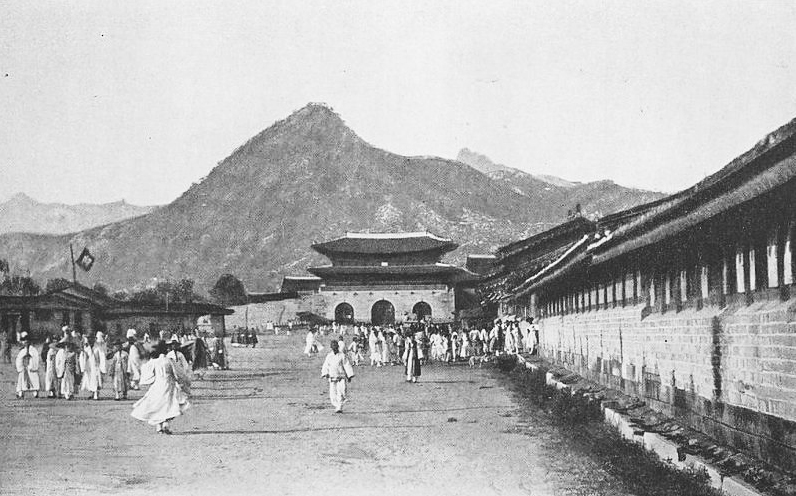
Korea has witnessed major population, infrastructure, and political changes since this photo was taken 100 years ago. (Source: Population Change and Development in Korea - Asia Society)________________________________________________________________________

SEOUL, Korea / Korea JoongAng Daily / Business / Economic Policy / August 8, 2011

By Lee Chan-Young

Korea’s population is aging at the fastest rate in the world. Last year, Korea’s birth rate was 1.22, the lowest among OECD nations. By 2018, Korea is expected to be an “aged society” with 14 percent of the nation being elderly.

The 18 years in which Korea is expected to take in shifting from an aging society to an aged society contrasts starkly with the time it took France (115 years), the United States (73 years) and Japan (24 years) to do so.

This rapid aging can cause three problems in the labor market: labor shortages; productivity shrinkage; and job competition between generations.

The first two concerns are fast approaching, but the third is being played out now, stoking worries about long-term youth unemployment, which has been stubbornly high the last several years.

The shrinking labor force will likely dilute potential growth. Korea’s economically active population, or the entire national labor force, is projected to climb to 26.68 million in 2018 from 25.82 million in 2010, and then begin a decline in 2019.

This would exacerbate potential growth that is forecast to sink by 0.4 percent in 2011-2018 from 4.1 percent in 2000-2010. In addition, the nation’s labor force is expected to decline by 0.7 percent annually from 2019-2030, which will drag down potential growth by 1.1 percentage points in the same period compared to 4.1 percent in 2000-2010.

The core productive population, the main drivers of economic activity, which refers to people aged 25-49, started to fall in 2009, and the pace of decline will likely accelerate. Accordingly, the size of the core productive population will drop to 14.25 million in 2020 and then to 11.98 million in 2030, or 90 percent and 76 percent of the 2010 size, respectively.

In contrast, the proportion of those aged 50 and above in the nation’s labor force is expected to increase sharply in the next decade. Many older workers lack knowledge and technological savvy, and are typically are less adept at updating their capabilities. Thus, the explosive growth in the 50-plus labor population would likely blunt national productivity.

According to an analysis of data, from 2000 to 2010, a 1 percentage point increase in the proportion of workers in their 50s and above eroded the nation’s labor productivity by 0.21 percent.

Since the proportion of workers in their 50s and above is expected to decline by 8.9 percentage points in 2010-2020 and 6.4 percentage points in 2020-2030, labor productivity will likely fall by 1.8 percent and 1.3 percent, respectively.

As for the job competition between generations, it began to appear in 2005. According to an empirical analysis, the employment rate for those in their 20s fell by 0.5 percentage points when that for those in their 50s increases by 1 percentage point.

This is because baby boomers started to turn 50 in the mid-2000s and work sharing during the global financial crisis maintained the existing workforce, reducing room to hire new employees.

In short, the productivity shrinkage stemming from the falling core productive population and job competition between generations will emerge as major issues in the next decade. From 2019, the labor shortage will become real as the nation’s total working population starts to drop. However, the labor shortage and retirement of most baby boomers by 2019 will mean better job prospects for young adults.

To tackle these demographic challenges, response strategies should be set up in stages and customized to each issue. Greater support for vocational training will help maintain productivity. Wider adoption of work sharing and a wage peak system, which keeps seniors employed but at lower pay, will help free up work space and budgeting to hire more young adults.

While the shrinkage of the entire labor force is unavoidable, the impact can be mitigated by a greater accommodation of women, young adults and seniors, currently not employed, in the workplace.

Lee Chan-Young is a research fellow in Macroeconomics Dept. at the Samsung Economic Research Institute. For more SERI reports, please visit http://www.seriworld.org/.

Copyright by JoongAng Ilbo
___________________________________________________________
Credit: Reports and photographs are property of owners of intellectual rights.
Seniors World Chronicle, a not-for-profit, serves to chronicle and widen their reach.