Remember ME - You Me and Dementia

Showing posts with label Sri Lanka. Show all posts

March 25, 2012

SRI LANKA: Central Bank defines senior citizens at 55 years

COLOMBO, Sri Lanka / The Sunday Times / Business Times / March 25, 2012


The Central Bank (CB) has directed commercial and specialised banks that senior citizens should be considered as those who are 55 years and above, after most institutions used 60 years as the threshold age.

In a March 19 directive to these institutions, the CB said that, “The Monetary Board having observed that licensed banks and licensed finance companies use different thresholds of age to identify senior citizens when conducting banking operations has decided to request licensed banks to use the common threshold of 55 years of age in identifying senior citizens.”

Copyright 1996 - 2012 | Wijeya Newspapers Ltd
___________________________________________________
Credit: Reports and photographs are property of owners of intellectual rights. 
Seniors World Chronicle, a not-for-profit, serves to chronicle and widen their reach.

December 25, 2011

SRI LANKA: Aging Parents A Burden To Some Children

RATMALANA, Sri Lanka / The Sunday Leader / Opinion / December 25, 2011


“How sharper than a serpent’s tooth it is to have a thankless child!”
William Shakespeare, King Lear

By Nirmala Kannangara 

Sanhinda elder’s home and
Sumana Weerasinghe, 72
Today is Christmas Day – a very special day to show love and compassion towards all beings.

For parents whether they are rich or not, this is the time they think more about their children than themselves and try to provide the best for their children.

So why is it that once they grow up, many children find that caring for their aging parents is a burden?

The number of elders’ homes is increasing in the country indicating that more and more children are unwilling or unable to care for their parents in their own homes.

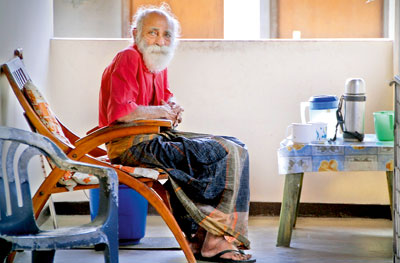
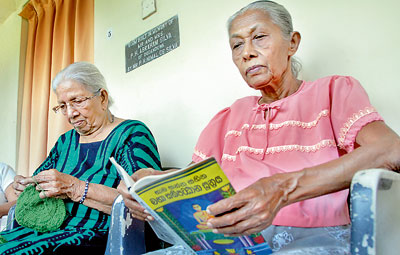
The Sunday Leader visited Sanhinda Elders’ Home in Pita Kotte and spoke to a few occupants and these are their stories.

Although Mallika Senanayake (76) was happy in the company of the other occupants, her eyes filled with tears when she talked about her life- the good old days. Her heartache began after the death of her beloved husband. 

She said, “I should not be spending the latter part of my life in an elders’ home. My husband provided me with all the comforts and ensured life interest for me in our family home. Our house was gifted to our younger son, but both he and his wife ill-treated me after my husband’s death. We have two sons and lived at Epitamulla in Pita Kotte. My husband was an Accountant in a private firm and my sons studied at a leading Buddhist school in Colombo. Her elder son is living overseas. On hearing about Mrs. Senanayake’s suffering, her sister took her to her residence and later at the request of Mrs. Senanayake her sister placed her in the elders’ home.

She summed up her heartbreak by saying, “If this is my destiny I have to face what life places before me. At least I am happy to have given birth to my elder son who is very concerned about me. He calls me often and visit me whenever he is in town,” she said. But as only a mother would, she still loves her younger son, although he has forgotten his obligations to his mother.

Sumana Weerasinghe (72) of Rajagiriya too had to come to Sanhinda Elders’ Home since her children have failed to look after her.

“I have a son and a daughter. My daughter lives with her in-laws and I was living with my son. I was left alone all the time and they did not bother to take care of me. They even did not send their children to see me which hurt me immensely. Since I could not bear the ill-treatment and loneliness I asked my sister to put me into a elders’ home and I am very happy to have come to this home where I have loving and supportive friends, she added.

When asked whether her children visit her, Mrs. Weerasinghe said that her daughter comes whenever she can but not her son.

Nanda Dep (75) is unmarried and has lived with her sister after the demise of their parents.

“I am very happy that I looked after my parents and that was why I could not get married. I have spent all my money offering alms in memory of my beloved parents. After their death I lived with my sister and when she passed on I came here,” she said.

Edwin Perera Gunasena (89) was a Civil Servant. He stays in private quarters at Sanhinda Elders Home. “I have four daughters and two sons. Two are Doctors (Ph.D), one is a Lawyer and the other is an Accountant. One daughter is a Professor in Peradeniya University and lives in Kandy and the rest are in the US and Australia. I have travelled all over the world and now I am confined to this room,” said Gunasena.
When asked as to whether he wish to be with his children he said that he wishes so but does not want to trouble them. “Even when I was admitted to Durdans Hospital during a cardiac arrest, it was my nephew who was with me right throughout. My son in the US and one daughter from Australia visited me but my daughter living in Kandy did not come to see me. I think she may be busy with her research work and that is why she could not come to see me. But she pays my ‘home’ bill,” claimed Gunasena.

Joy Perera is yet another father who is spending his winter years in this elders’ home. He regrets giving all his properties to his only child, his son, without keeping life interest.

“My son was an obedient child. He got married of his own wish and wanted me to transfer the house to his name to apply for a loan. Since my son and daughter-in-law were so caring I did not have any doubts but wrote the deed without keeping life interest. That was where I went wrong,” he said with deep sorrow.
According to Perera, he was ill-treated by his son and daughter-in-law and if not for his nephew – a high ranking CID officer he would have committed suicide long ago.

“My wife is well looked after as she is their baby sitter. If not for that my son would have chased her out as well. I am not trying to take legal action against my son and get back my property. My wife visited me twice with some money which my son had given, but I did not accept a cent as I do not want anything from them,” said this grieving father.

F. N. Abeywickrema is the father of a famous singer in the country. Despite the strong messages Abeywickrema’s vocalist son gives to society through his songs, his hypocrisy is evident through the neglect of his father.

“My eldest son is a singer and because he ill-treated me I went to my second son after my wife’s death. He took all my money promising to return it but did not and asked to me leave his house,” he said. According to Abeywickrema, he has given instructions to Sanhinda Elder’s Home about his final rites.

“My children should not be informed of my death and my body should be handed over immediately to the medical college. I do not want any of my children to see my corpse as there is no necessity for that. If they could not look after their father when he is alive what is the purpose of showing them a dead body?” asked Abeywickrema.

Bertil Ranasinghe is yet another occupant living in paying quarters. He is unmarried and waiting to see his younger brother on Christmas Day.

“I am waiting for him today. I am a Catholic and studied at St. Joseph’s College Colombo and a classmate of Prof. Carlo Fonseka,” he said.

Although Ranasinghe is waiting to see his brother today (Christmas Day) he is not aware that his brother is no more in this world. But he is expecting to see the brother and has many plans to go to England with him like in the old days when he used to travel to the UK very often.

All the occupants of the Sanhinda Elder’s Home, (both paying and non-paying) are looked after very well there. The occupants are full of praise for the management for providing the best of everything for them. The tidy halls and the well-maintained lawns speak volumes as to how these elderly persons are looked after.

editor@thesundayleader.lk
____________________________________________________________
Credit: Reports and photographs are property of owners of intellectual rights. 
Seniors World Chronicle, a not-for-profit, serves to chronicle and widen their reach.

August 7, 2011

SRI LANKA: Old, abandoned and penniless

COLOMBO, Sri Lanka / The Sunday Times / News / August 7, 2011

The society that brags about its high life expectancy is shamefully negligent of its elderly

Nadia Fazlulhaq reports


There are some 250 homes for the elderly in the country – and 1.9 million elderly persons. The chronic shortage of care, accommodation and other facilities for senior citizens should be cause for concern among all civic-minded persons.

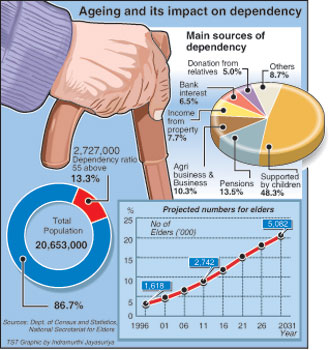
The 1.9 million senior citizens – persons 60 years and over – constitute almost 10 per cent of the total population. The figure is expected to increase to 25 per cent in the coming
 years.


While the number of senior citizens increases by the year, the number of applications for places at homes for the elderly is also increasing. The problem is that elderly homes are in short supply, and are not increasing in number to meet demand.

Applications are pouring in at elders’ homes, and thousands of applicants are on a waiting list. The Little Sisters of the Poor, in Darley Road, Colombo 10, is a home for elders, run by nuns of the Roman Catholic Church.


Finding a place in a home for an elderly person is a challenge. Photo: Sanka Vidanagama


The home, which is managed almost entirely on charity, can accommodate up to a maximum 98 persons. 

“But we get more than 300 applications a year,” Sister Irine Bernadette, who is in charge of administration at the home, told the Sunday Times. “This is the case at all elders’ homes. Children of elderly persons plead with us to find accommodation for their parents, but we are helpless. And often, when we do have a bed vacant, and we call, we are told that the elderly applicant has already passed away.”

According to Sister Irine, the home runs on public charity and money collected by nuns. The state gives Rs. 10 per day per elder. At the Mother Teresa’s Home for the Dying and Destitute, another Roman Catholic charity institution, there are 106 elderly persons. This is a home for old people with no family, home or income, and who end up on the streets, abandoned. There are no vacant beds here..

Many say the state should be doing a lot more for the elderly.

Wasantha Silva, treasurer of the All-Ceylon Buddhist Congress Senior Citizen’s Home, in Battaramulla, says applications for accommodation are on the increase, especially from Sri Lankans living overseas who are looking for homes and persons to take care of their parents here.
Professor Siri Hettige, of the Department of Sociology, The University of Colombo, says migration is the main reason today’s elders are facing homelessness. “In a dynamic environment we see people on the move, travelling and migrating, and these people cannot always take their parents along with them,” Professor Hettige said.
______________________________________________________________

"We have failed to give our elderly better access to health care. In developed countries, old people enjoy a decent standard of living.”  
– Professor Siri Hettige, Department of Sociology, The University of Colombo
______________________________________________________________

“Our agrarian economy is changing, and people from all over the country, even the remotest villages, are coming to the towns and the city in search of jobs. There are two million Sri Lankans of working age employed overseas. This number will increase with young people going overseas for higher education, most of whom will settle down in those countries.”

Being old and alone is one thing; being old, alone, and poor is another. An estimated 23 per cent of the country’s elderly population lives below the poverty line. “The children of these elderly people are under economic pressure themselves,” Professor Hettige said. “They find it difficult to balance the demands of both their offspring and their elderly parents. Some 80 per cent of the country’s elderly have been engaged in farming, fishing and small trades all their lives, and these people don’t go on retirement.

“In other countries, people of retirement age spend their time in leisure activities, or volunteer work. In Sri Lanka, people of retirement age have to find some way to generate an income in order to survive.”
According to Professor Hettige, neither the state nor the community has done much to help those of retirement age to lead active, productive lives.

“We have failed to give our elderly better access to health care. In developed countries, old people enjoy a decent standard of living. What is the point of Sri Lanka bragging about the country’s high life expectancy when we neglect our elderly?”

Life expectancy levels have been rising over the years. In 1946, life expectancy in Sri Lanka was 43 years; in 1998 it was 60 years. Today, life expectancy is 70 years for males and 76 for females.
Professor Hettige says a census should be held to ascertain the needs of the elderly, according to their income, medical support, and residential care requirements.

HelpAge Sri Lanka is a non-governmental organisation, set up in 1986, with a mission to raise the quality of life of the country’s elderly. HelpAge executive director Samantha Liyanawaduge told the Sunday Times that the elderly are entitled to a public assistance allowance of a niggardly Rs. 150 a month. This allowance, also known as “pin-padi”, is usually spent the day it is received.

“Most elders spend the Rs. 150 buying candy for their grandchildren,” Mr. Liyanawaduge said.

“It is the one day in the month they have some purchasing power. We should launch a study on how we should tackle poverty among the elderly. Most of our elderly have contributed to the economy. They deserve a decent monthly allowance from the state.”

Mr. Liyanawaduge said the Elders Protection Act empowers Grama Niladaris to set up elders’ committees. These committees can provide a forum for the elderly to get together and become involved in community work, he said.

The annual Budget should set aside more for the elderly, according to Ms. J. Krishnamoorthy, director of the National Secretariat for Elders, which comes under the Ministry of Social Service and Social Welfare.

Meanwhile, the National Secretariat for Elders has introduced an elders’ sponsorship programme. Members of the public are invited to sponsor an adult from a low-income community with a minimum monthly contribution of Rs. 250. The sponsorship programme comes under the Ministry of Social Services.

According to R. M. S. Ratnayake, Secretary to the Ministry of Social Service and Social Welfare, the Ministry has drawn up a proposal to increase the public assistance allowance to Rs. 1,000 per elderly person, out of the 2012 Budget, and increase the allowance for elders’ homes.

© Copyright 2009 | Wieya Newspapers Ltd
___________________________________________________________
Credit: Reports and photographs are property of owners of intellectual rights.
Seniors World Chronicle, a not-for-profit, serves to chronicle and widen their reach.

July 31, 2011

SRI LANKA: No Country For Old People

RATMALANA, Sri Lanka / The Sunday Leader / Review / July 31, 2011

By Sumaya Samarasinghe

Growing old and suffering the ailments which come along with age is unfortunately something no one can escape.

Tweve years ago in 1999, declared the UN Year of the Older Person, Former Ambassador Manel Abeysekera founded the NGO Forum On Ageing (NFOA) which aims at bringing together individuals and institutions to help them focus on the needs of elders who often cease to be considered as an integral part of society.

Though most often elders have key roles in the development of our nation, their contributions are quickly forgotten and some of them find themselves in extremely precarious situations, Abeysekara said.

“People who are categorised as elders have not necessarily been working. Those who have been doing so in the private sector don’t get a pension, those in the public sector will get a lump sum which is barely enough to survive for a few months or years after retirement. In a country like Sri Lanka, elders often write off their property to their children without any reservation clause if they need to use any of it, so when their relatives throw them out they find themselves homeless and penniless!”

Photos: NFOA organises activities to entertain elders

NFOA is registered with the Ministry of Social Services and acts as an advocacy group on behalf of elders. Abeysekera says however that the Forum is not receiving adequate support and no organisations consider the issue of elders as a serious community problem.

To add to the general lack of interest, the protection of the Elders Act No. 9 of 2000 which established as its main functional organ a National Council seems dormant. Eleven years after the Act was passed, essential measures to improve the situation of elders have not been taken and therefore the NFOA is offering to support the Council in implementing key and urgent actions which could improve the lifestyles of our senior citizens. Some of these measures include: the elders being able to obtain easily an elders ID card; to provide them special financial support which would include an increase in pensions, enhanced interests on deposits, insurance for elders who do not have policies (especially health) and an emergency fund for those who have been abandoned or ill treated.

Accessibility to public and private sector buildings is also a serious question as some elders with physical issues cannot attend to their matters because the buildings are not built in a proper manner to allow them access. Last but not least, free financial and legal advise should be provided by the Council to prevent elders from entering financial schemes which would render them penniless. Discounted rates for transport and drugs which would be necessary for regular usage are some of the measures which would help the elderly deal with day to day life in an easier and simpler way.

Raising the retirement age (retirement age is generally 55 to 60 years) of the elders and perhaps even using their services on a consultancy basis for a stipend would help them keep mentally and physically fit.

The World Bank Report on Addressing the Needs of an Ageing Population (Sri Lanka 2008), stated that Sri Lanka’s population of 20 million will grow to 23 million by 2030. It is fundamental that some actions be swiftly taken to improve the situation of Sri Lanka’s ageing population.

Source: The Sunday Leader
__________________________________________________________
Credit: Reports and photographs are property of owners of intellectual rights.
Seniors World Chronicle, a not-for-profit, serves to chronicle and widen their reach.

June 13, 2011

SRI LANKA: Pension plan okayed for elderly over 80

COLOMBO / Sri Lanka Daily News / June 13, 2011

Senior citizens’ pension for those over 80 from next year


By Priyanka Kurugala

Photo courtesy: onlanka.com

A Cabinet paper presented to provide a pension scheme for senior citizens of over 80 years has been approved. The government can activate the pension scheme for the elderly from next year, Social Services Minister Felix Perera said.

He was participating as the chief guest at a community mobile service at the Lindula Saraswathi Maha Vidyalaya, Nuwara Eliya.

The minister said: “one of the major ideologies of politics is social service. After my appointment as social service minister I was able to do a large amount of work for the country. I am very happy about this.”

“Sri Lanka stands above most countries in treating the elderly. Due to low income of their children or migration some parents become destitute. Every individual should consider that these elders have provided their strength to build the country and to have contributed a good generation to the country,” the minister said. Public donation was increased from Rs 500 to Rs 1,000 with the mediation of the Social Service Ministry.

The government has made it a must for builders to provide access facilities for the disabled when constructing new buildings. The Social Services Ministry is also providing support to the people who has become destitute in the Northern and the Eastern Provinces.

The Ministry has taken numerous steps to develop infrastructure facilities for institutions such as schools, temples, churches and kovils. To make a success of these tasks, the ministry has got the support of the public. Such works cannot be implemented only with government support, the minister said.

Copyright © 2011 The Associated Newspapers of Ceylon Ltd.

April 6, 2011

SRI LANKA: It's one of the fastest aging countries in South Asia

.
COLOMBO / Sri Lanka Daily News / April 6, 2011

It is important to consider elders' needs and protect their rights as Sri Lanka is one of the fastest ageing countries in South Asia, said National Secretariat for Elders Director J Krishnamoorthi.

She was addressing a workshop on Elders and Development held at the Intercontinental Hotel Colombo recently. With the increasing elderly population the country will face many new socio-economic challenges in health, education and nutrition she said.

Around 1,891,000 people out of the total Sri Lankan population of 20,450,000 are over 60 years, which is 9.24 percent.

The male population over 60 years is 893,000, which is 47.17 percent of the total elderly population, and 4.36 percent of the country's population. The female population over 60 years is 999,000, which is 52.83 percent of the total elderly population and 4.88 percent of the total population, Krishnamoorthi said.

The country's elderly population will reach around 16.7 percent in 2021, she added. This includes 10 percent over 80 years and 20 percent over 70 years. Over 80 percent elders live in the rural areas in the country which creates problems when providing them with welfare.

'Mahinda Chinthana' aims to create a better environment for senior citizens to live in dignity Accordingly all citizens should take care of elders providing them with love and kindness to keep them content.

Copyright © 2011 The Associated Newspapers of Ceylon Ltd.

March 30, 2011

SRI LANKA: Older returnees face isolation, poverty

.
COLOMBO / IRIN-Integrated Regional Information Networks-ASIA / News / March 30, 2011

Thousands of older returnees to Sri Lanka's conflict-affected north feel marginalized and need medical care, experts say.

Elderly returnees need greater assistance.
Photo: Amantha Perera/IRIN

"There are hardly any programmes to help these people," said Samantha Liyanawaduge, executive director of HelpAge Sri Lanka, one of just a handful of agencies targeting older returnees.


Although no official figures are available, estimates suggest there are more than 30,000 people over the age of 60 in the Vanni, a vast swath of land in the island's north once under the control of the defeated Liberation Tigers of Tamil Eelam (LTTE), which waged a decades-long civil war for an independent Tamil homeland.

Since the war ended in May 2009, more than 320,000 displaced have returned to their homes or are now staying with relatives, the UN reports.

According to community workers, many of the elderly show signs of trauma or isolation and struggle to meet their daily needs. Those without extended family support face poverty, loneliness, dependency, ill health and lack of nutrition and access to adequate healthcare.

Chelliah Philip Nesakumar, an Anglican priest from Kilinochchi, the former de-facto capital of the LTTE, says the elderly often feel abandoned, with some demonstrating sudden outbursts of anger.

"On the surface they appear ok, but many are carrying the psychological scars of two-and-a-half decades of war," Nesakumar said.

Veeran Pandaran, a 61-year-old grandfather from Kilinochchi, had hoped things would get better when the war ended. "Life is certainly safer now, but we've been left to fend for ourselves," Pandaran said.

Ongoing development and rehabilitation work in his area includes hardly any programmes tailored to the old and impaired, he claimed. "There is nothing to help people like me," he insisted. "It's as if we are not important."

Limited resources

HelpAge Sri Lanka - which has been working for the rights of marginalized senior citizens since 1986 - would like to do more, but resources are limited, forcing the agency to focus on the most serious cases first.


In February, it opened a small sub-office in Kilinochchi to coordinate its work and dispatch mobile medical clinics to the area each week.

Thousand of Sri Lankans, many of them old, fled the conflict. Photo: Dominic Sansoni/World Bank

Most of the elderly have cataracts. Of every 100 people the NGO sees, more than 60 percent are given glasses, while 20 to 30 percent require surgery.

HelpAge has its own eye clinic near the capital, Colombo, which can carry out cataract operations free of charge; however, many people are physically unable to travel the 300km distance, or simply do not have the funds to make the journey.

This in turn leaves them no other option but to seek treatment at a hospital in the northern town of Vavuniya, 70km south of Killinochi, where the operation can be carried out at a cost of around US$55 - money many simply do not have.

"That's money these people don't have to spare," Liyanawaduge said.

HelpAge organizes community groups and would also like to initiate programmes to generate income for them.

In the east of the country, Help Age has used elders' groups to start home-gardening, poultry and small cattle-farming operations.

"We know more needs to be done, but we simply don't have the financial resources to take them on," Liyanawaduge said.

Copyright © IRIN 2011.

April 25, 2010

SRI LANKA: Medical advances have brought longevity - and many aging issues

. CHENNAI, India / Sri Lanka Guardian / April 25, 2010 Issues facing elderly persons By N.S.Venkataraman While the improvement in medical science has enabled longevity of life for many people, this has also brought about many issues. There are number of instances that both the elderly parents and the children compliment each other in an elegant manner, with total understanding of each other’s needs. However, this is not always the case. At the fag end of one’s life, many of those who live beyond eighty years or so sometimes wonder as to whether such longevity is a blessing or curse. In most cases, such longevity of life is accompanied by ailments, which cripple the active life and increase the dependence on sons or daughters or even grand children to a considerable extent. Particularly when medical expenses become inevitable, in most cases, the dependence is not only for moral support but also for material support. With nuclear families becoming the order of the day and sons and daughters often going to distant places or abroad for employment, the elderly couple are forced to live alone in many cases. With materialistic pursuits receiving overwhelming priority amongst the younger people, the sons and daughters also feel on many instances that they cannot afford to make sacrifices in their professions or other interests for the sake of looking after their elderly parents. Also, there are some cases where the elderly couple find it preferable to live alone away from their sons and daughters even if they happen to be in the same city due to the compatability issue. However, it is not easy for elderly couple to live alone, particularly in present situation where the cost of living is spiraling up and security concerns create fear and anxiety. In the unfortunate cases, where the mobility of the elderly people make them disabled, living alone becomes tortuous for them. It is pathetic to see them struggling , with their children living away from them and just talking over to them during week ends or visiting them occasionally. The sense of loneliness and helplessness make them even more weak than what they actually would be. While old age homes are springing up all over the country both in big cities and small towns to cater to the needs of the elderly people, such old age home facilities can be availed only by those who can afford to pay. Many elderly people find that the old age home is actually not a real solution as what they need is some sort of emotional support which rarely happen in these paid homes. Even these old age homes can meet the needs only if the persons would be in reasonably good health. Photo credit: HelpAge Sri Lanka The plight of the elderly citizens become even worse when one of the couple happen to pass away which deny the survivor the emotional needs that is required and which can be provided with understanding only by the life partner. In recent times, there is considerable awareness among every one that some forward planning is necessary to ensure an honourable living at ripe age. People conserve the resources to the extent possible to reduce their economic dependence on their children . But, what about those elders who are not affluent and who cannot afford to have any savings at all ? Of course, there can also be the view that the elders should show greater understanding of the compulsions of the younger generation and the wisdom gained through age and experience should enable them to do so. However, in the case of those families where the younger generation do have problems in looking after the interests of elderly parents , some sort of counseling are required for the sons and daughters who should be enabled to develop an attitude of compassion and responsibility towards the parents and readjust their priorities to the extent possible , to meet the requirements of the elderly parents in tune with their aspirations and outlook. While earnings and jobs are important, they certainly can not be more important than keeping their parents comfortable and peaceful. Several sons and daughters often feel frustrated after their parent pass away that they have not done enough for their elderly parents while they needed support due to their frail health. There can be no greater satisfaction for anyone more than the feeling that they have done their level best to keep their parents happy when they were alive. [rc] Copyright © Sri Lanka Guardian

September 30, 2009

SRI LANKA: Senior citizens to go green

. COLOMBO, Sri Lanka / Daily News / September 30, 2009 Senior citizens to go green Under Api Vavamu-Rata Nagamu Program By Lakshmi de Silva Senior citizens are to go green all over the country. Social Services Ministry Photo of program launch earlier this year. Some 10,000 senior Citizen Committees to take part in home garden projects to contribute to the economy with their expertise under the Api Vavamu - Rata Nagamu food production program. These herbal garden programs have been started under indigenous Medicine Ministry to grow herbs in different parts of the country, Social Services and Social Welfare Ministry Secretary Vijayalakshmi Jegarajasingham told the Daily News on Monday. Distinguished senior citizens' contribution to the economic and social development program would be assisted by institutions like the National Secretariat for Elders, Agrarian Services Department, Samurdhi Authority, Indigenous Medicine Ministry, Science and Technology Ministry, Bank of Ceylon and People's Bank, she said. This special agriculture project would enhance the economic standards of senior citizens and the society while providing nutrition to people and a healthier environment. [rc] © 2009 The Associated Newspapers of Ceylon Ltd

August 24, 2009

SRI LANKA: One in four of population will be a senior citizen by 2030

. COLOMBO, Sr Lanka / Daily News / August 24, 2009 In next two decades: Senior citizen ratio to rise By Shirley Wijesinghe Sri Lanka's senior citizen ratio will increase up to one per four among the population within the next two decades and the Sri Lanka Social Security Board (SLSSB) has prepared pre-tailored pension schemes especially for non-pensionable citizens, Deputy General Manager (Operations) Dhammika Padukka said. Padukka added that the Social Security Pension scheme's main objective is basically to enhance the value of the senior citizens without burdening either the country or the family. He was speaking at a ceremony organised to distribute pension passbooks for beneficiaries of the Social Security Pension scheme of the Colombo Divisional Secretariat Division. The pension scheme will also ease the burden of parents especially in families whose members are employed abroad, Padukka said. "It is really a problem for over 250, 000 people leaving for employment abroad annually to make arrangements to take care of their parents and close relatives", he said. Although Colombo district consists of a higher population density, the rate of pension beneficiaries are not in proportion to the percentage of the population. The Government has paid special attention on this pension scheme and the promotion activities have been accelerated during the last two years. As a result, the SLSSB was able to enroll 325,000 beneficiaries to the scheme and there are about 6,000 pensioners under the scheme today. Addressing the ceremony Colombo District Secretary G. A. Sylvester said the Government allocated Rs. 100 million initially to implement the proposed Social Security Pension Scheme in 1996. A part payment of the pension contribution will be made by the Government to provide a subsidy for the beneficiaries as a payment installment, he said. "Our target is covering a majority of the non-pensionable people in the district through this pension scheme," he said. [rc] © 2009 The Associated Newspapers of Ceylon Ltd.

August 9, 2009

SRI LANKA: Old and Abandoned

. COLOMBO, Sri Lanka / The Sunday Times / News / August 9, 2009 Both family and state have turned their backs on the elderly. A pension scheme to ensure financial security for all senior citizens is desperately needed, writes Nadia Fazlulhaq. Pix by Berty Mendis “Our capacity is 95 elderly persons, and we have 330 people on the waiting list.” - Sister Irene Bernadette, The Little Sisters of the Poor, Darley Road. “The children see the older people as a burden. Financial support from the state is therefore a must.” - Samantha Liyanawaduge, HelpAge Sri Lanka executive director The number of elderly people in Sri Lanka keeps growing, but little has been done to ensure that the country’s senior citizens can live out their last days in comfort and financial security. In 2006, the number of elderly persons in the country stood at 2.2 million, and the figure is forecast to grow to 5 million by 2031, representing 22 per cent of the total population. The elderly placed in homes are largely left to amuse themselves. Family and friends seldom visit. HelpAge Sri Lanka, which is dedicated to improving the quality of life of all senior citizens, completed a feasibility study last year on a pension scheme that would provide for all elderly persons (over 70 years), regardless of background, income or status. HelpAge presented the study results and a proposal to the Ministry of Social Services and Social Welfare. The proposal was submitted to the Cabinet, which turned it down. According to HelpAge Sri Lanka executive director Samantha Liyanawaduge, at least a quarter of the country’s population will qualify to be categorised as elderly in 20 years’ time. “By 2030, 25 per cent of the population will be elderly people,” Mr. Liyanawaduge said. “At present, there are nine persons to look after one old person. A few years later there will be only three persons to look after one elderly person. It is important to start initiating plans to ensure that elders will be financially independent. If Sri Lanka is to successfully tackle old age poverty, there should be a fundamental shift in pension policy.” The HelpAge Sri Lanka proposal advocates a universal pension based on the national poverty line, which is Rs. 2,950 rupees a month. This sum can be supplemented with a small increase in VAT and excise duties to provide sufficient funds to finance a universal pension scheme. For example, VAT could be increased from 5 per cent to 5.5 per cent, thus providing sufficient funds to cover a pension for all persons over 70 years of age. “I believe tax payers will be more than willing to contribute,” Mr. Liyanawaduge said. “Political commitment behind the pension scheme is a must.” Providing homes for the elderly is not the complete answer, Mr. Liyanawaduge said, pointing out that 70 per cent of the country’s elderly lived in poverty. “Most of the elderly who live in rural areas suffer a lot,” he said. “They lack basic facilities, and their children are unable to support them. The children see the older people as a burden. Financial support from the state is therefore a must.” The current pension scheme for government employees covered only a small segment of the senior citizen population, Mr. Liyanawaduge said. A pension scheme as proposed by HelpAge Sri Lanka would be acceptable to the whole family. “The pension will benefit the family in three ways. The elderly recipients will be able to share their pension with their children, the families will no longer have to cover costs for caring for older people, and working adults will not have the pressure of saving for their old age,” he said. Mr. Liyanawaduge said the mandatory Employees’ Provident Fund (EPF) scheme had its disadvantages. On retirement, people tended to use up all their EPF savings, rather than invest the money to provide an income for the rest of their lives, he said. According to the National Secretariat for Elders, life expectancy levels have been rising over the years. In 1946, life expectancy in Sri Lanka was 43 years, while in 1998 it was 60 years. Meanwhile, the National Secretariat for Elders is drafting a five-year action plan that would include self-employment and home garden projects to support the elderly, according to secretariat official Indunil Rodrigo, who works for elders’ rights. He says only six per cent of the country’s work force were eligible for a pension. “In this country the children are the elderly people’s main support,” Mr. Rodrigo said. “It is important therefore that the elderly do not end up being a burden on their children. We also hope to launch a programme to train people in care-giving. There is a demand for home-care services.” According to a 2008 World Bank report, population aging is a universal phenomenon that is especially marked in Sri Lanka. The country’s population is among the “oldest” in the non-developed world, and Sri Lanka is one of the fastest aging countries in the world. Informal support, income support and healthcare are key areas to be addressed in looking after the welfare of the elderly, the report stated. Mrs. V. Jegarasasingham, secretary to the Ministry of Social Services and Social Welfare, said the universal pension scheme proposal, submitted as a Cabinet memorandum, was turned down because it meant increasing taxes. She said self-employment for older persons should be considered, and that such self-employment would contribute to the economy, even in a small way. The Parliamentary Act No. 09 of 2000 for the Protection of the Rights of Elders included a social security pension scheme for self-employed persons, she said. No place for the elderly Overcrowding is a problem in almost all homes for the elderly in the country. Moreover, most of the inmates of these homes are not happy, despite the “comforts” and “distractions” provided. According to the manager of the Sanhinda Sri Naga Viharaya Elders’ Home, in Kotte, the elderly people remain unhappy even when activities are organised to cheer them up. The main reason for their unhappiness is that they miss their children. “Most of the elderly tell us they want their children near them when they pass away,” the manager said. Long waiting lists prove that the country is under-supplied with homes for senior citizens. The elders’ home in Darley Road run by The Little Sisters of the Poor has been receiving a steady stream of applications over the years. “Our capacity is 95 elderly persons, and we have 330 people on the waiting list,” says Sister Irene Bernadette. She said the home receives frequent calls from families inquiring about accommodation. She also observed that the less-privileged families tended to show greater concern for the older family members. “The poorer families come regularly to visit their parents and grandparents, while the better off rarely come to see their parents”, she said. An official at the Lady Sareed Elder’s Home said families migrating to other countries often left the older members of the family behind, in the care of relatives or in homes. The Sunday Times learns that there up to 13,000 senior citizens in Vavuniya, but only four elders’ homes in the Vavuniya area. These homes were working beyond capacity. [rc] © Copyright 2009 | Wijeya Newspapers Ltd

July 29, 2009

SRI LANKA: Bank offers special savings account for senior citizens

. COLOMBO, Sri Lanka / The Island / Business / July 29, 2009 Sampath Bank is launching a special savings account for senior citizens under Sanhinda Saver which the bank believes will be creating another revolution in the banking industry. The new "Sampath Sanhinda Saver" account can be operated in Sri Lankan Rupees or foreign currency as per the choice of the account holder. A truly unique and attractive feature of the new account scheme is that interest will be paid twice a month for this account! If the average balances on or below is Rs.9,999 the applicable interest rate will be 4.25% per annum while the average balances above Rs.10,001 will gain an interest rate of 8.25% per annum. And the additional interest rate for foreign currency account is 0.5% US$. Sampath Sanhinda Saver Account can be opened by any Sri Lankan citizen of over 50 years of age, by making an initial deposit of Rs.1000 or US$100 for foreign currency accounts. The accounts holders will be eligible to a host of special discounts, offers and benefits from a large number of merchant outlets who have partnered with Sampath Bank. All Sampath Sanhinda Saver account holders will be given priority service at any Sampath Bank branch. And a 50% discount is offered for "Door Step Banking Facility".[rc] Copyright © Upali Newspapers Limited.

July 28, 2009

SRI LANKA: The way a country treats its aged shows its moral consciousness

. COLOMBO, Sri Lanka / The Daily Mirror / Opinion / July 28, 2009 The fastest growing segment in the population of the country will be the aged from the age 60. Demographic studies estimate that this population will increase from 1.92 million in 2000 to 4.45 million by 2025.. This rising increase has to be considered in terms not only of life expectancy which has been approximately said to be 74 years for women and 70 for males ( however this life expectancy shows a further rising rate presently) but also the demands the aged will make on the social , welfare and health services. of the process of population ageing needs to be looked at in the context of rising life expectancy. The large majority of the aged between the ages of 60 to 70 are yet employed, have partial employment or are self employment and hence though yet needing care do not provide a major burden to the state . However with the rising levels of life expectancy it is urgent that the state looks into the prevailing health care facilities and the social support that the aged would need. UN projections estimate that with greater urbanization a larger percent of the population would be living in urban areas. However the future care of the aged will be effected due to the various social and economic influences that affect urban society. Urbanization as we see does lead to a decrease in the number of children a family has and this as we observe even today has limited the number of siblings a family has to care for aged parents , in addition the present trends in migration for employment and residence too limits the availability of family members for the care of the aged. Further economic constraints affect many of the aged . A large number of them, especially in rural communities, are self-employed or casual workers engaged in the informal sector and work full-time in agriculture, manufacturing, and wholesale and retail trade. Many of these workers continue working due to poverty and the lack of social benefits until they are unable to do so because of ill health . Those in white collar jobs or in the state and private sector also have financial constraints when they retire, due to house mortgages , bank loans and settling their children , furthermore with the present economic context, many are compelled to take on early retirement due to retrenchment or cost cutting in various establishments. As people get older financial constraints, especially the escalating cost of living, prevent the purchase of nutritious food and medi-care This usually leads to various forms of ailments among the aged such as hypertension, cardiac problems , failing eyesight hearing impairment, dementia, diabetes and urinary incontinence cause disability. Further the incidence of strokes too can create permanent disability to a number. Hence it is essential that medicare facilities should be available both for preventive and curative health care. An act to ensure the welfare of the elderly was enacted in 200O titled Act No. 9 of 2000 for the Protection of Rights of the Elders The chief aspects of this act was the ; establishment of the National Council for Elders; protection of the rights of elders; registration of persons and organizations providing services to elders; establishment of a National Fund for the welfare of elders and the appointment of boards to inquire into complaints of elders and determine claims for their maintenance and other miscellaneous matters relating to their problems. Under the provisions of this act the Ministry of Social Welfare has established Day Care Centres both in urban and rural areas considering them as a necessary facility to look after elders when their family members are out of their homes. . A scheme for training home nurses has been started with this in view by the Ministry of Social Welfare with the assistance of Helpage Sri Lanka. In addition the Ministry has also taken steps to conduct training and awareness programmes, Health Camps, Job placement services, distribution of spectacles and other assistive devices to disabled elders with the assistance of voluntary organizations. However it is necessary that the facilities provided for the elderly should not be considered under the ‘Head’ of a Charity to the poor and disabled. The elderly have a right to the facilities that a state can provide for the benefit of its people and especially with regard to health care the elderly must be provided with a medicare scheme of affordable insurance. Today when the state hospitals are often not only understaffed but lack sufficient space and facilities to provide the needed health care support for the elderly and as private medical establishments have an exorbitant list of charges for diagnostic tests and treatment it is necessary that at least the national Insurance corporation works out a Medicare insurance scheme for the elderly so that at an affordable premium they could obtain the needed diagnostic testing and minimum health care facilities. Perhaps there may be a possibility to include such premium deductions from the pensions that retired State employees and farmers and fishermen who contribute to the pensions scheme receive and though it may be a tedious process, premiums can be adapted depending on the economic viability of persons .in a sense having such a pension scheme will also reduce the welfare measures that the state has to provide for the aged who need medicare and hospital facilities. Since except for national hospitals all other medical establishments now fall under the purview of the Provincial councils, those in charge of health in those councils could organize and motivate the health units functioning under them to prepare a viable health care programme for elders in the province. Medical officers in the Public health sector could have a specific weekly clinic for the elderly in their area and provide them with the medicines and advice needed for their s ailments or refer them to the hospital if further tests are needed. A medical card should be provided to them so that they will receive preferential treatment in state hospitals. Rural hospitals too could be instructed to hold a monthly clinic for the elders in the area and when necessary medical officers from the base hospital could visit and advise at these clinics. Since expenditure on health and medicare is limited in the state sector the optimum use must be made of the existing facilities to provide the aged with the needed care,. After all in the final analysis even as children are judged by the manner in which they care for their parents so too will a country be judged by its treatment of its aged." [rc] Copyright © Wijeya Newspapers Ltd.

July 23, 2009

SRI LANKA: Aging population presents risks, opportunities

. PITA KOTTE, Sri Lanka / LankaBusinessOnline / July 23, 2009 Sri Lanka's rapidly aging population could be a big burden in future but also provides a window of opportunity - a time of massive productive labour force and low dependents, a report said. Sri Lanka is the fastest aging country in south Asia, with the elderly population posing many challenges, according to a report by the Labour Ministry. An aging population will likely result in a decline in the labour force, reducing labour supply and productivity and at the same time reducing demand for goods and services as they will earn less. Looking after an aging population, especially as their health care costs increase, will place a bigger financial burden on the state and family, at a time when government tax revenues fall with the decline in the labour force. But the report said the phenomenon also provides a "window of opportunity" and that there were positive effects of aging. With the population aging - when the percentage of people belonging to the 60 years and above age group is increasing - the average age of the work force is likely to increase. This is believed to result in an increase in the productivity of the labour force. Population aging results in a decline in child dependency and an increase in the old dependency, the report said. "There will be a period with a massive workforce and a relatively smaller old and child population," it said. "This can be an era for economic development and acceleration. The decline in dependency will increase savings and may direct more funds towards investment. The challenge here is that this opportunity will not last long." The report said Sri Lankan policy makers should not fail to spot this "demographic bonus". "If Sri Lanka misses this opportunity, she has to face the burden of aging without economic advantages which could have been obtained by population aging." The percentage of people in the over 60 age group increased from 6.3 percent in 1971 to 9.2 percent in 2001 and was estimated by the United Nations at 11 percent in 2008 By 2031, 21.9 percent of the people will be over 60 years or one out of four will be an aged citizen, the labour ministry report said. "Thus it is obvious that there is a relatively hefty shift in the age structure in a short period of time," it said. An elderly Sri Lankan man sits under posters on a street in Colombo. (File photo CNN) "Sri Lanka as a developing country will have a shorter time period than developed countries which underwent this phenomenon a few decades ago." Aging affects both the supply and demand sides of an economy. Aging will affect labour supply, productivity, and capital, which determine economic growth, while reducing demand for goods and services. With an increasingly elderly population, savings will decline, resulting in a reduction in investments since less savings create less capital, and eventually a decline in economic growth, the report said. Fiscal pressure on government will worsen the situation with the decline in the labour force caused by aging, shrinking the tax base of the government, as it reduces the number of tax payers. This would come at a time when more funds are needed to look after the needs of the elderly. The government needs to pay more attention to the social security of the elderly through pension schemes, insurance schemes, bank facilities focused on the elderly, and health schemes, the report said. [rc] © Lanka Business Online.

July 21, 2009

SRI LANKA: Care-giving for the aged - Creating awareness among youth

. COLOMBO, Sri Lanka / Daily Mirror / July 21, 2009 A couple of weeks ago media reports once again highlighted the problems of the increase in the aging population of Sri Lanka and the dismal future many of the aged face. This media interest generated by a World bank report also led to a Presidential directive to the ministry of Social services to inquire into the problems facing the aged and take suitable action. Social scientists defer as to what could be deemed the age of aging However it is commonly accepted that this aging of the population refers to the an increase in the proportion of the aged in the population. Once again there is a no hard and fast rule considering the age that can be considered as the identification of the aged .The often accepted definition considered 65 as the cut off age when a person could be considered as aged since in most countries governmental social benefits apply to the group above this age limit. In fact retirement regulations in most countries in Europe came into operation when in 1873 Germany regarded 65 as the age whereby social benefits could be provided . However in our country usually the mandatory age of retirement was considered to be anything between the ages of 55 and 60 with an extension period of five years often granted both in the public as well as private sector. In the agricultural field ofcourse especially in the rural communities and in the informal sector many of those defined as aged continue to work way beyond the mandatory age. Essentially the problems facing the aged especially those who do not have any statutory social benefits or whose benefits do not take into consideration the increases in the cost of living are reflected in the fact that a number of persons whose livelihood opportunities are not in the rural agricultural areas, but also in the suburbs ,even after the defined statutory age limit continue working or seek various avenues for work. It was this situation that led to the World Bank report which stated that urgent plans are necessary to provide old age income support and health care. The report identified the four main issues that needed attention; family support of elderly; formal income support ; health status and a effective health care system and greater opportunities in the labour market. Further clarifying these issues the World Bank report stated that their findings have showed the following situations “ Regarding family and the elderly, the family is the main support of the elderly, but there are signs of emerging strains in the traditional support system. Formal old age income support systems have limited coverage, inadequate benefits and are financially unsustainable. Health Care systems are not ready to address the needs of an aging population. The increased share of elderly in population will increase economic pressure on budgetary expenditure and overall growth.” In the present context Sri Lanka has to deal with various problems considering the care needed for the aged. With rural migration both to urban areas and abroad by especially women seeking employment the family support that was available for elderly family members is gradually declining. Rural society has very little or no community systems established to provide alternate care and in recent times media has on occasion highlighted incidents when elderly parents have been abandoned by their families and are destitute. This aspect is further aggravated by the limited accommodation available in urban areas where housing is often limited to small apartments in high rise buildings that have no space or facilities to take in elderly parents or relatives. The escalating cost of living too acts as a barrier in situations where children are living in the suburban areas but do not have sufficient economic means to take in their parents to live with them. Another aspect that is affecting care giving is that during the conflict years and due to the continuing stagnant economic growth many professionals in the middle and upper middle class opted to migrate to more economically favourable countries leaving their parents behind. In many instances these families had the financial wherewithal to provide for their aged parents but lacked the care giving support of immediate family members especially since most of these families were limited to one or two children. Hence a new demand opened up for professional care givers and homes for the elderly where such services were available. Institutional care is often reluctantly accepted by the elderly who are forced to accept the situation due to the fact that their children are either involved in demanding work considerations , lack proper means of accommodation or have migrated abroad. The World Bank report states it would be necessary to provide especially for those elderly from marginalised families “adequate safety nets and social care services are targeted to aged and widowed women who are the most vulnerable population group among the elderly”. Whether this is possible for a cash strapped government which has perhaps greater priorities in another matter. In fact in this context it maybe more feasible if grass root administrative units first do a census of the aged in their own areas and at District level these statistics are studied and depending on the vulnerability of the aged in each area Provincial councils and local level administrative institutions work out a system whereby at community level with the assistance of volunteers and grass root level non governmental organisations a viable system of care provision is provided. In fact the Social services ministry that have at grass root level their coordinators could initiate the setting up small groups from the community to take charge of specific divisions in the area . Perhaps most of these activities can be combined with the government’s Village Awakening programmes which while providing infra structural facilities could also be participant in the much needed care giving support for the aged in rural communities. Another aspect that could perhaps be put into operation is to use the community halls to provide day care to the aged and under the aegis of religious leaders in the area a nutritional meal could be provided . School leavers could assist in such a project and provide them to an understanding and awareness of the need to provide care services for the aged.[rc] Copyright © Wijeya Newspapers Ltd.

February 23, 2009

SRI LANKA: Government decides to release elderly persons

. COLOMBO, Sri Lanka / Daily Mirror / February 23, 2009 By Kelum Bandara The government has decided to release persons over 60 years of age from the internally displaced camps in Vavuniya so that they could live independently or with their relatives, Vavuniya Government Agent Ms. P. S.M. Charles said. There are 15 welfare camps in Vavuniya currently occupied by over 31,504 displaced persons from the Wanni. Ms. Charles said these aged persons fond it difficult to live in a temporary hut without the aid of anyone, and therefore they would be allowed to live with their relatives outside the camps. She said the elderly people could choose to do so only if they were willing. However, the aged persons without any relatives would be accommodated in separate elderly homes to be looked after by the government. “We have already released 60 aged persons. We have identified another 73 persons at one camp to be released,” she said. Asked about the persons who had found their family members missing, she said that four such children were re-united with their families after their parents were traced. The parents of a few other children were yet to be identified, and the government was planning to launch an online programme to gather such information about the IDPs. Meanwhile, the Government Agent said that they had started the community cooking programme for the IDPs in Vavuniya. Accordingly, 100 families would team up in one group, and cook for all starting from today. The government provides essential items, kitchen utensils and firewood. Copyright © Wijeya Newspapers Ltd.

February 15, 2009

SRI LANKA: Living in the shadows - The lace-makers of Galle

. COLOMBO, Sri Lanka / The Sunday Times / February 15, 2005 By Aysha Aseef Galle lace, Beeralu lace, Portuguese lace, you have heard about it, but have you seen it? Bought it? Used it? A legacy of Portuguese colonization, beeralu lace making has long been considered a traditional craft of Sri Lanka. Today, a small concentration of women still continue this craft mainly in the Magalle area of Galle but it is an art form in crisis. They fight old age, poor market conditions and poverty to keep the craft going. Lace-making is a delicate and difficult craft. Before weaving the lace the lace-makers need to prepare a stencil (or Esbisalaya in Sinhala). To create a stencil the lace-maker needs to know all the different types of knots used in lace-making. The stencil is made on a piece of cardboard using graph paper. The pattern of the lace is traced onto the paper which is then fixed onto the rotatable structure of the beeralu kotte or pillow, the wooden structure used to make lace. They then weave over 30 wooden bobbins or beeralu, creating their pattern using pins where necessary in the design to separate the different kinds of knots. The craft is so intricate that it takes an experienced lace maker about a week to create a metre of one inch wide lace. Priyani is one of the lace-makers of Magalle. Like most lace-makers, the craft had been handed down from mother to daughter in Priyani’s family, for generations. She picked up lace-making from her mother and developed her skills into a fulltime business. She started off by selling to individuals who would buy her products and then resell them. Over the years her business grew and she was able to employ 12 women, to produce items such as cushion covers, table cloths and clothing trimmed with beeralu lace, at her home. She also had over 200 outreach workers. The list of awards Priyani has won for her lace designs as well as her entrepreneurial skills is as long as my arm, including two presidential awards in 1993 and 1997. Even today Priyani is looking for new and interesting ways to present and market her lace. The tsunami in 2004 washed away her business and her awards but slowly with the aid of NGOs and supportive individuals she rebuilt her home and her lace-making business. Though only her daughter and herself work at her home today, around 250 women still bring the lace they weave at their homes to her for sale. Now however, her sewing machines are silent, the beeralu pillows idle. Priyani has stopped production for the moment because of the lack of buyers. The market for lace and lace products is very poor, she says: “Tourism is slow, the big hotels in Colombo have stopped buying lace… I have stopped production for now.” The lack of a market and fair prices for beeralu lace are two of the main problems faced by the lace-makers of Galle. Beeralu lace is not popular among Sri Lankans which leaves the lace-makers dependent on the foreign market and tourists. Mass production and cheaper imports have pushed hand-made lace out of local markets. If the local attitude towards hand-made lace changed, it could change the face of the beeralu lace industry. Most of these women sell their lace to traders for a pittance. These traders resell the lace for three or four times the price they pay the makers who have no first hand access to the market. Very few are as fortunate to develop their trade as far as Priyani has. Leelawathi, another lace-maker from the Magalle area learnt lace-weaving from her grandmother at the age of twelve and took it up as an occupation after marriage. Those were the good old times when lace was popular among rich upper-class women, she says. There were only a few women making lace and demand was high. Leelawathi sold most of her lace to a buyer at a major hotel in Colombo and made a good living. However, 81 years old today, she is frail and her eyesight is failing. In her old age a skilled lace-maker who produced masterpieces in her heyday is left helpless. Lace-making, like many other crafts in Sri Lanka, lacks institutionalized training facilities where the younger generations can learn the craft and experienced lace-makers can share and improve their skills. Such a training facility would give experienced lace-makers like Leelawathi the opportunity to disseminate their knowledge and preserve the art. It would also give them an opportunity to support themselves while maintaining a sense of self-worth in their old age. If such training and educational facilities were available, the younger generations who abandon lace-making for more lucrative professions, will learn to respect lace-making as a serious profession and a valuable art form. Where will Galle lace be ten years from now? A thing of the past? A museum display? It may be a sad truth, but it would not be as sad as it is to see women with such skill desperate and without any reasonable income. The Power of Hands lends a much needed hand In March 2005, Andrea Galer, a famous UK costume and fashion designer, came to Sri Lanka to see what she could do to help the lace-making women in Galle whose situation had become even more desperate after the tsunami in 2004. Weaving lace at the POH workshop Andrea established the Power of Hands Foundation (POHF) to help the women survive and show people their wonderful skill while helping them earn fair prices for their work. In 2008 Power of Hands became a UK registered charity. It also provides marketing expertise and operational support to help the women to create craft products of a type and quality which can help provide them with a sustainable future, while reviving the craft. At present the POHF has established a workshop in the Galle Fort that provides a clean and safe environment where seven lace makers make lace on a full-time basis. This is also the base for a co-operative society of over eighty lace makers who produce lace in their own homes and visit the workshop regularly to be paid and collect new orders. The foundation is currently being managed by Anusha Liyanage, who has a passion for the craft. Parallel to the Power of Hands Foundation, Power of Hands Limited has also been established to create a market for the lace in the UK, with the development of ethical fair trade which is the main focus of the project. “These women have to earn fair trade prices for their work or they have to stop,” emphasises Andrea. Initially Power of Hands Limited targeted costume designers, fashion designers and theatres resulting in Galle lace appearing in productions at the Royal Opera House and on costumes of award winning British films. Andrea has used Beeralu lace in her costumes for award winning film such as Persuasion, Jane Eyre and Miss Austen Regrets and organized the production of some of the lace and tatting for the major Oscar winning film Golden Age by costume designer Alexandra Byrne. The POHF lends these lace-makers a much needed hand, but even the foundation is now bringing in fewer orders. Right now they have no orders to give the women, but hopefully the situation will improve soon. As Andrea sees it, “A great deal more needs to be done in design and marketing to hit the global market and provide the women with a safe future”. POHF also hopes to set up three new craft workshops and training centres, together with a co-operative of at least 100 women for each, in different locations throughout southern Sri Lanka. They seek assistance and support of individuals and organizations willing to lend a hand to make the lives of the craft makers a little easier. “Power of Hands is not about buying and selling lace,” says Andrea, “but about how the women can utilize their skills.” For more information: www.powerofhandsfoundation.org © Copyright 2008 | Wijeya Newspapers Ltd.

January 18, 2009

SRI LANKA: ‘HelpAge’ Fred was a friend to our senior citizens

. COLOMBO, Sri Lanka / The Sunday Times / January 18, 2009 ‘HelpAge’ Fred was a friend to our senior citizens H. P. GOONERATNE This tribute is written to mark the fifth death anniversary of H. P. Gooneratne. My first contact with Pushpa (Fred to his friends) was in 1965, when I joined Browns Group as chief security officer and he was chief engineer, Engineering Services Ltd, at Dias Place. I well recall that first meeting, because I left his office with the sense that I had met a person of total sincerity, who lived according to the dictates of his conscience, his principles and his Buddhist upbringing. We became close friends. It was Fred who guided me on the path to care for the less fortunate. He made me aware of the impermanence of life and how important it was to be conscious of this fact in our pursuit of material goals. Fred was a devout Buddhist, and it was from this Buddhist standpoint that he initiated the HelpAge programme in Sri Lanka. In the early ’80s, during one of his many visits to London, he discussed with me what he had in mind with regard to assisting the less fortunate senior citizens of Sri Lanka. I encouraged Fred in his aspirations, and helped him proceed to make his dream a reality. His initiative, drive and gentle persuasive ways brought him friends who rallied to support him in his noble objective of “Helping the Elderly”. It was Fred’s tireless efforts in those early days that helped put HelpAge at the forefront of programmes for caring for the elderly. Fred valued family life, and demonstrated this in the love and affection he bestowed on his wife Manel and children Roshan, Nishantha and Ishani. He was both father and friend to his children, and he taught them at an early age, by example, how to be good human beings. He was a keen student of astrology, interpreting the fate and fortune of people. Friends, including myself, treasured his counsel and advice. He was a source of strength and wisdom to many of us. Fred was a good human being – a true gem – radiating love and affection to all those around him. He was also an exceptional family man, and a most reliable friend. I have no doubt that, based on his meritorious acts, his wanderings in Samsara will be short and his path clear to attaining Nibbana. Tony Silva © Copyright 2008 | Wijeya Newspapers Ltd.Colombo. Sri Lanka.

January 6, 2009

SRI LANKA: Elders Well Being Clinics – A New Concept

. COLOMBO, Sri Lanka / Daily Mirror / Opinion / January 6, 2009 The problem of an increasing aging population in Sri Lanka was highlighted recently at a workshop when the World Bank Country Director for Sri Lanka Naoko Ishii stated, “Investing in healthy and productive aging is essential– and specially, given the speed of population aging, inaction is not a viable alternative.’ Often in countries such as ours the challenges of aging have a negative impact on economic growth and a host of complex situations arise due to the inability of the country to provide for old age income support and health care. In the present economic context the family support for the elderly is fast diminishing. The traditional support system that prevailed has suffered a tremendous setback due to economic pressures on the younger members of the family which has led to the breakdown of the extended family system. Gradually as greater migration of labour continues to occur from rural to urban areas, family support of the elderly tends to be limited. This is further aggravated by the fact that urban housing is limited and apartment life especially in various housing estates owned by the state are not designed to accommodate the elderly . Meanwhile the impact of economic conditions has also resulted in government and private sector imposing a statutory retirement age of 60 years , and this has led to, and will further increase in future years, the percentage of aged with reduced sources of income It has been stated by Prof. K. Siddhisena from the Department of Demographics of the University of Colombo, that the aging population in Sri Lanka is growing at 3.3% per annum while the population is growing at 1.1% . Hence other support systems for elderly will become extremely important. Formal old age income support systems have limited coverage, inadequate benefits and are financially unsustainable. Thus currently most of the elderly must rely on a dwindling extent of family support or very low benefits from the social assistance programs. Health systems are also not ready to address the needs of an aging population. The treatment of non- communicable disease is outdated and relies on under-financing and under-treatment. Health systems do not provide continuous or integrated care for the elderly that allow for systematic screening for illness or disability, and many elderly patients who require secondary prevention do not receive it. While family support naturally due to economic realities was being distanced , health care has become a much needed priority for the aged. The prevailing health care systems are not geared to address the needs of an aging population. And health insurance schemes for the aged are not readily available. In fact at present there is no available system that can attend to specific aging problems. Furthermore geriatrics has not been considered as an important aspect of medical studies and as such medical students are provided with a meagre understanding of the needs of an aging population under a community health programme which really does not deal very much with the specific needs of the aged. With the increased specialization in medicine ,disease diagnosis and treatment even of the aged is often classified according to the various ailments they have and the totality of the needs of the person is not taken into consideration. Many of the aged have age related ailments which cannot be classified under a specific label. Often many elders suffering from age related ailments do not have the opportunity to obtain the services they require , as such the initiative taken by the Sri Jayawardenapura to set up an Elders Well Being Clinic is not only noteworthy but extremely timely . This Clinic came into being due to the vision of N.E.W Wijewantha present Chairman of the hospital who brought in his knowledge of the needs of the elderly which he had experienced as a former Director of Social services and Executive Director of Helpage to persuade the Hospital Board at Jayawardenepura General Hospital to approve the setting up of clinic to provide the elderly with the care they needed. Supervised by a team of young doctors and guided by Dr. Chintaka de Silva the clinic at the initial stage will identify the categories of health problems which affect those who register and seek the assistance of the clinic. General medical investigation will be performed on all patients and depending on the clinical problems identified they will be referred for special investigation Social problems too will be identified and the personnel in the clinic hope to obtain the assistance of the Social service department to provide carers to look after patients or assist and educate carers in their homes. Volunteers too will be opted in when the need arises to attend to the specific problems of the aged. The concept of the Elders Well Being Clinic is certainly ambitious and novel . It will pave the way for a more composite attitude towards the aged and provide them with the mental and physical understanding that is so essential in dealing with aging ailments. However it may be necessary that the hospital in the near future allocates a ward, that perhaps is not currently used, so that the aged who need to have their progress monitored could have a place within the hospital to stay in. For instance a patient who has a speech disability due to age and is under therapy would gain the initial treatment in the hospital itself and thereby regain his confidence. Since this is the first time that such a Clinic has come into operation, interested professionals both in the state sector and private sector who are now on retirement could perhaps set up a core group to work out the logistics as to how to assist the management of the hospital to further the objectives of this centre. Essentially the success of this centre could have a ripple effect in that other hospitals even rural hospitals could use this concept to set up Elders Well Being Centres to help the aged with general physicians allocating one day of the week to attend to the aged who seek their assurance and care for their age connected ailments. In Sri Lanka at present geriatric care is at an all time low, in fact there are no specific wards for geriatric ailments. Sri Jayewardenapura hospital has now set out a new direction for the care of the aged, those who have retired can be of active assistance with their suggestions and views to make the Elders Well being Clinic not only a success but also financially viable so that the Health Ministry will be persuaded to encourage the formation of more such clinics . Copyright © Wijeya Newspapers Ltd.

January 1, 2009

SRI LANKA: “Wellness, Anti-aging are a trillion dollar business” - Al Mansoori

. AMMAN, Jordan / Al-Bawaba / January 1, 2009 Heba Al Ghais Al Mansoori, is an Emirati mass communications expert. She has a Bachelors degree (1999) in Media, Marketing and Sociology and worked with a mainline Arabic newspaper for three years before taking over as business editor of a leading Arab business magazine. She then moved on for a four year stint as head of PR of the Middle East Broadcasting Corporation. Currently, Al Mansoori heads the Middle East office of the Sri Lanka Tourism Promotion Bureau. Ms Al Mansoori underlines Sri Lanka’s key attractions. What are the new trends in tourism? Wellness is becoming a trend that people are looking for in all areas of their life including their travel plans. Meaning, purpose, health and vitality are essential for the wellness of an individual. Choosing activities that foster physical, spiritual and mental well being are quickly becoming important to many people in choosing how they spend their leisure time. Everyone’s lives have become so busy and overcrowded. Technology has increased life to high speed. A chance to breathe, relax and engage in a renewing activity is becoming vital. Wellness tourism offers a chance to re-energize, rejuvenate and become inspired and Sri Lanka is showing the way with thousands of spas dotting the country. There are many opportunities for people to participate in wellness tourism. Anything from spa weekends and yoga retreats to Ayurvedic spas that include a spiritually renewing program. There are adventures that provide healthy, gourmet food choices or an adventure to spiritual places across the country. So how important is spa & wellness tourism? Spa and wellness tourism is a rapidly growing industry around the world. Every seven seconds a baby boomer is turning fifty years old and approaching retirement. There is a phenomenal interest among these individuals in tourism that incorporates wellness. In America, in the past two years AED 41.10 billion has been spent on spa and wellness tourism by Americans and over AED 4 billion by Canadians. Wellness and anti aging are a trillion dollar business globally. So what specialist tours offered? Journeys in nature with tours incorporating physical, spiritual and emotional well being are being offered by Sri Lanka’s travel trade. Soft adventure tours such as sea-kayaking, hiking and cross country trekking tours in the most beautiful wilderness settings are being offered. Custom and corporate options are available as well. Menus provide for optimal nutrition, energy and freshness. Emphasis is given for respect and stewardship of our environment. Wellness is essential to be able to enjoy and honour all of life. What about the active traveller? For those seeking an adrenaline boost, there's a wide variety to choose from including rafting hiking trails, elephant safaris, mountain biking, fishing, camping, and tons of outdoor adventure. Reconnect with nature and catch a glimpse of a wild elephant, gaze at the pristine grace of a leopard, see a nesting turtle lay its eggs on the beach or witness the dazzling display of peacock feathers. The country is blessed with an abundance of natural diversity despite its small size. This astounding diversity is largely due to its dramatically different terrains ranging from coastal plains to hill country and lush rainforests to arid dry zones. Nature lovers will find 400 species of bird, 250 species of fish and 150 species of land and marine animals. Large areas rich in flora and fauna are conserved in 13 national parks across the country and over 100 other protected areas. The jungle comes alive with a myriad sights, sounds and motions. In Sri Lanka, guests shoot with their cameras and not their rifles. © 2009 Al Bawaba