Remember ME - You Me and Dementia

Showing posts with label Israel. Show all posts

June 18, 2011

ISRAEL: Age Discrimination At Work - Here's one example

LONDON, England / The Guardian / Society / June 17, 2011

Comment is Free: People's Panel:
Thoughts on what it's like to be considered too old –
or too young – for their job
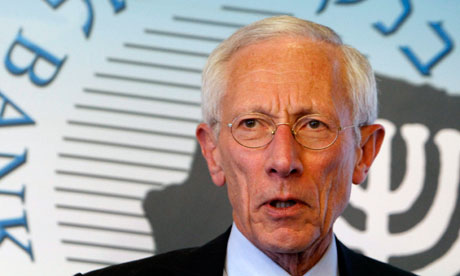
At 67, Stanley Fischer, governor of Israel’s central bank, is too old to run for head of the IMF. Photograph: Miriam Alster/EPA

At 67, the governor of Israel's central bank, Stanley Fischer, has been told he is too old to run for the vacant role of head of the IMF. Fischer had hoped the rule that applicants had to be under 65 would be overlooked, as it is "not relevant today", but the IMF did not share his views.
Read more: Experiences of age discrimination in the workplace.

© Guardian News and Media Limited

June 13, 2011

ISRAEL: Obesity in elderly boosts risk of dementia 300%

JERUSALEM / The Jerusalem Post / Health / June 12, 2011

Obesity in elderly boosts risk of dementia 300%, shows study

By Judy Siegel-Itzkovich

Health Scan:
Teaching how to live right; integrative medicine in OB/GYN; why DNA breaks down in cancer cells.
 
Photo: http://www.genome.gov/

Now there is another reason to control your weight: The journal Neurology has published Swedish research that has found that long-term obesity in older people raises the risk of developing dementia by 300 percent. Prof. Andrei Keidar, who is responsible for bariatric (stomach shortening) surgery at the Rabin Medical Center-Beilinson Campus in Petah Tikva, says the new findings are very important, and show that being overweight even in the elderly should be treated.

Eight thousand five hundred pairs of identical twins over 65 participated in the study; 350 were diagnosed as having vascular dementia (from blood vessel constriction), while 114 were suspected of having regular dementia. The researchers concluded that there is a significant connection between dementia and obesity.

Keidar explained that it has been known that metabolic diseases of the overweight, such as type 2 diabetes, involve excess sugar – the primary “fuel” of brain tissue. It may be that the disruption of normal metabolism contributes to the increase in the prevalence of dementia beyond the damage caused to the blood vessels, he suggested. Thus he concludes that preventing obesity and treating it at a younger age could reduce the amount of Alzheimer’s disease and other dementias. Alzheimer’s affects some 100,000 Israelis – more than 6% of people aged 65, and up to half of those over 85.

Health Ministry statistics show that 44.6% of Israeli adult men and 31.7% of women are overweight.

In the US and Europe, some 50% of older people are overweight or obese.

Keidar suggested that the amount of time for which people were heavy could affect their risk of dementia.

Exercise, diets, medical treatment and – as a last resort – bariatric surgery can help people avoid a series of diseases that can harm the quality and length of their lives, said Keidar. Some 5,000 bariatric operations were conducted (it is included in the basket of health services for those qualified) last year, compared to only 1,500 in 2006. After extensive study, two international medical societies recently stated that the efficacy of bariatric surgery in improving the health of the obese has been proven.

TEACHING HOW TO LIVE RIGHT

Finally, the Education Ministry has decide to make “A Healthful Lifestyle” the theme of the next school year. It will include information about proper nutrition and weight, physical activity and sports, disease prevention and not smoking, personal hygiene, strengthening body image and promoting clean and esthetic surroundings.

Central to school activities in September will be exercise and eating right. Pupils from first grade will be taught what is good to eat – including plenty of vegetables and fruits – in a society of plenty; preferring plain water to sweet drinks; avoiding fatty foods; the dangers of unprotected sun exposure; dental hygiene; and improving respect for oneself.

Education Minister Gideon Sa’ar said education on health can change habits. “I also believe that children have the power to improve society by influencing their parents and the whole family,” he said. Sa’ar set up steering committee headed by Irit Livneh, the ministry’s health supervisor, that would prepare a plan for implementing the decision in all the schools after consulting with public-health efforts.

INTEGRATIVE MEDICINE IN OB/GYN

An obstetrics/gynecology center for integrative medicine has opened at Jerusalem’s Shaare Zedek Medical Center that will combine conventional medicine with proven complementary medicine techniques. The unusual center was initiated by the hospital’s general integrative medicine center headed by Dr. Menachem Oberbaum and the ob/gyn division, and will be run by a senior gynecologist. Staffers in the new center will treat interested women in delivery rooms, the in-vitro fertilization unit and the ob/gyn departments.

WHY DNA BREAKS DOWN IN CANCER CELLS

The common denominator of all kinds of cancer cells is damage to the genes’ normal DNA. Although it is already known that cell damage is caused by stress to their DNA replication when cancerous cells invade, the molecular basis for this remained unclear.

But now, reportedly for the first time, Hebrew University of Jerusalem scientists have shown that in early cancer development, cells suffer from insufficient building blocks to support normal DNA replication. It is possible to halt this by externally supplying the “building blocks,” resulting in reduced DNA damage and the cells’ significantly lower potential to develop cancerous features. Thus, it is hoped that eventually this will provide protection against cancer development.

Prof. Batsheva Kerem of the Alexander Silberman Institute of Life Sciences and her Ph.D. student Assaf Bester showed that abnormal activation of cellular proliferation that drives many different cancer types leads to insufficient levels of the DNA building blocks (nucleotides) needed to support normal DNA replication.

Then, using laboratory cultures in which cancerous cells were introduced, the researchers were able to show that through external supply of those DNA building blocks it is possible to reactivate normal DNA synthesis, thus negating the damage caused by the cancerous cells and the cancerous potential. This work, documented in the journal Cell, raises the possibility of developing new approaches for protection against precancerous development, even possibly creating a kind of treatment to decrease DNA breakage.

© The Jerusalem Post 1995 - 2011

April 29, 2011

ISRAEL: Meet Ella 'Elka' Yagoda, 93, from Tel Aviv

.
TEL AVIV, Israel / Haaretz Daily / Weekend Magazine / April 29, 2011

Family Affair / Ella 'Elka' Yagoda
Meet Ella 'Elka' Yagoda, 93, from Tel Aviv

By Avner Avrahami and Reli Avrahami

TEL AVIV

Ella "Elka" Yagoda at home in Tel Aviv

The cast: Ella "Elka" Yagoda (93 ).


The home: This is a 60-square-meter home on the first floor of a standard apartment building on pillars, on Aminadav Street (20 stairs ); there are two and a half rooms ("We closed the kitchen balcony" ) and Elka has lived here since 1952 ("There was still scaffolding when we moved in - this is workers' housing" ).

Workers' quarters: "My husband was a Mapam person" - referring to a defunct left-wing party - "but I wasn't. The party's whole intelligentsia lived here." She adds that Meir Yaari, the Mapam leader, stayed at 22 Aminadav Street when he visited Tel Aviv.

Entering: On the other side of the door we find a hall, living room, bedroom, kitchen and another small room which is used as a studio for painting (complete with paints and brushes ). In the past, after the balcony was closed, this was the room of Elka's firstborn child: Prof. Nathan Gadot, a neurologist ("He's already retired" ), the former head of the department of neurology at Meir Hospital in Kfar Sava. The apartment, laden with books, pictures and statuettes, is carpeted, wallpapered and covered with oil paintings.

Oil paintings: These are richly colored Impressionist works - all by Elka. "I never used black," she says, "other than in sketches." The landscapes are imaginary ("Memories from Poland, memories from Russia" ). She has sold some of her paintings ("People bought in Belgium, people bought in America" ).

Continuing: The living room contains a sofa, two armchairs, curtains and a footrest, all in red ("I like warm colors" ). The sideboard ("from after the Yom Kippur War" ) holds, among other objects, the Encyclopedia Hebraica, "Moshe Dayan" (the biography by Shabtai Teveth ) and a book of photographs from Poland in the 1930s ("rare" ). We move to the kitchen.

The kitchen: There is a yellowish Amcor refrigerator, narrow marble counter, floral wallpaper and a jar of gefilte fish (from the supermarket ). As we return to the living room (which has a glass sliding door ), we notice certificates hanging on the walls.

Certificates: For volunteering "in the sphere of social welfare in the city of Tel Aviv-Jaffa," for volunteering in the Civil Guard, for volunteering in the Israel Cancer Association. There is also a photograph of Elka with the Polish consul general taken 20 years ago; she is closely connected with the Israel-Poland friends association.

Occupations: Twice a week she does volunteer work with an organization of Tel Aviv retirees, taking the No. 9 bus to offices on Pumbedita Street ("There is a bus every quarter of an hour" ). She's there from 8 to 11 and helps photocopy documents. She is also a member of two organizations that assist pensioners of the Tel Aviv municipality ("if someone needs a refrigerator, or teeth" ). The rest of the time is devoted to painting.

Painting: She's been at it since the age of six. "Starting from the time when we lived in Jablonna - with two N's - near Warsaw, where the palace of Graf Pototsky was located." She knew the count personally, she says, and more especially his wife ("who was an actress in the Nowosci Theater" ). In addition, Elka shops at the supermarket, has a cleaning person once a week ("Habuba, a Yemenite" ), prepares her own food ("I do everything myself" ) and doesn't complain about physical difficulties. At Purim, for example, she dressed up as a gypsy and went to a party ("I am a dancer" ).

Dancer: Every Saturday evening after the end of Shabbat she goes dancing at Golden Age House on La Guardia Street. However, she can no longer find a partner for the tango ("I used to dance with serious people" ).

Longevity: "My grandmother died at the age of 110. She used to eat in a shroud, so if the Angel of Death should come, he could take her."

Angel of Death: "I don't think about him." Life, she says, is very beautiful, but not everyone knows how to exploit it. "I was always elegant," she adds. "I never wore a bathrobe at home and I always put on lipstick and jewelry. I have been blonde for 40 years - I am a blonde with a brunette past."

Past: Elka, nee Broder, was born in Jablonna in 1918, to a nonreligious family ("but my father prayed every day" ) of eight children ("I was number six" ). Her father was a fruit merchant, and owned cherry and pear orchards ("We lived quite well" ); her mother was a housewife. As a teenager she was a group leader in the Young Pioneer movement, attended a high school for girls in Warsaw and always painted ("The teachers said I was very talented" ). At 14 she had a boyfriend, Moshe Yagoda, whom she met at summer camp and subsequently married. The war erupted on September 1, 1939.

The war: The Germans entered Jablonna before Rosh Hashanah, and Elka ("I looked like a goy" ) ran off to urge Moshe's family ("They had a soft-drink factory" ) to flee. Her whole family, who at first fled to Warsaw ("There wasn't a ghetto yet" ), perished. Her father died of typhoid, her mother was killed in the uprising and all her brothers and sisters were murdered in Treblinka, Majdanek and Auschwitz ("I alone survived" ). Elka fled eastward with Moshe, but first married him.

The wedding: "Moshe said, 'If you make a run for it, I am with you,' but his mother said, 'You will not leave here without getting married,' so we were married and fled as husband and wife." Her parents knew nothing of all this and she did not manage to say good-bye ("I regret that so much" ). She knew her father would not let her leave, she says.

The flight: They reached Russian territory in a horse-drawn cart, stayed a month in Bialystok and were sent "in a cattle train" to a forced-labor camp in the north, near Finland ("They said we were spies" ). Elka gave birth to Nathan in the camp in 1940 ("with the help of an older woman, with rags, in a hut with 80 people" ). In 1941, after the German invasion of Russia, they fled east to Tashkent. Moshe left first ("on the roof of a train" ); she and the baby ("with bronchitis" ) followed a month later.

Tashkent: Elka could not find Moshe among the tens of thousands of refugees in the Uzbek city ("I walked around with the child and shouted 'Moshe, Moshe!'" ). Then, after almost despairing, she suddenly noticed a basket that looked familiar - and he was standing next to it ("That was some meeting" ). They spent the rest of the war together in a kolkhoz in Uzbekistan and then returned to Poland.

Poland: They reached Szczecin, only to encounter pogroms ("The goy neighbors wanted to kill us" ). Elka, Moshe and Nathan fled to Germany, spent two years in a refugee camp run by the Joint Distribution Committee ("I saw Ben-Gurion there" ) and reached Palestine aboard the Exodus.

Exodus: The ship sailed from Marseille on July 11, 1947 ("The Israeli guys were like angels" ) and was intercepted by the British a week later. They were taken (after an escape during which four people were killed ) to Haifa and sent back to France. Elka was put ashore with Nathan at Port-de-Bouc ("I was very sick" ) and reached Palestine a month later aboard the Kedma ("Shulamit, Arlosoroff's daughter, looked after us" - referring to Haim Arlosoroff, a Zionist leader ). Moshe arrived afterward and they lived in a key-money apartment in the Shapira neighborhood in south Tel Aviv ("We received $100 from an uncle in America" ). Their daughter Etty was born in 1950 (she manages an old-age home in Kibbutz Evron ); their second son, Aryeh, was born in 1952 (he is a physician specializing in fertility problems at Herzliya Medical Center ). Elka also has eight grandchildren and eight great-grandchildren.

Tel Aviv: She and Moshe moved to the Aminadav Street apartment in 1952. Elka knew everyone ("Illi Gorlitzky was a good friend," she says, referring to the entertainer ) and played paddle ball on Frishman beach. After Moshe died, in 1967, Elka married his brother, Yisrael, who was always with them and was endlessly devoted to the family. "The children wanted us to marry," she says. "They loved him, so I decided to do it. He had a job at the municipality, but my great love was for Moshe." They were married in a civil ceremony conducted by the civil rights activist Shulamit Aloni ("a friend" ). Yisrael died in 1995 and she has been alone since.

Daily routine: Elka gets up at 5 A.M., exercises ("The body needs movement" ), dresses ("nicely" ), has a cup of coffee ("decaf, two spoons of sugar, no saccharine" ) and a slice of bread ("whole wheat" ) with cheese, puts on makeup and leaves the apartment. She catches a bus at 7:30. Returning at 11:30, she prepares lunch ("Soup is a must" ) and if there is no apple compote, she has a cup of tea with a cube of sugar ("which you put in the mouth" ). After washing the dishes, she rests for two hours and turns on the TV at 5 P.M. ("Channel 1 - I like Dan Margalit," the anchor of a current-events program ). Later she has a slice of bread with tomato and a cup of tea, listens to CDs ("classical and [singer] Dudu Fischer" ) and occasionally goes to the theater ("I have free tickets at the Cameri" ). If not, she paints in the evening and gets into bed at 9 in order to watch concerts until 11 on a Russian channel, falling asleep in the process.

Assisted living: "Not for me, that's the last path."

God: "I will not answer that. Some who went through the Holocaust do not believe in him."

Israel: "Such a pity. I came to a beautiful country, once a person was a person; today, if a president can do things like that ..."

Peace: "We have to compromise on the territories, there is no other choice."

Longings: "For my sisters, for Masha, who was 13, and for Fayge, who was 11."

Most important: "The children's education, more than love."

Happiness quotient (scale of 1-10 ): "I do not give a grade. I am happy, but because my daughter is sick, I am not happy."

Copyright: Haaretz.com

February 12, 2010

ISRAEL: Israel's senior citizens still having regular sex

. TEL AVIV, Israel / Haaretz Israel News / February 12, 2010 By Dana Weiler-Polak A poll in honor of Valentine's Day on the Hebrew-language Web portal Motke, which caters to seniors, shows that around 50 percent of senior citizens have sex at least once a week. Ilana, a 71-year-old former educator, says the figure does not surprise her. "I see this more in senior citizens' homes when I visit friends, where people are still looking when they are 80 or 90, and women who are courted are very pleased," she says. "Today life is longer. There is the Internet, which offers a world of possibilities. And women our age are exercising, doing yoga, dieting, doing various cosmetic surgeries - everything to look better and continue to live well." Photo for Illustration courtesy: Ozier Muhammed / The New York Times Ilana, a long-time divorcee, is expecting her partner to surprise her on Valentine's Day. "We're going north, but I let him know that Sunday is Valentine's Day and we have to celebrate, even at an older age. Nothing changes and I am looking as forward to it as I once did." Michaela Cohen, 81, is waiting at the entrance to an HMO clinic in Petah Tikva and asks for the time every few minutes. While waiting for her gentleman friend, who is 10 minutes late, Cohen hears about the poll's results. "That's what they do at old-age homes; that's why I refused to go there," she whispers. "All that the women do is smile and simper, and it's very unpleasant. Some people just can't stand being alone, so they make do with what there is. And today technology is well developed and there are doctors, and quite a few men ask for help in the matter to feel like men." At this point, Cohen moves aside and glances both ways before adding: "Don't ask how many betrayals there are. They say they want to have a 'good time' and meet people at the fitness club or the HMO, and the gossip doesn't stop." Motke was established as a social network for older Israelis to improve their health. That is part of the worldview of Prof. Mordechai Shani, who established the site, which has become the best-known site for that age group. It has 9,000 subscribers and 5,000 visitors a day who take part in chats and forums. "The poll shows that Israelis are no different than seniors in other countries," Shani says. "This is more proof that many people are mistaken about older people. There is no substitute for couplehood, which is an important factor in quality of life." At a small kiosk in central Petah Tikva, four friends meet regularly: Amalia Ben-Yehuda, Rachel Solomon, Haim Cohen and Yitzhak Aizik. Seated on old plastic chairs, they pass the afternoon chatting. Sex is not on the agenda. "I am a widow, living alone in my house, but I have my friends and this is what we do. So I have no plans for Valentine's Day," says Ben-Yehuda, 75. But Cohen then suggests to Ben-Yehuda and Solomon: "But you can go out, just the two of you, it's common today." Ben-Yehuda is surprised to hear the results of the poll. "That's probably true in a seniors' home, but with us everything is more simple," she says. "We are not technological and don't look at the Internet. We only know whom we meet here and there. I see people in an old-age home. They don't miss anything - even though there's a Don Juan right here," she says, pointing a finger at Aizik. "Love has to go both ways," Aizik says, and refuses to volunteer information on present and past loves. "I lived with one woman for 53 years and that was love. Now I prefer to be alone." [rc] © Copyright 2010 Haaretz.

July 12, 2009

ISRAEL: Maccabiah to Promote Sports among Seniors

. JERUSALEM, ISrael / Israel National News / July 12, 2009 The 18th Maccabiah international Jewish sport event, which opens Monday, will emphasize for the first time sport competition among senior citizens. The emphasis on elderly athletes is due to joint cooperation between the Maccabiah with the Ministry of Pensioner Affairs. Senior citizens will take part in the opening ceremony and competitions as part of advancing awareness to the sector’s participation in leisure time activities and physical fitness. At the opening ceremonies, nine young Israelis will march together with nine famous senior citizen athletes waving an Israeli flag. Deputy Pensioner Affairs Minister, Dr. Leah Ness stated that she hopes that the participation of the senior citizens will bring “awareness to sport activities within the third age, which greatly helps slow down the natural aging process.” [rc] Leah Ness. 2007 Photo © David Rabkin News Source: Arutz Sheva

May 26, 2009

ISRAEL: Amos Elon, Israeli Author, Dies at 82

. NEW YORK, NY / The New York Times / Middle East / May 26, 2009 By Ethan Bronner JERUSALEM, Israel - Amos Elon, an Israeli essayist and author who examined his society’s flaws and myths, explored some of its greatest figures and became for many years its most renowned public intellectual, died Monday in Italy, where he had made his home since 2004. He was 82. Amos Elon in the mid-1980s. Photo by Jerry Bauer His wife, Beth, said the cause was leukemia. The author of nine books, Mr. Elon rose to international fame in the early 1970s after the publication of “The Israelis: Founders and Sons,” an affectionate but unsparing portrait of early Zionists. Israel’s founders, he argued, had failed to properly acknowledge the people living on the land that the Zionists had come to reclaim. They had embarked on “a national and social renaissance in their ancient homeland,” he wrote, but “were blind to the possibility that the Arabs of Palestine might entertain similar hopes for themselves.” Such a critique is fairly common today, even in Israel, but it was rare then, particularly coming from the pen of an Israeli. Mr. Elon’s ability to step outside his society’s heroic narrative and present uncomfortable facts and perspectives in learned yet accessible prose set him apart. Appearing just as Palestinian nationalism was beginning to assert itself, the book fell on fertile ground. At the time a correspondent and columnist for Haaretz, the liberal Israeli daily newspaper, Mr. Elon found his work on international best-seller lists and his thoughts in demand from European and American broadcasters. He left the newspaper (returning some years later before leaving again) and devoted himself to his books and to writing essays, some appearing in The New Yorker, The New York Times Magazine and especially The New York Review of Books. A trim man with straight hair, a smooth face and unforgiving eyes framed by large horn-rimmed glasses, Mr. Elon had a severity of manner and, having been born in Vienna, a deep attachment to German culture. Widely admired, he was not an easy man to love. As Ari Shavit, a writer for Haaretz, said of him in the introduction to an interview with Mr. Elon in 2004, “a devotee of human rights but not overflowing with brotherly love.” Mr. Elon was born in 1926 and moved with his family to Palestine in 1933. He studied law and history at Hebrew University and Cambridge. By the 1940s he was a member of the prestate Tel Aviv intelligentsia. Hired by Haaretz, he rose quickly at the paper in the 1950s by focusing on topics others neglected — notably on what he termed “the second Israel,” meaning the poor Middle Eastern Jewish immigrants often overlooked by the country’s European founders. In short order the newspaper sent him to Paris as its correspondent, then to Bonn and later to Washington, where he met his American-born wife, Beth. They have one daughter, Danae Elon, a documentary filmmaker who lives in New York. He is also survived by a sister, Chaya Matarasso of Israel. Fluent in German, Hebrew and English, Mr. Elon wrote for publication in all three, offering fresh perspectives not only on Israel, but also on its perceptions of the outside world and on European culture. Tom Segev, who followed in Mr. Elon’s footsteps by becoming a Haaretz columnist and an iconoclastic best-selling writer of books that came to be called “new history,” said Mr. Elon’s book on Germany, “Journey Through a Haunted Land: The New Germany” (1967), was as much of a shocker to many Israelis as his books on Israel because it portrayed a vibrant, self-questioning society to readers who tended to see it only through its Nazi past. His most recent book, “The Pity of It All,” published in 2002, was a portrait of German Jewry from the mid-18th century until the rise of Hitler. German Jews are known in Israel as yekkes, a Yiddish term of derision and affection that suggests punctiliousness and a touch of cultural snobbishness, and coming from that world, Mr. Elon said, he wanted to set the record straight and write of its depth and richness. “They were really the first free Jews. And the first Europeans,” he told Haaretz in the 2004 interview. “And they built a civil society and believed obsessively in Bildung, which is self-improvement through the fostering of social concerns.” An earlier book was a penetrating but admiring biography of Theodor Herzl, the founder of Zionism. Mr. Elon owned a house in Italy, and five years ago he moved there permanently, selling his Jerusalem apartment and prompting a debate in Israel on what it meant that a cultural giant and social critic could simply leave. “The move smacked of a man saying, in effect, ‘I am withdrawing to civilized Tuscany,’ ” said Amnon Rubinstein, a law professor, author and former government minister. “There was a feeling that he felt he no longer belonged.” In the Haaretz interview, Mr. Elon said he had grown weary and angry at what he considered the growing influence of religion and a heightened focus on military power in Israel, especially after the capture of the West Bank and Gaza in the 1967 war. Asked if he felt alienation, he replied: “Not alienation. Disappointment.” As to whether he missed the story he had written about so forcefully, Mr. Elon said he took comfort from the Tuscan landscape: “It’s so beautiful that it melts your heart. So in the few years I have left, I want to look at this view most of the days of the year. On the other days, I’ll come to Israel and get mad.” Copyright 2009 The New York Times Company

May 13, 2009

ISRAEL: Study Demonstrates Link Between Appetite And Elderly Mortality

. CHEVY CHASE, Maryland / ScienceDaily / May 13, 2009 A new study by a Ben-Gurion University of the Negev (BGU) researcher reveals a linkage between elderly people's appetite and mortality rates, with those who report impaired appetite more likely to die sooner. The study, published in the May issue of the Journal of Nutrition, Health & Aging, demonstrated a link between the Daily Activity Energy Expenditure (DAEE-- an accurate measurement of total physical activity), appetite and mortality among well functioning community-dwelling adults. Information on an elderly patient's eating habits may be important for health providers regarding risk for patient deterioration and mortality. "These findings are important because they show how subjective appetite measurement can predict death, even when adjusting for health and many other variables," said Dr. Danit Shahar, a researcher with BGU's S. Daniel Abraham International Center for Health and Nutrition and Department of Epidemiology. Dr. Danit Shahar "Past studies failed to show an association with survival. It was thought that decreased appetite may be an indicator or a result to other health problems, and that malnutrition, rather than low appetite was associated with mortality." "Dietary Factors in Relation to Daily Activity Energy Expenditure and Mortality among Older Adults" analyzes data from the Health, Aging and Body Composition (Health ABC) study to demonstrate that higher DAEE is strongly associated with increased appetite, resulting in lower risk of mortality in healthy older adults. Using 298 older participants (ages 70-82 years) in the Health ABC study, researchers analyzed DAEE and dietary factors, including self-reported appetite, enjoyment of eating and intake assessed by the Block Food Frequency Questionnaire (FFQ) and Healthy Eating Index (HEI). Participants who reported improved appetite were at lower risk for mortality. Similarly, participants who reported good appetite at baseline had a low risk for mortality. The results remained significant taking into account health status, physical activity, demographic and nutritional indices. Follow up was nine years. Journal reference: 1.Shahar, D.R., B. Yu, D.K. Houston, S.B. Kritchevsky, J.-S. Lee, S.M. Rubin, D.E. Sellmeyer, F.A. Tylavsky, and T.B. Harris. Dietary Factors in Relation to Daily Activity Energy Expenditure and Mortality among Older Adults. Journal of Nutrition Health & Aging, 2009; 13 (5): 414-20

February 20, 2009

ISRAEL: Four retirees arrested for international drug smuggling

Four Argentinian retirees arrested for smuggling drugs for Israeli ring TEL AVIV, Israel / Ha'aretz / February 20, 2009 By Yuval Goren Four Argentine retirees who made their way to the Netherlands and India from South America allegedly served as couriers in an international drug-smuggling ring thought headed by five Israelis. Although the retirees initially failed to arouse the suspicion of border police at airports around the world, the Argentines and all five of the Israelis have been arrested in recent weeks. An undercover operation lasting more than a year conducted by the Israel police and police departments in other countries found the couriers to have been a lot more than innocents abroad. The four were reportedly caught with large quantities of cocaine and hashish. © Copyright 2009 Haaretz

January 26, 2009

ISRAEL: 25 Percent of Hospitalized Israeli Senior Citizens Die of Malnourishment

. BROOKLYN, NY / Yeshiva World News / January 26, 2009 According to information released at the opening session addressing nutrition among the elderly in Israel, it was learned that 25% of hospitalized senior citizens die as a result of malnourishment, not due to sickness or disease. Internationally renowned expert, Elia Marinos, a professor of clinical nutrition and metabolism from Britain stated “Israel is facing a very serious problem, malnourishment, because there is no awareness of the problem and therefore, no one is addressing it.” Prof. Marinos adds that the poor nutritional realities are also resulting in obesity and nutrition has a direct impact on the economy. The professor adds that many elderly residents lack the funds to purchase the proper foods, resulting in functional and cognitive problems including loneliness and depression. Some cases become increasingly complicated, leading to poor food absorption and problems pertaining to the ingestion and digestion of foods. Prof. Marinos explains that even some obese patients are victims of malnutrition, lacking essential vitamins and minerals. According to Dr. Danit Shachar, a gerontologist affiliated with Ben-Gurion University, 34% of senior citizens admitted to Israeli hospitals are diagnosed as suffering from some form of malnutrition which at times is manifest by a lack of vitamins and minerals which impair some bodily functions. Statistically speaking, these patients are usually hospitalized for longer periods, more frequently develop complications and their treatment is generally more costly. Dr. Shachar states that despite these alarming facts, the state prefers to ignore the problem rather than invest in simple testing, monitoring and treatment. Dr. Irit Hermesh of the Israel Nutrition Organization conducted a study which reveals 50% of hospital patients in Israel suffer from malnutrition and there is a significant number of senior citizen fatalities among hospital patients as a direct result of malnutrition. Dr. Hermesh adds the system ignores this and the general medical community lacks awareness and the necessary budget to address the issues at hand. Health Ministry official Yosfa Nachal responds to the report, stating all geriatric hospitals have a slot for a dietician and there has been an increase in monitoring of geriatric patients in nursing facilities. Yosfa adds that new standards are constantly being introduced. Yechiel Spira – YWN Israel

October 27, 2008

ISRAEL: Mental-health specialists protest after Israel bars them from Gaza meet

. EREZ CROSSING, Israel / The Daily Star-Lebanon / October 27, 2008 Dozens of mental-health specialists protested Israel's siege of Hamas-ruled Gaza Sunday after they were prevented from entering to attend a conference there. Around 70 protesters waved signs denouncing the Israeli closure of the Palestinian territory, with slogans such as "Let Gaza live" and "Israel: a medical conference is a security threat?" Doctors from several countries had hoped to attend a conference on mental health in the impoverished coastal territory hosted by the World Health Organization, but Israeli authorities did not allow them to enter. The conference, which will be held Monday with doctors in Ramallah participating via video conferencing, will focus on the impact of the Israeli siege on the mental health of Gaza residents. The Israeli military rejected the doctors' accusations in a statement, saying it would allow medics to enter Gaza to provide care but not to attend a conference in a "territory controlled by terrorists." Israel has sealed the territory of 1.5 million people off from all but extremely limited humanitarian aid since the Islamist Hamas movement - which won legislative elections in 2006 - seized power there in June 2007. Palestinian medical officials have reported numerous cases of patients dying in Gaza hospitals due to a lack of medical supplies and equipment resulting from the Israeli siege. - AFP Copyright © 2008, The Daily Star.

October 12, 2008

ISRAEL: Getting Ready For Sukkot

. An ultra-orthodox Jew checks palm fronds for blemishes in Jerusalem's Mea Shearim neighbourhood October 12, 2008. The palm frond is used in rituals during the week-long Jewish holiday of Sukkot, which begins Monday, October 13 at sundown. REUTERS/Baz Ratner

September 24, 2008

ISRAEL: In my own write - An ode to age

. JERUSALEM, Israel (Jerusalem Post), September 23, 2008 OPINION / Columnists Judy Montagu ________________________________________________ But maybe I ought to practice a little now? So people who know me are not too shocked and surprised When suddenly I am old, and start to wear purple. From 'Warning' by Jenny Joseph Jenny Joseph _________________________________________________ One of the most enduring images from my first years in this country, back in the '70s, isn't of a historic locale, religious site or natural beauty spot, though I saw quite a few of those and they were gripping and very splendid. It's of an elderly woman I encountered briefly in an office on the top floor of a old building in Tel Aviv, where I was helping out a friend of a friend with some secretarial chores (the company imported YKK zippers from Japan). Now two words in that last sentence - "elderly woman" - while perfectly accurate, do absolutely nothing to advance this story. I could write "old woman," but that wouldn't be any better. So I'll just tell it. There we were, about six of us in that long, stuffy room, heads bent over invoices, when the door opened and a figure wafted in. Clad in some pastel-colored floaty garment, she flitted - there's no other word - from desk to desk, bestowing here a word, there a smile. When she passed me, the merest fragrance remained in the air. Then she was gone. "Who was that?" I asked a co-worker, bemused. "That's the big boss's wife," she answered. I learned, too, that she was a woman in her 80s. It was late summer, but those few moments were a breath of spring. THIS EPISODE hardly fits with the general perception of old age - but that's my point. In a secular Western culture that worships youth and, lip service apart, doesn't consider being "full of years" as having much going for it, older people themselves can, as never before, define what being 60, 70, 80 and older means. Call it gray pride. There was a time when rigid social structures decreed that matrons must wear frilly caps and black bombazine. Widows, most of whom weren't very merry, receded into near-obscurity. Today, every color of the rainbow is there for women of any age to enjoy; for men, too. A woman of nearly 90 I saw at a wedding was dressed in sky blue from her hat to her shoes and looked as fresh as a flower. My neighbor, 78, told me about the life-drawing class she was enjoying. "I haven't told my grandchildren about the nude models," she laughed. "They'd probably disapprove." A life drawing model posing for art students.Photo © Rayman / Getty Images A TV documentary I saw a while back focused on a group of centenarians in America, hardy folk of 100 and over who looked far from calling it quits. One, a chemist, was still being driven daily to his laboratory, where he put in a few hours' work. A comment he made was instructive. "I know I'm going to have to give this up one day," he told the interviewer. "But I'm having such fun." I'd rather have fingers than toes I'd rather have ears than a nose; And as for my hair I'm glad it's all there I'll be awfully sad when it goes! - Gelett Burgess (1866-1951) 'I DON'T mind getting old," a colleague confided to me. "It's the baggage that goes along with it." Now the most dishonest, least useful thing one could do is romanticize old age and pretend that 60 is fitter, healthier and happier than 40. In many respects, it isn't. Bodies become frailer and more vulnerable to disease; joints wear out. Dear ones can die. But for those spared serious illness, who have a reasonable standard of living and the blessing of family and friends, getting old could, I imagine, be like slowly climbing a great oak tree and, the higher you go, seeing more and more of the countryside below. Perhaps, too, from that vantage point the perspective is better, the important things standing out and the rest softened. EVIDENCE suggests that those who make it into the oldest age are those whose occupation gives them the drive to carry on. In Short Stories About Long Lives, former Jerusalem Post journalist Helga Dudman looks at a whole gamut of people - famous and ordinary, Jews and non-Jews - who lived into their 90s and beyond. "The only basic rule that emerges," she concludes, is that this group includes "personalities who were devoted to their work and their causes, often to the point of obsession." Like Irving Berlin, the phenomenal American composer of hit songs. He published 190 of them between 1907 and 1914 alone, and lived to be 101. Though "Alexander's Ragtime Band" (1911) took him, he said, only 18 minutes to write, his subsequent efforts were far from a walk in the park. "I work (ideas) out between eight at night and five in the morning... I sweat blood between three and six a.m.... and when the drops that fall off my forehead hit the paper, they're (musical) notes," he said. Berlin's secret, Dudman writes, was work, work, and more work. ONE NEEDN'T look further than the Sam Orbaum Jerusalem Scrabble Club to find people Dudman could have put in her book. Co-founder Sara Schacter, nearly 93, plays at least three games of Scrabble every day, more if she can, and is still one of the club's top players. Feisty Roz Grossman, 82, has written and performed hundreds of songs and says she remembers the words of most of them. Another club member, 80-something, told me: "I've just had my whole apartment redone - new bathroom, new kitchen... it's gorgeous." She sounded like a young bride, which made me think: Enthusiasm. It's part of the answer to remaining young while growing old. OUR ENGLISH literature teacher at London's Brondesbury and Kilburn High School for Girls, Margo Rowlands, was not above shocking her impressionable charges, sometimes to the core. A professional actress, she once stole a pupil's wallet, to the amazement of those who witnessed it - in order, as it turned out, to demonstrate the folly of carrying money in a back pocket. The class was stunned when she calmly began a lesson with: "Girls, do you realize that you are one day nearer to your deaths?" For us 13-year-olds, it was almost impossible to conceive of life as finite, and of ourselves as anything but immortal. But it is, and we aren't; and had our teacher known about Rabbi Eliezer ben Horkanos, she might have followed her shocker with his well-known "Repent one day before your death." How does one know when one will die? the obvious question would have arisen. Aha, Rabbi Eliezer would have answered, that's exactly the point: You must live as if every day was your last. That recommendation might, if you think about it, be no less beneficial than the doctor's prescriptions the not-so-young carry regularly to their pharmacists. For what would we do, where would we go, and to whom might we reach out if we knew we were cashing in our chips at midnight? OH AND, by the way, if a decade or three from now, you should happen to see a person wearing a floaty garment of beautiful color, flitting here and there and spreading good vibes - it'll be me, doing my best to emulate an "elderly woman" in a Tel Aviv office who has stayed in my mind and heart these 30-odd years. Copyright 1995- 2008 The Jerusalem Post

September 11, 2008

ISRAEL: Filipino Caregiver of 86-Year Old Will Now Get US Visa

. JERUSALEM, Israel (The Jerusalem Post), September 11, 2008: By Etgar Lefkovits, The Jerusalem Post In an about-face, the American consulate in Jerusalem has granted a visa to the Filipino caregiver of a sickly 86-year-old American immigrant who plans to travel to the US this fall for the wedding of her grandson, the family said Thursday. The US-born elderly immigrant, Harriet Weitz, who lives in Jerusalem with her 88-year-old husband Meyer, has been under the care of a Filipino caregiver, Eden Cabullos, 43, for the last three years. Last month, as reported by The Jerusalem Post, the Consulate refused to provide the caretaker a visa for their trip. The Weitzs were subsequently issued a visa for the caretaker after they wrote in her contract that they agreed to pay her airfare, give her free room and board, and pay her the minimum NY state wage of $7.15 an hour while in the US, conditions which they agreed to from the start. "We are very grateful to all those who helped us make this story have a happy ending," Meyer Weitz said. Copyright 1995- 2008 The Jerusalem Post

September 9, 2008

ISRAEL: Researchers reveal inner workings of human memory

. JERUSALEM (The Jerusalem Post), September 9, 2008: By Judy Siegel-Itzkovich Israeli scientists working in California have, for the first time, recorded individual brain cells in the act of calling up a memory; targeting where in the brain a specific memory is stored and how to recreate it. Prof.Itzhak Fried, M.D.,Ph.D.,FACS Prof. Itzhak Fried, head of the functional neurosurgery unit at Tel Aviv Sourasky Medical Center, a neurosurgery expert at Tel Aviv University and a neurosurgeon at the University of California at Los Angeles (UCLA), led the experiment, which was conducted with 13 epilepsy patients about to be operated on at UCLA Medical Center. Electrodes usually introduced into their brains to locate the origin of their seizures before surgery were used to record the firing of neurons. Fried's team at UCLA included Israelis Hagar Gelbard-Sagiv, Michal Harel and Rafael Malach of the Weizmann Institute of Science in Rehovot, and Roy Mukamel of UCLA. Their work, described by experts as "foundational" in explaining how recent memory works, was recently published in the journal Science. The recordings showed that recent memories "live" in some of the same neurons that fired most actively when the recalled event had been experienced, thus providing strong evidence, for the first time, in favor of a long-existing theory of neuroscientists. The finding is expected to lead to new directions in the study of dementias like Alzheimer's disease and help explain how some memories seem to come out of nowhere. "If we understand memory better," Fried told The Jerusalem Post before rushing off to surgery, "we are in better condition to help dementia patients. "The hippocampus region of the brain that we studied is the first to be affected by dementia. The ability to lay down new memories and retrieve them consciously depends on the hippocampus and the gateway to it, which is called the entorhinal cortex." The patients watched short video clips showing comic character Homer Simpson and some famous actors and comedians, along with landmarks like the Eiffel Tower. As they watched, researchers recorded the activity of many neurons in the hippocampus and the "gateway," which responded strongly to individual clips. A few minutes later, after performing an intervening task, the patients were asked to recall whatever clips came to mind. "They were not prompted to recall any specific clips," said Fried, "but to use free recall - that is, whatever popped into their heads." The researchers found that the same neurons that had responded earlier to a specific clip fired strongly a second or two before the subject reported what he had recalled (but did not fire when other clips were recalled). Ultimately, it was possible for the researchers to know which clips the patients were recalling without having to be told. The single neurons that were recorded as they fired, Fried said, were not acting alone, but were part of a much larger "memory circuit" of hundreds of thousands of cells caught in the act of responding to the clips. "In a way, then," said Fried, "reliving past experience in our memory is the resurrection of neuronal activity from the past." © 1995 - 2007 The Jerusalem Post.

August 27, 2008

ISRAEL: Flying is a headache, literally, for many travelers

. NEW YORK (Reuters Health), August 27, 2008: Headaches associated with air travel appear to be a "huge and painful problem," Israeli researchers report. In a study of 906 men and women who had traveled more than once by plane, nearly 6 percent reported that they experienced headaches associated with flying. Based on 3.3 billion seats available each year on commercial flights, with 70 percent occupancy, Dr. Israel Potasman and colleagues from Bnai Zion Medical Center in Haifa estimate that more than 100 million people suffer from flight-associated headaches annually. "This finding has enormous impact both in terms of suffering and economics," they write in the medical journal Cephalalgia. There are a number of mechanisms that could contribute to headaches during air travel, including stress, poor air quality, engine noise and changes in barometric pressure, the investigators note. To investigate the prevalence of flight-associated headaches, they surveyed visitors to the travel clinic at their medical center. More than one in five of the study participants had headaches at least once a month that weren't related to flying, the researchers found. But just over half of the 5.7 percent who reported flight-associated headaches suffered headaches this frequently. They were also slightly more likely to have migraines. Two-thirds of those who suffered flight-associated headaches were women, and one-third had a family history of headache. Among the flight-associated headache sufferers, 19.2 percent said they had headaches every time they flew. Nearly a quarter said their headaches got worse as the plane climbed, while a fifth said the pain became worse as the plane descended to the Dead Sea, which is about 400 meters below sea level, suggesting that barometric pressure may be a factor. The average age of the study participants, who had gone to the clinic to be vaccinated before traveling to the tropics, was 33, the researchers note, so "we may have missed many older business travelers flying to Europe or the USA." The vast majority of those surveyed (97 percent) said they flew economy class. This study, the researchers conclude, suggests that flight-associated headache "seems to affect a significant number of the travel population." SOURCE: Cephalalgia, August 2008.

July 21, 2008

ISRAEL: "Read this for a longer life"

TEL AVIV (Haaretz - Israel News), July 21, 2008: By Ofri Ilani What can you do to live longer? Until recently, experts mainly recommended proper nutrition and exercise. But a new study conducted at Hadassah University Hospital, Mt. Scopus adds another activity: reading daily. "We found that people who read every day live longer," said geriatrician Dr. Jeremy Jacobs of Hadassah, the lead author of an article recently published in The Journals of Gerontology. The article described a long-term study being conducted by Prof. Yohanan Stesman at Hadassah. The researchers have been monitoring 1,000 elderly Jerusalem residents for the past 18 years. The study began in 1990 with 600 men and women aged 70, who were examined and interviewed every few years. Later on, more people joined the study, bringing the total to 1,000. The researchers examined the participants' general health and asked them about various habits, including reading. The participants were divided into two groups - those who read daily, and those who do not read daily or do not read at all. Eight years later, when the participants were 78, the researchers found that 83 percent of men in the first group were still alive, compared with only 61 percent in the second group. For an unknown reason, reading did not have a significant effect on women's life expectancy. Jacobs says people who read often have a higher level of education and a higher income, which contribute to their overall health. Nonetheless, the research statistically isolated these variables in order to focus on the impact of reading alone. Even when all other factors were neutralized, reading was found to increase life span. "After neutralizing the effects of other factors, anyone who read daily had a 2.3 percent lower chance of dying (during the period reviewed - O.I.) in comparison to those who didn't read." How can this be explained? "The more you use your brain, the more you improve the blood circulation there and the better you preserve it," said Jacobs. "Apparently there is something vital and active in reading. A person continues to exercise his brain and is active in the world. This may also affect self-esteem. People who read feel they are more vital." However, Jacobs notes that not every activity contributes to health. Watching television, for example, was not found to affect participants' life spans. "Someone who reads is doing something active, as opposed to watching television, which is passive, and therefore reading better protects the elderly from deterioration," he said. While conducting the study, Stesman and company also found that even at an advanced age, it is never too late to start exercising. "We showed that the physical activity improves survival rates even at an old age," he said. "Even if someone starts at age 85, this has a very positive affect on survival." © Copyright 2008 Haaretz.

June 17, 2008

ISRAEL: Home for elderly at Palestinian camp has become sanctuary for all ages

BEIRUT, Lebanon (The Daily Star),
June 17, 2008:

By Zeynep Goksel, Special to The Daily Star

The Palestinian Authority (PA) in Occupied Palestine can hardly pay its bills, so its ability to provide social-welfare services to millions of destitute refugees scattered across the region is negligible. In addition to PA support, Lebanon's Palestinians rely on the sparse resources of the United Nations to provide services to some 300,000 refugees living in the country.

And often filling the leadership void regarding social services in the refugee camps in Lebanon are the various Palestinian civic organizations which struggle to alleviate the most acute social problems.

One such organization found within the south Beirut camp of Bourj al-Barajneh is the Active Aging House.

Originally established as a center for elderly Palestinian women, the facility has now become a place of sanctuary for refugees of all ages.

"We are open to people of all ages. But we offer the most assistance to the most needy, and particularly the elderly who are living alone," said Malak al-Nimer, an organizer of the project and its key fundraiser.

Most of those who are currently looked after are between the ages of 60 and 80 who either have no living family members or who have been separated from their families, says Nimer.

The House, launched in 2006, evolved from a smaller project that started by providing iftar meals for refugees to break the daily fast during Ramadan.

"In 2004 we started giving iftars twice a week," said Hala Daifallah, a volunteer at the House recently retired from the United Nations Refugee and Works Agency for Palestinian Refugees (UNRWA).

"We continued this for three consecutive years, and then started giving them daily. Then we thought, why do this only on Ramadan? Let's create a place where people can come on a regular basis."

The House has also expanded its services to include literacy and education programs.

"Many of them wanted to learn how to read and write, so we launched a literacy program," said Darine al-Khatib, a social worker at the House.

Khatib also works closely with UNRWA's women's program, and reports to UNRWA about the program's activities.

"Some of them don't know how to write, so we have someone listen to them and write down their stories for them" said Daifallah. "We bring speakers who lecture about elderly life. Sometimes we bring a doctor to talk to them. Other times they are informed of diseases that come with aging. This helps them expand their knowledge. They like it."

They also make time for handicrafts. Fady Badaja, who organizes activities and other sessions at the House, held up a colorful quilt, with each man and woman's name from the House sown in colorful squares.

"We want to make an exhibition, of pillows, quilts," he explained, "so that people know who we are."

Badaja was eager to recount the troubling life of Umm Hussein, a regular at the House.

"Her brother used to beat her and her mother," he recalled. "When she got married her husband beat her too. He died when he was 35 and she was 27. Then, she had similar problems with her mother-in-law and her father. This has traumatized her for her entire life. Now in this center she feels comfortable, she wants to speak about her experiences. She once told me, 'take a picture of me. Take a video of me. I want to talk about my life.'"

The House has attempted to recreate a familial environment for those who have lost their loved ones or have few family members. "Here we try to emphasize the concept of a home, of having a family. We try to emphasize that our aim is not charity. Our aim is to have this house as a club, where they can communicate, share experiences. They can even talk about their problems, their lives, their illnesses, their lives in Palestine," said Daifallah.

This open and welcoming environment took time to build. "At the beginning, they were shy, especially the men. Eventually many people became friends and began to share their experiences with each other," added Daifallah.

Relationships between regulars at the House have blossomed from friendships to a level of reliance and dependence found only among family members. "Even when one has to go to the hospital, others take turns staying there overnight to take care of them," said Nimer.

The 2007 battles at the Nahr al-Bared refugee camp near Tripoli saw the number of attendees of the House swell as refugees moved to Bourj al-Barajneh to escape the violence.

The House became a sanctuary for those traumatized by the conflict in Nahr al-Bared.

"Some of the displaced came here to stay with relatives, and we reached a total of 40 regulars, so we started alternating, having 20 people one day and another 20 the next," said Daifallah.

Working in cooperation with UNRWA, plans have been made to expand the services offered at House.

"We are opening a second center in Nahr al-Bared. UNRWA will be paying the rent and helping with establishment costs. We already have a list of 50 elderly," said Nimer: "When UNRWA rebuilds its own headquarters there, they will have a place for us on the ground floor."

The House is also looking to expand to different locations within the camp as the current space has become insufficient in dealing with the growing numbers of participants.

Though the House insists it is not a charity, to many regulars it is providing an essential service for camp residents - companionship.

May Masri, a Palestinian filmmaker who visited the House, summed up its importance to refugees. "When they wake up, they now have a purpose. They have a place to go. It creates a life for them. It gives them something to live for."

Copyright © 2008, The Daily Star.

June 13, 2008

ISRAEL: One plus one equals zero

TEL AVIV (Haaretz), June 12, 2008: Easy Start By Ariel Hirschfeld "Come here for a minute, please. Pardon me, but you're Hirschfeld, right?" Right. "There's something I wanted to ask of you." Okay, sure. "Have a seat for a minute, if you don't mind. There. Please forgive me for taking some of your precious time. I wanted to ask you something. You write in Haaretz, right? You write there about the snails and the lizards?" Yes. "So I wanted to ask you, if you've written about snails and lizards already, maybe you could write about me, too." Huh?? "About me. I sit here on this bench almost every day, under the trees, by the door to your house, with my Filipino." But why should I write about you? "About me doesn't mean just about me. I'm just an example. The people with the Filipinos. I don't want to complain or anything. I just want you to see me at least the way you see lizards. I see you leaving the house sometimes, always with books under your arm, absorbed in thought. You've never seen me. But it's not just you. I wanted to explain to you what happens to us, the people with the Filipinos. From the moment we have a Filipino, no one sees us anymore. I see that you don't understand. _____________________________________________________ For readers who don't understand, Seniors World Chronicle may add: There are an estimated 50000 Filipinos in Israel, most of whom work as private caregivers. _____________________________________________________ "See, from the moment we become two - an old man plus a Filipino - we become zero. And this is the thing that I want you to write. But don't make it all sentimental. That's all I need. What I want is for you to explain what happens in this transition from being one person - albeit an old man - but one man - to someone who has been doubled into a man plus another support-man, and how from this moment on, I'm telling you, no one sees him anymore. "And we know it. We know that having this Filipino is not like consenting to use a cane or even a walker. And you should know, even just consenting to use a cane is no simple thing. And a walker, that's the worst. When you realize that now it's time for the walker, you know that that's it. There's no going back anymore. And you, who walked on two feet for 86 years are from now on going to need six, and you're going to bother people as if it were 20. But a Filipino - with the Filipino you're signing off that it's the end for you. "It's not that they're bad. Just the opposite. They're good souls. And I trust him 100 percent. But I want you to understand: Anyone who sees us in the street thinks we're finished. The butcher speaks directly only with the Filipino. The guy who came to take over for my body also took over for my mind. "I want to tell you something. Sometimes I'm jealous of old people who have already lost their minds. At least they don't understand what's happening to them. But I - I do understand and my mind works like that of a 20-year-old. I don't want to tell you what it's like to look at what you are and to see this insult. Don't write that part. Haaretz readers are sensitive and only prepared for ugliness if it pertains to leaders or the downtrodden. I just want you to understand that inside this zero of a-person-plus-a-Filipino there's someone who is cognizant of everything that is happening to him and sees perfectly well how others view him as an empty shell. And I see myself that way, too. I really am an empty shell. "I want to ask you to explain what it is to be a person who sees and knows that he's in the midst of his end. And you should know that this is all just nature's way in my case. There's no malignant disease or anything. I'm just an old man who can no longer get up from a chair by himself." But there must still be a few things that make life worth living, aren't there? "Quit it. I'm the one who should be saying this bit of nonsense. Not you. I have grandchildren and great-grandchildren and the sky is blue. There's that of course. I read books and see the horrors and even read Haaretz Magazine. Life is full of interest. That's not what I'm talking about. I'm talking about how we, who by some dubious privilege have reached an age where we can no longer stand up on our own, and for whom death did not come at the right moment, but instead left us here to watch and see exactly how it works, see and understand everything, and there is no one - no one - to tell all this, and no one to teach what we learn every day. I want to tell you that even though I've done some things in my life and overcome some obstacles, this project of seeing myself unable to get out of bed and move to a chair is harder than a lot of things. And it demands just as much stamina and strength as raising your children. And you're all alone with it. Other people your age, who understand what you're talking about, don't want to hear about it, and younger people - Why do they need to hear about such problems? "To live like this from day to day and to find meaning in life in the face of this ruin that opens up before you like a scroll, a new page every day, you have to get smarter from day to day. I'm telling you. Smarter. And the worst thing is, you have to keep all this wisdom to yourself. There's no one to give it to, and it has no future. When you're young, everything you do is done for the sake of some sort of future. You think that you'll eventually reap the benefit. The harvest is always in the future. It will come. It's yet to come. But me, I have to learn something even though I won't have any opportunity to do something with it. And tomorrow, apparently, what I learned today will already be irrelevant, because I won't even be able to sit on this bench anymore." What does that mean? "What does that mean? It means that you know that everything, and I mean everything, will only get worse. From the moment you're a man with a Filipino, you know that you're on a single narrow track, that nothing can be fixed anymore. The only thing that's still growing for me like in the past is my fingernails. All the rest, from day to day, is falling off and going to ruin. This, you should know, is what old age is. And I would like you to write, if it's not too hard for you, that old people see and understand everything. Ah, and I wanted to ask you, to write one time about Shlonsky. Not just about his "Onegin." About the brilliant and crazy Shlonsky. He was a great man. I knew him." © Copyright 2008 Haaretz

June 12, 2008

ISRAEL: Old-age homes reach the Arab community

TEL AVIV, Israel (Haaretz), June 12, 2008:

By Yoav Stern

When Salim Damush was young, he helped his father take care of his sick grandfather in their home. He stayed at his side for nine months, during the difficult moments of his illness and of caring for him and, he says, had an experience he would not have wanted to miss.

Photo courtesy GAA

Now, at 50, he is an electronics engineer who spends most of his day at work. His mother is cared for not by her children but at an assisted living facility, Atzulat Hamontfort, in their Western Galilee village, Me'ilya.

In a conversation held a few weeks ago, Damush said that he has mixed feelings about the situation.

"The experience I had with my grandfather was one that children cannot have in any other way - the humaneness, the connection, the escape from the reality around us.

But I wasn't able to give my daughters an experience of this kind.

We have a different religion today, which has destroyed the world:

We have become slaves to our jobs.

We have to work, to run, to bring things, and we have no time, so we have to find another solution for our parents," Damush says.

More and more Arab families have begun placing their elderly parents in assisted living facilities. Members of the "sandwich" generation, who are caring for both elderly parents and young children, argue among themselves whether this is merely another inevitable result of modernization, welcome or otherwise, or part of a general trend of a loss of traditional values.

Kamel Abed is the owner and manager of Atzulat Hamontfort. As a young man he went to Australia, where he worked for 11 years. In 1994, just as he was about to settle there permanently, he decided to take his family back to the village. After his return he resolved to establish a retirement home like the ones he saw in Australia.

"At that time, there was hardly any solution to the population's growing need," Abed told Haaretz. Today, however, the picture is different. In addition to a government facility in the village of Daburiya there are several private facilities in the Galilee. Additional ones are in the planning or construction stage, for the Triangle area.

"In the past, the daughters or daughters-in-law took care of their elderly parents or in-laws," Abed explains. "Today, with the increased numbers of people with higher education, the option of staying at home no longer exists for the women and there is a need for an alternative," he says.

In addition, there has been a decisive change in the economic structure of the Arab family. The father of the family once had control of events, since he provided the livelihood through farming and use of the family's lands, but in the past few decades this has changed drastically. Widespread land expropriation and other occurrences has led to the industrialization of Arab society, which has driven the younger generation toward education and skilled employment.

In addition, people were much more committed to family values in the past; it was much more difficult for them to take action without getting the approval of the extended family. "The position of the elderly has changed," Abed says. "He was once the one who employed everyone and he had the power, even if his health was poor. He would pass on his knowledge and his experience to the younger generations. Now everything is different."

Needless to say, this pattern is very similar to that of Israel's Jewish population. By comparison, in the Palestinian territories and in the Arab countries there are very few large residential institutions for the elderly; there are only shelters, which can accommodate only 10 to 20 people at a time.

Israel's Arab population is still similar in structure to that of developing countries. Only 2 to 3 percent of the population is over age 65, compared to 11.5 percent of the Jewish public. But if the recent drop in Arab fertility rates continues the proportion of old people in Israel's Arab community will rise significantly in the future.

Dr. Khalid Suleiman, a cardiologist at Afula's Haemek Hospital who is also the medical director of the Daburiya retirement home, explains that dramatic changes have taken place in the Israeli Arab public because of its contacts with the general Israeli public, considered to be Western. "All the societies of the Middle East have changed, but our change, as a result of the friction with Jewish society, has been accelerated, and there has been no transition period," he says.

Suleiman points to a number of factors: the change in the economic structure of the family, the considerable improvement in the status of women as well as the drop in birth rates and the rise in life expectancy. The Daburiya facility, which is part of JDC-Eshel, began over 15 years ago to admit Christian and Muslim Arabs from throughout Israel as well as Druze, Negev Bedouin and Circassians from nearby Kafr Kama.

"This causes many problems," Abed says, "such as the loss of values and changes in intergenerational relations inside the family. We have to find the right way - not to regress but to find a way that will blend values that are suitable for us with modernization."

© Copyright 2008 Haaretz

April 4, 2008

ISRAEL: Dying Arabs, Jews spend their last days together in hospice on Jerusalem's dividing line

JERUSALEM (International Herald Tribune - Associated Press), April 4, 2008: In a sunlit, tan-stone building on the dividing line of this divided city, Arabs and Jews come to die — or to live out the last period of their life, as the staff at the hospice at St. Louis Hospital in Jerusalem would rather say. The hospice is a rarity in Jerusalem — a place where the city's mistrustful residents come together in an atmosphere free of political tensions. "This feels like an oasis in the middle of craziness, which is ironic, because all these people are sick," said Tammy Einstein, an art therapist at the hospital. It's not that the hospital has suddenly made best friends out of wary Arabs and Jews. But in the last days of their lives, the facility's patients and their families find themselves on equal ground, getting a rare glimpse of each other's worlds. "We aren't a peace organization. We are here to work," Einstein said. "When people talk to me (about politics) I try to keep it on a human level — isn't it a tragedy that we have to lose more people in this fabulous city?" she said. The hospice faces the Christian Quarter of Jerusalem's Old City on one side and the predominantly Jewish west Jerusalem on another. Founded by a French philanthropist, the 146-year-old institution has 50 patients, around half of them Jews — including many Russian speakers who immigrated from the former Soviet Union, and a quarter Arabs. The rest are mostly foreigners who lived in Jerusalem and wanted to spend their last days in the holy city, including nuns who once tended to patients in St. Louis. Inside, white-clad doctors and nurses speak Arabic and Hebrew among themselves, while communicating to each other in English. On a recent day, three elderly patients sat around a Russian-language television. The sunlit hospital smelled of clean linen and faintly of bleach. Colorful paintings were taped over the faded paint on the walls. Many of the hospice's residents sat in wheelchairs in a sunny corridor on the hospice's second floor, gathered in twos and threes. Many were attached to machines and barely spoke. Others gave lively greetings as staff members walked by. Patients' stays in the hospice range from hours to years, staffers say. While most patients were unable to communicate, their families freely interacted. As visitors bustled past, two women wearing Muslim headscarves stood in a corridor, as a Russian-Israeli woman with dyed red hair pushed an elderly woman in a wheelchair. A nurse suddenly swooped by. "Good day," she said in broken Russian to the elderly woman, who smiled back in return. "Illness is intimate. We see something else in each other," said Sister Monika, the German nun who has run the hospice for the past nine years. Volatile Mideast politics, including the struggle for control of Jerusalem between Palestinians and Israelis, a key issue in peace talks, are left at the door. Israel controls the entire city and claims it as its capital. Palestinians want east Jerusalem — captured by Israel during the 1967 Mideast war and site of key Jewish, Muslim and Christian holy sites — as the capital of their future state. In such an environment, Jews and Arabs rarely socialize together in Jerusalem, though they often come into contact. The city's hospitals are among the few places with mixed staffs and where patients find themselves face to face. Almost every day, Adina Marx, a Jewish Jerusalem resident whose family came from Poland seven generations ago, comes to the hospice to visit her husband Gadi, who is suffering from brain damage from a previous illness%emph_on(type:italic;%). %emph_off(%)She said the hospital staff has made her family feel welcome by respecting Jewish dietary laws. ""I don't know who is a nun and who is not. They keep kosher here. They respect Passover," she said. "They honor people's beliefs ... It's very a delicate (balance)." A 45-year-old Arab woman who visits her elderly mother at St. Louis laughed over Jerusalem's complexities. She tries to visit her mother every day, but is often late because of the Israeli military checkpoints that hinder her travel from an outlying Arab suburb. The woman, with a bright green headscarf and pink lipstick, asked not to be named, citing family sensitivities. She helped her 86-year-old mother move slowly with a walker. "It dwells in my heart, that frustration over being discriminated against," she said. Israel says the obstacles are needed to keep Palestinian attackers out. Today's embattled Jerusalem is a stark contrast to the city of her mother's childhood. As a young girl in the 1920s, she lived in the Old City, a maze of houses and bazaars, mosques, churches and synagogues. At the time, she had Jewish neighbors, but they fled or were expelled during the war that followed Israel's creation in 1948, when Jordanian forces captured east Jerusalem. After Israel recaptured the area in the 1967 Mideast war, her mother went searching for her old Jewish neighbors — people she considered friends. But they were gone. She said she rarely interacts with Jewish Jerusalemites — except in the hospital. She's not close friends with any of the Jewish families, but they are good neighbors in the hospice, she said. "We say hello to each other and nod, we ask about each other. But in the end, I'm here because I want to care for my mother. And they are here for the same reason, to care for their ill," she said. Copyright © 2008 the International Herald Tribune