Remember ME - You Me and Dementia

Showing posts with label Future. Show all posts

June 24, 2011

USA: Alzheimer's may cause global cash crunch, say experts

WASHINGTON / Agence France Presse / Health / June 24, 2011

By Kerry Sheridan, AFP

Alzheimer's disease could cause a global cash crunch in coming generations -- as people begin to regularly live to 100 -- and must be considered a serious fiscal danger, experts said Thursday.

Already 24-37 million people worldwide live with the incurable form of dementia, and that number is projected to reach 115 million by 2050, a panel of Alzheimer's disease experts told the US House Committee on Foreign Affairs.

As women bear fewer children and the population ages, the world will become increasingly ill-prepared to cope with large numbers of dependent elderly people and must begin investing more in research to prevent the disease, they said.

Places like Russia, Europe, the US and parts of Asia are experiencing more people dependent upon public health systems (AFP/File, Sebastien Bozon)

Places like Russia, Europe, the United States and parts of Asia are experiencing "declining populations, fewer workers and more people dependent upon public health systems for their support," said George Vradenburg, founder of an advocacy group called USAgainstAlzheimer's.

"That is producing fiscal stress on our health systems around the world and it is producing the risk that the developed world -- particularly the Asian rim and particularly western Europe -- are going to be declining in their economic growth and prosperity in the coming years."

According to the London-based Alzheimer's Disease International, the total estimated worldwide cost of the disease in 2010 was 604 billion dollars, or nearly one percent of global GDP.

"If Alzheimer's were a country, it would be the 18th largest economy based on GDP," said Daisy Acosta, the chair of ADI, describing Alzheimer's as "the single most important health and social crisis of the 21st century."

"The impact of this disease today is massive and will accelerate with the years to come," she said.

And yet, compared to other major health woes such as cancer and HIV/AIDS, the amount of research money being spent on preventing it is minimal.

"We invest six billion a year for cancer, four billion dollars a year for heart disease, two billion dollars a year for AIDS," said Bill Thies, chief scientific officer at the Alzheimer's Association.

"We are at about 450 million a year for Alzheimer's disease," he said.

"Without increasing that significantly we are going to see the peak of this epidemic and we are going to see the worst possibilities of it."

The experts acknowledged that the strain of caring for an Alzheimer's patient usually falls on the family, but in the years to come nations as a whole could prepare themselves better by considering how to run an aging economy.

"My grandchildren, aging experts tell me, will live to 110 or 120," said Vradenburg, noting that after age 85 one in two people is diagnosed with dementia.

"We are going to see increasingly a physically able population but a cognitively disabled population."

In order to prevent the older set from consuming a nation's economic resources for health care, countries must think about how to put dementia patients to work in order to keep their economies from collapsing, he said.

"We need to change our aging populations from people who are taking a public benefit... and turn them into productive taxpayers who are participants in the workforce," Vradenburg said.

"Those countries that get it right and figure out how to support their aging populations -- keeping them healthy and keeping them productive -- are going to be winners in the 21st century."

Those who do not will be "losers," he added.

"It is critical for the world to begin to recognize this not just as a health issue but as a fiscal issue."

Eric Hall, president of the Alzheimer's Foundation of America, called for a global meeting early next year to compare notes among nations on how to best approach the problem and formulate a global action plan.

House Representative Ed Markey, a Democrat from Massachusetts, said the world must come together to find a solution.

"We are in a race against time here... and that is across the whole planet," said Markey.

"It is imperative for us to have an action plan that does work, because failure is not an option here."

Copyright © 2011 AFP
___________________________________________________________________
Credit: Reports and photographs are exclusive property of original owners.
Seniors World Chronicle, a not-for-profit, serves to chronicle and widen the reach.

June 6, 2011

UK: Who pays for the elderly?

LONDON, England / The Daily Mail / Money / June 6, 2011

MONDAY VIEW
by Ros Altmann

After recent frightening headlines from the UK Care sector, will we finally wake up to the scale of the challenge we face to ensure dignity and decent care for our ageing population?

It is wonderful that so many are living longer, but Government has failed to prepare for the inevitable sharp increase in costs of older people’s care. Everyone is in denial. ‘I don’t want to think about it’. ‘It won’t happen to me’. ‘The State will pay’. ‘It’s all too difficult’.

All kinds of excuses, but in reality nearly all of us are likely to have to engage with care funding, for ourselves, a partner or a parent.

Growing problem: By 2030 those needing care will have risen by 50 per cent

A few years ago, warnings of a looming pensions crisis were brushed aside but policy is now desperately seeking solutions for the pension problems we have all woken up to.

Let’s not make the same mistakes with care.

Those in need cannot wait at all. Yet no money has been set aside, there is next to no financial sector or employer involvement and state provision is patchy at best.

The coming decades will witness a sharp rise in demand for care in ‘the’ home or care in ‘a’ home. One in three women and one in five men will need some care, normally costing tens of thousands of pounds. It is vital that our system of regulation and protection for vulnerable elderly people is improved.

But funding of care must also be provided. By 2030 numbers needing care will rise by 50 per cent and the working age population will be unable to afford the costs. However, in a civilised society, the money has to be found. There are no easy answers.

The current system is complex and confusing. Local government is responsible for a large proportion of social care funding, provided on the basis of need and ability to pay. With local authority budget cutbacks, care services are increasingly concentrated only on those with greatest needs.

Removing early intervention means many elderly patients end up in NHS hospital acute beds costing a fortune.

The State only covers medical care in full, whereas non-medical long-term care is means-tested. Anyone with over £23,250 in assets in England and Wales may have to cover their entire care costs. As it is virtually impossible to insure against such unlimited costs, people don’t.

So what can be done? Apart from better regulation and protection for care home residents, we must also reform care funding.

The Dilnot Commission, reporting in July, will propose options for reform – its recommendations must be taken seriously, rather than pushed into the long grass as with previous Reports.

Reforms could include capping the amount people must pay – say £50,000 – with the state funding the rest. Incentivising care savings plans, perhaps Care ISAs, or even ‘family care plans’ where families club together, with the benefit of tax relief, to pay for someone’s care.

Some will need to use the value of their house, but not all of it as now. This should attract private sector involvement to help plan properly.

Reforms are essential to ensure our ageing population can achieve the dignity and care so many will need in future years. We missed the pensions crisis, let’s not fail on care funding too.

Ros Altmann is the Director General of Saga

Copyright: Associated Newspapers Ltd

June 5, 2011

USA: Cancer’s New Era Of Promise And Chaos

NEW YORK, NY / Forbes.com / June 5, 2011

THE MEDICINE SHOW
By Matthew Herper

In a major speech to cancer doctors Saturday, the outgoing president of the American Society of Clinical Oncology told his colleagues to prepare for a new era in which rapidly advancing genetic technology will change the way cancer is treated for the better – but also force doctors to change the way they invent and test drugs and care for patients.

This bold declaration came as the first results of this way of thinking bear fruit. A drug made by pharmaceutical giants Roche and Daiichi Sankyo reduces the risk of death from melanoma by 63% – if the skin cancer tumor has a particular mutation. A Pfizer lung cancer treatment awaiting regulatory approval keeps lung cancer patients alive longer – if they are in the small minority that have a very specific genetic defect. Two clinical trials that have been presented at ASCO ‘s annual meeting in Chicago, which I’m attending, showed it is possible to pick drugs for patients using a panel of genetic tests. Image via Wikipedia

George Sledge, the ASCO president and one of the country’s top breast cancer researchers dramatically and eloquently spelled out what these big changes will mean. This story is a condensation of his prepared remarks, which ASCO shared with me. Mistakes are mine. Credit for marshaling these facts and constructing this argument belongs to Sledge.

Cancer doctors, Sledge said, are entering an era of “genomic chaos,” a phrase that describes both the genetic madness that makes healthy cells turn into deadly cancers and the instability that incorporating rapidly advancing genetic technology into cancer care will bring. The way clincial trials are run will need to change dramatically. New kinds of electronic health records will need to be created to collect data, inform doctors instantly of new results, and track how good a job physicians are doing. Sledge, whose one-year term as ASCO president is ending, argued doctors need to face up to this blast of new technology.

Dr. Sledge's  Presidential Address at the Annual Meeting. Photo by © GMG/Todd Buchanan 2011.

This is not just geeky talk about cool genetics — it is really a matter of life and death. The speech was dedicated to Sledge’s administrative assistant, who was recently diagnosed with triple-negative breast cancer, one of the hardest varieties of the disease to treat.

A million and a half Americans will be diagnosed with cancer this year, Sledge said. Cancer death rates are falling as a result of less tobacco smoking and better science, but malignancy kills half a million Americans every year. The cost of health care outpaces inflation. According to an article in the Journal of National Cancer Institute, costs for cancer care will increase by 27% or more. The workforce of doctors willing to do clinical trials is dropping; it is hard work, comparatively poorly compensated, and is a “labor of love.” And new cancer drugs fail most of the time. Cancer drugs succeed in late-stage trials 34% of the time, compared to the 60% success rate in respiratory disease, endocrinology, and immune system disorders.

Doctors have been trying to use localized treatments to attack tumors since the 19th century. In the 1940s and early 1950s, the first chemotherapies were used. Cancer drugs like Gleevec and Erbitux, targeted to attack specific mutations in cancer cells, have been the breakthroughs of the past decade. The next step, Sledge says, is DNA-sequencing technology, which is getting cheaper and more powerful at a rate faster than Moore’s Law, which predicts the regular reduction in the cost of microprocessors that has driven the computer revolution. Already, he notes, companies like Knome in Cambridge, Mass., will deliver a genome on a thumb drive.

“So what happens when, a few years from now, a patient walks into a doctor’s office and hands a physician a memory stick loaded with gigabytes of personal genomic data?” Sledge asks. His answer: the flood of data will help doctors and patients, but things will get “very, very complicated.”

Read full report here

2010 Forbes.com LLC™

May 24, 2011

USA: Judgment Day forecaster points to new doomsday date

.
LOS ANGELES, California  / Reuters / News / Oddly Enough / May 24, 2011

By Steve Gorman


The evangelical Christian broadcaster whose much-ballyhooed Judgment Day prophecy went conspicuously unfulfilled on Saturday has a simple explanation for what went wrong -- he miscalculated.

Instead of the world physically coming to an end on May 21 with a great, cataclysmic earthquake, as he had predicted, Harold Camping, 89, said he now believes his forecast is playing out "spiritually," with the actual apocalypse set to occur five months later, on October 21.

Camping, who launched a doomsday countdown in which some followers spent their life's savings in anticipation of being swept into heaven, issued his correction during an appearance on his "Open Forum" radio show from Oakland, California.

The headquarters of Camping's Family Radio network of 66 U.S. stations had been shuttered over the weekend with a sign on the door that read, "This Office is Closed. Sorry we missed you!"

During a sometimes rambling, 90-minute discourse that included a question-and-answer session with reporters, Camping said he felt bad that Saturday had come and gone without the Rapture he had felt so certain would take place.

Reflecting on scripture afterward, Camping said it "dawned" on him that a "merciful and compassionate God" would spare humanity from "hell on Earth for five months" by compressing the physical apocalypse into a shorter time frame.

But he insisted that October 21 has always been the end-point of his own End Times chronology, or at least, his latest chronology.

The tall, gaunt former civil engineer with a deep voice and prominent ears has been wrong before. More than two decades ago, he publicly acknowledged a failed 1994 prophecy of Christ's return to Earth.

To publicize his latest pronouncement, the Family Radio network posted over 2,000 billboards around the country declaring that Judgment Day was at hand, and believers carried the message on placards in shopping malls and street corners.

Evangelist admits world end error

Asked what advice he would give to followers who gave up much or all of their worldly possessions in the belief that his Judgment Day forecast would come true, Camping drew a comparison to the nation's recent economic slump.

"We just had a great recession. There's lots of people who lost their jobs, lots of people who lost their houses ... and somehow they all survived," he said.

"People cope, he added. "We're not in the business of giving any financial advice. We're in the business of telling people maybe there is someone you can talk to, and that's God."

(Editing by Greg McCune)

May 23, 2011

UK: How will we care for the centenarians of the future?

.
LONDON, England / The Guardian / Culture / May 23, 2011

Comment is Free
Those born today will be in their prime by 2050. But they won't be living here unless we change attitudes to immigration

By Danny Dorling

By 2066, there are predicted to be over half a million people
aged over 100 in Britain and diminishing resources to care for them.
Photograph: Edmond Terakopian/AFP/Getty Images


The future potential care bill for the elderly in Britain is so great that it could threaten family ties, according to a report released by the Organisation for Economic Co-operation and Development yesterday. It suggests that, by 2050, the country will spend more than a fifth of its entire national output on services for the elderly.

In my new social atlas, Bankrupt Britain, I document with Bethan Thomas how the current economic woes have revealed a whole series of potential financial, residential and moral future bankruptcies. The harsh truth is that by 2048, advances in medicine, a better-ordered society, and even huge amounts of care being provided by the young elderly, will not be enough to help us care for our rising population of the very old. Last year, the Department for Work and Pensions upped their estimates of future centenarians considerably, to suggest that there will be more than half a million aged over 100 by 2066.

To aggravate the situation, there is great uncertainty over how many young people there will actually be around in the future in Britain, compared to how many we need. When the present Queen was just a couple of years on the throne, and then again a dozen years later, she was told wildly different stories about how many future subjects she should expect to reign over. Her advisers were uncertain, but such uncertainty matters when we try to prepare for our dotage.

In 1955 and 1965 projections, published by the precursors of the Office for National Statistics for the UK, population around the time of the millennium differed by some 22 million people. The 1955 projection of 53 million by 1995 was far closer to the final outcome than was the 1965-based estimate of 75 million by 2001. We tend to overestimate future populations rather than underestimate them. The 1965-based projections, published around the Queen's 42nd birthday, projected that there would be more than 1.5 million babies born in the year 2000, a projection that turned out to be over twice the actual number.

When the 2011 census results are released in less than a couple of years' time, we will find out again if we have been over-estimating the population and perhaps then we will recognise that we do need censuses, we do need to plan and we could be much better organised than we are.

However, better organisation only gets you so far. No matter how well we organise ourselves in future, we do have a problem with how few youngsters there are projected to be in future in Britain. Even if (like almost every other nation state in Europe) we disband the households of servants that royalty and the super-rich have established to care for them, so that the cost of these servants can be redistributed to allow the rest of us to be cared for more efficiently, there may well not be enough younger people to go around in Britain. It is when people find that this is the case that the fear of an each-for-their-own attitude prevails most strongly.

Most of the world's population who are projected to be very elderly in 2050 are not living in those places where the vast majority of people currently being born are projected to live. Those born today are people who will, by 2050, be in the prime of their lives. But almost all of them won't be living in Britain, unless we change our attitude to immigration (in this country and across all of Europe) – the greatest fall in fertility in the world recently has been in eastern Europe, so we shouldn't expect help from Polish carers in future.

If our current population and household projections are allowed to run their course then, just as there was a 73% rise in single (mainly elderly) households between 1981 and 2008, with just a 12% rise in households containing more than one person, so too we should expect a similar rise over the course of the next 27 years.

However, as we can see, though, from the contradictory advice given to the Queen, there is nothing inevitable about projections. They have been out by millions before, mainly because what actually occurs is very much out of our hands. A higher proportion of single-occupancy households is what you get when you combine an ageing population with a curtailment of immigration.

Britain's full up, you might say, and – apart from when petrol prices rise suddenly and incomes fall – our roads are pretty full. But that has more to do with people taking more journeys in Britain than is usual in Europe, than with British population density being too high. Many of the more affluent British currently emigrate in great numbers to some of the most densely populated areas of Europe to enjoy their retirement in the sun: to Malta, to the Spanish Costas and other hotspots.

We have as many emigrants as immigrants, it's just that being a very unequal country the exchange has not always been that fair – more affluent Brits out (for at least the colder part of the year) and more poorer immigrants in.

This imbalance is a product of the inequalities we tolerate. Inequalities which, if they are allowed to increase unabated, result in a very unattractive image of a future society. Not the kind of place that will find it easy to care well for that first tally of half a million centenarians. I'm "young" enough to be among that cohort. If I should live that long I have a huge vested interest in Britain changing for the better beforehand.

© Guardian News and Media Limited

CANADA: The Middle-Class Is Coming!

.
TORONTO, Ontario / The Globe and Mail / Life / Facts & Arguments / May 23, 2011

SOCIAL STUDIES

By Michael Kesterton


In just a decade, the world will change from being mostly poor to being mostly middle-class  (iStock Photo)


Earth to be middle class

“Let’s have a round of applause for an astounding milestone in individual achievement, family prosperity and community improvement around the globe,” The Christian Science Monitor says. “In just a decade the world will, for the first time in history, change from being mostly poor to being mostly middle class. … The middle way is not intrinsically virtuous. It can involve overindulgence and beggar-thy-neighbour conflicts. It can make tragically bad choices. But somewhere within the five billion middle-classlings forecast for 2030 are individuals who will help us figure out how to keep the planet a balanced, enjoyable habitat. We’re counting on that.”

Creaking boomers


“We’re becoming a nation of bum knees, worn-out hips and sore shoulders, and it’s not just the Medicare set,” says Associated Press. “Baby boomer bones and joints also are taking a pounding, spawning a boom in operations to fix them. Knee-replacement surgeries have doubled over the last decade and more than tripled in the 45-to-64 age group, new research shows. Hips are trending that way, too. And here’s a surprise: It’s not all due to obesity. Ironically, trying to stay fit and avoid extra pounds is taking a toll on a generation that expects bad joints can be swapped out like old tires on a car.”

Musicians’ brains better?


“New research shows that musicians’ brains are highly developed in a way that makes the musicians alert, interested in learning, disposed to see the whole picture, calm and playful,” says ScienceDaily. “The same traits have previously been found among world-class athletes, top-level managers and individuals who practise transcendental meditation.”

Watch that one

“Lingering glances across the office may not be a good thing, claim scientists, as it could mean you are the victim of malicious gossip being spoken about you,” says The Daily Telegraph. “Researchers have found that people unconsciously pay more attention to the faces of others whom they have heard spoken of in negative terms. The reason stems from evolution, when it was useful to know whom to avoid and to keep an eye on them, [researchers] believe. It allowed humans to live in groups and to learn from others, and not just from direct experience. The team, led by Northeastern University in Boston, asked people to look at pictures of faces made to look as neutral as possible, some of which had been linked to negative gossip, some to positive and some to neutral.” Their findings are published in the journal Science.

Keep your mind on your meal

“If the diet and exercise industry is any indication, one of the hardest things for people to do is to control their appetites,” says The Boston Globe. “A new study suggests one piece of advice: pay attention. While eating lunch, young women either listened to a recording that instructed them to pay attention to the sensory experience of eating, or they read an article about healthy eating, or they did neither. Those who focused on the experience of eating were less hungry two hours later and ate fewer snack cookies – an effect that was explained by a more vivid memory of the meal.”

Rudeness seems to rule

“Have you ever noticed that many people with power seem to flaunt their presumed authority by being rude?” Psych Central asks. “A new study investigates this observation and discovers people with power seem to act the part by smiling less, interrupting others and speaking in a louder voice. Researchers determined that when people do not respect the basic rules of social behaviour, they lead others to believe that they have power.”

Votes for future adults

“Sixteen-year-olds are voting in a state election in Germany for the first time,” reports BBC News. “The authorities in the city of Bremen lowered the voting age to try to interest younger people in politics. Sports stars and politicians have taken part in a campaign to persuade teenagers to participate, and schools have held lessons in how to fill in ballot papers. … Skeptics argue that it is inconsistent to give 16-year-olds the vote when they have to wait two more years before they are allowed to drive or sign a contract for a mobile phone.”

Thought du jour

“No man thinks there is much ado about nothing when the ado is about himself.”

– Anthony Trollope (1815-82), Victorian novelist

© Copyright 2011 The Globe and Mail Inc.

May 12, 2011

USA: The Millionaire Retirees Next Door

.
NEW YORK / The Wall Street Journal / Opinion / May 12, 2011

Typical retired couples will collect $1 million or more in Social Security and Medicare. This is more than they paid in, and the cost will fall on today's workers.

By JOHN COGAN

Readers may recall the 1950s TV show, "The Millionaire," which portrayed stories of individuals who were given a "no strings attached" gift of money by an anonymous benefactor. Each week in one of the show's opening scenes, a man representing the wealthy benefactor, John Beresford Tipton Jr., knocked on an unsuspecting recipient's door and announced: "My name is Michael Anthony and I have a cashier's check for you for one million dollars."

That TV program is scheduled to return next year as a reality show, and the new recipients will be the typical husband and wife who reach age 66 and qualify for Social Security. Starting next year, this typical couple, receiving the average benefit, will begin collecting a combination of cash and health-care entitlement benefits that will total $1 million over their remaining expected lifetime.

According to my calculations based on government data, such married couples will begin receiving monthly Social Security checks that will, on average, total about $550,000 after inflation. They will receive health-care services paid for by Medicare that, on average, will total another $450,000 after inflation. The benefactors will be a generation of younger workers who are trying to support themselves and their families while paying taxes to finance the rest of government spending.

We cannot even remotely afford to make good on these promised benefits. Although our system of personal liberty, free enterprise and limited government has made us an affluent and upwardly mobile people, we are not yet a nation of John Beresford Tiptons.

More on Savings

Video:

* Social Security: Maximize Your Benefit
* Doing the Math on Social Security
* Social Security: What Couples Should Consider


Chad Crowe


The existence of so many million-dollar couples is not the result of elected officials carefully weighing the needs of senior citizens against the financial ability of younger workers to meet these needs. Rather, it is the result of decades of separate legislative actions by both political parties to liberalize retirement and health-care benefits, the sum total of which no one has bothered to calculate.

Social Security and Medicare were the result of natural human impulses to create safety-net programs to prevent poverty in old age and to help needy senior citizens with their medical bills. But the programs are flawed.

In 1978, Congress instituted automatic cost-of-living adjustments for Social Security. That's reasonable. But Social Security's method of automatically increasing benefits to successive cohorts of retirees by more than inflation makes less sense. It means that the average worker who retires this year receives a monthly benefit that is about 23% higher after adjusting for inflation than the monthly benefit received by the average worker who retired 20 years ago. The average worker who retires 10 years from now is, in turn, promised an initial benefit at retirement that is 14% higher after adjusting for inflation than the average worker who retires today.

Under the federal government's fee-for-service Medicare program, every time a senior citizen meets with his physician or health-care provider for a check-up, lab tests or surgery, somebody other than the patient foots most of the bill. That such a program should produce runaway costs is hardly surprising. Over the years, the government has expanded the type of services covered, such as prescription drugs, and it has assumed a greater portion of the program's finances. Medicare premiums paid by senior citizens once covered half of the cost of physician and related services. They now cover one-fourth. Copayments once covered nearly 40% of these services' costs. They now cover only 20%.

To fix Social Security, Congress should start by limiting the increase in benefits of future retirees to the rate of inflation. Congress should then gradually raise Social Security's normal retirement age. Congress should also allow younger workers to invest a portion of their payroll taxes—and create more incentives for them to invest their earnings—in safe, broadly-diversified, stock and bond funds. This would allow younger workers to become millionaires through their own hard work and thrift.

To fix Medicare, we must move away from the current system of fee-for-services and low copayments. First and foremost, copayments should be increased significantly. Medicare recipients need to have more skin in the game if they are to become cost-conscious medical consumers.

The higher copayments can be offset by reducing Medicare premiums and offering more Medicare health plan choices. Rep. Paul Ryan's proposal—to provide fixed annual grants to enable Medicare recipients to buy an affordable private insurance plan—is a fiscally sound way to achieve this outcome. Competition among providers, not government-administered prices and government boards of experts to determine coverage, is the best way to ensure high quality and reasonably priced health care.

Many of the million-dollar couples believe they rightfully deserve the benefits they have been promised. They have, after all, spent all of their working years paying into Social Security and Medicare. And true enough, the typical 66-year old couple and their employers, on their behalf, have contributed nearly $500,000 in payroll taxes (in today's dollars) toward these benefits during their working careers.

But regardless of how much they have contributed, the hard reality is that the federal government has already spent it. No matter how deserving they are, it is younger generations of workers who have to come up with the money.

So today's seniors need to consider how they want the script for "The Millionaire" sequel to be written: There's a knock at the door. We now know that on the other side there's a check for a million dollars. When the door opens, do we really want to see our children, under the commanding gaze of Uncle Sam, presenting us with that check?

Mr. Cogan is a senior fellow at the Hoover Institution and a professor of public policy at Stanford University. He served as deputy director of the Office of Management and Budget during the Reagan administration.

Copyright ©2011 Dow Jones & Company, Inc.

April 19, 2011

UK: Live to be 100? One in four 16-year-olds predicted to become centenarians

.
LONDON / The Guardian / Science / Aging / April 19, 2011

Experts call for radical rethink of pensions and work-life balance to tackle problems of increased life expectancy

By Sam Jones
 
Society will have to embark on some radical rethinking of everything from pensions to the work-life balance if it is to cope with increasing numbers of people living to be 100 and older, demographic experts have warned.

According to figures released this week by the Department for Work and Pensions, more than a quarter of children aged 16 and under can expect to see their 100th birthdays.

The statistics revealed that as many as 11 million people alive now will become centenarians: 3.3 million are aged 16 and under; 5.4 million of them are between 17 and 50; 1.4 million are 51-65, and more than 900,000 are already over 65.

The pensions minister, Steve Webb (right), said the state pension system had to be made "fair and sustainable for future generations" if people were likely to be spending more than a third of their lives in retirement. But others have suggested that a far more radical approach is required.

David Sinclair, head of policy and research at the International Longevity Centre, said that while the increase in life expectancy was "a huge societal success", it would come at a price.

"If the projections are true, then the impact on service provision is huge and as a society we are heading towards huge fiscal service pressures," he said.

"The pressures on local authorities and central government will have a very, very significant impact - as will the knock-on impact on other ages and other generations. If the older population demands more and more resources, then it has to come from their own wealth and assets - or from someone else."

That, said Sinclair, could form the crux of the problem. While the increased number of active and familiar centenarians might help change and improve our attitudes to older people, their ubiquity could give rise to resentment.

"The pessimistic side is that there is a very real risk that it could generate even more intergenerational tensions if you end up with a clash for resources between young and old - and that is what we really need to avoid."

Prof Jane Falkingham, head of the school of social sciences at Southampton University and director of the ESRC Centre for Population Change, said one of the challenges would be deciding when to work and when to have children.

"Although medical advances are pushing up the age at which women can bear children, the most fertile period is and is likely to remain the 20s and 30s," she said.

"One question is whether it makes sense to juggle work and family life, or whether we in future will invest in parenthood and then invest in work - and work into our 70s."

Such an approach, she said, would involve rethinking the way the welfare state works. "If people are going to restructure their lives and have their children first and then have work, they're going to have to have something to live on when they're having the children before they pay it all back through the world of work," she said. "So it's thinking about how the welfare state can operate across the life course, as well as how individuals restructure their lives."

Danny Dorling, professor of human geography at the University of Sheffield, said that while the ONS projections ought to be celebrated, they should not be taken for granted.

"It's good news that it's possible," he said. "But Britain currently has the lowest life expectancy of almost any western European country and we need to ask why.

"Japan has the largest number of old people in the world; Japan also has lowest income and probably the lowest wealth inequalities in the rich world."

Prof Sir Michael Marmot, of University College London, said it was high time for some "radical rethinking about what the nature of the life course looks like in a changed society".

Sir Michael - who led a government-ordered review into Britain's widening health inequalities last year - added that the projections would illustrate how variable outcomes could be for different people.

"We'll have some people working all their lives and not having nearly as much time to enjoy their pensions, and other people working all their lives and having decades to enjoy their pensions because their life expectancy is much longer.

"Unless we're going to take the kind of steps that my health and equality review called for - unless we're going to take the steps to reduce that - these new projections will mean much longer, healthier lives for some but not for others. It won't be uniform by any means."

Personal view: Diana Athill

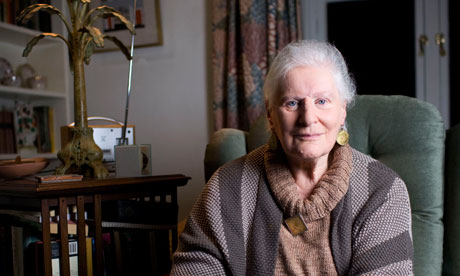
The novelist, memoirist and editor Diana Athill. As a nonagenarian herself, she thinks it is ‘bad news’ that so many will reach 100.  Photograph: David Levene/eyevine

An impressive person living in this retirement home is 105. She has all her marbles, walks far, far more briskly than the rest of us and has a positive and cheerful disposition. If anyone is a good advertisement for being a centenarian, she is.

Yet she says – not in a whingeing way, but calmly, as a matter of fact – that she has had enough. She would like to die. And I, while still six years short of 100, can see what she means.

However well you carry your old age, and however many surprising compensations you discover in it, it does get worse and worse. It is a limited condition. Your body is no longer a source of pleasure and although you can still do much, there are a great many things you can no longer do. It isn't, I'm sure, meant to last very long. After all, everything that has a beginning has an end. That's life.

So I think it's bad news that so many more people are going to reach 100 – I certainly don't want to be one of them. And one thing's for sure: we'll have to keep a very close eye on our lords and masters or they'll start contriving ways of polishing us off. We may not want to last very long but we don't want to be killed.

© Guardian News and Media Limited

September 12, 2010

CHINA: China’s percentage of elderly highest in 2030

.
BEIJING, China / People's Daily / China Society / September 12, 2010

The proportion of people above 65 in China will surpass that of Japan in 2030, which will make China the world’s most aged society, according to a report released Friday by Chinese Academy of Social Sciences (CASS), China News Service reported.

China will enter the phase of intense aging in 2050. Photo: CFP.cn

The proportion of people above 65 in China will surpass that of Japan in 2030, which will make China the world's most aged society, according to a report released Friday by Chinese Academy of Social Sciences (CASS), China News Service reported.

The report, called China's Financial Policy Report from 2010 to 2011, says China will enter the phase of intense aging in 2050, when senior citizens above 60 will consist of more than 30 percent of the total population.

According to the latest demographic data predicted by the United Nations, China's aging problem is not so serious in 2010, with people above 60 consisting of 12 percent of the total population, which is below the average level of the Organization for Economic Cooperation and Development (OECD). But in the following 30 years, it will become more of an aged society with its accelerating elderly population.

The report also says as a result of this, China's demographic dividend, meaning a rise in the rate of economic growth due to a rising share of working age people in a population, will peak in 2013 and gradually decrease from there.

The problem with an increase in China's elderly population will slow GDP per capita growth, investment and capital accumulation, while at the same time increase public debt. China needs to find a solution for this in order to ensure continuous and steady economic development, according to the report.

Source: CRIENGLISH.com
Copyright by People's Daily Online

September 9, 2010

CHINA: China expected to face aging society crisis in 2035

.
BEIJING, China / The People's Daily / Life & Culture / September 9, 2010

The effects of China's aging population are expected to reach crisis levels in 2035 when every pensioner is supported by less than two Chinese taxpayers, said Dr. Yang Yansui, a professor of Tsinghua University, during the 21st Century Forum held in Beijing on September 8.

Prof Yang Yansui also said that China's working age population will decrease in 2015 and the pace for the growth of the aging population will accelerate.

Yang said there will be 810 million people in the working age population, which includes those aged between 15 and 64, and 294 million people in the aging population, defined as those above the age of 65, in China in 2035.

If students, the unemployed population and low-income population failing to meet the minimum tax threshold are excluded, then every pensioner will be supported by less than two Chinese taxpayers. Such a phenomenon is called the threshold of aging society crisis.

European countries and the United States have all formulated strategies for pensions and the development of the elderly care service industry 30 to 35 years ahead of schedule in order to ensure the living security of seniors and help them to deal with various negative social impacts posed by aging problems. Comparatively, it will take China only a little more than 20 years to enter the threshold of the aging society crisis, thus it is urgent for China to formulate pension policies to prevent the aging society crisis.

Li Ling, a professor at the China Center for Economic Research under the National School of Development of Peking University, believes that China has a special national situation and has a larger population and faster changes of pace than any other country.

Therefore, she suggested that the huge assets of China's state-owned enterprises should gradually be transformed into the source of funds for the country's social security system.

Meanwhile, since the rise in the value of state-owned land is a result of economic development, the related added value should be assets shared by all the people, and be used as the funds for the social security system, she said.

Copyright by People's Daily

December 16, 2009

INDIA: In 2025, India to Pass China in Population, U.S. Estimates

. The view of the Friday night market from Scott Poniewaz's apartment balcony. West Patel Nagar, New Delhi, India on September 27, 2009.Photo credit: Scott Poniewaz . NEW YORK, NY / The New York Times / Asia-Pacific / December 16, 2009 By Sam Roberts India will become the world’s most populous country in 2025, surpassing China, where the population will peak one year later because of declining fertility, according to United States Census Bureau projections released Tuesday. The bureau suggests that the projected peak in China, 1.4 billion people, will be lower than previously estimated and that it will occur sooner. With the fertility rate declining to fewer than 1.6 births per woman in this decade from 2.2 in 1990, China’s overall population growth rate has slowed to 0.5 percent annually. In contrast, India’s 1.4 percent growth rate is being driven by a fertility rate of 2.7 births per woman. The bureau’s International Data Base projects that China’s labor force will peak at 831 million — 24 million more workers than today — in 2016. That is because the number of newcomers to the labor force in their early 20s is expected to start declining in 2011 after reaching 124 million. In India, the number of new entrants to the labor force is expected to reach 116 million in 2024 before decreasing. China and India alone account for 37 percent of the world’s population of about 6.8 billion. Every minute, the bureau’s estimates, 250 people are born worldwide and 107 die, for an increase of more than 75 million annually. By the time the 21st century is a quarter over, the bureau estimates, the population of the United States will be more than 350 million. The United States fertility rate, about 2.1 births per woman, is higher than in most developed countries, in part as a result of higher birthrates among immigrants. After China and India, the most populous countries are, in order, the United States, Indonesia, Brazil, Pakistan, Bangladesh, Nigeria, Russia and Japan. The worldwide population estimates include more than 11 million people over the age of 90 and more than 326,000 centenarians. More boys are being born than girls, but women begin to outnumber men among people in their late 40s. [rc] Copyright 2009 The New York Times Company