Remember ME - You Me and Dementia

Showing posts with label Netherlands. Show all posts

March 1, 2012

NETHERLANDS: Mobile euthanasia units to make house calls

LONDON, England / The Guardian / World News / Netherlands / March 1, 2012


New scheme called 'Life End' will respond to sick people whose own doctors have refused to help them end their lives at home

 in Berlin


Dutch euthanasia organisation Life-End will be offering its home services 
free of charge to Dutch citizens. Photo credit:  AP
A controversial system of mobile euthanasia units that will travel around the country to respond to the wishes of sick people who wish to end their lives has been launched in the Netherlands.
The scheme, which started on Thursday , will send teams of specially trained doctors and nurses to the homes of people whose own doctors have refused to carry out patients' requests to end their lives.
The launch of the so-called Levenseinde, or "Life End", house-call units – whose services are being offered to Dutch citizens free of charge – coincides with the opening of a clinic of the same name in The Hague, which will take patients with incurable illnesses as well as others who do not want to die at home.
The scheme is an initiative by the Dutch Association for a Voluntary End to Life (NVVE), a 130,000-member euthanasia organisation that is the biggest of its kind in the world.
"From Thursday, the Life End clinic will have mobile teams where people who believe they are eligible for euthanasia can register," Walburg de Jong, a NVVE spokesman, said.
"If they do comply, the teams will be able to carry out the euthanasia at patients' homes should their regular doctors be unable or refuse to help them," he added.
The Netherlands was the first country to legalise euthanasia in 2002 and its legislation on the right to die is considered to be the most liberal in the world.
But doctors cannot be forced to comply with the wishes of patients who request the right to die and many do refuse, which was what prompted NVVE to develop a system to fill the gap.
Sick people or their relatives can submit their applications via telephone or email and if the patient's request fulfils a number of strict criteria, the team is then dispatched.
Legal guidelines state that the person must be incurably sick, be suffering unbearable pain and have expressed the wish to die voluntarily, clearly and on several occasions.
According to De Jong, the team will make contact with the doctor who has refused to help the patient to die and ask what his or her reasons were.
More often than not, he said, the motivations are religious or ethical, adding that sometimes doctors were simply not well enough informed about the law.
If the team is satisfied that the patient's motives are genuine, they will contact another doctor with whom they will start the euthanasia process.
"They will first give the patient an injection, which will put them into a deep sleep, then a second injection follows, which will stop their breathing and heart beat," De Jong said.
Every year 2,300 to 3,100 mercy killings are carried out in the Netherlands, although opponents of the practice claim the figure is much higher because many cases are not registered. The Royal Dutch Medical Association (KNMG) supports euthanasia in principle if there is no alternative, but has distanced itself from the NVVE initiative, arguing that giving it the name Life End will foster the idea that it is for those who it said are simply "weary of life" rather than those who are sick.
It has also questioned whether Life End doctors will have the chance to forge the necessary relationship with a patient to be able to ascertain whether or not his or her life should be ended.
But Jan Kuyper, of the Life End Clinic Foundation, said: "We're not trying to push any boundaries here." He said it was quite possible that the mobile teams would not end up carrying out a mercy killing, either due to medical questions about the case or if doubt is cast on the patient's motives.
Little is known about the Life End teams. But one of the team leaders is believed to be a 67-year-old retired doctor who carried out 20 mercy killings during his medical career.
The teams would be limited to one house visit a week to minimise the psychological burden on them.
In neighbouring Germany, where mercy killings are strictly illegal, euthanasia opponents were particularly vocal in expressing their outrage at the developments. "This is an inhumane proposal," said the German Hospice Foundation, while the group Life Rights for Everyone called it a "warped understanding of [the meaning of] autonomy".
____________________________________________________________
Credit: Reports and photographs are property of owners of intellectual rights. 
Seniors World Chronicle, a not-for-profit, serves to chronicle and widen their reach.

December 3, 2011

NETHERLANDS: Chieko, 67, lends a helping hand to local Japanese

TOKYO, Japan / The Japan Times / Life in Japan / Features / December 3, 2011


A graceful hand to help elderly Japanese in Holland:

Chieko van Santen, longtime resident of the Netherlands, knows all about living overseas


By Kris Kosaka
Special to The Japan Times

In 1941, in the then Dutch East Indies, thousands of people were forced into internment camps by the invading Japanese army. It is a slice of history almost forgotten today, along with so many other wartime atrocities. It is something Chieko van Santen remembers every day, as the Japanese widow of a Dutch national whose father, a civilian businessman, died in one of the camps.

From her home in Wassenaar, a small town north of The Hague, Chieko, 67, now volunteers to help aging Japanese nationals living overseas with her organization, Nichiran Silvernet Foundation.

Chieko was born at the end of World War II in Onomichi, Hiroshima Prefecture, and was raised by a single mother. Everywhere in Japan, life was difficult in the aftermath of the war, but her mother "really gave me everything," she recalls. "Whatever I showed interest in, she found a way for me to do it. Ballet lessons, Japanese dance lessons, ikebana, tea ceremony and all kinds of things."

Her mother worked first as a schoolteacher and later as a government official. "She was a strong woman. Highly educated for that time," Chieko remembers.

She stayed in Onomichi until graduating from high school, then studied English literature at Hiroshima University. She accepted a job at the Osaka office of a Dutch textiles trading company "to practice my English." It was there that she met her husband-to-be. As director of the trading company in Japan, he had recently been appointed from a branch in Singapore. They met when he was visiting the Osaka branch from his base in Tokyo. A whirlwind courtship quickly passed and in six months they were married.

Settling in Tokyo, they stayed for 15 years and raised two boys. Although Chieko was aware of his past, they didn't discuss his own of the Japanese occupation of the Dutch East Indies.

"Whenever we talked about it, my husband merely said, 'I do not see you as a Japanese, but only as one woman.' But when we got engaged, my uncle asked me, 'Don't you know Dutch history?' My mother said, with memories of the atomic bombing in Hiroshima, 'At least he is not American!' "

Although her mother accepted the marriage and welcomed her grandchildren, it was a challenge for Chieko to put aside her feelings from the war.

Raising her bicultural children in the 1970s, she likewise faced challenges. International marriages weren't common at the time, and her children drew quite a lot of attention — whether good or bad — from other people. "I always told them, you are not half, you are double. With not much effort, you can have two languages and both cultures."

Then her husband suddenly announced he wanted the family to move to Holland. "I was already 40 years old, and the boys were 13 and 10. I had never lived outside of Japan. It was quite a big change."

Luckily, the family had visited the Netherlands many times. "My husband's mother always welcomed me, and never said a word about history or her husband's death in one of the camps. Later, I realized how difficult it must have been for her to accept a Japanese daughter-in-law."

The family moved to Holland in 1984. For several years, most of her energy went into ensuring the children were settled. It was hard at first for everyone. Adjusting to the move, finding the right school for each of the boys, adapting herself to her new home, Chieko sometimes became discouraged.

"When my boys were teenagers they had a difficult time, and I said to them, 'Well, your foreign mother is suffering too,' but they told me, 'You chose this marriage, we didn't choose the two cultures, two countries from two parents.' "

Chieko laughs now, with both their children happy as bicultural, bilingual adults, each now in an international marriage of his own. But it was partly these difficult early experiences in Holland that sparked Chieko's determination to support other Japanese nationals throughout the Netherlands.

Chieko became interested in the fate of children born to Dutch or Indonesian women and Japanese soldiers during the wartime occupation. In many cases the children of such unions were torn away from one parent and lived divided between the two countries.

"I realized some of these now-grown children had a very difficult life, trying to keep this fact a secret for a long time, but now they wanted to search for their Japanese fathers before it was too late."

Chieko's efforts led her to Japan-based groups to help reconnect these parents and children.

Fate stepped in, however, and she first had to support her ailing husband, who in 1994 was diagnosed with emphysema.

As his health steadily declined, Chieko realized how both communication and support are necessary among the elderly. Because she couldn't speak Dutch fluently, she began to imagine the problems a non-Dutch-speaking resident would find as they grew older.

The final proof came from the experience of her husband's mother. "I saw my mother-in-law in a retirement home. It is wonderful if you are Dutch. All the announcements, all the games, everything is in Dutch. You are served bread and cheese or potatoes every day, but the whole idea put me off. I wanted to somehow make a Japanese old person's home in Holland."

With the support of her husband, she begin researching possibilities. She enlisted the help of a local Japanese women's club she belonged to, an informal gathering to drink tea and make connections, and soon the idea of Nichiran Silvernet Foundation was born.

She started with three members and herself. They began organizing various outreach projects and soon the numbers grew. As Silvernet's members are spread throughout the Netherlands, many activities are organized around interests or hobbies. From a gardening group to singing to studying history, these groups keep the women connected and active.

Chieko is most proud of the Help and Care Team: "Each month we have a telephone circle, o-genki desuka circle, a simple way to check on people, especially the elderly who live alone. We also visit people who need help with chores or volunteers shop once a month at Japanese grocery stores and deliver to the elderly. We organize visits when someone is hospitalized, bringing Japanese food, and we have various members who can translate between Dutch and Japanese if necessary. Bit by bit, we try to make life easier."

Silvernet made life easier for Chieko, giving her energy and focus when her husband passed away in 2007. In less than 10 years, the group has grown to about 130 members, and they soon discovered there are similar groups all over Europe, including in Switzerland, Germany, France and Britain.

Chieko believes that it is proof that there is a common need for Japanese people who came to Europe or other countries "whether in an international marriage or to study art or music and settled here." Silvernet corresponds frequently with these groups, sharing pamphlets or experiences, and Chieko met recently with members of the group in Switzerland, Care Team Japan, when she visited one of her sons there.

Although Silvernet still dreams of a central location to organize activities, Chieko recognizes that starting a Japanese retirement home in Holland would be difficult. As it is now, running Silvernet takes a lot of organization and planning, but for Chieko, the effort proves immensely rewarding. "This is really when I feel best, when just one person is happy because of Silvernet."

Most of the organization falls to her, as "the younger members still have families at home, and the elderly people cannot do very much extra." Still, she finds time to return to Japan most years, and visits her sons and their families in Amsterdam and Paris.

And, she remembers. "We Japanese should not forget our history. It is our decision if we live overseas, and even if it may be difficult sometimes, I hope Japanese people living in Japan will understand that we are trying to represent Japan, to show the best of Japan overseas."

For more information on Chieko van Santen's organization, seewww.nichiran.org/index_en.html

(C) The Japan Times
____________________________________________________________ 
Credit: Reports and photographs are property of owners of intellectual rights.
Seniors World Chronicle, a not-for-profit, serves to chronicle and widen their reach.

September 23, 2011

NETHERLANDS: Nearly 100,000 visitors, 600 exhibitors at Older People's Show

Jaarbeurs Exhibition Grounds at UTRECHT, The Netherlands hosted the 19th edition of 50PlusBeurs, one of the most important trade exhibitions for older people, September 13 thru 18, 2011. Source: 50+Beurs


_______________________________________________________
Credit: Reports and photographs are property of owners of intellectual rights.
Seniors World Chronicle, a not-for-profit, serves to chronicle and widen their reach.

August 6, 2011

NETHERLANDS: Dutch doctors solidly behind euthanasia, says poll

CARLTON, Victoria, Australia / Mercator / Careful / August 6, 2011

By Michael Cook

How much can on-line polls be trusted? Not much. An on-line poll about euthanasia? Even less. However, in view of the sketchy state of information about euthanasia in the first country to legalise it, any poll is welcome. The EinVandaag website in the Netherlands surveyed general practitioners in the last week in July and found that Dutch doctors support it, though sometimes reluctantly. (The number of official notifications of deaths by euthanasia rose 13% to 2,636 in 2009, although many deaths are apparently not reported.)

Here is what the poll of 800 doctors found. The vast majority – 87% -- were willing in principle to participate in legal euthanasia. About 68% said that they had participated in euthanasia in the last 5 years. Of these, 29% did it once; 25% twice; 33% 3 to 5 times; and 11% more than 5 times.

Euthanasia is certainly on the agenda. In half of the doctors’ practices, euthanasia is a topic which is increasingly discussed. About 65% had felt pressure from patients or relatives to perform euthanasia and about half of them said that there was pressure to do it quickly. About a third of them felt that the pressure had increased over the last five years.

There was a limit for most of the doctors. About 74% said that they would not be willing to euthanase patients simply because they feared unbearable suffering. About 65% were not willing if patients are simply tired of living – although 20% were willing. In any case, such acts would be illegal, as euthanasia is only allowed if a patient is suffering unbearable pain from a terminal illness.

Most doctors are satisfied with the current state of euthanasia regulation in the Netherlands – about 76%. And in response to the statement “euthanasia has no place in a general practice”, 89% disagreed.

There is room for much confusion in a poll like this. In the Netherlands, terminal sedation is said to be displacing euthanasia to some extent. Several questions dealt with what the poll termed “palliative sedation”. About 90% had used this at some stage in the past 5 years. However, most doctors said that “palliative sedation” seldom led to the death of their patients.

MercatorNet - New Media Foundation Ltd © 2004 - 2009
__________________________________________________________
Credit: Reports and photographs are property of owners of intellectual rights. 
Seniors World Chronicle, a not-for-profit, serves to chronicle and widen their reach.

June 11, 2011

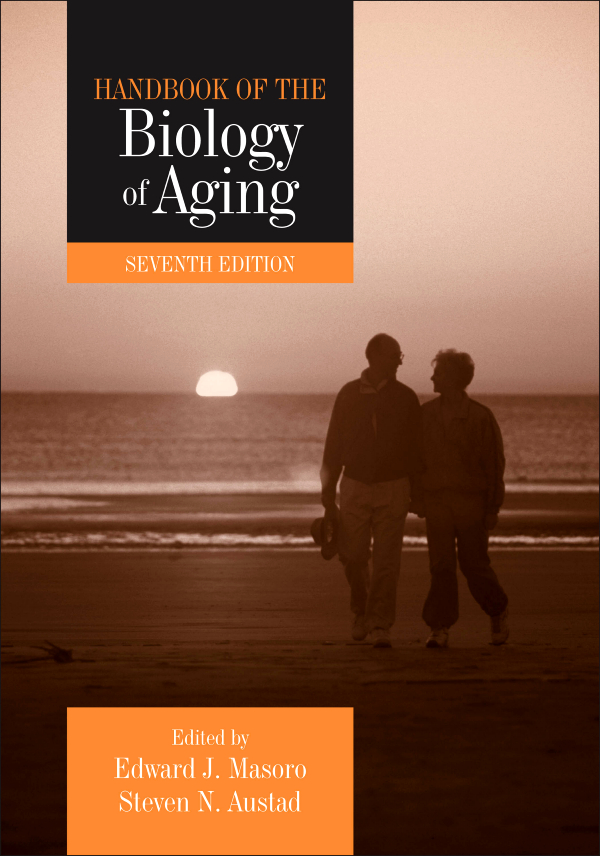
NETHERLANDS: Handbook of the Biology of Aging - 7th Ed

DUBLIN, Ireland / Research And Markets / June 11, 2011

By Laura Wood

Handbook of the Biology of Aging - 7th Edition

Providing a comprehensive synthesis and review of the latest research findings in the biology of aging, it is intended as a summary for researchers, and is also suitable as a high level textbook for graduate and upper level undergraduate courses.

The 7th edition is organized into two main sections, first covering the basic aging processes and then the medical physiology of aging. This puts less emphasis on research germane only to specific species and more emphasis on the mechanisms that affect aging across species, and what this means medically for the aging of humans.

This volume allows basic researchers to keep abreast of basic research outside their subdiscipline as well as recent clinical findings, while allowing medical, behavioral, and social gerontologists to understand what basic scientists and clinicians are discovering.

Coverage of basic aging processes includes the effects of dietary restriction, somatotropic axis, free radicals, apoptosis, adipose tissue, stem cells, leukocyte telomere dynamics, genetics, sirtuins, inflammation, and protein homeostasis on aging.

Coverage of the medical physiology of aging includes several chapters on aging effects on the human brain including changes in brain myelination, cerebral microvasculature, and cerebral vascular dysfunction.

Additional chapters include research on aging pulmonary function, insulin secretion, thermoreception and thermoregulation, calorie restriction, frailty & mortality, and sex differences in longevity and aging. This more clinically-oriented section advances our understanding of what to expect, how to prevent, and how to treat common medical effects of aging.

Handbook of the Biology of Aging, 7th Edition
Edited By Edward J. Masoro & Steven N. Austad
520 pages. Copyright 2011
Hard Copy : EUR 68

Part of the Handbooks of Aging series, including Handbook of the Psychology of Aging and Handbook of Aging and the Social Sciences, also in their 7th editions.
* Contains basic aging processes as determined by animal research as well as medical physiology of aging as known in humans
* Covers hot areas of research, like stem cells, integrated with longstanding areas of interest in aging like telomeres, mitochondrial function, etc.
* Edited by one of the fathers of gerontology (Masoro) and contributors represent top scholars in gerontology. Elsevier

TABLE OF CONTENTS

Section 1: Basic Aging Processes
1. Potential Pathways Involved in Slowed Aging due to Food Restriction, Anne Brunet (Stanford University)
2. Aging and Apoptosis, Stephen E. Always (West Virginia University School of Medicine)
3. The Role of Stem Cells in Aging, Thomas Rando (Stanford University)
4. The Role of Telomere Biology in Aging, Abraham Aviv (UMDNJ)
5. The Oxidative Stress Theory of Aging: Where do we stand?, Holly VanRemmen (UT Health Sc Center)
6. Tor Signaling Pathway and Aging, Richard A. Miller (University of Michigan)
7. Insulin/IGF Signaling and Aging, Holly Brown-Borg (U. of North Dakota)
8. Mitochondrial Function and Aging, Martin Brand (Buck Institute for Age Research)
9. Comparative Genetic Modulation of Aging, Matt Kaeberlein (U. of Washington)
10. Sirtuins in Mammalian Health and Longevity, David Sinclair (Harvard)
11. Inflammation and Aging, Caleb E. Finch (U. of Southern California)
12. Protein Homeostasis and Aging, Ana Maria Cuervo (Albert Einstein U.)

Section 2: Medical Physiology of Aging
13. Adipose Tissue Physiology and Aging, Jim Kirkland (Mayo Clinic)
14. Sex Differences in Aging, Steven Austad (UT Health Science Center)
15. Terminal Weight Loss, Frailty, and Longevity, Ed Masoro (UT Health Science Center)
16. Age-Related Alterations in Myelin and CNS Functioning, George Bartzokis (UCLA)
17. Age-related Changes in Microvasculature and Brain Function, Lewis Lipsitz (Harvard Medical School)
18. Aging and Insulin Secretion, Jeffrey Halter (U. Michigan)
19. Aging Alterations in Cardiac Function, Dorothy Vatner (UMDNJ)
20. Aging and Vascular Function, Frank Faraci (U. of Iowa)
21. Aging and Pulmonary Function, Nigel Taylor (Woolongong University)
22. Food Restriction and Aging in Primates Including Humans, Luigi Fontana et al (Washington U.)
23. Aging and Changes in Thermoregulations, Eus Van Someren (Netherlands Inst. On Neuroscience)

Source: ResearchAndMarkets.com

June 6, 2011

NETHERLANDS: One in five aged 40 to 65 who live alone are in a long-term relationship

AMSTERDAM / DutchNews / June 6, 2011

Sharp rise in single person households

The number of single person households has risen by at least 500,000 since 1995, according to new figures from the national statistics office CBS.

Now, 1.8 million people aged 18 to 65 live alone. The increase is greatest under middle-aged men who are more likely to live alone after divorce.

One in five men aged 18 to 65 live alone, as do one in six women, the CBS said. One in five men and women aged 40 to 65 who live alone are in a long-term relationship.

© DutchNews.nl

May 25, 2011

NETHERLANDS: Adults aged 55 to 75 will be tested for bowel cancer from 2013

AMSTERDAM / DutchNews / May 25, 2011

Bowel cancer screening for over 55s introduced from 2013

Adults aged 55 to 75 will be tested for bowel cancer from 2013 in a move which health minister Edith Schippers (photo on left) thinks will halve the death rate.

In total, 4.4 million people will be tested. The health council said in 2009 that testing should be carried out every two years. At the moment, some 5,000 people die of bowel cancer a year and 12,000 people are diagnosed with the disease. The earlier it is identified, the earlier it is to treat, the minister said.

Schippers’ predecessor Ab Klink had said screening could only be introduced from 2019 because of the shortage of doctors and the high cost.

© DutchNews.nl

May 11, 2011

NETHERLANDS: Serious Seniors Bullying - Dutch set up anti-bullying guidelines for elderly

.
AMSTERDAM/  Radio Netherlands Worldwide / International / Europe / May 11, 2011

By Thijs Westerbeek van Eerten

Illustration: Nationaal Ouderenfonds

Sweet little old grannies can also be merciless bullies

Bullying is so widespread in Dutch old people’s homes that the National fund for the Elderly (Nationaal Ouderenfonds) has developed an anti-bullying protocol it provides to old people’s homes on request.


The protocol offers a number of practical tips and possible approaches to deal with bullying. A study conducted last year showed that no less than one in five residents of old people’s homes are being bullied by fellow residents.

“It gets really bad sometimes”, Patrick Arnhem says. He has been working for decades as a geriatric helper at a major Amsterdam care institution. Since a few years ago, he has been in charge of a small-scale living unit for demented senior citizens. And that is exactly the demographic where bullying can be at its worst:

“When one of the residents has their regular spot, and the others find out about it, they’ll start harassing that person. For instance by pushing the other person with their feet under the table, or grabbing the other person’s chair and continuously shoving it back and forth."

Exclusion

The fact that these people are suffering from dementia is a complicating factor. They often don’t remember they were bullying somebody, or that they were told not to. Sometimes there is only one solution: excluding the bully from communal activities.

Director Jan Romme of the Nationaal Ouderenfonds confirms that exclusion is sometimes the only answer, but he says that the new protocol offers a variety of ‘handles’ to deal with old people who are suffering from dementia as well as those who are still ‘all there’.

“First off, we believe it’s important for old people’s homes to have a trusted intermediary on their staff to whom old people who are being bullied can go for advice. Also, care institutions should put the subject on the agenda several times a year, for instance during a special meeting. And it’s important for old people to be properly introduced when they join a new care group.”

Encouraging debate

The Nationale Ouderenfonds has published four posters that care institutions can use to encourage debate, which, according to Mr Romme, is no luxury. The children and grand children of the residents often think of their relative as a sweet old granny. They have great difficulty coming to grips with the fact that things can get real tough

“Exclusion is a serious form of bullying, but things can get a lot worse. We have heard reports involving groups of old people attacking another old person with their walkers. They kept bumping into their victim. Not just once, but just about every day.” ’

Pressure of work

To which is added the next problem: work pressure in care. Jan Romme says the protocol is not intended to add another responsibility to the job description of geriatric helpers. “We are already short-staffed the way things are now.” Which explains why Mr Romme believes this could be a job for volunteers: “It’s a rewarding job. When you listen closely, give some attention and keep an eye open, you can give so much happiness to an old person. Isn’t that wonderful?”
(gsh/as)

Copyright: Radio Netherlands Worldwide

April 22, 2011

NETHERLANDS: Fearful elderly people carry 'anti-euthanasia cards'

.
LONDON / The Telegraph / Health News / April 22, 2011

Elderly people in the Netherlands are so fearful of being killed by doctors that they carry cards saying they do not want euthanasia, according to a campaigner who says allowing assistant suicide in Britain would put the vulnerable at risk.


Kevin Fitzpatrick, a researcher with the pressure group Not Dead Yet, claimed that relaxing the law in this country would threaten old and disabled people as it would allow “moral judgments” that their lives were not worth living.

He said it is “nonsensical” to say that we all have a right to die, when what is really being sought is the right to a premature death that is not sought by all in society.

But a former professor of geriatric medicine, Raymond Tallis, also writing online in the BMJ, argues that countries which have legalised assisted dying have neither seen trust in medics eroded nor the procedure imposed on vulnerable people.

The debate comes amid an increasingly high-profile campaign in Britain to decriminalise assisted suicide. A court victory last year forced the Director of Public Prosecutions to admit that individuals would not be prosecuted for helping terminally ill loved ones die in most cases, and in recent months a series of public figures including Ian McEwan, Chris Broad and Sir Terry Pratchett have spoken out in favour of the law being relaxed still further.

But charities and groups supporting disabled people and the elderly fear that any change in the law would leave them feeling under pressure to end their lives.

In an article published on BMJ.com on Friday, Mr Fitzpatrick wrote: “Disabled people, like others, and often with more reason, need to feel safe. Thus eroding what may already be a shaky sense of safety in medical care poses a further threat to disabled people’s wellbeing, continuing care, and life itself.”

He cited the experience of Baroness Campbell of Surbiton, the disabled founder of Not Dead Yet, who was once told by doctors that they “presumed” she wouldn’t want resuscitation if she experienced complications during treatment.

“Very scared, she stayed awake in hospital for more than 48 hours.”

Mr Fitzpatrick said: “The doctors’ judgment, based on the idea of a “life not worth living,” is a moral judgment not of facts (medical or otherwise).

“A law permitting euthanasia would reinforce this position, further clearing the ground to take away lives based on a moral judgment rather than medical fact. The threat will extend to the lives of older, disabled people too.”

He mentioned the comments of Lord McColl made in the House of Lords that in the Netherlands, where euthanasia has been officially legalised and regulated since 2002, doctors found the cases increasingly easy to carry out while “many elderly people in the Netherlands are so fearful of euthanasia that they carry cards around with them saying that they do not want it”.

This was a reference to the Dutch Patients’ Association (NPV), which has 70,000 members of whom at least 6,000 have “living will declarations” stating that they do not want euthanasia if they are taken into hospital or a nursing home.

Other Dutch people, however, make written declarations of their “will to die”.

Mr Fitzpatrick concluded: “These discussions are complex, involving deep moral questions that cannot and must not be treated as though they were merely matters of fact with clear and obvious answers that everyone must share, as though logic dictated it.

“The lives of many disabled people depend on resisting attempts to introduce a law legalising the intentional act of killing.”

© Copyright of Telegraph Media Group Limited 2011

September 15, 2010

NETHERLANDS: Health insurance cost should reflect unhealthy lifestyles: report

.
AMSTERDAM, The Netherlands / DutchNews / September 15, 2010

People who smoke and people with an unhealthy lifestyle should pay more for healthcare, the national health council RVZ is poised to recommend to the government, according to the Nederlands Dagblad.


The paper says no where in the industrialised world do as many people smoke as in the Netherlands and that one in five smokers would have to stop to get the Netherlands back to the OECD average in terms of health.

The RVZ is also recommending that cheap medicines which are widely use should no longer be free, the paper says. And the current system of fixed prices for different treatments should also be dropped and hospitals allowed to set their own fees, in negotiation with health insurers.

© DutchNews.nl

May 2, 2010

NETHERLANDS: Wider bicycle paths, fewer cars

.
AMSTERDAM, Netherlands / Nieuws Uit Amsterdam / May 2, 2010

The new city administration wants
Amsterdam to remain Europe’s number 1 bicycle city

The area within the A10 ring road will have reduced car traffic and there will be more bicycle stands, waiting time indicators and green waves for cyclists. In addition, there a ‘moped policy’ will be developed. These measures have been announced in the coalition agreement presented last week by PvdA, GroenLinks and VVD.

On behalf of GroenLinks, council member Fjodor Molenaar participated in the negotiations on issues including traffic. Last year, he submitted a policy paper Cyclist King, which argues among other things for a moped policy and for ‘bicycle streets’ where cars are guests. At the time, alderman Hans Gerson responded positively to his proposals. In an email, Molenaar explains the new agreement.

Is it correct that the bicycle plans of the new administration are a confirmation of the former administration’s response to Cyclist King?

“In part, that’s certainly the case. The idea that Amsterdam should remain Cycling City Number 1 and the ambition to create more spacious bicycle paths are the most obvious elements that have been included in the agreement. Also, the notion that the inner city area will be expanded to the area within the A10 and that there should be structurally more room for slow traffic in that area, has survived.”

At the time, a study on creating bicycle streets was announced as well. Will there be such a study?

“On bicycle streets, nothing concrete has been agreed upon, so neither has Gerson’s proposal for a study. The districts take the lead in renovating public space and therefore also in opting for bicycle streets, but an initiative or guideline from the city might activate them. In Westerpark and De Baarsjes, decisions on bicycle streets have already been taken. They are explicitly mentioned in Centrum’s new agreement. Therefore, I expect that bicycle streets will be created in various districts the coming years.”

Instead of a car free day, there will be a large car free zone during major events such as GayPride, the Marathon, Sail or Sinterklaas. Is that a loss or perhaps a victory?

“Of course, GroenLinks would have liked to retain the annual Car Free Day, but VVD and PvdA were against it. I do think that’s a loss. Against that background, the agreement to create a large car free zone during events is a good result. Roads will have to be closed anyway, so a larger car free zone won’t entail any additional financial burden. In my blogpost, I used the events you mention as examples, but the city and the districts will have to reach specific agreements on that.”

A municipal moped policy will be developed; what kind of specific measures can we expect?

“Gerson had promised the city council a new moped policy before the election, but it wasn’t finished in time. The three parties do want such a policy. Traffic safety, clean air and the nuisance mopeds create were explicitly mentioned. The new alderman will submit a proposal to the council specifying which concrete measures to take.”

On a different note: during the campaign, you said a coalition with the right-wing VVD was ‘really improbable’. Now there is such a coalition. What happened?

“This coalition was indeed quite improbable and could only happen because of the twisting of D66 during the negotiations. For GroenLinks, it does feel a bit like marriage of convenience, what doesn’t mean that it can’t turn out to be really effective. In various districts (Centrum, Zeeburg, Oud-West) these parties have taken responsibility for the administration; this should be possible at the municipal level as well. A lot depends on how people get along in the administration and the council, and we’re getting along really well. Finally, the combination PvdA – VVD – GroenLinks has considerable administrative clout, which is no luxury in a time of budget cuts.” [rc]

Photo: FaceMePLS
Source: nieuwsuitamsterdam

April 6, 2010

NETHERLANDS: Anti-psychotic drugs link to pneumonia warning

. LONDON, England / BBC News / Health / April 6, 2010 The use of anti-psychotic drugs in the elderly doubles the risk of potentially fatal pneumonia, say Dutch researchers. A study of almost 2,000 patients found the increased risk starts soon after treatment begins and concluded that patients should be closely monitored. Anti-psychotic drugs do not benefit many dementia patients An expert review published in 2009 found the drugs are overused in many cases and are responsible for up to 1,800 deaths in the UK every year. Ministers have said they want to see a significant cut in their use. The latest research published in the Annals of Internal Medicine compared the health records of 258 over-65s with pneumonia with 1,686 patients without the infection. Of those with pneumonia, a quarter died within a month. When they looked at prescribed drugs, they found current use of anti-psychotics was associated with a roughly two-fold increase in the risk of pneumonia. Those on the newer types of anti-psychotic drugs were slightly less likely to have the infection than those on the older class of drugs but were still at significant increased risk. The risk was found to start soon after treatment and increased the higher the dose of drugs the patient was prescribed. Evidence The researchers from Erasmus University Medical Center in Rotterdam said: "Clinicians who start treatment with anti-psychotic drugs should closely monitor patients, particularly at the start of therapy and if high doses are given." Last year's UK review found that around 180,000 dementia patients a year are given the drugs in care homes, hospitals and their own homes to manage aggression but only around 36,000 would actually benefit from them. Measures suggested in the report and accepted by the government included better monitoring of prescribing practices and ensuring that, where necessary, they were prescribed for short periods of time. Professor Steve Field, chair of the Royal College of GPs said: "Anti-psychotics are prescribed too frequently without doctors thinking about the consequences. "This paper yet again gives us evidence why we should not prescribe them unless absolutely necessary and if you do you should closely monitor the patient." [rc] © BBC MMX

December 17, 2009

NETHERLANDS: 'Pension funds took too many risks'

. AMSTERDAM, The Netherlands / DutchNews / December 17, 2009 Many Dutch pension funds took too many risks with their investments and were too optimistic about the prospects, the central bank said in its quarterly economic report on Wednesday. Pension funds lost €219bn last year, of which €112bn was due to the decline in value of their investments. The rest followed from interest rate cuts. Photo credit: Allianz Global Investors Many pension funds invested in a whole range of activities, from property to commodities to hedge funds, the central bank said. 'Many funds underestimated the risks they were exposed to or took too-big risks with their financial planning,' the statement said. Asset managers charged by some pension funds with making investments on their behalf were also given too much leeway to act, the central bank said. The decline in their value of their assets means many funds have had to freeze payouts or raise premiums to get their coverage ratios back above the 105% mark. [rc] © DutchNews.nl

October 21, 2009

NETHERLANDS: Footing the bill for the happiness of the baby boomers

. AMSTERDAM, Netherlands / NRC Handelsblad / Opinion / October 21, 2009 The baby boomers may have rebuilt the Netherlands after WWII, but they are leaving it to us in a shambles, argues 25-year-old Rosanne Hertzberger. By Rosanne Hertzberger The state pension age in the Netherlands is to be raised from 65 to 67. But not just yet: we first have to wait for everyone who was born in the ten years following World War II to turn 65 and collect their pensions. Only then, when the ageing of the population is past its peak, will something finally be done. At the same time we know the money working people pay into social security no longer covers the costs of the benefits being paid out. Worse: one tenth of government expenditure comes from money we don't have but have to borrow. So the baby boomers have saddled us with an expensive pension system, and not enough money to pay for it. The government praises itself for its quick decision-making. Even the Labour party gave into without a fight. So what now? Should young people be happy the state pension age has finally been raised, that the state's finances are finally getting some breathing space? Photo courtesy: ANBO, Netherlands Seniors Association Where were the young people when all this was being decided? For most of us the whole debate felt like getting a call from a telemarketer offering a funeral policy: ridiculous, irrelevant, not a priority. We have just started our professional lives, and we are still convinced we are going to have such satisfying careers that we wouldn't dream of retiring at 65. The baby boomers on the other hand do want to retire at 65. In making their case all the cliches about elderly people are fair game. How could we deny the elderly their golden years after all those years of hard work? Didn't they rebuild the country after the war? Didn't they feed us, send us to school, give us a future? We are being hit over the head with images of 64-year-old men forced to work on their knees paving the streets while dreaming about their well-earned pensions. But this is also the generation that has benefited from a very generous social security system: student loans for as long as they wanted, early retirement, severance pay, disability allowances for the slightest aches. These are all benefits we young people will not be able to enjoy, or only in a very slimmed-down form. But nobody ever asked our opinion. Contrary to what may people have said, young people are involved with politics. We blog and twitter about every issue under the sun: the cost of higher education, the future of the public broadcasting system, the protests in Iran... But the state pension age is not a popular topic. The group 'AOWnaar67' (Raise state pension age to 67) on the popular social networking site Hyves has only ten members, and nobody has left a message on the forum yet. It's not so much a generation gap; it is a gradual change: the younger the employee is, the less he or she feels represented by the traditional Dutch negotiating structures. The unions represent only 20 percent of the working population, and young people make up only a fraction of union members. My generation isn't into marching in the streets. The idea of joining a union doesn't appeal to most of us. And even those young people who have joined a union have a hard time getting heard: many young members tried to argue for a raise in the pensions age, but often their voice was overruled by the older vote. The few youngsters who did join a union are scared away by this. The Hyves-group in which members are encouraged to give up their membership has 146 members and many forum messages. The fact remains that as long as the elderly keep benefiting from a social security system we simply can't afford, my generation will always pay more into the system than we will ever get in return. The baby boomers may have built a beautiful country for us, but they have left it to us in a shambles. [rc] Rosanne Herzberger (25) is a student of molecular biology at the University of Amsterdam and a columnist for nrc.next, NRC Handelsblad's sister paper. Source: NRC Handelsblad

October 7, 2009

NETHERLANDS: Exercise advised for rheumatoid arthritis

. LEIDEN, Netherlands / United Press International / Health News / October 7, 2009 Exercise programs designed to improve strength and stamina are safe and effective treatments for rheumatoid arthritis, a review by Dutch researchers found. Lead researcher Emalie Hurkmans of the Leiden University Medical Center in the Netherlands and colleagues reviewed dynamic exercise program trials in rheumatoid arthritis patients and found moderate benefits associated with this type of treatment. "Based on the evidence in this study, we would recommend aerobic capacity training combined with muscle strength training as routine practice for RA patients," Hurkmans said in a statement. "But we need more research to establish the recommended length and type of exercise programs, whether patients need to be supervised and if these programs are cost effective." The researchers combined data from eight trials involving a total of 575 patients. The results, published in the Cochrane Library, reaffirm the previous studies' findings that dynamic exercise programs are safe and have positive effects on aerobic capacity and muscle strength in rheumatoid arthritis patients, and when performed long-term also have a positive effect on functional ability. However, the researchers said the benefits are only seen immediately after the intervention. They also suggest water-based programs may help improve functional ability of patients. [rc] © 2009 United Press International, Inc

September 24, 2009

NETHERLANDS: Internet typing error costs father €43,000

. AMSTERDAM, Netherlands / DutchNews Newsletter / September 24, 2009 A man from Wageningen has gone to court to try to recover €43,000 he sent to the wrong bank account, The Telegraaf reports on Thursday. The man was attempting to pay the money into his son's bank account but made a one-digit error when putting the number into his internet banking system. Instead the cash went to a woman in Almelo who refused to return it. She used most of the money to buy a car and pay off her gambling debts. Police also found €10,000 in cash at her house. The man has now gone to court to ask for the money back. The entire process could take years, the paper says. [rc] © DutchNews.nl

August 28, 2009

NETHERLANDS: Soluble fibre 'effective for Irritable Bowel Syndrome'

. LONDON, England / BBC News / Health / August 28, 2009 A soluble fibre supplement should be the first line of attack in treating irritable bowel syndrome, experts say. Researchers from Utrecht University in the Netherlands compared adding bran, a soluble supplement called psyllium and a dummy supplement to sufferers' diets. Irritable bowel syndrome is a common condition They found psyllium was the most effective, warning that bran may even worsen the symptoms of the condition, the British Medical Journal reported. As many as one in 10 people is estimated to have the condition. It is characterised by abdominal pain and an irregular bowel habit. Its exact cause is unknown and recommendations for treatment include dietary advice, antidepressants and drug treatments. Many relying on dietary adjustments still turn to bran in a bid to help improve the way the intestines work. ________________________________________________
I think adding psyllium to the diet is the best treatment option to start with Dr Niek de Wit, researcher
________________________________________________ But the Dutch study of 275 patients questions the wisdom of this approach. The team gave patients 10g of either psyllium, bran or rice flour twice a day for 12 weeks. Symptom severity At the end of the study, those on psyllium, a naturally occurring vegetable fibre, reported symptom severity had been reduced by 90 points using a standard scale of rating problems. For bran it was 58 points and for the placebo group, 49. The report also showed that patients seemed less tolerant of bran, with more than half of the group dropping out during the trial, mostly because their symptoms worsened. Soluble fibre can also be found in fruit such as apples and strawberries, as well as barley and oats. But Dr Niek de Wit, one of the researchers, said: "It is unlikely that people with IBS would get enough from fruit and other foods to help them. "I think adding psyllium to the diet is the best treatment option to start with. In the study, people did this by adding it to things such as yoghurt and it had a real effect." Dr Anton Emmanuel, medical director of Core, the charity for diseases of the gut, said bran was being over-used. He said the study was "helpful" and "reasonably robust", adding: "Putting it all together, patients should tolerate this form of fibre well and it may help some, especially those with a tendency to constipation." [rc] © BBC MMIX

August 10, 2009

NETHERLANDS: Brain radiotherapy affects mind

. LONDON, England / BBC News / Health / August 10, 2009 Radiotherapy is a common treatment for brain tumours Radiotherapy used to treat brain tumours may lead to a decline in mental function many years down the line, say Dutch researchers. A study of 65 patients, 12 years after they were treated, found those who had radiotherapy were more likely to have problems with memory and attention. Writing in The Lancet Neurology, the researchers said doctors should hold off using radiotherapy where possible. One UK expert said doctors were cautious about using radiotherapy. The patients in the study all had a form of brain tumour called a low-grade glioma - one of the most common types of brain tumour. In these cases radiotherapy is commonly given after initial surgery to remove the tumour, but there is some debate about whether this should be done immediately or used only if the cancer returns.
It always depends on the patient, but if it is possible to defer radiotherapy, maybe people should - Dr Linda Douw, study leader
It is known that radiation treatment in the brain causes some damage to normal tissue and the study's researchers suspected it could lead to decline in mental function. A previous study in the same patients done six years after treatment found no difference in aspects like memory, attention and the speed at which people could process information, in those who had received radiotherapy. But the latest research, carried out more than a decade after original treatment, did find significant variation in the results of several mental tests between those who had had radiotherapy and those who had not. In all, 53% of patients who had radiotherapy showed decline in brain function compared with 27% of patients who only had surgery. The most profound differences were in tests to measure attention. Delaying treatment With an average survival of ten years for this type of tumour, the researchers said patients undergoing radiotherapy were at considerable risk of developing problem years down the road. One option for doctors would be to delay when patients received radiotherapy, reserving it in case the tumour returned, they advised. "It always depends on the patient, but if it is possible to defer radiotherapy, maybe people should," said study leader Dr Linda Douw, from the Department of Neurology at VU University Medical Centre in Amsterdam. But she added that more research was needed and there were trials under way to look at other treatments such as chemotherapy. In an accompanying article, experts from the Mayo Clinic in Rochester, USA, said it was hard to draw conclusions because radiotherapy had improved since the patients in the study had been treated, but agreed more studies were needed. Dr Jeremy Rees, a Cancer Research UK scientist at the National Hospital for Neurology and Neurosurgery Honorary said they would usually try to avoid giving radiotherapy to patients with low-grade glioma, unless the tumour was progressing or the patient had epilepsy not controlled on standard medication. "Surgery is generally a preferred option with chemotherapy or radiotherapy coming into play at a later stage, if the glioma progresses. "Continued research and increased knowledge about the disease is enabling us to treat it increasingly effectively while reducing side effects." [rc] © BBC MMIX

July 27, 2009

NETHERLANDS: Low blood count ups death risk in elderly people

. NEW YORK / Reuters Health / July 27, 2009 News research indicates that low red blood cell blood counts, regardless of other diseases that might be present, is a risk factor for death in very elderly individuals. In the study, anemia was associated with a twofold increased risk of death during follow-up. Prior reports have linked low red blood cell counts, also known as anemia, with death, but it was unclear if this was simply due to the chronic diseases that often accompany anemia or the anemia itself, Wendy P. J. den Elzen and colleagues, from Leiden University Medical Center, the Netherlands, note in the Canadian Medical Association Journal. Red blood cells carry oxygen around the bloodstream, from the lungs to the body's tissues. The researchers analyzed data from 562 subjects who were at least 85 years of age. Just more than a quarter of subjects had anemia at baseline, and another quarter developed it during the five years of follow-up. Anemia was linked to an increased risk of death during follow-up, and was also associated with increased difficulties with activities of daily living. In an accompanying editorial, Dr. A. Mark Clarfield, from McGill University, Montreal, and Ora Paltiel, from Hadassah-Hebrew University, Jerusalem, comment that further research is needed to determine if anemia actually causes increased mortality and to determine if treating anemia in very elderly people improves survival and functional outcomes. [rc] SOURCE: Canadian Medical Association Journal, July 27, 2009. © Thomson Reuters 2009

July 18, 2009

NETHERLANDS: ‘So many lies are being spread to frighten people'

. ROTTERDAM, The Netherlands / SP International / July 18, 2009 ‘It's almost unbelievable how much nonsense is being put about by those who support the idea of making us work till we're 67,' says SP leader Agnes Kant. Kant vigorously counters the arguments in favour of raising the pension age. Interview with SP leader Agnes Kant on proposals to raise the pension age Raising the pension age to 67 is necessary to keep the state pension affordable. Supporters of raising the age at which you can claim your pension do indeed raise the spectre of an unaffordable system. It's true that an ever-increasing demand will be made on the state pension fund, but this growing group of over-65s will also mean that income from taxes paid by pensioners will also rise strongly. These tax revenues will be sufficient to cover the costs of the growing number of pensions, as has been shown by a number of studies, including one from the Netherlands Bureau for Economic Policy Analysis (CPB) If we don't raise the pension age, we'll soon be faced with a labour shortage Another woppa. As things stand two out of three people between the ages of 60 and 65 don't work. For 64-year-olds, the proportion in work is just 13%, just over one in eight. The great majority have been paid off or are no longer able to work through some form of disability. But in addition to this, there are very many people between the ages of 50 and 60 who aren't in work but would certainly like to be. Of course in time there will be a labour shortage because ever more people are on pension. But that will mean pressure on employers to invest in hanging on to these older workers, who are currently sidelined en masse and no longer considered for positions. Currently, two-thirds of people between the ages of 60 and 65 don't work. Besides that, we shouldn't be working more or for longer, but above all we need to direct our efforts towards innovation. This would mean that employers would invest in raising labour productivity. Since 1970, through mechanisation and innovation, productivity has risen almost sevenfold. In recent years, also, productivity has risen. It's obvious that this process will continue. Raising the pension age will bring a lot of money in. As I said earlier, a large majority of older potential workers have either been laid off or are unfit for work. Raising the pension age to 67 will lead principally to an increased demand for various welfare payments, such as disability and attendance allowances. The cost of these payments is also covered by people in work. So it's probable that all that will happen is that the money will come from one pot instead of another, and that in concrete terms nothing will be gained. All that will be achieved is an increase in discontent, inconvenience, insecurity and a lot of people applying for support who have no real chance of receiving it. That's why it's also so important that we try to ensure that people who can't now find work succeed in doing so. That is what will produce the money. If we don't act now the next generation will be saddled with debt. Supporters assert that raising the pension age is a way of saving money. I would say on the contrary that it will probably produce no money at all. On the other hand, I agree that we should be very careful with the public purse. And that can be achieved in a number of ways. For example, cancelling the order for the JSF, the Joint Strike Fighter. Or by asking the rich for a fair contribution to the financing of the cost of health care by making premiums fully income-related. Or by limiting mortgage relief for sky-high mortgages for villas. Mortgage relief was never meant for such things, but for ordinary people with ordinary houses. And for them the SP would guarantee mortgage relief. If you put the different policies side by side you can see that the government wants people to carry on working after their 65th birthday so that mortgages on villas can continue to be subsidised. I find this a painful thought. People have a higher life expectancy than in the past, so working for longer is normal. This is such a bizarre line of reasoning. It's a huge good that from our 65th birthday we can enjoy our old age, and one for which we have fought hard. The fact that progress means that more people can enjoy their old age is surely no reason to undo what we've achieved? Raising the pension age will increase class inequality. Not only do people who had only elementary education live on average five years less, but they suffer ill-health fifteen years earlier than those with a higher level of education. The number of people who retire in good health will be reduced if the pension age is raised to 67. In our neighbouring countries working to the age of 67 has already been introduced. That's a great pity for the people who work there, but no reason to copy them. People stay in education for longer, and so pay less into the pension fund. That's unfair. Raising the pension age will affect everyone, and not only people who stay in education for longer. This would affect people with a lower level of education and a low income in two ways. They start working early, but will never earn enough for a nest-egg which would enable them to retire early, in contrast to people with a high level of education and earnings, who, just as is already the case, by saving up, can stop work at an earlier age. What you would therefore be doing is forcing people to continue working who already have a life expectancy five years lower than the better educated. Raising the pension age won't apply to people with demanding jobs. For a start that remains open to question. But some supporters have, it's true, noted that it would be physically impossible for a building worker to trudge about carrying hods of bricks up to his 67th birthday. Okay. But building work is not the only demanding work to be found in the Netherlands. I can think of a few groups of people who have had enough by their 65th. People who have worked for years in health care, or teachers who have stood for thirty years or more in front of a class and who are mentally drained. But such people, according to this government, don't come under the category of those with 'demanding jobs'. Politicians who try to sell this to the public in this way attempt in the main to make everything sound very nice and logical, but haven't given a moment's thought to what really constitutes demanding work. The SP won't let anyone work after their 65th birthday, even if they want to. Nonsense. Whoever wants to, and can, should be able to carry on working. And a priority must be to get rid of the rules which currently make that difficult. But all of this must genuinely be a free and individual choice, with no improper pressure on people who don't want to carry on working after they're 65, or who aren't really capable of doing so. Furthermore, these people must have the same rights and duties as other workers, in order to prevent their exclusion from the labour market. The other major parties, the governing Christian Democrats and Labour, and the right-wing liberals of the opposition VVD, have said that the pension age won't be raised. The biggest lies we've heard in this whole story relate to the huge about-turn that these parties have made. Seldom have the voters been deceived on such an immense scale. At the beginning of 2009 Labour wrote to people who asked a question about the old age pension, "The PvdA (i.e. Labour Party) does not want to raise the pensionable age to 67, but to keep it at 65. In the PvdA's view, the attention that the government has given to this question has been a waste of energy. The simple reality is that the crisis is being misused to force through a deterioration in social provision. People are being made afraid and misled with false pretexts. Just as they were in the referendum on the European Constitution. [rc] © SP 1996-2006