Remember ME - You Me and Dementia

Showing posts with label Kenya. Show all posts

February 21, 2012

KENYA: Medical insurance cover bound to collapse

NAIROBI, Kenya / The Star / National / February 21, 2012

Civil servants cover quarrel


By Ramadhan Rajab
The recently launched medical insurance cover for civilservants is bound to collapse, Union of Kenya Civil Servants has warned. Tom Odege, UKCS secretary general said though the concept was perfect on paper, it was proving impractical for their members to access medical care from hospitals under the cover.
He said the hospitalslisted by the cover administrator - National Hospital Insurance Fund – werestill levying charges on various cases like surgical, dental, and those seekingear, nose and throat treatment as well the cover was not explicit on howcancer cases should be handled. Odege said their members were spending a lot onpurchasing drugs which are always out of stock in government hospitals.
“NHIF over marketed clinics which are not available beyondNairobi, though they only exist on their papers that they have a countrywidecoverage, we have been in Kakamega  Bungoma, Mumias, and Busia and those clinicsthey are talking about where our members can seek treatment have never beenheard,” Odege said.
He also faulted the administrator for having mixedinstructions to their staff in branches, “for instance when we meet at thenational office the language and common understanding is that the cover is a comprehensiveone, but when you get out the headquarters the terms and conditions changeswith exceptions on what is covered.”

Source: The Star
____________________________________________________________
Credit: Reports and photographs are property of owners of intellectual rights. 
Seniors World Chronicle, a not-for-profit, serves to chronicle and widen their reach.

November 29, 2011

KENYA: Wangari Muta Maathai Has Died at 71 - The Trees Will Mourn

LAKE OSWEGO, Oregon / The Elder Storytelling Place / TimeGoesBy.net / November 29, 2011


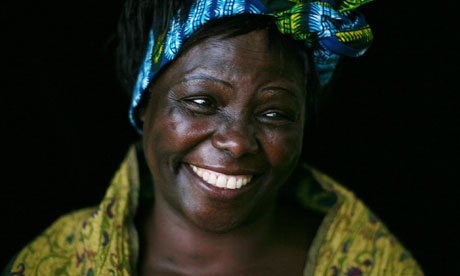
Wangari Maathai in 2005 in South Africa's Newlands Forest. Nic Bothma/European Pressphoto
Courtesy: The New York Times

Wangari Muta Maathai Has Died at 71 and the Trees Will Mourn

By Jacqueline Herships of The Little Old Lady Stays Put

For various reasons which I am finally beginning to understand, I’ve been more of a hider than a doer in life. But during the last 10 years I’ve been coming out of my shell - poking around to see what’s going on - and I have become a sort of explorer. Amazing people are everywhere and it is becoming my great joy to meet them and to write about them.

And so, several years ago when I learned about environmental leader, Wangari Maathai, from an environmentalist friend, I went to hear her speak at the Museum of Natural History in New York City.

I never actually met her, but seeing her and hearing her discuss her life and ideas was more than enough to make a huge impression on me.

Wangari was born in 1940, in Nyeri, Kenya, one month less than a year before I was born here in the USA.

Her home was near a stream and a wood lot. As a girl, she would go to the stream to get water for her mother for cooking and drinking. The wood lot provided fuel for cooking and heat.

I grew up in the U.S. in what was referred to as the comfortable middle class. We lived in a solidly built house with running water and piped in gas, big enough to shelter a large extended African family but not regarded as particularly large in my town.

During this period, tremendous changes were occurring worldwide. In the U.S., small farms and woods were being swallowed up by subdivisions, urban sprawl and agri-businesses. Wangari’s wood lot disappeared into a coffee plantation. The stream from which they drank was first poisoned and then went dry.

While women in Kenya were increasingly struggling to find water fit to drink and chopping down the last bits of wood that remained to cook their increasingly meager meals, foods from around the world appeared in ever-greater variety in our supermarkets. Chefs drizzled their creations with obscure ingredients which would have tantalized Nero in another age.

Wangari was not the first to notice the connection between the disappearance of trees and the disappearance of clean water but she was the first to introduce that insight to the disempowered Kenyan women whom she knew and the first to urge them to respond by planting new trees.

For her efforts, she was reviled, beaten, jailed but ultimately honored throughout the world as a Nobel Peace laureate because she focused the attention of the humblest to the most powerful on the connection between trees, food, water and war.

We humans have tended to view history as a description of war and conquest, or at least that was how I experienced it in school. Histories were tedious lists of battles won and lost – the humans involved seemed secondary at best – the significance of cultures was not yet appreciated at all. Only recently have we noticed the causes of war which transcend battle strategies and the lust for power, such as the need for natural resources, food and water.

What does this have to do with Little Old Ladies? Just this: Society cannot be expected to support its weak and aged if it cannot feed itself. In the current atmosphere of senior citizen as dim wit, many of us who are strong and capable have abdicated our roles as wise and experienced teachers and leaders. I think we are afraid that if we speak up, others will notice that we are old and we will be dismissed, maybe even thrown overboard.

But there is much to do and it is up to everyone to do it – even old people, even senior citizens, even us. Africa and the third world are not so far away anymore. The problems they deal with on a daily basis have come to us now, too, in the form of pollution, deforestation, encroaching desertification, growing climate change.

I began blogging at the age of 70 because I thought it would help me in my struggle to figure out what’s next for me as I get old. At the time, I was thinking about income, health care, Medicare, housing - things like that. But I am already half way to 71 and although those subjects are still on the list, so far I find myself more drawn to people and places – among them special people who have crossed my path and who are using (or have used) their lives in ways that are worthwhile and wonderful to me. People like Wangari. I believe I am looking for teachers.

Wangari Maathai was a charming speaker. She told us that every person needs about 22 trees to get the oxygen they require and reminded us that we had better know where our trees are. I could see everyone mentally counting up the trees in their yards. But personally, I had no idea where my trees were. Are they here or are they in the rain forest? It’s a worry.

Wangari died on the 25 September 2011, and I am sad that she is gone before I had a chance to be in her presence again.

© 2011 Ronni Bennett
___________________________________________________________
Credit: Reports and photographs are property of owners of intellectual rights.
Seniors World Chronicle, a not-for-profit, serves to chronicle and widen their reach.

September 27, 2011

KENYA: Wangari Maathai, Nobel Peace Prize Laureate, Dies at 71

NEW YORK, NY / The New York Times / Africa / September 27, 2011

By Jeffry Gettleman

NAIROBI, Kenya — Wangari Maathai, the Kenyan environmentalist who began a movement to reforest her country by paying poor women a few shillings to plant trees and who went on to become the first African woman to win a Nobel Peace Prize, died here on Sunday. She was 71.

The cause was cancer, said her organization, the Green Belt Movement. Kenyan news outlets said that she had been treated for ovarian cancer in the past year and that she had been in a hospital for at least a week before she died.

Dr. Maathai (click for slide show), one of the most widely respected women on the continent, played many roles — environmentalist, feminist, politician, professor, rabble-rouser, human rights advocate and head of the Green Belt Movement, which she founded in 1977. Its mission was to plant trees across Kenya to fight erosion and to create firewood for fuel and jobs for women.

Dr. Maathai was as comfortable in the gritty streets of Nairobi’s slums or the muddy hillsides of central Kenya as she was hobnobbing with heads of state. She won the Peace Prize in 2004 for what the Nobel committee called “her contribution to sustainable development, democracy and peace.” It was a moment of immense pride in Kenya and across Africa.

Her Green Belt Movement has planted more than 30 million trees in Africa and has helped nearly 900,000 women, according to the United Nations, while inspiring similar efforts in other African countries.

“Wangari Maathai was a force of nature,” said Achim Steiner, the executive director of the United Nations’ environmental program. He likened her to Africa’s ubiquitous acacia trees, “strong in character and able to survive sometimes the harshest of conditions.”

Dr. Maathai toured the world, speaking out against environmental degradation and poverty, which she said early on were intimately connected. But she never lost focus on her native Kenya. She was a thorn in the side of Kenya’s previous president, Daniel arap Moi, whose government labeled the Green Belt Movement “subversive” during the 1980s.

Mr. Moi was particularly scornful of her leading the charge against a government plan to build a huge skyscraper in one of central Nairobi’s only parks. The proposal was eventually scrapped, though not long afterward, during a protest, Dr. Maathai was beaten unconscious by the police.

When Mr. Moi finally stepped down after 24 years in power, she served as a member of Parliament and as an assistant minister on environmental issues until falling out of favor with Kenya’s new leaders and losing her seat a few years later.

In 2008, after being pushed out of government, she was hit with tear gas by the police during a protest against the excesses of Kenya’s entrenched political class.

Home life was not easy, either. Her husband, Mwangi, divorced her, saying she was too strong-minded for a woman, by her account. When she lost her divorce case and criticized the judge, she was thrown in jail.

“Wangari Maathai was known to speak truth to power,” said John Githongo, an anticorruption campaigner in Kenya who was forced into exile for years for his own outspoken views. “She blazed a trail in whatever she did, whether it was in the environment, politics, whatever.”

Wangari Muta Maathai was born on April 1, 1940, in Nyeri, Kenya, in the foothills of Mount Kenya. A star student, she won a scholarship to study biology at Mount St. Scholastica College in Atchison, Kan., receiving a degree in 1964. She earned a master of science degree from the University of Pittsburgh.

She went on to obtain a doctorate in veterinary anatomy at the University of Nairobi, becoming the first woman in East or Central Africa to hold such a degree, according to the Nobel Prize Web site. She also taught at the university as an associate professor and was chairwoman of its veterinary anatomy department in the 1970s.

A day before she was scheduled to receive the Nobel, Dr. Maathai was forced to respond to a report in The East African Standard, a daily newspaper in Nairobi, that she had likened AIDS to a “biological weapon,” telling participants in an AIDS workshop in Nyeri that the disease was “a tool” to control Africans “designed by some evil-minded scientists.”

She said her comments had been taken out of context. “It is therefore critical for me to state that I neither say nor believe that the virus was developed by white people or white powers in order to destroy the African people,” she said in a statement released by the Nobel committee. “Such views are wicked and destructive.”

In presenting her with the Peace Prize, the Nobel committee hailed her for taking “a holistic approach to sustainable development that embraces democracy, human rights and women’s rights in particular” and for serving “as inspiration for many in the fight for democratic rights.”

Dr. Maathai received many honorary degrees, including an honorary doctorate from the University of Pittsburgh in 2006, as well as numerous awards, including the French Legion of Honor and Japan’s Grand Cordon of the Order of the Rising Sun. She was the author of several books, including “Unbowed: A Memoir,” published in 2006.

She is survived by three children, Waweru, Wanjira and Muta, and a granddaughter, according to the Green Belt Movement.

Former Vice President Al Gore, a fellow Peace Prize recipient for his environmental work, said in a statement, “Wangari overcame incredible obstacles to devote her life to service — service to her children, to her constituents, to the women, and indeed all the people of Kenya — and to the world as a whole.”

In her Nobel Prize acceptance speech, Dr. Maathai said the inspiration for her work came from growing up in rural Kenya. She reminisced about a stream running next to her home — a stream that has since dried up — and drinking fresh, clear water.

“In the course of history, there comes a time when humanity is called to shift to a new level of consciousness,” she said, “to reach a higher moral ground. A time when we have to shed our fear and give hope to each other. That time is now.”

© 2011 The New York Times Company
____________________________________________________________
Credit: Reports and photographs are property of owners of intellectual rights. 
Seniors World Chronicle, a not-for-profit, serves to chronicle and widen their reach.

KENYA: 'African heroine' Maathai dies at 71

LONDON, England / The Guardian / World News / September 26, 2011

Wangari Maathai, Kenyan social activist, environmental crusader who founded the Green Belt Movement, and Nobel peace prize winner, has died of cancer at 71.

By Xan Rice in Nairobi

Wangari Maathai, Nobel peace laureate at the Hay festival in 2007.
Photograph: Martin Godwin for the Guardian

Wangari Maathai, the first African woman to win the Nobel peace prize, died on Sunday night of cancer. She was 71.

A towering figure in Kenya, Maathai was renowned as a fearless social activist and an environmental crusader. Her Green Belt Movement, which she founded in 1977, planted tens of millions of trees.

Maathai's death was confirmed in a statement on the movement's website.

"It is with great sadness that the family of Professor Wangari Maathai announces her passing away on 25 September 2011, at the Nairobi hospital, after a prolonged and bravely borne struggle with cancer. Her loved ones were with her at the time."

Maathai was a pioneer from an early age and in many spheres. After winning a scholarship to study in the US, she returned to a newly independent Kenya, becoming the first woman in east and central Africa to obtain a PhD. Maathai was also the first woman professor the University of Nairobi, where she taught veterinary medicine.

Her work with voluntary groups alerted her to the struggles of women in rural Kenya, and it quickly became her life's cause. Noticing how the rapid environmental degradation was affecting women's lives, she encouraged them to plant trees to ensure future supplies of firewood and to protect water sources and crops.

Maathai's agenda quickly widened as she joined the struggle against the repressive and corrupt regime of Daniel arap Moi. Her efforts to stop powerful politicians grabbing land, especially forests, brought her into conflict with the authorities, and she was beaten and arrested numerous times. Her bravery and defiance made her a hero in Kenya.

In awarding Maathai the Nobel peace prize in 2004, the Nobel committee said that her "unique forms of action have contributed to drawing attention to political oppression – nationally and internationally".

Maathai served as an assistant minister in President Mwai Kibaki's government from 2003 to 2005, but her refusal to keep silent on some issues saw her politically sidelined, and she lost her seat after a single term. Her work schedule remained hectic however, and she wrote several books and travelled widely.

Maathai had been in and out of hospital this year, though most Kenyans were unaware of her illness until it was reported in the local media late last week.

"Professor Maathai's departure is untimely and a very great loss to all who knew her – as a mother, relative, co-worker, colleague, role model, and heroine; or who admired her determination to make the world a more peaceful, healthier, and better place," the statement from her organisation said.

Maathai is survived by her three children and a granddaughter.

© 2011 Guardian News and Media Limited
__________________________________________________________
Credit: Reports and photographs are property of owners of intellectual rights.
Seniors World Chronicle, a not-for-profit, serves to chronicle and widen their reach.

July 25, 2011

KENYA: Kung Fu Grannies Combat Rape in Kenya

HEALDSBURG, California / Global Press Institute / July 25, 2011

Home » Global Newswire » Kenya

As government, police and residents struggle to reduce rape incidences in Kenya, a group of grannies in a Nairobi slum is taking matters into their own hands. A local organization here trains elderly women to defend themselves against attackers.


By Rose Odengo - Reporter 

NAIROBI, KENYA – Shanty houses made from rusted corrugated iron sheets line a lone tarmac road in Korogocho, a slum in Nairobi, Kenya’s capital. Garbage is strewn along the dusty sidewalks, and a herd of goats trots by, oblivious to their surroundings. Amidst the shanty houses stands a robust church made of blue corrugated iron sheets with its name painted in white:

Outside the church, a sound of yelling and pummeling become audible, like out of a kung fu movie.

“No! No! No! No! No!” is shouted repeatedly.

The church door flings open, revealing a room of almost 30 elderly women in their 60s and 70s who are taking turns chopping, hacking and pummeling a punching bag. Some even use their walking canes to pulverize the imaginary assailant.

This is a self-defense class for elderly women in the heart of Korogocho, one of Nairobi’s largest slums, with an estimated 200,000 residents. The class is run by No Means No, a local organization that offers various programs to protect Kenyan women.

File photo courtesy :AFP/Tony Karumba

Sheila Wanjiku of No Means No says she was part of a larger team that brought the elderly women of the Korogocho slum together in 2007. They taught them a variety of martial arts techniques to defend themselves against rapists. Now the elderly women train diligently every Thursday and Saturday to protect themselves from attacks in the slum, an area rampant with crime.

Wanjiku, who was born and bred in Korogocho, says she witnessed many crimes around her growing up. She says she saw young men rape innocent elderly women, even killing some and leaving them in sewage trenches or garbage dumps.

Wanjiku says there are many theories on why this happens, including a belief by some men that raping elderly women cleanses them from other crimes.

“Some young guys say that when they steal or commit other crimes and rape a grandmother they would not be caught,” she says. “It’s like a form of cleansing ritual.”

Wanjiku says that most young men also believe that every young woman in Korogocho is HIV-positive, so they prefer to rape grandmothers. She says the young men approach the elderly women and request to visit them and buy them groceries as an act of kindness. But once inside the home, the men rape the elderly women and leave some for dead.

Authorities and residents in Kenya’s slums pass the blame when it comes to addressing rape incidences, which leave elderly women particularly vulnerable here. Nongovernmental organizations, NGOs, strive to reduce cases and provide legal services. Meanwhile, a group of grannies are taking matter into their own hands by gathering biweekly for self-defense trainings.

Scattered statistics of rape and defilement cases across the country make it difficult to determine whether there has been an increase or decrease in rape cases in recent years. Nairobi Women’s Hospital attended to approximately 2,500 cases of sexual and gender-based violence cases – with rape cases accounting for 21 percent – following post-election violence during the first three months of 2008, according to a 2010 report by the Agency for Cooperation and Research in Development, an international NGO. Meanwhile, the 2010 annual report from the Nairobi Gender Violence Recovery Center of the Nairobi Women’s Hospital listed 2,487 survivors of gender-based violence, with rape or defilement accounting for 85 percent.

Still, most women in the slum do not report cases of rape for fear of stigma, according to a 2010 Amnesty International report on women’s experiences in Nairobi’s slums. Some women interviewed in the report also said that the legal procedure took too long.

According to the Amnesty International report, there is an “ever-present threat of rape and other violence that women face” in Kenya’s slums. One reason it identified was the lack of adequate security services, such as policing and public street lighting.

Nelson Kambale, subchief of Korogocho government, says there have been few rapes reported this year.

“This year I have only had two cases of rape reported to my office,” he says.

Recently, there was a case of a molested child, but he says the parents requested the chief to contravene the law and mediate a financial settlement with the rapist to “make peace” instead.

Kambale says they make efforts to resolve crime in the area, but admits that many times they fail.

“We call local barazas [meetings] with the elders in the slum to discuss our new strategy to resolve issues of security,” he says. “Yet at the same time, the thieves are the elders’ sons, who they inform of the strategies and the initiative fails.”

Wanjiku says that the authorities are working to curb crime in Korogocho, blaming the residents instead for crimes such as rape.

“The community is not playing its role,” she says. “Parents settle cases out of court. They allow rapists to bribe their way out of punishment.”

James Wainaina, a resident of the area and a community volunteer, attributes the high delinquency in the area to extortion of local residents by police officers, instead of protecting them.

“Young men doing menial jobs earning 50 to 100 shillings [55 cents to $1.10 USD] a day are constantly accosted by police and accused of idling,” he says. “And the police would demand [a] 1,000 shillings [$11 USD] bribe.”

He says that the men turn to crime to make up this lost money.

Njahi, the officer in charge of the police post in Kariobangi, the area where Korogocho is located, denies allegations of police harassment or extortion in the slum. He says police rarely receive reports of crime.

“The community chooses to resolve its own problems,” says Njahi, who refused to give his last name. “They do not contact the police.”

Kambale says that very few cases of rape and defilement have been reported. He says that the number has decreased since the enactment of the 2006 Sexual Offenses Bill, which punishes those convicted of rape with 10 years to life in prison.

“If you know that when you rape you are facing a capital offense, you would think twice about committing the crime,” he says.

NGOs have also gotten involved to bolster government efforts.

Cecilia Chebon, legal officer with the Center for Rights Education and Awareness, an NGO set up by women lawyers to raise awareness of women’s needs and rights, says that government support in enforcing the Sexual Offences Act has been wanting. She says that the act mandated the creation of a register of convicted sexual offenders, but that this is yet to be done.

”State law office needs to be involved,” she says. “The most we can do is just push them.”

Chebon says that it also takes a long time to resolve the legal cases of rape and defilement that she takes on at the center, with cases taking anywhere from a few months to two years, depending on the stage of the client’s legal process.

Chebon says that some of the cases they deal with are also from towns outside of Nairobi a far as Naivasha, 90 kilometers from Nairobi and a one-hour drive away, and Nakuru, 185 kilometers from Nairobi and a 2.5- hour drive away.

As the government and NGOs trudge through the legal process, Wanjiku and her team of grannies is growing steadily. Starting with just 20 grannies in 2007, the team has expanded to 84 grannies.

Beatrice Wairimu, chairwoman of the team, pumps her clenched fists in the air and shouts with conviction, ”Ujasiri,” which means “courage.” The other women respond in unison, ”UJASIRI!”

Wairimu then beckons one of the women to hold the punching bag and whacks it with the bottom of her palm in two areas. She demonstrates on a fellow granny, indicating the areas to target on an assailant. She then beckons the other women to do the same systematically in a queue.

Whack! Whack! Whack! As the women whack the bag, they shout: ”No! No! No! No! No! Staki ujinga wako,” which means, “No to your stupidity!”

Wanjiku says that the No Means No progam has trained the elderly women to be bold, assertive and speak out.

“We teach them to yell, not scream,” she says. “When yelling, we tell them to name the act.”

This aims to draw attention to the assailant during an attack. Wanjiku and her team have also sensitized the neighborhood to run to the assistance of the elderly ladies when they raise an alarm in such a manner.

“This has helped us become confident and assertive,” says Jacinta Wanjiku, one of the grannies. “We even teach our grandchildren and neighbors.”

Another granny, Mary Wangui Njuguna, says the training is crucial.

”My friend was raped and found dead in a rubbish pit this last week,” she says. “So many of us are at risk. We need to defend ourselves, and this is how we learn how to do it.”

© 2010 The Press Institute.
__________________________________________________________
Credit: Reports and photographs are property of owners of intellectual rights.
Seniors World Chronicle, a not-for-profit, serves to chronicle and widen their reach.

May 1, 2011

KENYA: Are we witnessing the end of Hakuna Matata era?

.
KAMPALA, Uganda / Daily Monitor / OpEd / Commentary / May 1, 2011

By Nafha Maani Ebrahimi

The first time I heard the expression Hakuna Matata (a Swahili expression meaning No problem or no worries) was during my travels in Kenya. This was many years before the publication of the now famous movie ‘The Lion King’. Shortly after, one could hear many people using Hakuna Matata even though they did not speak any other Swahili word. This expression always reminded people of a mode of life that was laid back and associated with sun, sea, palm trees and a stress-free life.

Maybe they were right, because some years ago you would meet genuinely smiling faces on roads and in the hospitality industry, and from time to time notice someone dancing on a corner of a street while doing their daily chores.

But then I came across a recent report published by a Gallup poll that Kenyans are among the saddest people in the world; poverty and being unable to make ends meet were major causes of this sadness. I doubt if the story is any different in Uganda and Tanzania.

I once talked to an elderly Tanzanian and asked how the mood was some years ago, and he said that money had some value back then and even if you had a low salary, one could still buy things for the family and have a bit of saving for the rainy day. Today one’s salary evaporates even before it reaches the wallet. It is interesting that the smile did not leave the face of this man throughout our discussion! Now it seems that with population explosion, scarcity of land and adverse climate change, even the little that found itself on the table seems to have gone missing. But then is this sadness or something else?

The same Gallup Poll stated that poverty and the inability to buy food is one of the main reasons why people are sad. In another report the same Gallup Poll mentioned that the French are the saddest people in the world, so when I think of French, the situation in Europe and the number of immigrants trying to make it to that continent for one reason or another, then I wonder why would the French be the saddest people in the world? Gallup should conduct a poll on the definition of sadness and happiness; is being grim on the face because you are hungry considered sadness, or the need to have a decent meal? And why is it that in many European countries where food and leisure are available for most, people’s mood depends on how good or bad the weather is!

I don’t want to see the end of the Hakuna Matata era.

The joy and spirituality stemming from the pure hearts in our warm African continent should not be affected by the cold materialistic winds blowing in the world today. This continent seems to be one of the last refuges for an ailing humanity!

Ms Nafha Maani Ebrahimi is a social critic
E-Mail: nafhamaani@yahoo.com

Source: Monitor.co.ug

May 21, 2010

KENYA: You Are Never Too Old for a New Mission

.
NAIROBI, Kenya / Sunday Nation / Opinion / May 21, 2010

By Randall Smith

In 1972, George McGovern ran for the presidency and each step was followed keenly by the press. Today, McGovern, who will be 88 in July, can slip in and out of a country with hardly anyone taking notice.

Witness his visit to Kenya this week.

McGovern is well known in America for his opposition to the Vietnam War, and his landslide loss to President Richard Nixon.

George McGovern. Photo: San Francisco Sentinel 

Nixon was later forced to resign after he was linked to the burglary of the Democratic National Committee’s headquarters in the Watergate Hotel in Washington, DC.

But McGovern’s focus is different these days. It is hunger, and that’s what brought him to the slums of Kibera for 10 days.

Related report
A Humbling Experience in One of Africa's Largest Slums
By George McGovern

Rather than be remembered by history as a losing political candidate, McGovern has joined former Senator Robert Dole, another losing presidential contender, to promote the World Food Programme.

Their work has underwritten school meals in Kibera.

Both Dole and McGovern are examples of new life in America.

And since we’re in the season of graduations and springtime renewal, it’s important to remember that you don’t have to be young to set forth on a new mission. You just have to have the right attitude.

As my grandfather used to tell me: “It’s not how often you get knocked down in life that counts. It’s how often you get back up.”

McGovern’s trip to Nairobi took him to the Kibera home of Lilian Adhiambo and her daughter. Both have HIV and live in a “sparkling clean” mud hut, McGovern wrote in a column that’s been distributed widely.

Lilian, 22, receives food aid from the United Nation’s World Food Programme, and McGovern reports that it allows her to have the energy to make a modest living and lead a normal life with the rest of her family.

McGovern said he visited others at the Stara Rescue Centre, which he described as both a school and a haven for destitute and orphaned children. The children receive nutritious lunches there, and that gives them the strength to do well in school.

I READ MCGOVERN’S COLUMN WHILE waiting for the start of my nephew’s graduation ceremony. There were many speeches, but the most impressive came from a wealthy businessman who has worked with the poor throughout the world.

He implored the graduates to make time for those less fortunate.

Through the poor, he said, he has kept his own life in balance and realised that his wealth is temporary.

Recently, former President Bill Clinton, who was disgraced in a sex scandal during his presidency, was asked if he thought that he was wasting his time in Haiti by trying to help a country that hadn’t been able to help itself.

Clinton looked at the questioner and responded: He’s had two heart operations in the last few years, and there’s no telling how much longer he’ll live.

Do you think that he’d waste one second of his time on Haiti if he didn’t believe in the people there?

Clinton spoke, too, at a graduation ceremony in the last week in the Republican-dominated southern US and received the applause of thousands.

He talked about a changing world and the importance of being nimble.

When I was a young journalist, my first major interview was with Senator Thomas Eagleton, who was McGovern’s vice presidential running mate in 1972 for 18 days.

I was interviewing Eagleton before a speech and I noticed that his hands were trembling as he spoke to me. Being a rookie, I found it odd, but didn’t give it a lot of thought.

A few weeks later, Eagleton resigned from the McGovern team after two reporters discovered that Eagleton had frequently suffered from severe depression and had sought shock treatments.

History could remember Eagleton as a man with mental illness who was almost one heartbeat away from the presidency. But Eagleton, who died in 2007, did not disappear from public life after the news. He continued to tell people that he had something to offer and voters returned him to the Senate until he retired in 1987.

Always humorous, he wrote a final note to family and friends when he knew death was near: “Go forth in love and peace — be kind to dogs — and vote Democratic.’’

So it was not unusual for me to spot Eagleton’s old running mate in Kenya on a new mission.

I was also not surprised that he danced with a school girl in Kibera. That’s what successful people do. [rc]

Randall Smith
E-Mail: rsmith4825@gmail.com

Source: Sunday Nation / Nation Media Group (NMG) Limited

May 12, 2010

KENYA: Kenya's kungfu grannies combat attacks with fists

.
NAIROBI, Kenya / Associated Press /  Sexual Abuse / May 12, 2010

By Tom Odula, Associated Press Writer


A two-finger poke to the eyes, a punch to the solar plexus, a kick to the groin, then turn and run, the instructor barks.

But this is not your typical self-defense class. The trainer is an elderly Kenyan woman who is teaching her peers how to combat a spate of rape attacks targeting elderly women in the slums. One Nairobi hospital treated 437 rape victims older than 60 last year.

In the sludge-covered alleyways of the Korogocho slum, 50 women, many of them grandmothers, have enrolled in twice-a-week self-defense classes at a run-down community center. The women say they must rely on themselves because the police rarely patrol the dark paths that wind through the maze of iron-roofed shanties. When suspected rapists are reported to the police, they often bribe their way to freedom, the women say.

At the Korogocho community hall, elderly women clad in headscarves, long skirts and petticoats pound punching bags with the heels of their bare feet.

"No, no, no!" screams 70-year-old Mary Wangui as she pounds the heavy hitting pad. Her open-palm blows force a 20-something instructor, Sheila Kariuki, to fall backward. A group of around 30 women between the ages of 50 and 80 cheer on Wangui as they wait their turn.

"When we hit the pad with an open palm we are training to target the nose, the solar plexus or the groin to hurt an attacker so that it can give you a chance to escape. Shouting 'no' repetitively is meant to draw the attention of people so that they can assist you," said Wangui, who has been training for almost two years.
"Don't feel any mercy. Was he coming to read the Bible with you?" Kariuki asks the women.

One of the causes of elderly rape is a belief by criminals that intercourse with an elderly women can cure them of AIDS. Others think that raping an elderly woman will cleanse their sins after committing crimes, Kariuki said.

Ten elderly women have been raped and killed the last two years in Korogocho, but no suspects have been arrested, Kariuki said. Many other rapes are believed to have taken place but not reported.

Elizabeth Olwenya is a grandmother to four children under the age of 5 who were orphaned after two of Olwenya's daughters died of AIDS. The 55-year-old Olwenya was one of the first to take the self-defense classes three years ago, and said the skills she learned help protect her grandchildren.

"The life here is not good. People here can rape you and even your child," said Olwenya, a widow.

Dr. Jake Sinclair, a founding member of Ujamaa, a non-governmental organization that helps rape victims and holds the self-defense classes, said many class members are grandmothers motivated by the fact that they are raising their children's children. The classes can provide protection for both generations, he said.

For the orphans to have a chance of success in life, the grandmothers must be given skills and capital to start small businesses, Sinclair said. High crime rates threaten income-generating activities.

"If they lose that they have nothing," he said. "In most cases the mothers and the fathers have died of HIV and if the grandmother cannot support them or protect them the kids will end up on the streets or the Kenya youth authority, which is like prison. If they end up on the streets it is prostitution or thuggery."

Through a grandmother's care, the children have a chance to finish their education and break past the barrier of poverty, he said.

The Gender Recovery Center at the Nairobi Women's Hospital treated 2,357 victims of rape last year. Of the 1,118 adults who were victims of the crime, 223 women over the age of 60 — almost 20 percent of the victims, said the center's monitoring and evaluation officer, Lillian Kasina. National crime statistics are lower than the hospital's numbers, because of the stigma of reporting rape.

"Many of the reporting desks at police stations are manned by men who see rape as a crime of pleasure rather than seeing it as a crime that violates women's dignity," said Harun Ndubi, a human rights official with the group Haki Focus.

A national police spokesman, Charles Owino, said that reports of rape in general rose in 2008 and 2009, although he would not release statistics. He said the increase is because of more awareness of the crime and the introduction of stronger laws against sexual offenders.

Owino said the allegation that police do not act on reported cases could be true, and that if a police officer ignores a complaint, the victim or her family should talk to someone higher up the chain of command. "You can go all the way up and talk to the police commissioner," Owino said.

Julia Karinge, who is in her 80s and gets assistance from Ujamaa, said she has been raped twice.
"I did not resist either time because I did not want to die. They killed a friend of mine and dumped her body outside my house," said Karinge, who is not taking the defense classes.

No arrests were made, though she reported the crime to police and could identify her attacker.
"You need to pay them to get them to do anything," she said. [rc]

Copyright © 2010 The Associated Press.

April 7, 2010

KENYA: Keeping fit and staying mentally alert in old age

. NAIROBI, Kenya / Business Daily / Life / April 7, 2010 By Kiruri Kamau We have just been to the Coast where we enjoyed a week of blissful sunshine. We headed back to Nairobi on Good Friday in time to avoid an extortionate holiday supplement which hotels usually slap on their rates, congratulating ourselves for being so clever in avoiding the mad rush southward and the rain. It pelted down the night before we left. President Kibaki and Prime Minister Raila (with a little help from our foreign masters) have done a good job on the road and all things being equal one should be able to drive the distance in just over five hours. It, however, takes almost as long as it used to when one had to negotiate potholes and craters because trucks, trailers and kamikaze drivers have taken over the highway. Getting older, one can go to the gym and do a structured workout or plan to take a regular walk in the neighbourhood. Photo/PHOTOS.COM By the way, what does the draft constitution suggest we should do with obstructionist trailers, matatus and suicidal drivers? While at the Coast, I observed this old man, whom am told is 80 years plus, as I have always done every time I have stayed in this hotel. He scurries up and down the corridors clad in his khaki shorts and short- sleeved shirt. He walks, nay strides, faster than any other 80-year-old I know. Every morning at the stroke of six, the diminutive, sprightly old man with a hint of Mahatma Gandhi about him, is in the hotel swimming pool doing lap after lap of breaststroke before sitting down to a healthy breakfast. He repeats the routine in the evening. He then begins his rounds, visiting bars, the kitchen and the hotel grounds, chatting with workers and suggesting improvements here and there. The old man owns the hotel and I swear he is the most alert, hands-on 80-year-old employer I know. The secret The secret, which the old man has discovered, is that the longer you can remain physically active as you grow older, the longer you will be able to live an enjoyable and productive life. There are options from which you can pick exercises that you will enjoy doing. But as you get past 50 you should avoid high impact exercises like running and kung-fu fighting which can negatively jolt your bones, muscles and joints especially if you last exercised in high school. You can go to the gym and do a structured workout under the supervision of a trainer, but that will cost you. Alternatively, you can take a regular walk in the neighbourhood. There is always safety in numbers especially if you live in an unsafe area, but you can take care of such nuisance by carrying a studded Maasai rungu and wearing a mean look. The real reason for involving others is to help them get as fit as you and in return they will help you keep your commitment to exercising. The better option initially would perhaps be to get your spouse to buy into the idea of being your walking partner. You will, of course, attract some unwelcome attention from children (there goes potbelly and waddle-flesh again) but in a few months you might discover that you have started a walking movement that will go viral. Like Makmende. Swimming, however, is the best exercise for old people. It is safe (if you can swim that is), exercises every part of the body at the same time and is easy on the body, allowing you to move it without bearing your weight because water has approximately the same density as the human body. You could also take up golfing, but then that might mean using up all your retirement benefits to buy golf clubs alone and we don’t want you to end up destitute at Mji wa Huruma, do we? You, however, can keep yourself in shape by simply moving all the time. Stretch, walk, march in place, stand and sit as many times as possible, especially when talking on the phone. Another sensible alternative would be to take up gardening. In effect you will help cut down kitchen expenses while at the same time keeping fit. Or you can offer to wash linen, ha, ha. [rc] Source: Business Daily Africa

December 26, 2009

KENYA: Witch-hunt targets elders

. DOHA, Qatar / Al Jazeera / Africa / December 26, 2009 See Video The video contains some disturbing images Dozens of villagers in the Kenyan district of Kisii are falling prey to superstitious groups accusing them of witchcraft. The poverty-stricken western district, known as Kenya's sorcery belt, has seen an increase in mob attacks on individuals and even killings. The poor and elderly in particular are being targeted. Witches of Kisii Three months ago, a group of youths tortured five suspected witches before setting them on fire. Joseph Ondiek's 65-year-old mother was one of those killed. He says says he and his family are living in constant fear and cannot even think about getting justice for their mother's killing. "Our neighbours call us witches. We have no friends around and we are fearful," he says. "I am also forced to go as far as possible from my village in search of jobs. No one who knows me will offer me any work." Deeply rooted tradition Al Jazeera's Mohammed Adow, reporting from Kisii, says witchcraft remains deeply rooted within the community despite the brutal killings. "Every ailment, misfortune or trouble is blamed on sorcery. Some say even success here is attributed to witchcraft," he says. "Lobby groups for the elderly have set up shop here to try and stop the targeting of senior citizens, spreading the message that burning of suspected witches is not an answer to sorcery." Harrison Nyaribo, 70, had his home razed by a mob on a witch-hunt. He was accused of practising witchcraft, but says the attack on his home had other motives. "I have never been engaged in sorcery. All this is is envy," he says. "My children are all grown up, educated and have good jobs. I am also one of few people here who have stone buildings. This is the work of envious people." [rc]

December 2, 2009

KENYA: State rolls out pay package for the old

. NAIROBi, Kenya / The Standard / December 2, 2009 By Ally Jamah The sunset years for thousands of poor senior citizens could soon be sweeter following plans by the Government to start payments to those above 65 years. The plan will ensure they get dignified old age. By the middle of this month, the Government will start paying Sh1,500 a month to about 33,000 of poor Kenyans above 65 years. The number will be increased gradually to reach 1.6 million senior citizens, most of whom live in abject poverty. Senior citizens perform a play depicting the plight of Kenya’s old people during the launch of a Kenya National Commission of Human Rights report at a Nairobi hotel, yesterday. The report shows Kenya is becoming unfriendly to old people. Photo: Mbugua Kibera/Standard We want to ensure that growing old in Kenya is not a path towards impoverishment and doom but rather, one towards celebration of a long fulfilled life," said Righa Mwakio, the Commissioner of Gender in the Ministry of Gender and Children Affairs. Pilot project Mr Mwakio said Sh540 million was allocated for the programme in this year’s budget after a successful pilot project that involved 300 senior citizens in three districts. "It has taken us several months to determine which people deserve the money most and now we are ready to roll out the programme this month to help the old lead decent lives," he said. The Gender Commissioner was speaking while launching a new report prepared by the Kenya National Commission of Human Rights (KNCHR), which examines the plight of old people. "We invite donors to partner with us to help us cover more people left of the safety net. We hope eventually, we will cover all the old people," he said. The report Growing Old in Kenya: Making it a Positive Experience, reveals Kenya is becoming unfriendly to its senior citizens, who are now battling negative perception and hostile treatment in their vulnerable years. "These days, being old is seen as a bad thing and old people are increasingly seen as burdensome and incapable of contributing to the society," said Wambui Kimathi, a KNCHR Commissioner, who compiled the report. Ms Kimathi expressed dismay many old people have been abandoned in the rural areas by their children living in urban centres, with some shouldering the burden of raising orphans, who lost their parents to HIV and Aids. The report urged the youth to prepare for retirement early to avoid living their senior years in squalor. The CEO of HealthAge Kenya Gerald Mwangi dismissed the frequent calls to replace old people in senior leadership with youths. "Even old people are capable of making valuable contributions to this country because they have mature wisdom and deep insights," he said. Mwangi urged Kenyans to honour and respect senior citizens. [rc] ©2009 The Standard Group

August 15, 2009

KENYA: School pupil, 90, dies in Kenya

. NAIROBI, Kenya / BBC News / Africa / August 15, 2009 Kenya's oldest pupil, Kimani Nganga Maruge, has died in Nairobi aged 90. The great-grandfather held the Guinness World Record for being the oldest person to start primary school, at the age of 84. His house in the Rift Valley was burnt down in post-election violence last year and he was later moved from a camp to an old people's home in the capital. Despite the disruption, Mr Maruge kept hard at his studies and had two years left to finish his primary education. Mr Maruge, a veteran of the Mau Mau independence movement, never had the opportunity to go to school when he was younger. Kimani Nganga Maruge started school in 2004, aged 84 The father-of-five said he wanted to learn how to read the Bible for himself and he was also suspicious that he might not have been getting his full pension so he was also keen to study maths. In 2004 he enrolled at Kapkenduywa primary school, in Eldoret, a year after the Kenyan government introduced free primary schooling. With one of the best attendance records he was made a prefect in the school. Two of his 30 grandchildren, who had been at the same school, said he had eventually wanted to complete a veterinary diploma. 'Courageous' Mumbi Kamuri, head of Cheshire Homes in Kenya where Mr Maruge spent the last year of his life, told the BBC he was dedicated to his studies right to the end. Even after he was diagnosed with cancer in February he asked for teachers to teach him at home, she said. "He was a very courageous man," she said. "Even if you don't see it through to the end, you will still have achieved something." In 2005, he travelled to the United States where he called on world leaders attending a summit to make education for the poor a priority. The BBC's Will Ross in Nairobi says he will be remembered by many people as an inspirational figure who brought new meaning to the phrase, "it's never too late". [rc] © BBC MMIX

July 3, 2009

KENYA: Number of Beggars Up By 50 Percent

. NAIROBI, Kenya / Daily Nation / July 3, 2009 The number of beggars in this town has risen by more than 50 per cent in the past few years due to increasing poverty. According to Save The Aged, a local aid group, beggars were mainly elderly people. Severe drought has seen large herds of livestock dying, leaving many people in the pastoralist community, destitute. [rc] Copyright © 2009 The Nation.

March 17, 2009

KENYA: Early pension plan can save you cash woes in old age

. In Kenya, dependence rate in old age is extremely high because the country does not have a universal social security programme.. NAIROBI, Kenya / Business Daily Africa / March 17, 2009 Written by Steve Mbogo For those Kenyans aged 35 and above and have not even saved Sh1,000 for pension, the high noon may come three decades from now— when one is most vulnerable. Mr Dominic Kiarie, the managing director of British American Asset Managers, says 35 years should be the latest age that one should start saving for pension, otherwise retirement will become a nightmare with no money to support the family or continue with the lifestyle one is used to. In Kenya, people who start saving for pension at 35 have 25 more years to work, after the government revised the retirement age for civil servants, which could be replicated in the private sector, to 60 years. “The best age to start saving for pension is between 25 and 35. Pension works on the principal of compounding interest. The percentage of contribution of one’s salary should be 10-20 per cent, going up as one approaches retirement,” said Mr Kiarie. Small amounts The concept of compound interest was once termed “one of the greatest mathematical concepts of our time” by Albert Einstein, the science and mathematics genius, because of its ability to turn small amounts of money into a lot over the years. Personal financial experts say no matter ones age after the first day of work, it is important to decide what retirement age feels right, then work on the pension plan with that in mind. Financial forecasting to decide how much to save and when can be obtained with the help of a professional personal financial consultant. Some tips towards pension planning include the awareness that working longer means more time to save and more time for investments to work for you and early retirement means one will need more savings to meet financial goals. Research has shown that in Kenya, 84 per cent of the informal sector has no pension and 80 per cent of the formal sector is also not covered. It means dependence rate in old age is extremely high, a factor that helps to create a cycle of poverty because incomes of workers are drained by the expenses of their aging parents. “The main problem is lack of knowledge regarding the benefits of the pension,” said Mr Kiarie. Last year, his company launched a pension management fund for small to medium-size pension schemes and individual pension plans. The fund is meant to help informal sector workers get into a professionally managed pension fund, and also offer pension management services to SMEs who may not meet the cost or get the expertise of managing a pension scheme. Majority of Kenyans perceive pensions saving as a luxury activity that is undertaken only after they having taken care of all other financial needs like buying a house, a car, land, educating children and so on, says Mr Edward Odundo, the chief executive officer of the Retirement Benefits Authority. “This is a perception that we must reverse so that pension saving is incorporated in the financial planning exercise, hence the need to reach the public and educate them on the importance of saving for retirement.” The authority has subsequently launched a public education campaign on the importance of contributing to pension schemes. According to Mr Odundo, the youth is particularly vulnerable to lifestyles that may prevent them from saving for pension. He said that was why one of the authority’s education plans is to partner with learning institutions to introduce pension education in schools and universities so that young Kenyans can learn to incorporate pension saving in their financial planning as soon as they are employed. “We are looking at achieving a situation where employers will incorporate retirement planning in their employee induction programme so that every working Kenyan in the formal sector can make retirement a priority within the overall financial planning,” he said. One of factors that should motivate every working Kenyan to be part of the pension scheme is that the country does not have a universal social security programme. This means that the government does not give financial support to retirees as happens in some developed and developing economies. But the benefits of investing in a pension scheme extend beyond the personal gains. For instance, pension money forms a pool of financial resources which institutions including the government can borrow from to develop social infrastructure like roads and hospitals. Total issue This would mean that the government does not have to borrow from expensive foreign markets or beg for aid. In the most recent case this year, the Ministry of Finance said the retirement benefits sector was the largest investor in the recent issuance of the infrastructure bond, with allocation of Sh8 billion or 42.9 per cent out of the total issue of Sh18 billion. These funds are earmarked for the development of infrastructure facilities under roads, energy and water. Pension money also moves the capital markets, in the Kenyans case the Nairobi Stock Exchange and the bonds market. © Copyright 2000-2007 by Nation Media Group

January 29, 2009

KENYA: Grandparents struggle to keep teens in line

. NYANDO, Western Kenya / Integrated Regional Information Network - PlusNews / January 29, 2009 It is early evening in Kisumu, the largest town in Nyanza Province, western Kenya, where Lillian Atieno, the teenage granddaughter of Peter Okong'o, 67, is putting on her make-up before going into town for what she describes as 'business'. In fact, she is a sex worker at Octopus, a popular night club. "Since mum and dad died two years ago, I had to look for a way to get my needs ... prostitution is the most lucrative business around here," she told IRIN/PlusNews. "My grandfather does not know what I go to do in Kisumu," she added. "Furthermore, he can't ask me because that is none of his business; he can control my younger siblings, but not me." Atieno has underestimated her grandfather; Okong'o says he has a good idea of what she does when she goes out in the evenings. "Her parents died of HIV, and at times I watch her behave in a very irresponsible way," he said. "I can only sympathise, because she dismisses me most of the time - thinks I am old and do not understand the modern world, and so I let her live in her world as she wants." In the Luo culture prevalent in the area, being Atieno's grandfather means that even if he had words of wisdom to give her, certain topics are out of bounds, including matters related to sex. "She is a grown up girl and it would be disgraceful for me to start discussing issues of sex with her - that amounts to chira [taboo in the Luo language] in our community," he said. "Maybe her grandmother would have, but she is also dead." Approximately 1.2 million Kenyan children have been orphaned by AIDS. Nyanza Province, with the highest HIV prevalence in Kenya, also has one of the largest populations of orphans. According to HelpAge Kenya, an NGO working to empower older persons economically, 89 percent of orphans in Nyando District, where Kisumu is located, are cared for by their grandparents. "These older people are most often very poor and unable to provide the needs of the orphans under their care, thus they have to engage in activities that would act as a source of income," said Maurine Odawa, a programme officer at HelpAge Kenya. "For girls, sex work becomes the easiest way to get this income." Kenya does not have a social welfare system for its older citizens and the child welfare system is over-stretched so, for the most part, grandparents and their orphaned grandchildren are left to fend for themselves. Poverty and a vicious cycle of HIV "Take for example a young girl who needs sanitary towels, yet the grandparent can hardly afford even food; she has to get these needs even if it means getting into sex work," Odawa said. Jennifer Awuondo has cared for three teenage grandchildren since their parents died eight years ago and admits that she can barely control their behaviour. "Initially they were very obedient, but later I do not know what got into their heads," she told IRIN/PlusNews. "They do not listen to me any more and one of them, as you can see, is now sick [HIV-positive] after sleeping with widows here in the village. His older sister sleeps around with fishermen at the beach in the name of looking for money," she added. "I don't know what I will do with them when they are all sick because I can see it coming very soon. It is sad when you know you lost your children to HIV, and you are again seeing the children they left in your care die because of the same disease." Ruth Wanyama, the nurse in charge of the Ahero Health Centre in Nyando, said orphaned girls reported three out of every five teenage pregnancies registered by the health facility, and many of them also turned out to be HIV-positive. HelpAge Kenya's Odawa said the best way to prevent orphans in poor homes from going off the rails was to ensure that they stayed in school as long as possible, or enrolled in vocational training schools where they could learn a skill that would give them an income. "In our programmes across the country we try to train these young people in vocational skills, and provide soft loans to older carers to start income-generating activities. Giving the older carers some form of economic empowerment would also go a long way in alleviating the suffering, both for themselves and the orphans that they care for," Odawa said. "If the older people can provide for some basic needs of these orphans, then it would cushion them - especially the young girls - from engaging in risky behaviours like sex work." Copyright © 2009 IRIN.

January 27, 2009

KENYA: A Maasai woman’s age old art

. NAIROBI, Kenya / The Standard / January 27, 2009 By Maina Muiruri Severe drought has hit most parts of Maasai land and men have migrated with their cattle in search of water and pasture. Left behind in manyattas in the driest parts of Kajiado and Narok are women, children and goats (goats, unlike cows, can survive in very dry weather). In the burning heat and dust, women fend for their children, trekking long distances to look for food and fetch water. They also build new manyattas and repair old ones — which is their duty, traditionally. The architecture of the Maasai manyatta, built in the dry seasons when construction sticks abound in dried bushes, is a marvel to watch. On a trip to cover famine in Kajiado, we deviated to record the painstaking duty of one old woman, putting together a manyatta that her son, who was away, would return to make a home in. Yangaso Parmat, a Maasai woman, builds a manyatta for her son in Kajiado. It is customary for women to construct huts. Photo: Maxwell Agwanda/Standard Hundreds of these huts are strewn across a vast scrubland of acacia trees and thorns, and from afar they resemble makeshift mounds of earth, rising a metre from the ground and blending with the terrain. But it is hard work and time consuming. Watching Yangaso Parmat, 70, make a home for her son is like watching a bird weaving a complex nest. It will take Parmat, a widow, over a month of tiresome tasks and often dangerous balancing on a sloping roof, as she literary knits sticks together, to complete the structure. We found the hut half finished, with the woven shell of sticks almost complete. Parmat had been at it for two weeks, putting in about 12 hours daily. "Once you start, you don’t stop. We believe if you stop, something will go wrong with your finished house," she says via an interpreter. No nails needed Without a helper, she fetches all the building material. Most of the other women constructing manyattas are young and newly wed, but Parmat’s son is yet to marry, so his mother takes up the task. The old woman starts most mornings with a five-kilometre journey to the bank of a dry riverbed, to cut the almost dry olkigirri sticks that thatch the network. No nails are needed for this handiwork, as all sticks are joined with inkinyat ol tepesi (coarse fibre from a tree bark). Three king posts, known as ang’athe, will be the central pillars of the house. The structure is rectangular at the base, about six metres long by four metres wide, but curves in at the roof, to give it a dome shape. It rises just slightly above a metre from the ground and one has to bend low when entering. The floor is dug a step below ground level. Parmat, who barely looks up from her work as we arrive, balances her frail figure on the sticks and manages, seemingly effortlessly, to climb the roof. She says: "The roof is the test of a good builder, it should never leak and the curves must be equal, otherwise the manyatta is abandoned or in constant repair." She kneels on the roof, pulling each stick in and out and measures gaps with her thumb and index finger to ensure they are equal. The entire structure requires about 3,000 sticks but only 1,000 straight ones. Each sturdy stick will pass through at least 20 joints tightly knotted together. Partan will make partitions for two rooms inside — the main area, for cooking and sitting, and the bedroom. When the network is complete, she will fill it with cow dung mixed with a special soil that glues it together. For the roof, she adds coarse green grass which, when dry, adds to the ‘cement’ effect and holds like a concrete slab. The floor of the house is also smeared with smooth cow dung, which dries to form a soft slab. The bedroom, known as erruat, is traditionally laid with hides and other coverings like blankets. The windows are very small — two on each long side — for fear of giving wild animals access. The door, known as orike, is a detachable frame made of attached sticks. Thorny hedge Once the house is complete, Parmat’s son will place a spear from the inside, at an angle, to hold the door in place. A homestead like Parmat’s, who has four sons, has as many as six houses, including hers and that of her co-wife. Women pass on the art of this pastoralist architecture to their daughters and daughters-in-law. Men are forbidden from this work. The Maasai believe a man who builds a manyatta will die. A large Maasai homestead in rural areas is an enclosure of a thorny hedge with a narrow main gate. Inside, there is another one for cows and a one for goats. Hyenas and other wild animals are common here and it is the men’s task to come out at night to ward them off. For Parmat and her womenfolk, weaving the structures is a delicate but rewarding task. © 2009 The Standard Group

September 19, 2008

KENYA: The older judges get the wiser they become

. NAIROBI, Kenya (Daily Nation), September 19, 2008: By Peter Mwaura Should the Kenyan judges’ mandatory retirement age be lowered? When is a judge too old to perform? Do judges have a shelf life? Justice minister Martha Karua seems to think so. “The retirement should not be 74 years,” she said in Meru on Sunday. “In some cases, according to me,” she added, “even at 70 years, senility might have set in.” So she wants the retirement age reviewed downwards. Section 62 (1) of the Constitution states that a judge of the High Court shall vacate office when he or she attains such age as may be prescribed by Parliament. Parliament has prescribed 74, which is what the minister wants changed. At the meeting convened by the Mt Kenya Law Society of Kenya branch, she said some judges were unable to make logical decisions and perform their duties properly because they were “over the hill” even before they have attained the prescribed retirement age. We can only presume Ms Karua knows judges who have become worn out before reaching the mandatory retirement age. In that case, she should call for their removal as provided for in the Constitution. Section 62 (3) of the Constitution states that a High Court judge may be removed from office for inability to perform the functions of his office, whether arising from physical or mental infirmity or from any other cause. Otherwise, to call for the lowering of the retirement age is to engage in age stereotyping. People, including judges, age differently. We cannot attribute senility to all judges as a group. Each should be treated as a unique individual rather than as a stereotypical member of the group. A judge who is 70, 74 or even 84 could be a fabulous adjudicator. The retirement age of 74 is arbitrary. Why not 75, for instance? To retire judges even at 74 can be, in some cases a waste of knowledge and ability. All over the world, there are many examples of judges who have excelled in their twilight hours. Judging is not like policing, soldiering or even nursing and doctoring. There is clear evidence that in general, the older one gets the better one becomes. Some of the world’s most famous judges did their most brilliant work in their advanced years. Lord Denning, the most influential British judge in the 20th century, retired at 83 in 1982. He was famous for his witty, no-nonsense judgments, and is one of the world’s most quoted Court of Appeal judges. He was an innovator in legal reasoning and made an enormous contribution to the advancement of law. For law students he is a legend. Of old age he said: “You can do good work after 75. I think I gave some of my judgments of greatest value after 75.” Owen Dixon, who is widely regarded as Australia’s greatest judge and lawyer ever, was the country’s chief justice until he retired in 1964 aged 78. He was considered by many people as the greatest judicial lawyer in the English-speaking world. During his time on the bench, he wrote many judgments that are still regarded as classic statements of the common law. In the United States, Thurgood Marshall was 67 when President Lyndon Johnson appointed him to the Supreme Court. He served in the highest court in the US for 25 years as the first African-American judge of the Supreme Court until he retired in 1991 at 83. Although he is best remembered for his jurisprudence in civil rights and criminal procedure, Marshall made significant contributions to other areas of the law. He also helped to write Kenya’s Constitution, in particular the Bill of Rights, in 1960. The Parliament-mandated retirement of judges on the basis of age is a form of discrimination. Each judge is a valuable member of the Judiciary, not a statistic. Mandatory retirement means that our wisest, most experienced, most reliable and probably most productive judges will be taken out of the system because of age. Judges, unlike people in other areas of work, tend to reach their performance peak relatively late in life. The US recognises this fact. Retired judges become senior judges. They handle selected cases while in retirement on a part-time basis. Age should not be the criterion for leaving the Judiciary. Performance should be. Copyright Nation Media Group Limited

June 25, 2008

KENYA: Why we must tame the rogue morans, say elders

Maasai elders at their weekly meeting at the Kamukunji grounds in Nairobi.

NAIROBI, Kenya (Daily Nation), June 25, 2008:

Story and photo by JOSEPH GICHUKI

The Maasai elders behind the “deportation” of errant morans from the city have different backgrounds, as their clubs are carved from different tree species.

Every Monday afternoon at the Kamukunji grounds in Nairobi, the elders sit in a semi-circle under a shade. They exchange greetings and pleasantries, while others find a chance to taste their peers’ snuff. It’s all “Sopa oleng?” (how are you?)”- the traditional greetings, before they ask about the health of the livestock, the children and wives in that order.

It is mandatory for the Maasai elders to carry a walking stick. “I was born with it. I herded the cattle with it. This emuti-the stick, is what distinguishes a man from the rest of the world,” says Mzee Tengere ole Lamaya, a senior elder at the urban traditional council.

Weak body

Mzee Lamaya reveals that it is bad manners for a man and an elder to address gatherings without the stick. “It’s the measure of judgment. It is the means to justice. It’s the voice of the elders. It is like the mallet of the judge in courts. In any case, it supports my weak body in the morning when I wake up,” he says.

Mzee Lamaya reveals that the elders come from different regions with diverse shades of wisdom.

“We have come from different villages and clans. I come from Namanga Division, Meto Location, Endebes sub-location, Kajiado District,” he says. He is quick to point out that he specifically comes from Likishunu clan and the old manyatta of Olingororiti. “This is where our inspiration and sense of judgment was nurtured in the early days,’’ he says.

“The old manyatta of Olingororiti is famous for its fair trial and sense of judgment in difficult cases. How many cases have been referred to this community court by the Government? There are cases of land disputes, elderly fighting and marriages,” he says with a sense of finality.

“Look, we uphold respect for the grassland, men, women and the children. We cannot afford to be biased in our judgment. And that is why we cannot miss a representation at any important Masaai ceremony.

Herbal merchants

‘‘And why do you think a Maasai elder leads prayers when Parliament is being opened? It is because of the fair judgment rooted in Maasai culture. “It might look like a joke to send the rogue morans back to the village, but we know what we are doing and achieving as a community,” he says.

The elders insist that apart from health risks associated with ignorant morans working in the city, the minority community would lose more if the morans refuse to multiply. Most of the elders, are herbal traders and suppliers to the larger urban market and the tightly-knit network of Masaai herbal merchants.

“We are the elders from the forest. We know the herbs that heal. If a disease lacks cure in Nairobi, we bring the medicine. And if we find that other disease of morans getting lost in immorality and alcohol, we treat it accordingly.” The group of elders does not only consist of the medicinemen and general clansmen, but also the traditional seers.

Ole Koila, a senior member of the judgment table, is a close descendent of the legendary Masaai paramount chief, Lenana ole Sendeiyo.

Two Maasai Morans Walking with Spears at Sunset, Amboseli National Park, Kenya. Photographic Print by Alison Jones.

Popularly known to elders as ole Masiokio, for his curved long ears, he holds the last word in the judgment of the difficult cases or in determining the road map for the urban community’s prosperity. “He is the seer. He predicts the cause of the current trends of the Maasai community, drawing his inspiration from the springs of the savanna,’’ says elder Papa ole Kimuyu.

Ole Koila is one of the elders said to have resisted learning Kiswahili or any other language apart from Maa, lest their language becomes extinct.

Awkward charms

Ole Koila believes that the city girls are using “awkward charms’ to lure the morans.”

Although the elders have of late expanded the mandate of their mission to new areas like Kisumu, Eldoret and Nakuru, they lament that their organisation was thinly financed.

“We don’t have enough money to rehabilitate the morans, that we fish from these towns. Most of them are sometimes very poor and just idle in towns. We need to put them back on their feet. There are others, who are very hostile.

“They arrange with the women that eat their money to blow the whistle that we are criminals. They incite their urban community to chase us back. In such cases, we are always well armed and ready for any eventuality,’’ says ole Marias, exposing a sword tucked in his loins.

And whenever the extradition squad plans to execute such a mission, they first seek a police order, that the moran in question should be put under community arrest. “The police letter sometimes helps us to seek free transport from police station outside Nairobi or in remote areas,” says Marias.

Ole Marias learnt the skills of staking out for the errant morans from the drills gained in hunting lions.

Elder Sendeyo Lasaris emerges from the nearby herbs market in haste. He is looking for Sh2,000 emergency loan to transport yet another moran back to the village. He was found in Dandora estate after squandering all his money.

“We know their tricks in the city. They hide their faces with a strand of grass,” says Mzee Sendeyo, who signs the dispatch warrant. The community elders contend that their efforts have started bearing fruits.

Grow old


“Many of the morans taken back to the village are doing well. They have become responsible citizens,” says Mzee Marias. “They now have their own goats, cows and are leading a happy life with their families,” he adds.

Mzee Nandare ole Kolei belongs to the Laiseke clan, in Kajiado District.

He bears all the signs of the traditional regalia that say he has seen many seasons. Old as he is, Mzee Nandare is not the kind to sit on the fence and watch young morans running around the city like wild bulls.

The red omindui beads dangling from both his ear lobes and the silver embernyet on the upper ear lobe are not worn by boys, he says.

He turns and asks: “Just tell me, would you prefer all the elderly people in the countryside to be thrown in the Indian Ocean and eaten by the crocodiles? Don’t you think that you will also grow old?” The Maasai elders pay homage to pioneer elder and founder of the their council, Leterian ole Morel, who comes from Loitoktok, Olongururoi Location, in 1997.

“The founder was a senior adviser of the former Local Government minister, Mr Stanley Oloitiptip.

Poor family

He continues to find solutions to difficult problems within the community, says ole Kimuyu, the current chair of the council of elders.

The biggest test, however, lies on the detection of a HIV and Aids victim among the morans.

“This has given us the greatest challenge especially if he comes from a poor family, and happens to have squandered all his savings. However, we warn the healthy wife not to have unprotected contact with him at whatever cost.

‘‘We also involve the local chief and the elders, to handle the rest in collaboration with health officers,” says ole Kimuyu.

Copyright Nation Media Group 2007