Remember ME - You Me and Dementia

Showing posts with label Egypt. Show all posts

July 1, 2011

EGYPT: Post-revolutionary old-age blues

CAIRO, Egypt / Al-Ahram Weekly / June 30 - July 6, 2011

Youthful in spirit and execution, the Egyptian revolution has sometimes aroused emotions of fear and concern amongst the elderly, writes Hanan Radwan


The 25 January Revolution seems to have exacerbated certain symptoms of old age amongst Egypt's senior population, with feelings of depression and anxiety spreading among some elderly people in the aftermath of the revolution and leading to feelings of confusion or alarm.

One case concerns 74-year-old Bahiga Hassanein, who has suffered from symptoms ranging from acute insomnia, loss of appetite and fear of the future since the outbreak of the revolution. Her blood pressure and diabetes have worsened, forcing her to take stronger medication, and her anxiety levels peak when her daughter leaves the house for work or on errands. She is only barely reassured when her daughter calls her every 15 minutes or so on her mobile phone when she is out.

Once an active person, Hassanein now spends most of her time watching the television news and commentaries, having lost the desire to leave the house or regain her social life. In some ways, her condition typifies the state of disenchantment prevalent among some elderly people over the past four months and following the revolution. The strikes and demonstrations, the increasing incidents of crime and deteriorating economic conditions have dampened the spirits of Egyptians in general, with those above the age of 65 appearing to be among the hardest hit.

"Some nights, I leave my family sitting in the living room, lock myself in my bedroom and cry," confesses Emam Moussa, 63, a retired army officer. "I've sacrificed a lot for this country, and I fought in the October 1973 War. I felt very happy and optimistic when the 25 January Revolution broke out, but now I feel that things are collapsing, and it breaks my heart," he said.

Accustomed to decades of relative political and economic stability, the elderly find today's rapid turn of events and volatile political situation particularly unsettling. "Every day we hear of a new strike or demonstration," says 65-year-old Roxanne Hashem. "Even the doctors are now abandoning their patients in order to go on strike. What do all these demonstrators want? Do they expect all their wishes to come true in a matter of weeks? Why don't they leave the army and the government to do their jobs in peace, instead of coming up with new demands every Friday," she asks.

The proliferation of satellite television news channels and the fierce debates and commentaries aired and repeated several times during the day seem to have accentuated feelings of anxiety amongst older viewers. Bassima El-Gamal, 67, concedes that excessive exposure to news and heated television discussions has left her emotionally drained.

"There are so many news channels these days, and because the competition between them is so fierce each channel tries to put out sensational news and host controversial figures." Most of the time, she adds, the programme guests shout and insult one another while pretending to be having a debate. Even if the slightest accident happens in a remote alley, you see it covered on television as though it were a national catastrophe.

"What is worse, some of the news turns out to be rumours. I don't know whom or what to believe anymore," El-Gamal says.

Even more confusing for the elderly is the escalation of crime and inadequate police protection that have taken place since the revolution. Recalling days in her youth when apartment doors were kept open all day and never locked at night, Hassanein now hears of thugs kidnapping children in broad daylight in return for ransoms and other crimes that she would never have imagined could ever take place in Egypt.

"If the policemen, who are supposed to protect us, get assaulted or killed, how are we expected to feel safe," she asks.

A common fear amongst the elderly today is the new appearance of unfamiliar and unpredictable dangers. This age category bore the brunt of upheavals such as the 1952 Revolution and the wars of 1967 and 1973. Yet, as Moussa puts it, "back then, we knew who our enemy was and could predict when that enemy would try to strike against us. Now, we don't know who is a patriot and who is trying to destroy the country. We feel we can't trust anyone anymore."

Such feelings of malaise are not uncommon amongst Egyptians of all ages. Yet, old-age blues seem to have rendered the four months of post-revolutionary Egypt especially difficult for senior citizens, who may feel that their sense of peace and safety has been jeopardised.

As people get older, their need for security increases, explains Ahmed Shawqi, a professor of psychiatry at Al-Azhar University in Cairo. Citing worldwide studies, Shawqi adds that approximately 30 per cent of those above the age of 65 experience varying degrees of arterial sclerosis, an age-related disease that prevents blood from reaching important organs like the brain in adequate quantities. As a result, older people can be more prone to bouts of anger, weeping and depression.

"Under normal circumstances, an older person is easily susceptible to worry and distress, so it is understandable that such people may consider an event like a revolution as something similar to the Day of Judgement," says Shawqi.

The principles and goals of the revolution have been espoused by young and old alike. Yet, as Mohamed Eid, 80, a retired first undersecretary at the Ministry of Petroleum, comments, "we welcomed the revolution in the hope that it would rebuild our country, which we seemed to have lost for more than 30 years. But now all I see is chaos, and people destroying instead of rebuilding."

Thoughts like these have caused Eid and others from his generation who lived under the stringent rule of the army under former president Gamal Abdel-Nasser to become apprehensive about the future. "If the young continue to provoke the army with their demands and the army decides to take matters more firmly in its hands, this country will suffer the harshness of military rule," Eid says.

Moussa, Hashem and Hassanein concur, acknowledging this as one of their greatest fears.

However, Shawqi responds to such views in a positive light. "The fact that older people are thinking about and debating these issues means that their minds are working actively and are being stimulated," he says. "Even though their thoughts may be negative, this is better than a situation in which they have nothing to stimulate them or take no interest in what is happening around them."

The elderly do not enjoy battling daily fears or trying to keep up with the rapid momentum of events. For many, stability can only be achieved when the strikes and demonstrations are halted and the ruling Higher Council of the Armed Forces and interim government are provided with enough elbow room and time to prosecute suspected criminals and corrupt former officials, restore order, and revive the country's ailing economy.

Yet, with the likelihood of political and economic instability persisting for some time to come, Egypt's older citizens may find themselves paying a higher price than some for the sake of change. Summing up the sentiments of those of her generation, El-Gamal says, "I wake up and go to bed not knowing what will happen next. I have never felt so insecure before. It's very hard for me to spend the last years of my life like this."

© Copyright Al-Ahram Weekly.
__________________________________________________________
Credit: Reports and photographs are property of owners of intellectual rights.
Seniors World Chronicle, a not-for-profit, serves to chronicle and widen their reach.

June 29, 2011

FRANCE: Egyptologist who saved Nubian temples dies aged 97

 
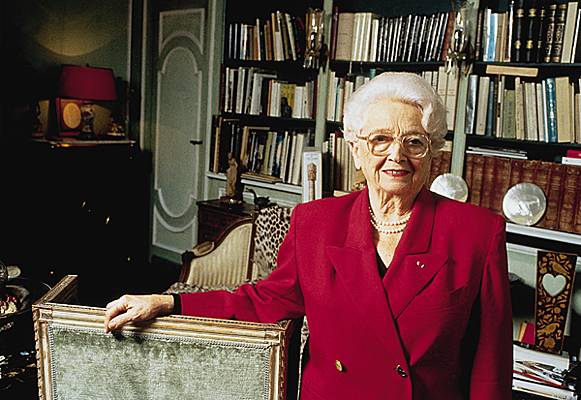
Irina Bokova, Director-General of UNESCO, with French Egyptologist 
Christiane Desroches Noblecourt at UNESCO Headquarters in 2009. 
© UNESCO/Michel Ravassard

PARIS, France / UNESCO / Secretariat / June 28, 2011
UNESCO Director-General Irina Bokova has paid tribute to the memory of Mrs Christiane Desroches-Noblecourt, great French Egyptologist, whose "disappearance she learned with deep sorrow". A press statement issued today says:

Christiane Desroches-Noblecourt put her passion and knowledge of Egypt at the service of a universal saga. Her contribution to the cause of world culture was enormous and the importance of her action with UNESCO invaluable.

She was the face of the International Campaign to Save the Monuments of Nubia, one of the most brilliant successes of international cooperation remaining to date. Her speeches made at UNESCO were a milestone in the emergence of the principle of commonly protected world heritage, one of the most solid and fertile gains of universal conscience.

UNESCO paid her fulsome tribute two years ago for the 50th anniversary of the Nubia Campaign. The great woman of the Nile leaves us as her legacy the duty of following her work and of conveying her message.

Her career also reminds as that international institutions’ actions can only be as good as the will of men and women able to convince and to mobilize, beyond divisions, for the stake of a cause uniting us.

The whole UNESCO family is grieving and would like to send a message of support and deep sympathy to her family and friends".

© UNESCO 1995-2011
_________________________________________________________

Related News from Associated Press
By Jamey Keaten - Associated Press

Christiane Desroches Noblecourt, a pioneering French Egyptologist who prodded Gen. Gamal Abdel Nasser to help salvage Nubia's vaunted antiquities, has died. She was 97. (Photo by courtesy: Larousse.fr)

Desroches Noblecourt died Thursday at a hospital in Epernay, east of Paris, where she had been taken after a recent stroke, said Anne Francoise, treasurer of a retirement home in the nearby town of Sezanne where Desroches Noblecourt lived the last few years.

Born Nov. 17, 1913 in Paris, Desroches Noblecourt developed an early passion for Egypt after reading about the discovery of King Tut's tomb in the early 1920s. She later studied at the Louvre and the Sorbonne.
After an initial trip to Egypt in the late 1930s, she became the first woman to be put on a stipend with the Cairo-based French Institute of Oriental Archaeology - cracking a male-dominated world of Egyptology.

In a statement, President Nicolas Sarkozy paid tribute to Desroches Noblecourt as the "grande dame of the Nile," who blended scientific rigor with the qualities of "the most passionate of educators."

After Egyptian officials began planning the Aswan High Dam project on the Nile in 1954, Desroches Noblecourt met Nasser to air concerns that 32 ancient temples and chapels in southern Nubia were facing submersion.

In an interview with Le Monde newspaper in 2007, she recalled how she told him "let me handle it, I'll go talk to UNESCO on your behalf," she was quoted as saying. "He trusted me and let me do it. He was brilliant."

Paris-based UNESCO then helped mobilize nearly 50 countries for a vast project in the 1960s to dismantle, move and reconstruct the antiquities - including massive statues of Pharaoh Ramses II at Abu Simbel, which were broken down into 1,000 pieces and rebuilt over four years.

Desroches Noblecourt helped organize a Louvre exhibit in 1967 about King Tut's treasure that drew more than 1 million visitors.

During World War II, Desroches frequented some members of the French Resistance and was arrested in December 1940. "I thought I was done for," she told Le Monde. "I told them what I thought of them, and I don't know why, they let me go after two days."

Christiane Ziegler, a former curator at the Louvre's Egyptology department, called Desroches Noblecourt "very dynamic, but also very tiring: she wanted everything done in a minute! She had a lot of charisma and spoke well, and really cared for the greater public."

Desroches Noblecourt wrote dozens of books, including "The Fabulous Heritage of Egypt" that was a best-seller in France in 2004 and 2005.

A funeral was planned Monday in the nearby town of Mondemont-Montgivroux, according to Francoise, of the retirement home. She is survived by a son.

© The Associated Press
______________________________________________________  
Credit: Reports and photographs are property of owners of intellectual rights.  
Seniors World Chronicle, a not-for-profit, serves to chronicle and widen their reach.

May 19, 2011

EGYPT: Egyptian princess was first to have heart disease more than 3,000 years ago

.
WASHINGTON DC / Smithsonian Magazine / Science Blogs / May 19, 2011

Ancient Egyptian Princess Had Coronary Heart Disease

A mummified princess from Thebes (known as Luxor during her time)
is the earliest person known to have had coronary heart disease
(Courtesy of flickr user Rita Willaert)


You might be under the impression that hardening of the arteries, a.k.a. atherosclerosis, is a modern problem. That our diets, rich in animal fats and processed foods, are the problem, and if we only ate like humans used to not so long ago, we’d have no need for bypass surgeries and no one would ever die of a heart attack.
 
But atherosclerosis is common in Egyptian mummies, say scientists who imaged dozens in Egypt, going as far back as 1550 B.C. (Their study, recently published in the journal Cardiovascular Imaging, was presented at the International Conference of Non-Invasive Cardiovascular Imaging earlier this week.)

The researchers created CT scans of 52 ancient Egyptian mummies at the National Museum of Antiquities in Cairo (the mummies couldn’t leave, so the scans were done at the museum). They could see arteries in 44 of the mummies. Of those, 20 had calcification, a marker for atherosclerosis, in their arteries, and in three of the mummies that calcification could be seen in coronary arteries.

The mummies with signs of atherosclerosis tended to be those that had lived the longest; they averaged 45 years old. One of the three with coronary heart disease was the princess Ahmose-Meryet-Amon, who lived in Thebes around 1580 to 1530 B.C. and died in her 40s; two of her three main coronary arteries were blocked. If she had lived today, “she would have needed bypass surgery,” said one of the study’s co-authors, Gregory Thomas of the University of California, Irvine. She is now known as the earliest person in history to have suffered from coronary heart disease.

Calcification in the right (RCA) and left (LCA) coronary arteries appears white in this CT scan

(Courtesy of the European Society of Cardiology)

At the time when the princess lived, the Egyptian diet consisted of fruit and vegetables, bread, beer and a little domesticated, lean meat, which may sound like a doctor’s recommendation for how to avoid the very problem the princess had. So how did her arteries end up with so much calcification? The researchers have a couple of theories.
 
Parasitic infections were common in ancient Egypt, and the resulting inflammatory response may have predisposed her body to atherosclerosis, much as HIV appears to do so today. Foods during that time were often preserved in salt, which could have had an adverse effect.
 
Or the princess may have eaten a different diet than the average Egyptian; as a royal, she could have feasted on luxury foods like meat, cheese and butter, the very items that heart doctors tell us to avoid.

Sarah Zielinski — Archaeology,The Human Body


  • Copyright Smithsonian.com
  • June 9, 2009

    EGYPT: Drive to stop kisses as greetings as Egypt detects swine flu cases

    . DUBAI, Emirates / Gulf News / The Region / Egypt / June 9, 2009 By Ramadan Al Sherbini, Correspondent Cairo: More than three years ago, Dr Adel Ashour, a pediatrician, started a campaign to stop kisses as a way of greetings in this country of 80 million. At the time, his campaign did not generate much attention. He still thinks that current fears about a potential outbreak of swine flu give his campaign a sense of urgency. The reason for my campaign is the fact that kisses are a vehicle for the transmission of around 15 diseases, said Dr Ashour. According to him, the list includes the common flu, bird flu, swine flu, tonsillitis, sinusitis, pneumonia, rubella, tuberculosis and some types of hepatitis. Kisses can help spread such diseases in a populous country like Egypt, he told Gulf News. He particularly warns against kissing children because their immune system is not mature yet. Kissing does not reflect passionate greetings. In fact, it is a tradition, which should be replaced with dry greetings, i.e. handshakes. This shift is particularly important as the world fears a pandemic of swine flu. On April 29, Egyptian authorities ordered all pigs in the country to be slaughtered. Meanwhile, Minister of Health Dr Hatem Al Gabali has advised the public to avoid crowded places and wear face masks as preventive measures against swine flu. Medical specialists say that washing face after being kissed is as important as washing the hand after a handshake. Anyone who cannot avoid exchanging kisses with another should wash his/her face, because the possibility for catching viruses through kisses is higher compared to a handshake, said Dr Hassan Hamad, a specialist in infectious diseases. Over the past few days, Egypt has reported three swine flu cases in a US girl coming from the Netherlands, and two students at the American University in Cairo. The cases have fuelled concerns about an outbreak of the potentially fatal virus. Mahmoud Nabih, an MP for the Nile Delta town of Mansoura, has proposed a draft bill to ban kisses and punish offenders by a fine of LE500 (around Dh333). This habit is widely spread in the rural areas, and must be stopped in order to prevent the spread of serious diseases. Greetings by kissing have become a popular habit even among people working at the same place. This is absurd and hazardous. Some countries, aware of these hazards, have already levied fines on offenders. MP Nabih, however, admits that penalty alone would not be enough to halt it. Men of religion and the media should help make the public aware of the health hazards involved in the exchange of greetings. [rc] © Al Nisr Publishing LLC 2007

    April 4, 2009

    EGYPT: Gamal El-Banna - A Lifetime dedicated to his vision of Islamic renaissance

    . CAIRO / Al-Ahram Weekly / Interview / April 2-8, 2009 edition Of the thousands of passers-by who walk past an old building on Al-Geish Street, near Bab Al-Sheariya Square in Downtown Cairo, very few can realise that on the fifth floor there is a huge flat that acts both as a library and a home. It contains 15,000 books in Arabic and 3,000 others in English, among them hundreds of rare books and reference works. The flat is also home to Gamal El-Banna, who has read the majority of the books his library contains. El-Banna is almost 90 years old now, and he tells Al-Ahram Weekly that ever since he was 15 he has made a habit of reading two books in Arabic a day and one book in English every two days. He started collecting the treasured contents of his library in 1940, adding to the books his father and his brother had already gathered. The library is impressive indeed. Every wall in El-Banna's flat is covered top to floor with shelves, and even the bedroom is filled with books, except for a gap in the shelves on one of the walls, which contains a photograph of his beloved younger sister Fawzia. Interview by Sahar El-Bahr "I am a writer. It's the only job I've ever had. It's even written on my ID card. The only thing I wanted to do in my life is read and write," El-Banna says. "It is problematic, because I am a writer in a country where few people read. I was a weak child and was never fit enough to play with the other children in the streets or to ride a bicycle. I was fit for nothing but to sit and read and write. I spent most of my childhood in my father's huge library." Though he is best known today as a prominent Islamic scholar, El-Banna in fact has written over 50 books that deal not only with Islam, but also with politics, economics and the trade union movement. If certain concerns characterise all his books, they are with freedom, religious revival, and the use of the mind to find new solutions to old problems. Click to continue reading © Copyright Al-Ahram Weekly

    March 8, 2009

    EGYPT: Komboha Village boasts the nation's first female mayor

    . LOS ANGELES, California / Los Angeles Times / World / March 8, 2009 ‘I’m part of history,’ says Mayor Eva Habil Kyrolos, Egypt's first woman to hold such an office. The village of Komboha, which was granted to her great-great-great grandfather in the 19th century, is getting used to it. AFP, AFP/Getty Images ______________________________________________________ Eva Habil Kyrolos wears the distinction lightly as she tends to law and order and social matters in Komboha, the village her great-great-grandfather was granted in the 19th century. ______________________________________________________ By Jeffrey Fleishman Reporting from Komboha, Egypt Her father's chair sits beneath the window to catch the morning light, where he once held court with villagers who wanted him to discipline their sons, chase away thieves and settle land and dowry disputes on the lush fields between the Nile and the desert's edge. She eases into the high-back chair with the worn wooden armrests. A single woman of 53 wearing faded bluejeans and a pink blouse, her dark hair uncovered, she has her late father's spirit and wisdom, though she has decided not to spank misbehaving children and, truth be told, she'd rather not know all the whispered sins and untidy dramas of her friends and neighbors in this brick-and-mud smudge of a village founded by an ancestor. Few would have expected this place of millstones and poultry dealers to claim the "first" of anything. It's there, though, in a picture frame: Eva Habil Kyrolos smiling and standing next to President Hosni Mubarak on the day she became Egypt's first female mayor. It hangs near photographs of her grandfather, whose brow seems cut from stone, and her father, a scrubbed-faced raconteur in a turban. "People from nearby towns used to mock us, 'Oh, you have a woman mayor now,' " said Osama Gamel, a car mechanic, mimicking the needling chirps of those who poke fun. "But you know what? She's better than a man." Better than a man. Not a phrase one often hears in Egypt. But those words resonate in alleys where donkey carts, piled with bundles of green grass, rattle past churches and mosques, and boys hoe brown-black furrows along the river. Gossip blows from stoop to stoop and fishermen moor their battered boats in the marshes. The restless and the young peek into visiting cars, hoping for an exciting face to peek back. Everyone can point you to the mayor's office. "I am part of history now. I am under the spotlight," said Kyrolos, sitting in her receiving room, while outside a taxi driver, a lead-footed madman who minutes earlier had sent old ladies running and ducks scurrying through the dust, washed his car near a brick wall. The mayor heard the slosh and clatter, got up and shooed him away. "The villagers are getting used to a woman, but sometimes when they address me as mayor they use the male gender. I was once the 'mayor's daughter,' but I'm developing my own credentials. I'm a judge, but sometimes I have to be a mother to make them obey." Step outside, walk past corner shops and schoolgirls too young to know that in the late 19th century Kyrolos' great-great-grandfather, a Coptic Christian, was granted permission by the state to lay claim to a village, providing he built a house of worship and a kiln to bake bread. He called it Komboha; family legend has it that it was named after a princess who walked with pharaohs. Choosing a mayor is more official these days. Kyrolos, a member of the ruling National Democratic Party, was appointed by the state Interior Ministry in December. She is not married; she knows what goes through people's minds about this, but once she hit 40 her relatives quit asking. As a strict Copt, she said, divorce is forbidden, so choosing someone means choosing him for life. That's not easy, which leads to the tale of a husband who recently knocked on Kyrolos' door. "He came to me and told me his wife was fooling around on him. I was shocked," the mayor said. "I told him to go to the church and talk to a priest. Then he told me he had told a lot of people about this. I said, 'I can't help you if you've told everybody, if it's not private.' His wife ended up solving things herself. She ran away." Kyrolos was born here. She and her friends were the first to graduate from the new elementary school, and every summer they watched the Nile rise around their village, turning it into an island. She later studied law at Ain Shams University in Cairo and then ended up in Iraq, working in a stationery store in Baghdad before being hired in the legal department of a government office. She stayed two years during the rule of Saddam Hussein before returning to Egypt and moving to Cairo to start a law practice. "I wanted an independent life," she said. "But my father got sick in 1990. I was the only one of his six daughters not married. I felt an obligation to take care of him. It was the toughest decision I ever made. "He died at 85 in 2002, but while he was ill I helped him with his mayor duties and I was intrigued and grew politically active. I worked on women's rights issues to stop early marriage, female circumcision and I helped women get their voting cards." The mayor's job is law and order, handling civil arguments and listening to woes unfolding amid intimate gestures and sips of tea. Kyrolos has three deputy mayors and six guards, smiling men with Kalashnikov rifles. Crime is not a big problem, except for the bandits who robbed and ransacked a coffee shop and had to be run off by police. There are fewer babies than a generation ago, and life is more marked by a new blister, a slipped disk or a change in the price of chicken. Kyrolos is polite, but not demure. She laughs easily and hard, her hair skimming her shoulders, her fingers rising like fluttery punctuation marks against her words. Her guards hover at the edge of her voice, which is occasionally broken by junkmen hawking their wares as they pass by her window. She doesn't yell or shout at the men who come before her; she tells them that legal action will be taken if they don't move a car blocking the road or clean garbage from an empty lot. This talk of paperwork and court appearances was a bit mystifying at first, but the villagers have grown accustomed to the mayor's penchant for legalese, although occasionally, in the heat of the moment, a twist of country logic can solve things quickly. "After my father died and until I was appointed, we had no mayor. A sense of egocentrism took over the village. People felt they could do whatever they wanted," she said. "We had a 14-year-old boy who used foul words, words too dirty to repeat, to curse and insult a man in his 50s. I called the boy's father. I wouldn't beat the boy, but I told the father he had three options: 'You discipline your son right here in front of us, I'll have my guards do it, or I will file a legal complaint against your boy.' The father disciplined his son right then and there and went home." Most of her constituents are Copts. Several crucifixes and a big picture of Jesus hang in Kyrolos' sitting room; the other day she fasted to commemorate the three days Jonah spent in the belly of a whale. The Muslim villagers, who tend their livestock and gather for daily prayers at a few mosques beneath a low skyline of crescents and crosses, mingle easily with the Christians. "The people of the village are calmer and quieter than what you find in Cairo. You hear birds here, not car horns. We're not rich, but we don't have anyone who cannot earn his bread," she said. "There are sectarian problems in other parts of the country. But our Copts and Muslims are at peace with one another. They're both too busy with work and don't have any time to annoy one another." The Muslims seem to like Kyrolos as much as the Christians, who will mention, with a more than discernible glow of pride, that it's no big deal to have a female mayor because, as one Copt put it, "We don't believe a woman's body is a stigma to be covered in veils." A few blocks away, Kamel Nadi abu Sedeira, a white-haired farmer with a staff in his hand, walked from a courtyard and stood outside his mosque as other voices fell away. "Kyrolos is not like any woman. She's a very serious woman," he said. "It was tough to get used to at first, but I guess it's hard for the whole country to get used to a woman mayor. We've only got one." She's the unveiled one with her guards, her father's wisdom and a voice that comforts as much as it demands respect. Jeffrey Fleishman jeffrey.fleishman@latimes.com Noha El-Hennawy of The Los Angeles Times' Cairo Bureau contributed to this report. Copyright 2009 Los Angeles Times

    November 25, 2008

    EGYPT: Spooling the thread of time

    . Samir Milad, 63, works in his sewing machine repair shop in Cairo. Milad, who has been doing such work since he was 11, has repaired thousands of Singers, Brothers, Pegasuses, and an Egyptian model named after Nefertiti. Holly Pickett / For The Times ______________________________________________________________________________________ Samir Milad began repairing sewing machines when many homes had machines, before factory-made clothes made it cheaper to buy and women began pursuing careers. Now he works on industrial machines. . LOS ANGELES, California / Los Angeles Times / Column One / November 25, 2008 By Jeffrey Fleishman Reporting from Cairo He was a boy when a Greek taught him the intricacies of the sewing machine. What was his name, that Greek? Yani Defarkas. Nice man, steady hands. That long time ago is mentioned the way a gray-haired man recalls how the job he took in his youth gradually became who he was. Kind of like thread, spooling, raveling. One day you're a kid with pricked fingers, the next you're an old guy with tweezers and a magnifying glass tinkering with the gadgetry of progress. Samir Milad fixes sewing machines; he's done it since he was 11, since Defarkas sent him hustling with bobbins and needles through Cairo's alleys, past plumes of wool and cotton, past nut sellers and upholsterers, past the bygone bordellos near the stock exchange. He's repaired thousands of Singers, Brothers, Pegasuses, and an Egyptian model named after Nefertiti. You can tell the story of a man, the story of his country, through the sewing machine. But first you have to wait until Milad gets settled in his wooden chair, the one with fading lacquer, the one that creaks when he leans back and puts his hands behind his head and raises his eyebrows, which are darker than his bristly hair. It is then you hear of seamstresses, foot pedals, the piston rhythm of the needle, clothes made and mended by mothers and daughters, every home a miniature factory of snipping scissors, falling threads and tied-off knots. And how it all changed, not just sewing, but the whole world went high-tech, making the young more concerned with amassing fortunes than seeking a trade. "The job today is less attractive," he says. "The young generation is greedy. They want money quickly. When I was younger, we were passionate about the skill of repairing. But the young today don't want to learn a craft." His hands are smooth. They are a laborer's hands, softened by years of sewing machine oil. They glisten. Amber. They seem delicate when he brings them from behind his head and moves them over the laptop in a second-floor office decorated with Christian icons. The room doesn't feel lived-in; it is the office of a man who spends his time downstairs in a shop crowded with Allen wrenches and coiled silver shavings spilling from a drill. The son of a carpenter, Milad quit school in 1955 and started work with a sewing machine repairman in the neighborhood. A year later, Defarkas took him in, paying him 20 piasters a week -- about 60 cents at the time. Greek and Italian craftsmen migrated to Cairo back then. Egyptian President Gamel Abdel Nasser, a socialist-nationalist, made bonds with like-minded nations such as communist Hungary and Poland, which during the Cold War shipped over legions of sewing machines. "I spent three years with the Greek," Milad says. "He taught me this skill. I left him. I didn't have a shop, but I had a reputation, people knew me and I made house calls. I had to support two sisters and two brothers. My father was getting too old." He made house calls for a decade. In 1969, he leased a storefront and quickly expanded across the rear of the building and up the stairs. The 1973 war between Egypt and Israel was followed by waves of inflation, government corruption, higher taxes and globalization. Sewing habits changed too. Textile and clothing factories moved in, and you could buy blouses, veils and pants, stacked in rumpled mountains in souks and markets, cheaper than you could make them at home. Even sewing machine companies started to look different. Singer was bought by a private equity firm, the Japanese began outsourcing production, and the sea of tin and metal spare parts that once repaired Egypt's sewing machines was replaced by computer grids and sophisticated foot pedals. Milad changed too; he had a wife and four children, and less patience for at-home seamstresses with their busted hand wheels and wheezing motors. Samir Milad, 63, repairs a sewing machine at his shop in Cairo. "I don't have the time or the labor force to fix the old machines anymore, and besides, people are turning them into antiques," says Milad, 63, who these days repairs and sells modern machines and parts to the factories of the clothing industry. "Every era, I suppose, has its own feel. Fewer girls went to school in the past, so they stayed in the house and made clothes. Now we have girls in college. One of my daughters graduated from a fine arts school, the other is a pharmacist." They know Milad in the alley. The men with smaller shops, some of them no bigger than pantries, who still fix the sewing machines of grandmothers and new brides, point out his store. He's there on the right; inside a woman stands over a glass case, taking orders for needles and screws beneath rows of wooden drawers stretching toward the ceiling. Through a door, tools are scattered, a fan hums, a man with glasses sliding down his nose fixes a machine under a white light as Milad's sons, both engineers, stand ready to help. Sewing machines are everywhere, on the floor, on the workbench; lined and stacked, cannibalized and broken, a dusty army of spindles and metal. A man who begins his craft when he's 11 gathers much, learns the secrets of mechanisms. He has time to polish and think, to wonder about his place in life and how to keep it. Why do taxes keep rising? Why does bread get more expensive? Why doesn't Egypt work better? Such questions go through a man's mind when he's threading a needle. But he shouldn't linger. Milad, dressed in jeans and an untucked button-down shirt, stays busy with the broken machines before him rather than waxing too long about the fixed ones from the past. If he were a boy today he'd be studying electronics, figuring out how things got so, what's the word? Interconnected. "I get hurt every day," he says. "The job is hardest on the eyes. The concentration exhausts the eyes. When you work on a machine for four hours it's like studying hard over one big book. But it's not so difficult. All sewing machines have the same logic, just like languages all have alphabets. The trick is how you write your alphabet." Jeffrey Fleishman is a Times staff writer. jeffrey.fleishman@latimes.com Copyright 2008 Los Angeles Times

    October 11, 2008

    EGYPT: Sexual Harassment of Women on Unsafe Cairo Streets

    . CAIRO, Egypt (Al-Ahram Weekly), October 9 - 15, 2008 The Eid was once again marred by attacks against women in the streets of Mohandessin in Cairo. Reem Leila reports on the growing problem of sexual harassment Sexual harassment of women on Egypt's streets once again hit the headlines during Eid Al-Fitr, which marks the end of the month of Ramadan. On October 2, roving gangs -- up to 100 young men are thought to have been involved -- randomly targeted women in the streets of Mohandessin. Eyewitnesses report women being violently molested. Some, wearing the veil and niqab (face veil), had their clothes torn. Details of the incident are still emerging, reminding the public of similar assaults that took place in 2006, also during the Eid. This time, though, officials responded. After being informed of the violence by a reporter from the opposition Al-Wafd newspaper, police rushed to Mohandessin and arrested 38 people. Only two remain in custody -- there was insufficient evidence, say the police, to press charges against the other 36 -- and they are both expected to appear in court soon. "The police actually arrested people this time," says Ingy Ghozlan, a member of the Egyptian Centre for Women's Rights (ECWR). "It's the first time the government has admitted that there is a problem on Egypt's streets." It is a positive sign, Ghozlan believes, arguing that as long as police do not enforce order in the streets and people know they can act with impunity the chaos will continue. During the Eid in 2006 gangs of men rampaged in Downtown Cairo, sexually assaulting any woman they came across as police watched and did nothing. Last year similar incidents were reported. Officials then blamed the disorder on belly dancer Dina. Whilst attending the premiere of her film at a Downtown cinema, they said, she had incited the crowds. The 2006 attacks led some activists to speak out against the deteriorating situation in Cairo's streets. They now believe their two years of lobbying is beginning to show results. "Sexual harassment is at the forefront of the issues we deal with," says Nihad Abul- Qomsan, head of ECWR. Sexual harassment in public areas is not limited to a specific age category or social class but is a "social cancer". "Unwelcome behaviour of a sexual nature," she adds, "makes all women feel uncomfortable and unsafe." The National Centre for Sociological and Criminological Research (NCSCR) reports that sexual crimes are rising but provides no detailed statistics. The ECWR claims that two women are raped every hour in Egypt and that the vast majority of offenders are jobless men. "The huge cost of marriage and the fact that sex outside marriage is forbidden helps explain such behaviour. Men take out their frustrations, not just sexual, against women," says Abul-Qomsan. A study released by the ECWR in July 2007 found that 62 per cent of Egyptian men admitted to sexually harassing women. Of respondents, 83 per cent of Egyptian women and 98 per cent of foreign women reported being harassed, of which half said harassment was a daily occurrence. Fifty three per cent of the men questioned blamed women for inciting such harassment. "Harassment is a real issue here, and it has got worse over the last 10 years," says Abul-Qomsan. "A lot of people say that up until the 1970s there was very little harassment in Egypt. Things are very different now." Foreign embassies in Egypt, she points out, are increasingly concerned for the safety of their female nationals, with embassy staff recording increases in the number of complaints they receive. Many embassies now urge women to be extremely cautious in public places, especially when alone. Sameh Sayed, 29 years old, who works as an assistant hairdresser, typified a widely held attitude when he told Al-Ahram Weekly that "when a woman walks out into the street in tight trousers and tight belts she deserves what she gets". "The women here are different from the ones in my village," he says. Sayed was brought up in a village in Menoufiya. "My female relatives would never be seen swaying in the street like that." Nahed Ramzy, a psychologist at the NCSCR, says the state itself taught young men a spectacular lesson in institutionalised patriarchy when security forces and government-hired thugs assaulted women demonstrators during an anti-regime protest in 2005. Ramzy also believes that in some cases young men are using such incidents to intentionally defy the state, and its authority as represented by the police, because none of their basic needs are fulfilled. "They feel they are not treated as humans. Events such as the Dweiqa landslide, where hundreds of people were left to die under the rocks, amplify their feelings of alienation. Young men believe the government is helpless, careless and can't do anything for them." The average age at which Egyptians marry has been rising steadily. It is now normal for men in their mid-30s to remain single as they struggle to meet the costs of securing a bride. Boys reach puberty at the age of 13 or 14, meaning that they face a 20-year emotional and physical deficit. As Hanaa El-Gohari, sociologist at Cairo University, stresses, whenever economic, social, cultural or legal systems fail to deliver basic needs nature steps in. "The government is absent, the regime is lax and the police don't care. The result is inevitable. It is what we see on the streets." El-Gohari blames economic deprivation and an increasingly conservative religious trend that promotes more restricted social roles for women and rebukes those who step outside it. "Religion itself is not the problem. The issue here is the conservatism influenced by the Wahhabi trend in Saudi Arabia," says El-Gohari. The People's Assembly is widely expected to debate measures in its coming session that will increase penalties for those convicted of sexual harassment and make it easier for women to report such incidents to the police. © Copyright Al-Ahram Weekly.

    August 25, 2008

    EGYPT: But who is Shahira Fawzy?

    . Shahira Fawzy, an inspiring activist, exotic designer and anthropologist CAIRO, Egypt Egypt Today, August 2008 Volume # 29 Issue 08 Shahira Fawzy’s life changed when she discovered a “lost” tribe in the Eastern Desert. She’s since made it her life’s work to improve the lives of isolated nomads and share their cultures. FACES By Nicolè A. Staab GALLABA: THE BRINGER. A female ‘middleman’ who works between nomads and city dwellers, exchanging city goods such as sugar, coffee, tea and flour for the goods the nomads offer such as lambs, charcoal, gold and silver. With goodwill missions taking her to all of the Egyptian deserts, remote Yemeni villages, the border of India and China; global recognition as a distributor of jewelry and crafts; UN accolades; her own non-governmental organization (called Capacity)—and no less than seven films about her life, she is esteemed and recognized at home and abroad. But who is Shahira Fawzy? You could call her an anthropologist, entrepreneur, philanthropist, even a designer. While it takes more than a label to truly understand who a person is, there is one word that truly describes her: Shahira is a ‘bringer.’ But Shahira isn’t a typical gallaba in that she doesn’t barter commodities. She is a bringer in a much more philosophical sense. To the Bishari tribe in Egypt’s southeastern desert, she is a bringer of new ideas to an ancient way of life. To the women in the mountains near Sohag, she is a bringer of commerce and economy. To villagers in Yemen, she is a bringer of knowledge and education, as well as trade skills and crafts. To Egypt and the world at large, she is a bringer of culture — showcasing the culture of people from isolated regions. Shahira speaks passionately of the joys of the simple life, money’s threat to happiness and the all-too-often misunderstood concepts of wants and needs, an unexpected philosophy from the only daughter of an upper-class Egyptian family. With a double-BA in Anthropology and Economics from the American University in Cairo and an MA in Economic Anthropology from Boston University, Shahira had the world at her fingertips. In 1970, she was planning her wedding and had scheduled a trip to China with her university. “But then my professor needed my help [and] asked me to go with them to Lake Nasser to do some study on the water pollution of the lake,” she recalled. A Forgotten People That experience was a defining moment for Shahira. She decided to relocate, calling the desert “home” for the next 15 years of her life. What prompted this young woman to leave behind the only world she knew? Blame the binoculars. If it hadn’t been for the pair of binoculars Shahira constantly kept at her side, she never would have known that a tribe of people were living in the desert east of Lake Nasser — and neither would the rest of the world. Shahira loved to look for fox and hyenas while exploring the lake’s eastern fjords. One afternoon, while standing on a cliff, she spied a herd of animals in the distance — and a human standing nearby. She went down to the shore to investigate. “Normally, we were warned not to go down, but I didn’t listen,” Shahira says with a little laugh. “I approached the shoreline and then I see from far away those women — young girls — who were a bronze-brown [color] with long plaits full of beads and shells, half covered around their waists and little pieces of material thrown on their shoulders.” To Shahira’s disappointment, the women fled. “I thought that being humans, we were going to talk. But they ran, leaving a child and a goat in the bush.” Eventually, the women returned, this time with a man. “His hair was completely blown up on the top and he had plaits on the back of his hair like people I had never seen before.” Shahira was reduced to finger signs and charades to communicate with the man. The breakthrough: “I kept saying ‘Aswan, Aswan’,” and in response, the man pointed at himself and replied, ‘Abraq, Abraq’.” Shahira’s map pinpointed Abraq in the center of the Eastern Desert, but there was no record of any inhabitants. The next day, the 19-year-old woman followed the people into the desert. “We walk for like a couple of hours and then we reach a cocoon-shaped home that looks like a big stone,” she says. “And then I come back to Cairo and I explain to the government here that I found those people.” The officials didn’t believe her, brushing off her ‘tribe’ as a passing caravan. “They tell me those people don’t exist. I can’t [accept] it,” Shahira explains emphatically. “I’m 19, approaching 20, and at that age you want to prove something.” Postponing her wedding, she returned to the desert to photograph the tribe she discovered — the Bishari, modern Egypt’s lost tribe. When the Aswan Dam was built in 1963, Old Nubia, the Bishari’s ancestral land, was flooded. Thousands of Nubian villagers were relocated, but no one knew that the nomads were there, nor that their only pasture was now submerged. From the tribesmen, Shahira learned that they “were waiting for the ‘torrent’ to dry — the rain. They say that the torrential rains have come from the hills and have sunk Nubia and all the lands and all the pastures. And they were waiting for it to dry.” She tried to tell them about the dam and how their “torrent” was a permanent lake. Like the officials in Cairo, the Bishari didn’t believe her. “They said, ‘No, no you are young. You don’t understand, we are old people, we live in this desert, we know exactly what we are talking about.’” Unable to convince them that the waters would not recede, she decided to stay on and help them. To the Bishari people, Shahira is a bringer of change. The first thing she introduced to them was the idea of digging wells. At that time Shahira didn’t have outside funding; she was working on the pocket money she received from her father. She paid one worker LE 250, but couldn’t afford to hire people to do the digging. “So I asked two of the nomads to help him and then I discovered that those people can learn how to do it. So the two guys learn how to dig and they also go and get two guys each and begin to dig more wells across the desert.” Two years later, the development and relief agency Oxfam contacted her with an offer of funding. With that and contributions from European nations, the Bishari dug 25 large wells along a route between Lake Nasser and the Red Sea hills, each well 30 kilometers apart — one day’s walk for a camel. Shahira Fawzy is in the middle.Photo: eastvaganza.com Next, Shahira recognized that their handicrafts and jewelry had market appeal. She introduced precious stones to the traditional designs and sold them in Cairo. The money went back to the Bisharis to improve their lives with water-storage containers and a meeting building housing a clinic, school and mosque. “[In the desert] you learn how little you are, how weak you are and how strong you can be. That is how life goes on in the desert: If you are human then you are entitled to what I’ve got, and if I’m human I am entitled to what you’ve got. And you reciprocate that way. It’s like a complete unity of humanity against [an] environment that is so difficult that they are fighting it together and they have to care for each other, so it’s a completely different world. “I remember looking at the ground full of those dried fruits that sold in Aswan for 25 [piasters] and thinking ‘oh look, if you collect all of this, this will be a lot of money back in the city’ — because this is our normal way of thinking but then by the end of my trip I brought nothing back with me. You begin to realize that our world is one where everybody is competing to get the same things — things that they need and things that they want — everything is being taken.” The Sahara Movement Shahira’s success with the Bishari tribe’s crafts drew invitations for projects with other aid agencies. UNICEF asked her to work with women in the mountains near Sohag, where she taught them how to draw on their knowledge and environment to create unique, marketable items. Thus began what Shahira calls “The Sahara Movement.” The Sahara Gallery(Photo: eastvaganza.com) was born in Shahira’s tiny Cairo flat, with nomad crafts stored around the rooms, under the bed and wherever else there was available space. Eventually Sahara turned into the formal gallery that it is today in Heliopolis — not only exhibiting handiwork from various regions but also offering desert adventure trips and craft classes taught by the nomads themselves. By this time, Shahira was a veteran gallaba, linking two very different worlds. To the people in Cairo and abroad, Shahira was a bringer of a new culture, a new world through jewelry and crafts and information. To the tens of thousands of rural women supporting themselves in this manner, Shahira became a bringer of independence. Earning an income makes people feel important. But for Shahira the benefit is more than just about making money — it is about keeping cultures alive and sharing them with the world. In Yemen, the approach was different but the outcome just as rewarding. As the Director of Hodaidah Primary Health System Support Project (better known as the Dutch Project), Shahira was a bringer of education, creating a year-long training program for doctors and nurses to improve the standards of healthcare. Developing skills changes a person’s life; it creates an identity and aids in liberation from poverty. “I believe my role has a beginning and an end. I am just reminding them of what they’ve got, but then I am giving them their freedom I don’t believe that people should be over-adopted, people should be given the knowledge and the freedom to utilize what is around them,” she explains. But she hasn’t forsaken the desert or the people that she has strived to assist. Her role has now evolved to that of a marketing consultant, working on new jewelry and craft designs for the villagers and exposing them to the world. To that end, the Sahara Gallery is hosting a special three-day exhibit in early December. Wherever she goes, be it the desert, the mountains, the city shops or the nonprofit boardrooms, it is obvious to everyone that Shahira touches, she is a bringer of hope — hope for a better future.

    August 1, 2008

    EGYPT: The slightly more frivolous side of the internet

    . CAIRO (Egypt Today), July 2008 edition Scene and Heard By Hassan Hassan The internet has churned out pop culture phenomena and famous-for-fifteen-minutes losers by the dozen, a trend that is only going to grow. ....It’s no different in Egypt. Like most trends, we are catching up on this one a little late. A slew of Egyptian blogs have come out that don’t want to show videos of policemen beating up protesters burning American flags. While the internet is a vital tool for freedom of speech, it is also an outlet for mass frivolity. Egyptian bloggers are writing about their feelings as well as their politics. On forsoothsayer.blogspot.com, for example, the female blogger shares everything from her excretory patterns to stories about her boyfriend and the trials and tribulations of living in Egypt, while also being witty and relatively interesting to read. Hold on while I Google how blogs were started the rise of the blog. Most of the time, blogs are online diaries with entries added whenever you want. The phenomenon of putting your life on the internet has picked up fast in this country. Just look at Facebook: The site has over 3 million people in the Egypt network. And that doesn’t include the number of people who are in different networks but still Egyptian. 2007 was the year of Facebook, with everyone talking about it, uploading pictures, adding hundreds of friend and screeching about how they found their best friend from sixth grade. Like most fads, the fuss has died down, but the blogging scene has apparently picked up where Facebook left off. In January 2007 there were around 1,000 blogs in Egypt. That number has now doubled, and the entries are in English, French and even German, as well as Arabic. In 2007 and 2008, bloggers and their sites were put under scrutiny for publishing pictures and videos of various strikes and demonstrations. Ending in messy trials, various arrests and general mayhem in the media, the issue of free speech on the internet has drawn hazy conclusions and erected new boundaries. Political blogging aside, a crop of Egyptians seem intent on using the internet for slightly more frivolous — albeit just as important — personal communication. Sites such as Forsoothsayer usually have at least one taxi story, a drunk story and a look-at-the-sorry-state-of-Egypt. Bloggers like Sandmonkey, Mademoiselle HH and a selection of others all regale us with tales of life in Egypt (often with an overtly political message). The blogs mostly consist of snippets of amusing anecdotes, vented frustrations and stories of basic day-to-day life in Egypt. While they have their merits , is their life really that interesting? Not to every reader, but to this new generation, yes it is. The voice of a generation This is a method of anonymous communication. What each of these blogs says is “yes, you’re not the only one.” It is an immediate reflection upon yourself, whether you are reading or writing the blog — you become part of a group, a clique that exists solely in cyberspace, a place where you can be whoever you want to be. Giving way to torrents of complaints targeted towards an audience that feels the same way you do is cathartic; and if the readers don’t agree then all they have to do is click and the page disappears. It may not warrant much skill, talent or even recognition, but blogging is undeniably the semblance of a voice of a generation, and a voice that everyone is privy to. Entire aspects of people’s personalities (even if they have been embellished somewhat) are available in a condensed page: all their friends, their likes and dislikes, if they are sitting at a computer or not, the people that talk to them most, whether or not they are in a relationship, their pictures — all in a compact package wrapped up for your browsing pleasure. A blog is like a microwave meal of personalities; ten seconds and you’ll know enough about someone to formulate an opinion — even if it is only what they want you to think. What was once the pastime of slightly nerdy boys sitting at their laptops, convinced they have a penchant for writing stories of injustice and a troubled government, is no longer exclusively for the anonymous skinny dude playing Grand Theft Auto, taking breaks to wax lyrical about the plight of the Kifaya movement. Putting yourself on a web page is becoming cool, because as well as being packed to the brim with information and knowledge, the internet is home to more vices than just porn. The internet has created the ultimate water-cooler — a haven for gossip mongers the world over. Gossip sites are increasing in popularity and this is the secret ingredient that made Facebook such a success. The sheer gossip factor of pages of pictures, outings and arguments without actually having to physically be there is irresistible. Providing a service Cairo, a city addicted to rumors, has now got its very own gossip site: scene-heard.blogspot.com. It claims that it is not a gossip site but a public relations utility. That said, aside from some posts about car shows and exhibitions, the site is pretty much all about bitching and gossip. I might add that this is perfectly fine; gossip makes the world go round and has a fitting place in almost each and every society the world over. Scene-heard proudly proclaims on its banner that “only the who’s who of Cairo are scene and heard.” It posts tales of the most “hip and happening parties,” has open votes to decide who has the hottest body, who is the most happening couple, who has the best dress sense and who is the richest self-made millionaire in Egypt. Other activities include segregating people by school, outlining personality traits according to what school they went to and how much money they have and working out the type of job they will most likely get. Recently, the female author of the site (who calls herself S&H) has even discussed threesomes, a guy’s guide to getting some and almost every important summer wedding. This author is intent on calling herself a PR utility. Although the most she has done is recommend a few songs and talk about events you would have known about anyway, this is not what makes the site interesting. One of its more opinionated posts attracted attention for saying the wrong thing about the April 6 strikes, in a post entitled, “Don’t be scene and heard tomorrow.” The post encouraged people to stay home — not all people though, just the upper class. It read: “We highly RECOMMEND [sic] staying off the streets since last time [a general strike] happened during Sadat’s time, the upper class became the target. So to the who’s who of Cairo, for one day, try not to be scene and heard.” With over 100 comments posted within the next few days, the writer was called everything from an elitist pig to someone telling it like it is. The comments made it onto other blogs and even started online arguments on how she should feel for the plight of the people and how ashamed S&H should be of her behavior. All it did was increase Scene-heard’s popularity. Each post on the site is an attempt at tongue-in-cheek humor, but ends up somewhat ridiculous. Topics supposed to be juicy are just ‘so what?’ Whoever writes the site can’t really spell and uses absolutely no grammar, which is fine. It isn’t out for a Pulitzer Prize. This is, after all, a gossip site, a place where syntax and commas don’t really have a home anyway. The strange thing about its apparent popularity is that the site is not that controversial. It talks about a few parties and things that are popping up in Egypt that strike the author’s fancy. At best, Scene-heard is a playful insight into the mindset of the Egyptian upper crust. At worst, it is the writing of a bored, pretentious and spoiled little girl vying for our attention on the internet. The author does get it though. Since its inception in March this year, the site has received close to 22,000 hits (at press time), and each post has at least ten reader comments. The author is constantly causing some kind of argument, with heated comments provoking contributors to attack each other. Anonymous #1 will tell Anonymous #6 they are classless, can’t spell and find more important things to do with their life. A simpering Anonymous #15 will then come in and tell them to chill and throw in an insult of her own. Fascinating stuff. There are also full-fledged wars between sites. The claws come out in cyberspace, apparently, and in a comment-fueled post entitled “S&H starts new war,” our anonymous female writer hashes it out with another celebrated blogger, Sandmonkey. The ensuing madness of over 70 comments in less than three days sees both sides trying to prove who is better, smarter, wittier and just plain right. Most of the time this sort of mindless argument just involves picking a side and going with it; sometimes however, someone really smart comes in and actually proves a point. Uncensored Opinion What Scene-heard has done is allow a glimpse (skewed, accurate or otherwise; the internet should rarely be trusted) into the life of Cairo’s rich and beautiful. While there has yet to be a particularly juicy entry, the comments do get nasty, the responses are nastier still and each one of them aims directly below the belt, or at least attempts to. All this is incredibly funny on a boring afternoon in the office. It gives people an outlet to vent about the stupid day-to-day things, even if S&H does get a little pretentious at times. You just have to look at the titles of her posts: “Sahel-izing,” “Tattoos and piercings” (more acceptable) and my personal favorite “Metro sexuality: the New Black,” which took a fashion phrase and turned it into a debate on racism. Some of the commentators are incredibly riled up; you can almost see them typing furiously, trying to think of the perfect thing to say to the ‘popular’ girl. These comments are the reason the site is interesting, not what our gossip guru deems as newsworthy (which is usually nothing more then a new ad, the opening of a restaurant or her occasional ‘controversial’ post). The controversial entries usually consist of the blogger’s opinion and nothing more, but they manage to drive people into a frenzy about everything from homosexuality, racism, marriage and divorce, poverty and sexual harassment — all with little knowledge or research but still giving a rather accurate perception of the different types of people in society. Protected by anonymity, the comments are a great representation of what younger people are thinking — without censorship. It really is a strange insight to the voices of very different people, even if they can’t write and thus spew out some of the most insipid arguments ever. It is also strange that visitors to the site will call each other posers, losers and various expletives, then put a smiling emoticon next to the word, just to make sure they didn’t offend you. The comments are what make the site what it is. What S&H has done is create a playground that you can log into and play, consequence-free. Gossip isn’t supposed to be ground-breaking. It isn’t supposed to be smart. It isn’t supposed to enlighten or educate. You talk about something, laugh about it, think what you would do if it happened to you and then get on with your day. It also represents the mindset of a generation. What a certain generation considers socially scandalous is just as important as what they think of government. Young people’s thoughts on relationships, drinking alcohol, tattoos and piercings are indicative of the direction the country is taking, if only among the supposed high class. Egypt Today is current affairs magazine in Egypt and the Middle East and the oldest English-language publication of its kind in the nation. © 2004-2007 IBA-media

    July 28, 2008

    EGYPT: Youssef Chahine, Egyptian Filmmaker, Dies in Cairo at 82

    CAIRO, Egypt (The New York Times), July 28, 2008: By A. O. Scott Youssef Chahine, an Egyptian filmmaker who was a pre-eminent figure in Arab cinema, died Sunday in Cairo. He was 82 and had been in a coma after suffering a cerebral hemorrhage last month. His death was announced by MENA, Egypt’s state news agency, according to wire reports. The director Youssef Chahine at the Cannes Film Festival in 2004, where his “Alexandria ... New York” was shown. Pascal Guyot/Agence France-Presse — Getty Images Mr. Chahine, who directed his first feature film, “Baba Amin,” in 1950, was an eclectic and exuberant storyteller who could move easily across a range of styles and genres. In 28 movies — the last, “Chaos,” was shown at the Venice Film Festival in 2007 — he shifted deftly from urban realism to florid melodrama, from historical allegory to musical comedy, from social criticism to autobiography. Whether his subject was the domestic struggles of poor and middle-class Cairenes, his own youth in Alexandria, the building of the Aswan Dam or the life of the medieval philosopher Averroes, Mr. Chahine’s films reflected his cosmopolitan, humanistic sensibility, as well as his deep interest in Egyptian and Middle Eastern history and society. In France, where Mr. Chahine’s films found an admiring audience, news of his death brought a tribute from the president, Nicolas Sarkozy. He described the director as “very attached to his Egypt but open to the universe” and said that he sought “to denounce censorship, fanaticism and fundamentalism.” The Egyptian film critic Kamal Ramzi told Agence France-Presse: “Chahine was seen as one of the largest schools of Egyptian cinema. Everyone who worked with him learned a lot from his style and his style of work.” An early supporter of the nationalist revolution of Gamal Abdel Nasser, Mr. Chahine became a critic of the policies of Nasser and his successors and was often at odds both with Egypt’s ruling party and with its increasingly powerful religious conservatives. “The Emigrant,” his 1994 film about the Old Testament figure Joseph, was banned after being denounced by militant Islamists, and he frequently did battle with censors and government bureaucrats. “All my projects are high risk, and I fight like mad,” he said in a 1997 interview with The International Herald Tribune. “I spend 80 percent of my time on politics, 20 percent making movies. Raising money is politics; every penny I make goes back into cinema. I can’t afford to stop.” Youssef Chahine (pronounced Sha-HEEN) was born into a Christian family in Alexandria on Jan. 25, 1926. His mother was of Greek descent, his father Lebanese, a mixed heritage representative of the city’s long history as a Mediterranean melting pot where various faiths and languages mingled and flourished. Alexandria was the subject of four films Mr. Chahine made from 1979 to 2004: “Alexandria ... Why?,” “An Egyptian Story,” “Alexandria Again and Again” and “Alexandria ... New York” — a tetralogy that many critics regard as his finest work. Mr. Chahine attended Victoria College for a year and then left Egypt for California, where he studied at the Pasadena Playhouse and acquired a taste for American movie musicals. Returning to Egypt, he began a period of prolific cinematic activity and accelerating success. In 1951, he was invited to the Cannes Film Festival to show “Nile Boy,” the beginning of a long relationship that would culminate in 1997, when he received a special award commemorating the festival’s 50th anniversary. He is widely credited with discovering Omar Sharif, who played the lead in Mr. Chahine’s 1954 film, “The Blazing Sun.” The director’s own artistic breakthrough came a few years later with “Cairo Station,” a complex drama notable at the time for its frank exploration of sexual behavior and psychology. It is also a hard film to categorize, and thus typical of Mr. Chahine’s oeuvre. The critic Elliott Stein described “Cairo Station” as “an idiosyncratic mixture of neorealist social commentary, grotesque horror, and lighthearted comedy.” “Idiosyncratic mixture” is an apt summary of the director’s mature style, which also incorporated musical numbers, sudden changes of tone and, when the mood struck and the technology allowed, computer-generated special effects. Running through this eclecticism were a consistent engagement with the realities of Egyptian life and an often impatient sense of the nation’s resistance to progress. “You can’t be an artist if you don’t know the social, the political and the economical context,” he said in a 2006 interview with a German Web site. “If you talk about the Egyptian people, you must know about their problems. Either you are with modernity or you don’t know what the hell you’re doing.” By 1997, when he was honored in Cannes, Mr. Chahine’s international reputation was firmly established, but he remained embattled at home. Like the novelist Naguib Mahfouz, with whom he collaborated on two films in the late 1960s, he represented a liberal, skeptical spirit increasingly squeezed between Egypt’s authoritarian political culture and the government’s Islamist rivals. He was an outspoken critic of the current Egyptian president, Hosni Mubarak, of political Islam and of American foreign policy. When asked in the online interview whether he thought Egypt would become “more free and liberal in the near future,” his reply was categorical and pessimistic: “No, neither in the near nor in the faraway future.” He was, nonetheless, a fixture of Egyptian cultural life, his importance recognized, at least at the end, even by the leaders he antagonized. According to Agence France-Presse, when Mr. Chahine became ill, Mr. Mubarak pledged to pay for his care and had him flown to Paris for treatment. He is survived by his wife, Colette. Copyright 2008 The New York Times Company

    March 31, 2008

    EGYPT: Elderly care in Canada is bewildering for common man here


    Marc and Craig (right) Kielburger Photo: Toronto Star

    TORONTO, Canada (TheStar), March 31, 2008:

    Craig Kielburger
    Marc Kielburger
    Special to the Star

    His answer was not the kind we were expecting.

    Sitting at a café on a bustling street in downtown Cairo, we ask our local guide Mohammed Abdel Rehim what he perceives to be the biggest difference between Egypt and Canada. Surprisingly, neither history nor politics make up any part of his response.

    "The largest difference," he says, as he sips a cup of tea, "is how you treat old people."

    Rehim explains that, in Egyptian culture, seniors are among the most valued members of society. They are universally admired for a lifetime's worth of wisdom and experience and are expected to pass on that knowledge.

    Children kiss their grandparents' hand when greeting them as a sign of respect.

    That is why Rehim says he cannot understand the North American concept of old age, where the contributions of the elderly are expected to dwindle slowly, sometimes culminating in children putting aging parents in a nursing home.

    "People in our community would not even speak to you if you did this," he says.

    Instead, Rehim wants his parents to live with him, giving his own children the opportunity to learn from their life experience. He says he plans one day to buy a house big enough for his wife, two children and parents to live together, something he calls "a great honour."

    All Egyptians, he says, are expected to care personally for their parents in old age and to maintain this bond.

    Our guide makes an interesting point. In North America, this kind of discussion about the wisdom and skills seniors can contribute to society is often drowned out by discussion of what they require from society – from health care to pension costs. It's part of our notion of the sunset years, where seniors are expected to "slow down."

    But any assumption that older people will automatically participate less within their families and communities because of their age is increasingly out of line with reality. A 2007 Statistics Canada report found that seniors today have carved out a role for themselves that is far more engaged than any they have had before.

    "They are better educated, they are Internet savvy and they are active," the report said.

    So, as they get older, Canadian seniors are using their lifetime of experience to give back. By better recognizing this, the whole country would stand to benefit. Around the world, we've seen that children in particular learn a great deal about everything from gratitude to community through their elders.

    Rehim's musings about old age remind us of similar attitudes we've encountered abroad. In India, we've watched young people bend down to touch the feet of their elders, symbolizing their respect. In South Korea, children use only formal language when speaking to a senior. In East Africa, the elderly are admired for their accumulated life experience.

    The role of the aging is especially relevant in Canada these days, as baby boomers approach retirement. There are now more than four million seniors in Canada, a number that's to double by 2025.

    With seniors eventually making up one-fifth of our population in Canada, Rehim's words seem almost prophetic. He wonders why Canadians don't make a greater effort not just to live side by side with their elders, but to seek out the wisdom of a fully lived life.

    "Without this (wisdom)," Rehim says, "you cannot expect great generations to come."

    Craig and Marc Kielburger are children's rights activists and co-founded Free The Children, which is active in the developing world.

    © Copyright Toronto Star 1996-2008

    March 18, 2008

    EGYPT: More crushed under weight of struggle to secure daily bread

    From a working single mom to a leading member of the ruling party, a pensioner to the country’s top business editor, we paint a portrait of what it means to be poor in Egypt —and what poverty could mean for the nation

    CAIRO (Egypt Today), March 18, 2008:

    OMM AHMED | Wife of Bawab - Gateman or Doorkeeper


    The true meaning of poverty was rammed home as I stood in our drafty garage talking to Omm Ahmed, our bawab’s wife. Shabrawi, her husband, had gone off to buy bread for the family. I asked if he had gone to the bakery next to the supermarket a few blocks down the street; after all, they sell perfectly good, fresh baladi bread for 40 piasters a piece. Not that expensive, you would say.

    Omm Ahmed regarded me as if I was crazy. “Do you think we are going to spend all the money we make on bread? Shabrawi is in Arab El-Maadi, standing in line to get the five-piaster bread,” she chastised.

    And chastised I was. I consider myself an empathetic person. I have been to and reported on slums and ‘poor’ districts for longer than I generally like to admit. I have interviewed people living six or seven to a room, people who make under LE 200 per month. But the very basic everyday image of what this really means never hit me so hard as when I had that enlightening chat with Omm Ahmed.

    It’s enough to make you wonder about the state of poverty in Egypt.
    ..........

    HUSSEIN SHAABAN | Retired civil servant, father, grandfather, 72

    My pension is LE 194, which is good as pensions go. But this money is not enough for anything. We spend it during the first week of the month, and then we borrow from whoever will lend to us for the rest of the month.

    I have five daughters and one son. All the girls were married and living with their husbands, but the youngest got divorced a year ago and is now living with us together with her three children. She does not work, but sometimes gets a job altering dresses and then we have enough to get us through a day or two. My son is married and lives with us. I had to agree. His mother and I gave up our room: He lives in it with his wife and two kids. My wife and I, together with my daughter and her kids, sleep in the living room. We get by, alhamdulillah.

    My son is a good craftsman, but is moody sometimes. He keeps quitting jobs, so one month he makes money and two or three months he does not. We have to make this pension last, which is becoming more and more difficult every day. Prices are increasing all the time. The money is barely enough to keep us eating bread.

    I hope the ration card works. I have an old one, and am working on getting new ones for my grandchildren. We really need the government’s help. It must remember the masses, the public.

    We love the President, may God grant him good health. Please tell him to remember us. I am sure he would not agree to what is happening to us.

    By Manal el-Jesri

    Read full report in EGYPT TODAY
    ©2004-2007 IBA-media

    January 7, 2007

    EGYPT: 5 Million Elderly Dream of Decent Life

    CAIRO, January 6, 2007: Currently 5 million senior citizens live in Egypt and this number is expected to increase to 13 million by the year 2030, according to an official report. The State devises a number of policies and plans with the aim of meeting the needs of the elderly people, being part and parcel of the society. In 2005-06, the number of elderly homes reached 104, benefiting 3097, elderly clubs 159, benefiting 26853, elderly service offices 27, benefiting 6337 and physiotherapy units 52, benefiting 1258, the annual report says. Elderly Egyptians have formally requested a national council which will support elder rights in the country. Others have asked for concrete laws to protect senior citizens from elderly abuse. One example of such abuse, the growing trend of family members to expel the elderly from their homes and onto the streets, demonstrates the need for legal protection. The government on its part has said that it is investigating the issue of a national council to serve elder Egyptians. However, activists say that over a period of seven years, nothing much has been done to protect the rights of senior citizens. ©Egypt State Information Service

    August 19, 2006

    EGYPT: Pension Revision Shortchanges Seniors

    CAIRO (AmCham Business Monthly), August 18 2006: For senior citizens, summer usually brings some relief. Every June, the government increases their monthly pension by about 10 percent, giving them more leverage to make ends meet amidst continually rising prices. But this year was not so kind. In May, the government announced suddenly, and without any apparent room for recourse, that it would only increase pensions by 7.5 percent. Why? Nobody was really quite sure. If the government had a reason, it wasn’t saying. Not surprisingly, rumors soon began to fly. Some said the government had re-categorized pension funds in an attempt to make its financial statement look better, others said the funds had been squandered on white elephants, and some tabloids even suggested the funds were spent on the engagement party for a prominent member of the ruling party. One independent Egyptian daily had its own theory, suggesting that the government was forced to cut its losses after the pension funds it allegedly invested in the stock market were lost when the market turned sour last March. Pensioners, many of whom have long suspected the government has no qualms about shortchanging them, find the allegation disturbing, yet plausible. “I have no problem believing this was the case since I have very little trust in the government and what it claims,” says Foad Labib, a 72-year-old pensioner. Photo Courtesy: Al-Ahram Weekly) In Egypt, contributions to the national pension fund are deducted from the monthly salaries of all legally employed individuals. Upon retirement, usually at 60, individuals receive a monthly sum of money drawn from this fund to cover basic living expenses upon their retirement. The fund itself is considered so vital to social security that it is excluded from the list of assets in the national budget for fear it might encourage the government to consider spending it. Hisham Tawfik, adviser to the minister of finance, dismisses the allegations that the government squandered the nation’s pension funds, insisting that the funds are in safe hands. He explained that all but £E 1 billion of the pension fund, which currently amounts to around £E 33 billion, has been deposited in the National Investment Bank (NIB). The bank in turn lends the money to government entities for social and economic projects according to the directives of the Ministry of Finance. This type of investment, he argues, involves almost no risk, yet yields returns that help augment the pension fund. The fact is, says Tawfik, all pension money placed in NIB has been lent out. “There is no cash involved anymore,” he says. “The pension money has simply become a debt that the Ministry of Finance is responsible for.” According to Tawfik, only £E 1 billion of the national pension fund has been invested in the stock market. “This amount has been there for the past 10 years and I can safely say that over this time the return rate [has been] a positive 2 to 3 percent,” he says. As stock investment represents such a small percentage of the fund’s application, even in the unlikely event that all of this money were to be lost it would have a relatively insignificant effect on the fund as a whole. Thus, insists Tawfik, the ministry’s decision to reduce the annual pension increase has nothing to do with the performance of the stock market. Instead, it is simply a matter of “shifting priorities.” Tawfik explains that the Ministry of Finance, to which the pension portfolio was added following last January’s cabinet reshuffle, recognized the growing burden that pensions were placing on the budget and decided to reorganize its priorities, giving precedence to human development activities such as education. “The decision was taken because this is the [financial] capacity of the government at the current time,” he says. “I think that it was a very courageous act by the Ministry of Finance to take this step in order to guarantee a brighter and better future for the coming generations.” Omneya Helmy, senior economist at the Egyptian Center for Economic Studies (ECES), thinks the government needs to reexamine its priorities. She argues that pensioners should be a top priority because if the government isn’t going to look after them, who will? Annual pension increases help senior citizens bridge the gap between their limited income (in many cases the pension is their sole income) and the basic costs of living, which continue to rise. “Pensioners should receive a fair annual increase as they are mostly old people who cannot work anymore and are truly dependent on every penny they get from pensions,” she says. Pensioners have found it particularly unfair that the government increased public sector employee salaries by the usual 10 percent this year, while pensions only went up 7.5 percent. Tawfik, however, says the difference is due to the fact that employees represent a net gain for the state. “Employees have more expenses than pensioners and they work, so that gives them the right to a higher increase,” he says. Right or wrong, it’s hard to refute Tawfik’s enumeration of the three main problems that are putting a strain on the current pension system. The first is the increase in life expectancy. In the 1960s, the average life expectancy for Egyptians was 44 years for men and 46 years for women. Today, it is 67 years for men and 71 years for women, which means not only are more Egyptians reaching the age of pension, they’re collecting pensions for a longer period. The second problem, says Tawfik, is a flaw that has plagued the pension system since its inception in 1936. Under the current system, pension contributions are based on a percentage of an employee’s current salary, whereas pension payments are based on a percentage of the employee’s final salary at the age of retirement. As most people’s salaries increase as they gain experience and seniority, their contributions are less than the benefits they receive upon retirement. For example, if a person’s salary never exceeded £E 300 for their entire career, but was raised to £E 1,200 in their final year of employment, the pension paid would be determined by this final amount. “The difference is paid out of the pocket of the Ministry of Finance,” explains Tawfik. The third problem is that the annual increase in pension payments is paid out of the pocket of the government. Tawfik argues that this increase is completely unnecessary and the money could be spent better elsewhere. “The 7.5-percent increase is too generous considering that we are a poor nation and we have to start behaving like one and pay more attention to increasing our production,” he says, arguing that increased production would increase wages, which would in turn increase pensions. Tawfik points out that European countries addressed similar defects in their pension systems over 25 years ago. Egypt, however, has avoided the issue and allowed the problems to grow. “The pension system has become fiscally non-sustainable,” he says. “We have to stop the bleeding and act fast so that we can secure the future.” But pensioners like Labib have a hard time swallowing the government’s line that investing in a brighter future for Egypt’s youth must come at the expense of the elderly. “This is not a poor country,” he grumbles, “This is a country that has been robbed by government officials and everyone knows it. Now they’re just trying to cover it up.” Tawfik insists that if the government simply wanted to take the easy path it would have opted to keep the annual pension increase at 10 percent. This would have kept the public happy, but it also would have hurt future generations. “It’s very easy for a political system to chase after short-term popularity, but it’s very [tough] to face the people with the problems that we will encounter in the future,” he says. “We have to be able to differentiate between a charity system and a financial system. The pension system is definitely a financial one so we can’t get emotional about where to put the money.” Helmy agrees on that point, but suggests the government should develop a fixed formula to calculate the annual pension increase instead of increasing it each year by an arbitrary amount. The formula should take into consideration all factors including inflation, standard of living and other financial variables. “The current system lacks a set formula that can be used to calculate the percentage increase for every year,” she says. “This is one of its biggest drawbacks.” For the time being, pensioners are at the mercy of the Ministry of Finance’s policymakers. This year’s 7.5-percent increase will be especially hard felt given last month’s 30-percent increase in the price of gasoline, which is expected to push up the cost of other basic items such as electricity and food. “Very soon we won’t able to afford the price of bread and that is the true price that we have to pay for being Egyptian,” says Labib. By Amena Bakr Copyright ©2006 American Chamber of Commerce in Egypt