Remember ME - You Me and Dementia

Showing posts with label Pension. Show all posts

June 7, 2013

Good intent, lackadaisical implementation

MUMBAI ,INDIA / ONE INDIA ONE PEOPLE  / SOCIAL SECURITY / JUNE 1st 2013


Indira Gandhi National Old Age Pension Scheme in India (IGNOAPS), a scheme aimed at providing financial security to the destitute aged living below poverty line fails to achieve its goal because of lackadaisical implemenation, writes Dr. Nidhi Mishra. 

Old age brings with it lot of challenges, a major one is that of financial insecurity. Financial security of elderly in general and particularly of those belonging to BPL category has been a matter of concern, and due to increase in longevity, old age health care expenses, increasing cost of living, the problem has only compounded. Due to lower or negligible family income and rise in the cost of living, the poor often find it difficult to depend on their family for financial support, and thus the role of government becomes important in providing financial security to the destitute aged in our country.
 
Overview of Indira Gandhi National Old Age Pension Scheme (IGNOAPS)

Realising the pressing need to provide financial security to the destitute elderly, the IGNOAPSGovernment of India (GOI) launched the National Old Age Pension Scheme (NOAPS) under the National Social Assistance Programme (NSAP) of the Ministry of Rural Development, on 15 August 1995. Like other schemes of NSAP, this scheme is in line with Article 41 of the Constitution of India which directs the State to provide “public assistance to its citizens in case of unemployment, old age, sickness and disablement and in other cases of undeserved want within the limits of its economic capacity and development.”

On 19 November 2007, NOAPS was renamed as Indira Gandhi National Old Age Pension Scheme (IGNOAPS) and to widen its scope it has been extended to the elderly who fall Below Poverty Line (BPL). Initially under this scheme, all destitute elderly aged 65 years or above were provided a pension amount of `75 per month. Subsequently, with effect from 1 April 2006, the pension amount was increased to `200 per month per person in order to make this scheme more effective and the state governments were requested by central government to contribute a matching amount for each beneficiary of this scheme. It has been noted that not all states are contributing an equal amount of `200 per person per month to the pension.

To further improve the effectiveness of this scheme, with effect from 1 April 2011, the eligibility age for this scheme has been reduced from 65 to 60 years and the amount of pension has been raised from `200 to `500 per month for those who are 80 years or above.

The other two schemes under NSAP– Annapurna Scheme and Indira Gandhi National Widow Pension Scheme (IGNWPS) are linked to IGNOAPS in a way that under Annapurna Scheme ten kilograms of food grains are provided free of cost to those BPL elderly who though eligible, have not been covered under the IGNOAPS. And under IGNWPS, once the BPL widows reach the age of 60 years they are transferred to IGNOAPS.

The Annual Report (2012-13) of the Ministry of Rural Development, GOI, highlights coverage of 223.18 lakh BPL elderly all over India, where the highest number of beneficiaries were reported in Bihar (37.87 lakh), followed by Uttar Pradesh (37.67 lakh) and Odisha (17.77 lakh). The total expenditure reported under NSAP for the year 2012-2013 is `4855.77 crore, although a total of `8447.30 crore was allocated for it. IGNOAPS is a part of NSAP and is allotted a major portion of the funds, however, the exact breakup of scheme wise budget allocation under NSAP is not available in the annual report or on the website of Ministry of Rural Development. 

Benefits

The IGNOAPS is praiseworthy, as this is the first ever national level scheme which provides economic security to the poor elderly and widows who would have either been dependent on their family’s limited income or would have been forced to lead a neglected life. This aspect has also been highlighted in one of the participatory study conducted in Madhya Pradesh and Uttar Pradesh by the NGO HelpAge India in 2008, where responses of participants indicated that IGNOAPS plays a very important role in poverty reduction. 

Limitations

Over the years, government bodies and social scientists have highlighted some limitations of this scheme mainly in terms of its improper implementation. A research paper jointly published by four professors from Harvard School of Public Health in 2010 highlighted weak targeting of beneficiaries which is generally based on combination of a survey based definition of poverty and community identification of the poor as a major problem related to implementation of this scheme.

In a survey conducted by United Nations Population Fund (UNFPA) India in 2012, covering a total of 9,852 elderly in the seven states of India which have higher proportion of elderly viz. Himachal Pradesh, Kerala, Maharashtra, Orissa, Punjab, Tamil Nadu and West Bengal, the problem of wrong targeting was observed. While investigating the utilisation of IGNOAPS, it was found that some non-BPL elderly were also availing the scheme. It was also observed that there was low awareness of this scheme among the beneficiaries, thus raising the need for effective steps to be taken by the government to promote the scheme.
Another targeting issue identified in assessments of this scheme is the difficulty of determining the age of a person, particularly in rural areas. Along with this some researchers (Anand and Kumar, 2006) have also highlighted that while from a macro perspective IGNOAPS seems to be working well, and meeting its many objectives, a micro analysis shows that there are gaps in areas like distribution and the identification of beneficiaries.

In an assessment report of Ministry of Rural Development (2006) it was found that the IGNOAPS is lacking on two grounds which cut across states: (i) it involves complex administrative procedures and, therefore, proves especially difficult for the illiterates, and (ii) the size of programme beneficiaries is capped artificially by using an arbitrary ceiling formula. 

Conclusion and recommendation

It is clear that IGNOAPS is a useful scheme for elderly below poverty line, however, it is facing problems of improper implementation such as wrong targeting, limited coverage and irregular payment of pension which needs to be strongly dealt by the government through improvement of coordination between its various bodies. Also through an effective monitoring and evaluation mechanism the problem of wrong targeting and irregular payments can be controlled by the government. Along with this proper need assessment should be done by the government for effective coverage of the scheme. Additionally, the government should publicise the scheme especially in rural areas and slums for creating awareness amongst potential beneficiaries. Civil society can also play an important role by conducting training programmes for the targeted beneficiaries.


Dr. Nidhi Mishra ,The writer is working at Tata Institute of Social Sciences for the United Nations Population Fund (UNFPA) Ageing project in India.

©One India One People Foundation 2013.
_______________________________________________________________
Credit: Reports and photographs are property of owners of intellectual rights.
Seniors World Chronicle, a not-for-profit, serves to chronicle and widen their reach.

April 15, 2013

Senior Citizens to Impact 250 Loksabha Seats in coming Election


MUMBAI , INDIA / POLITICS / APRIL 15th , 2013 

By Sailesh Mishra

Indian Politics ‘Newest’ Vote Bank: Senior Citizens to Impact on 250 Loksabha Seats in coming Election


Taking a cue from recent study “Social Media & Lok Sabha Elections”, by IRIS Knowledge Foundation and supported by the Internet and Mobile Association of India (IAMAI), on how Facebook and other social media will impact 160 seats in coming Election, what immediately came to my mind was Elder Population impact on Indian Democracy. I have been trying to market this idea since launch of Silver Innings in April 2008. 

As on 2012 Senior Citizens Population in India is 100 million (10 crore) that comes to roughly 10% of Total Population.  But when we take into account the Total Voting Population i.e. 18+ age group, then Senior Citizens becomes roughly 26% of Voting Population, here I have not taken into account Senior’s influence on Family voting. 

Indian Parliament has 543 constituencies / seats and this 26% strong Vote Bank of Senior Citizens will surely impact more then 250 constituencies. This ‘new’ Senior Citizens Vote bank always existed but no one including elders ever realised their strength . This time 2013/14 Parliamentary and State Election will be change in new thought process towards our elders , they deserved to be respected and cared for as our great tradition need to travel in this new speed changing society . 

I would be happy if any research agency or students take up this interesting subject of ‘Senior Citizens Voting Impact on Indian Politics‘. 

In recent times, since last 3 years there has been contestant activity by most of the political parties to woo Senior Citizens by organising onetime events, trips, goodies etc , but they have failed to make a concrete Long Term Policy & Programme for doubling Ageing population . Government , Politicians and Political parties are Ageing but they don’t bother about Ageing population , which many demographer describe as ‘ Silver Tsunami ‘ , which will have huge economic and social impact on India’s growth . Not to forget the same story will repeat in most of the developing countries. 

Due to advocacy and awareness campaign like ‘ 16th August National Protest Day’  by organization’s like AISCCON, Silver Inning Foundation and a united front called Join Action Committee (JAC) since 16th August 2010 , of more than 32 All India organisation’s working for and with Senior Citizens and newly formed  Pension Parisad ; there has been marked improvement in channelizing & mobilising Senior Citizens as united group demanding basic rights from central and state governments . Senior Citizens pan India, has been slowly realizing their strength and can’t be fooled any more by this goodies of politicians.

Social Media including Facebook and Twitter, has added new type of activism and in fact renewed the whole advocacy movement, Silver Innings a pioneer in social media usage for ageing and many youth and elders have taken this technology route for outreach and mobilising elders and their family.

Iam happy that , Elders like always will give shape to our Future , whatever they demand today will be for betterment of more then 85% of total population. This strengthen my firm view that ‘Our Elders Are Change maker’s ‘, the change we all want to see.


About Author: 
Sailesh Mishra is Founder President of 'Silver Innings' a socail enterprise and Silver Inning Foundation, a NGO working with Senior Citizens and has more then 6 years hard core activist experience in Ageing domain . His unique PR and ICT tool usage for Ageing has made him Internationally known Gerontology Consultant.  He may be contacted at silverinnings@gmail.com


________________________________________________________
Credit: Reports and photographs are property of owners of intellectual rights.
Seniors World Chronicle, a not-for-profit, serves to chronicle and widen their reach.

May 8, 2012

INDIA : Unorganised workers and Elders demand pension


NEW DELHI , INDIA / The Hindu / Pension / May 8, 2012


Feeling excluded':Participants at the Pension 
Parishad dharna in New Delhi on Monday demanding 
universalisation of pension for the elderly.
- Photo: Sandeep Saxena

Demands for a universal pension scheme got bolstered with a large number of underprivileged people including farmers, domestic workers, single women, disabled persons, sex workers and trans-genders from more than 20 States beginning a five-day dharna at Jantar Mantar here on Monday.

The campaign for universalisation of Rs.2,000 as monthly pension for every elderly above 60 years in age and does not come under the tax slab is being spearheaded by Aruna Roy of the Mazdoor Kisan Shakti Sanghatan (MKSS) along with Dr. Baba Adhav, the veteran leader of the unorganised workers in Maharashtra.

Addressing the protestors, Ms. Roy said: “Pension is a right that the aging working poor have earned by virtue of having given the best years of their lives to contribute to the economy. They have grown food for the country's population, built houses and highways, cleaned streets, collected materials for recycling, cooked food and looked after households and assembled electronic goods.”

“Society must provide a decent pension for these people when they are no longer able to work. From where do you expect these poor people to pay for every thing, especially when you don't provide them even half the minimum wages?” Ms. Roy asked.

At present, all elderly over 60 years from the Below Poverty Lines category get Rs.200 per month as pension under the Indira Gandhi National Old Age Pension Scheme (IGNOAPS) with the State governments adding usually lesser and in some cases higher amount to the pension.

According to rough estimates there are around two crore beneficiaries of the Government pension scheme against the total elderly population of 10 crore.

The Pension Parishad, an assembly of organisations demanding a universal pension scheme, has rejected the IGNOAPS pension calling it “pittance” which can't ensure a dignified living to the elderly.

“The Government pension is a pittance which is in no way sufficient for the elderly. That is why we are asking for at least Rs.2,000 or half the minimum wage whichever is higher,” said Nikhil Dey, leader of MKSS, who is also part of the Pension Parishad.

On the issue of locating money for the scheme, Prabhat Patnaik, former member of the Kerala State Planning Board and member of the UN Commission, said the State has to do the needful. “If a child doesn't get food, you don't blame the child. In the same manner if the elderly starve, it is the State's duty to ensure a dignified living to them who can't be blamed for being poor.”

Patnaik said that with 14 per cent (Centre and State combined) India has the lowest tax GDP ratio in the world so it has enormous amount of potential to increase taxes.

Referring to the Arjun Sengupta Committee which had talked about modest cess increase of 0.5 per cent to generate funds for social welfare schemes, Mr. Patnaik said even if the government increases the tax by 2 more per cent to 16 per cent, India will still be the country with lowest tax GDP ratio and its elderly population will be able to live a decent life as well.

During the public hearing, most of the elderly talked about extreme despair and how they felt excluded from all entitlements and services even as they struggling to hold their lives together.

Sixty-seven-year-old Ramani Devi doesn't have anyone except a son who has abandoned her in her village in Rajasthan. Now she is left at the mercy of her neighbours. She doesn't get the pension because she doesn't have a BPL card.

“Even if I tell you (what I eat to survive), will you never be able to imagine what I eat?” said Ms. Devi when asked how she survives. Now only the hope for a decent pension has brought her to Delhi from the interiors in Rajasthan.


Copyright © 2012, The Hindu 


Senior Citizens Organizations like Helpage India , Silver Inning Foundation , AISCCON have extended their support to ' Pension Parisad'  .

 
Programme from May 8 - 11
 
8th – Public hearing on Accountability and Grievance Redress related to Pensions and entitlements for the elderly. The Grievance Redress Bill will also be discussed.
9th – Public hearing on issues of marginalised and vulnerable groups
10th – Public hearing on issues related to the National Food Security Bill and food security of the elderly
11th – Pension Parishad discussion on the response to the charter of demands. Planning the way forward.


________________________________________________________
Credit: Reports and photographs are property of owners of intellectual rights.
Seniors World Chronicle, a not-for-profit, serves to chronicle and widen their reach.
UK : Elderly care funding should focus on poorest

LONDON  , UK / The Guardian / Society / May 7, 2012 

Report by Centre for Social Justice calls for resources to be concentrated on pensioners with few or no assets

By , chief political correspondent

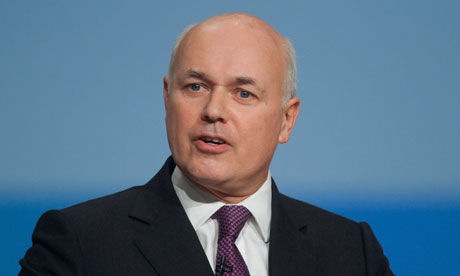
Funding for the long-term care of elderly people should be targeted at the poorest with few or no assets, according to a report by Iain Duncan Smith's thinktank. In a direct challenge to the Dilnot commission, which called for an increase in support for those with assets, the report, by the Centre for Social Justice, calls for resources to be concentrated on pensioners solely dependent on state support.

Iain Duncan Smith's thinktank, the Centre for Social Justice, says low pay, poor training and lack of oversight has to led to 'very poor quality of home care for the most disadvantaged older people'. Photograph: Geoff Newton


The centre was established by the work and pensions secretary while he was in opposition. Its report, to be published on Tuesday, is likely to influence ministers as they consider their response to Dilnot. They are holding cross-party talks before the publication of a white paper setting out their proposals.

Dilnot recommended that the threshold of savings and assets above which the state stops offering help with care costs should rise from £23,250 to £100,000. Its other key recommendation was to impose a cap of £35,000 on the amount any individual would have to pay towards their own care costs during their lifetime.

But Transforming Social Care, the new report, sweeps aside these arguments and says the government should concentrate on the neediest pensioners. It is careful not to define who falls into this group, but it is thinking of those who are wholly dependent on the weekly state pension of £107.45 and have few or no other assets.

Christian Guy, managing director of the Centre for Social Justice, says: "Understandably, there is a lot of concern about better-off pensioners being forced to sell their homes and use the proceeds to pay for their care until they drop below the means-tested threshold. But ministers should make the most vulnerable people and the unacceptable conditions they face their first priority, then phase in the Dilnot recommendations so that help can be extended to all."

The centre says that any extra resources should be focused on the poorest members of the "extraordinary generation" who lived through the second world war, because they suffer most severely from the country's "broken" care system.

The report points out that of the 400,000 elderly people living in care homes, nearly two-thirds are funded by the state. Many, according to the centre, suffer poor care because councils use their purchasing power to drive down fees.

The centre says Dilnot "says little about ameliorating the current system, which is in large part failing many … Those proposals do not address the means-tested system for those who have not been fortunate enough to own their own houses but instead find themselves dependent on the state in their old age."

The CSJ report, which points out that nearly £1bn has been "stripped out of social care budgets in England" in the last year, warns that a failure to target resources on the neediest will have a major impact on the NHS.

"Older people, we know, account for two-thirds of overnight stays in hospitals … Free at the point of use, and always open, accident and emergency departments have in many of the most deprived areas become 'catch-alls' for suffering."

Sarah Pickup, chair of the Association of Directors of Adult Social Services, said the new report was a welcome reminder that implementing the Dilnot proposals on their own would not solve the crisis in adult social care.

"The CSJ is right to say that the commission has provided a good answer to the question about how to provide people with more certainty about the costs of care and to reduce the risk of catastrophic costs, but also to point out that solving this problem will not address the wider issue of the need for a level of funding which is sufficient to fund quality support and services to meet needs."

Labour questioned the premise of the CSJ report on the grounds that the current system already focuses on the poorest. People with combined income and assets above £23,250 have to pay for long-term care. Only pensioners with income and assets below £14,250 qualify for the maximum help from local council social care service. Councils have discretion for people with income and assets between those two figures.

Liz Kendall, the shadow social care minister, said: "The current social care system already focuses on the poorest and neediest in society. The problem is that the government's cuts to local council budgets have pushed the care system to breaking point.

"More than £1bn has been cut from council budgets for older people's social care since the coalition came to power. We need sufficient funding for existing services as well as reform for the future. It's a false choice to suggest otherwise."


© 2012 Guardian News and Media Limited 

________________________________________________________
Credit: Reports and photographs are property of owners of intellectual rights.
Seniors World Chronicle, a not-for-profit, serves to chronicle and widen their reach.

May 7, 2012

Sudan: Give the Senior Citizens on Pension Their Dues

JUBA / The Citizen / Pension / May 5, 2012

We have read the article of the columnist of The Citizen Newspaper, William Sunday Tor strongly suggesting to our Government of the Republic of South Sudan the need for creating a budget and a comprehensive system of paying post-service benefits, gratuities and pensions to our former employees.

Dying of hunger
 
His suggestion is in place and the acting Minister of Labour, Public Service and Human Resource Development, in the Government of the Republic of South Sudan should come out with a scheme to meet the demands of these senior citizens who have retired after serving their nation and people for a very long time. The issue of pension payment to its beneficiaries, the pensioners, should top the priorities of our acting Minister of Public Service because one of the most important functions of his Ministry is to take stock or make census of the employees retired from active service after performing their duties for their nation and their fellow citizens with dedication and prudence for so long a time. Let us thank the Almighty God that He had guided us to total independence from the jallaba who had been depriving us of our rights even the most basic ones for survival.


Now that we are responsible for our destiny we should treat all our people equally irrespective of our ages. These voices of elderly people crying for their dues from their homes should not be ignored by those concerned officials because if their entitlements are not given to them we shall answer questions on the day of judgement before Almighty God whether we have not deprived anyone from his need during our lifetime. Here we would like to advise the Acting Minister of Labour and Public Service not to shy away this proposal put forward by writer William Sunday Tor but to work out a comprehensive scheme of meeting the financial entitlements of the pensioners who are in their thousands in the ten South Sudan states. The Minister has to coordinate this work with the Minister of Finance and Economic Planning so that an emergency budget is made available to meet the financial requirements of the pensioners. The two ministers can solve this human problem. Actually the problem has something to do with food, feeding and keeping alive.


The pensions cannot build a house. The Republic of South Sudan has come a long way with a lot of sacrifices in many forms and some of these elderly citizens had worked hard to bring up their children who are some of these important government ministers and officials and that was their contribution to the struggle for independence of our great nation which is capable to square the problem of its pensioners. We know that when we cut the cord from the jallaba of Sudan it was a total separation and therefore we have to solve all our problems which we have inherited from the old Sudan by ourselves here in Juba. Information was once circulated that pensions of the senior South Sudan elders who had been serving during the British era and in the post-independence period of old Sudan were to be released by Khartoum. How could they do this if they were angry that these senior citizens of South Sudan had advised their younger generation to vote for separation and not unity during the referendum? So there is a serious enmity from Khartoum against the South Sudanese pensioners that whatever money of pensions Sudan has should be written off as bad debts. No pension money should be expected from Khartoum and our Government in Juba should shoulder its responsibility to care for the welfare of its elderly citizens. This is the last service that they can be accorded.


© 2012 AllAfrica


________________________________________________________

Credit: Reports and photographs are property of owners of intellectual rights.
Seniors World Chronicle, a not-for-profit, serves to chronicle and widen their reach.

April 5, 2012

GREECE: Public suicide of an indebted pensioner in Athens

BERLIN, Germany: Der Spiegel International, April 5, 2012

Austerity Suicide

Pensioner's Death Sparks Clashes in Athens

Photo Gallery: Deep Sadness Followed By Blind Rage
Photos
DPA
Violent protests have erupted in Athens following the public suicide of a 77-year-old retired man. A note he left behind accused the Greek government of impoverishing him with its debt crisis austerity measures, a message that resonated with demonstrators. Many are blaming the state for his death.

The public suicide of an indebted pensioner in Athens on Wednesday has touched a nerve in the Greek capital, sparking violent clashes with police.

The 77-year-old retired pharmacist shot himself in the head during the morning rush-hour near the central Syntagma Square, police said on Wednesday. In a note found in his clothing, the man reportedly blamed the debt crisis and austerity measures for his suicide. After paying into his pension for 35 years, the government had rendered it too small to survive, he said in the message, published by local media. "I find no other solution than a dignified end before I start searching through the trash for food," it read.

The square where the incident occurred, just opposite the parliament building, has already been the site of frequent protests during Greece's debt crisis, and people gathered once again on Wednesday to mourn the unnamed pensioner's death. The death is the latest in a growing number of suicides in Greece, a country grappling with dramatic financial troubles that have led to high unemployment, lower wages and shrinking pension payments.


Some people posted notes to the tree under which he died, with messages like, "It was a murder, not a suicide," and "Austerity kills." Meanwhile, hundreds of others marched toward parliament chanting similar slogans.


'Difficult Hours'


"This suicide is political in nature and heavy in symbolism," Vassilis Papadopoulos, protest organizer and spokesman for the "I won't pay" group told the Associated Press. "It's not like a suicide at home."


The man's suicide quickly became a political issue in the country, with Prime Minister Lucas Papademos issuing a statement as protesters gathered. "It is tragic for one of our fellow citizens to end his life," he said. "In these difficult hours for our society we must all -- the state and the citizens -- support the people among us who are desperate."


An estimated 1,500 people attended the anti-austerity protests, and by nightfall they turned violent. Young people reportedly threw rocks and Molotov cocktails at riot police, who fired tear gas and flash grenades in response. No injuries were reported.


No relief is in sight for Greece, despite international financial aid. By the end of 2012, the country's economy is expected to contract by 4.5 percent and remain in a recession until the following year, according to the Bank of Greece's annual report, released last month. The country's economy already took a 7 percent hit in 2011
.
© SPIEGEL ONLINE 2012
____________________________________________________________
Credit: Reports and photographs are property of owners of intellectual rights. 
Seniors World Chronicle, a not-for-profit, serves to chronicle and widen their reach.

April 4, 2012

UK: Two million pensioners face cuts to vital benefits

LONDON, England / The Daily Mail / Money / April 3, 2012

Why did we spend our lives saving?


By Lauren Thompson


Almost two million pensioners are facing a cruel trap that threatens to deprive them of the biggest ever rise in the state pension and vital .elderly benefits.

Savage cuts to Pension Credit for pensioners who saved for their retirement have all but wiped out what Chancellor George Osborne boasted was the ‘largest-ever cash increase’ in the state pension, which takes effect this week.

And the cuts risk barring hundreds of thousands of pensioners from vital discounts, council tax and housing benefit, cold weather payments, and help with heating costs from energy suppliers.


The change has come as a shock to many pensioners who received the news in letters from the Department for Work and Pensions revealing their state pension for the new tax year.

It comes just a fortnight after the Chancellor announced changes to pensioners’ tax allowances — the so-called ‘granny tax’ — which could leave pensioners on incomes of little more than £11,000 a year £323 worse off.

Michelle Mitchell, director-general of charity Age UK, says: ‘It is unfair that older people on low incomes are having their benefits reduced. 

‘The Treasury is giving with one hand and then immediately taking with the other.’


Associated Newspapers Ltd
____________________________________________________________ 
Credit: Reports and photographs are property of owners of intellectual rights.
Seniors World Chronicle, a not-for-profit, serves to chronicle and widen their reach.

February 28, 2012

JAPAN: 880,000 pensions hit by Japan investment scandal

TOKYO, Japan / Japan Today / National News / February 28, 2012

AIJ Investment Advisors reportedly boasted annual returns of up to 240% when in fact 185 billion yen has melted away AFP
A growing scandal around an investment company that has lost $2.3 billion has affected pensions for up to 880,000 people, Japan’s government said Tuesday.
AIJ Investment Advisors has reportedly been lying to clients for years, boasting of annual returns of up to 240% while in fact 185 billion yen in pension investments has melted away.
The company’s operations were suspended last week and the government ordered a probe of 260 asset management firms nationwide after allegations that most of the money in its care had disappeared.
The scandal has shocked Japan, where a rapidly aging middle class population is increasingly looking to private pension funds, while the state retirement pot also struggles due to gross mismanagement of its own.
The government said Tuesday that the 185 billion yen was from 84 separate pension funds, and affected 540,000 employees who were saving for retirement, as well as more than 340,000 people already drawing their pensions.
Most of the 84 funds entrusted fractions of their savings to AIJ, but 13 funds had a quarter of their investments exposed to AIJ, the health ministry said.
The company, which was set up in 1989, has consistently reported healthy returns on investments since the start of the last decade, but financial regulators now say the bulk of the money it looked after is gone.
It was not known whether the money was lost due to market turbulence or because the firm diverted it for other purposes.
The head of the Financial Services Agency (FSA), Shozaburo Jimi, said he had ordered investigations into the assets of 260 investment management firms.
“We will put all of our efforts in to clarify the facts of the AIJ case. We will get to the truth and draft ways to prevent similar incidents in the future,” he told a press conference.
Exact details of how much has been lost were not available as the FSA said it was unable to comment on an ongoing investigation.
The case, however, has further highlighted the gap between what the graying nation needs and its creaking public pension system, run by a government already saddled with debt worth double the nation’s GDP.
The state borrows money to finance roughly a half of its annual budget, amid dwindling tax income due to two decades of economic stagnation and a shrinking workforce caused by population decline.
© 2012 AFP
____________________________________________________________ 
Credit: Reports and photographs are property of owners of intellectual rights.
Seniors World Chronicle, a not-for-profit, serves to chronicle and widen their reach.

February 16, 2012

FRANCE: Necessary to push retirement age to 65, French feel

PARIS, France / Capital.fr /  Retirement / February 16, 2012

The French are worried about their retirement. The majority of them expect to see lower the amount of retirement pension and think that a further delay of the statutory retirement age is inevitable, if one believes a survey published by the Circle of Savers.


Only 19% of 1,005 respondents are confident in their future retirement. Six points lower than last year. It must be said that 63% fear a decline in the amount of their pensions in the coming years.
To cope, many people will save. Preferred product: life insurance. 51% say they put money in preparation for their old age.
Moreover, the idea of retirement at age 60 seems permanently buried. And that, whoever the winner of the presidential election. Only 29% believe that the left, if victorious, will restore the legal age to 60 for those who started working at age 18, yet a measure promised by Francois Hollande .
Nearly 60% of respondents thought it would be necessary even to raise the legal age of retirement from 62 to 65 by ten years. They were only 30% last year.
© Capital.fr
____________________________________________________________
Credit: Reports and photographs are property of owners of intellectual rights. 
Seniors World Chronicle, a not-for-profit, serves to chronicle and widen their reach.

February 6, 2012

PHILIPPINES: 6,328 elderly of Baguio aged 77 and more to get social pension

BAGUIO / Sun Star / February 6, 2012

By JM Agreda

THE Department of Social Welfare and Development (DSWD) recently announced its plans to expand the Social Pension, which aims to provide monthly pension to senior citizens aged 77 years old and above.

From last year's 3,566 social pensioners, the regional office announced plans to add some 2,762 senior citizens in the region, making the total number of elderly beneficiaries to 6,328.

Leonardo Reynoso, DSWD-Cordillera Administrative Region director, said the 77 percent increase in the region is part of the nationwide program expansion targeting around 1,297,159 million poor elderly Filipinos nationwide who are qualified for social pension based on National Household Targeting System data.

This brings the annual budget allotted for the Social Pension program to P37.9 million in the Cordillera.

As stipulated in the Expanded Senior Citizen's Act of 2010, the Social Pension program for indigent senior citizens grants a qualified beneficiary of a P500 monthly stipend to augment daily subsistence and medical needs.

The department currently distributes this monthly stipend quarterly to pensioners.

Reynoso said only indigent senior citizens are covered by the social pension program, excluding pensioners of insurance providers such as the Social Security System, Government Service Insurance System, and other insurance services.

The DSWD is set to release P9.4 million this February as first quarter stipend of the pensioners. The amount, according to Reynoso, has already been released to the DSWD by the Department of Budget Management.

The regional program management committee is currently facilitating the preparation of payrolls for all pensioners who are set to receive their cash stipends for the first quarter by February.

Last year, the program was able to release over P21.3 million in grants for its beneficiaries.

The Social Pension Program is implemented in partnership with local government units, municipal and city social welfare offices and Offices of Senior Citizens Affairs.


Sun.Star Publishing, Inc.
____________________________________________________________
Credit: Reports and photographs are property of owners of intellectual rights. 
Seniors World Chronicle, a not-for-profit, serves to chronicle and widen their reach.

January 11, 2012

UK: Pension income plummets by 15pc to a five-year low

LONDON, England / The Telegraph / Personal Finance / January 11, 2012

PENSIONS:
Those retiring this year can expect to live on an average annual income of just £15,500, according to research from Prudential.


Those retiring this year can expect to live on an average
annual income of just £15,500.
 Photo: IAN JONES
By Kara Gammell 

Expected retirement incomes have hit a five-year low, a fall of more than 15pc.
Those retiring this year can expect to live on an average annual income, including private, company and State pensions, of just £15,500, according to research from Prudential.
This is down from nearly £18,600 five years ago.
The survey revealed that fewer than two in five of those about to retire feel they have saved enough to secure a comfortable income, with just one in five expecting to live on less than £10,000 a year.
According to the report, men are more optimistic about their retirement than women, with 45pc of men confident they will be financially comfortable, compared with just 31pc of women.
Meanwhile, around the country there is a regional disparity of more than £5,000 in expected retirement income. Londoners have the highest average expected retirement incomes of £17,900, while those in Yorkshire and Humberside have the lowest at £12,800.
Tom McPhail, head of pensions research at Hargreaves Lansdown, warned that income levels are likely to decline further. Annuity rates, which determine, income from your pension, are at a record low.
“Investment funds are volatile, annuity rates are declining and employers are shutting down final salary pension schemes with almost unseemly haste,” he said.
However, for those who are planning on retiring this year, Mr McPhail pointed out that there is unlikely to be much gained by delaying.
“Delaying annuity purchase for one year at age 65 will take 22 years to make a financial difference and when you consider life expectancy at age 65 for a man this year is just under 21 years, there is very little to gain. What’s more, while Gilt yields could shoot up again and drive annuity rates to rise, it is more likely they will continue to decline.”
Mr McPhail said that for those looking to retire, it is essential to shop around for the best possible terms when it comes to buying an annuity.
“You can use drawdown as an alternative but only if you are happy with investment risk in retirement,” he said.
Vince Smith-Hughes, spokesman at Prudential, said: “The current economic climate has created the perfect storm for people in the run up to retirement. The impact of the credit crunch, banking crisis, recession, and concerns over the Eurozone, has been reflected in the fact that expected retirement income levels have hit a five-year-low.
“It is concerning that expected retirement incomes are going down, while pensioner expenditure is going up.”
© Copyright of Telegraph Media Group Limited 2012
____________________________________________________________
Credit: Reports and photographs are property of owners of intellectual rights. 
Seniors World Chronicle, a not-for-profit, serves to chronicle and widen their reach.